
[ GUIDE · THE DISPATCH ]
Where to Stay in Budapest: Buda Calm, Pest Buzz, and the Ruin-Bar District
Where to stay in Budapest comes down to one question: do you want to sleep or do you want to party? The Danube splits the city into calm Buda and loud Pest, and picking the wrong side is a surprisingly easy mistake.
Planning the trip? Start with the the day-by-day Budapest itinerary — it lays out exactly where to go, and when.
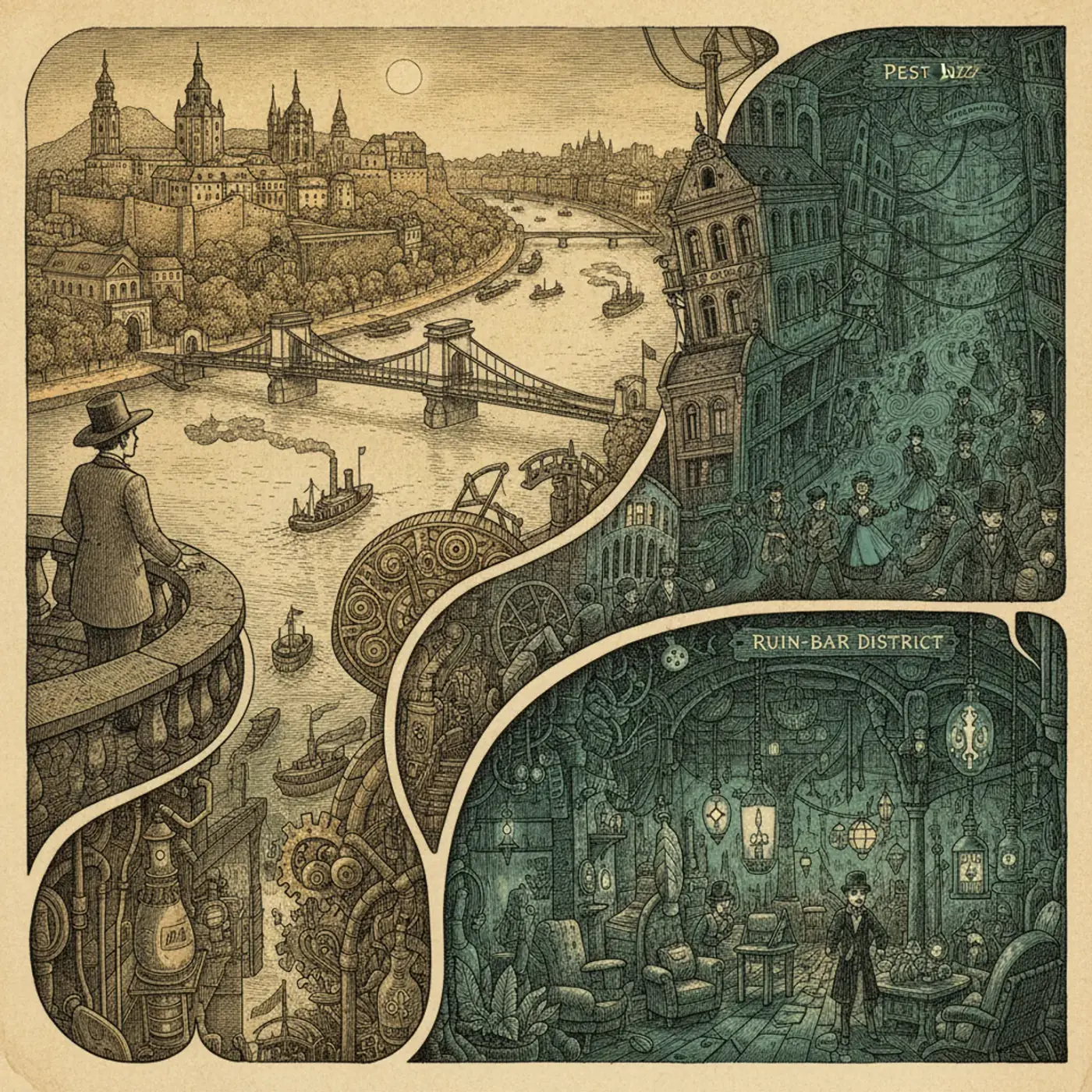
The first decision about where to stay in Budapest is geographic, and it’s the one that quietly makes or breaks the trip. The Danube cuts the city in two: hilly, green, castle-topped Buda on the west bank, and flat, dense, buzzing Pest on the east. They merged into one city in 1873 and locals will still tell you which side they’re “from” like it’s a personality test. Pick the side that matches your trip, not the prettiest photo.
I’ve stayed on both. Here’s the honest breakdown.

Pest — where you probably want to be
For a first visit, stay in Pest. It’s flat (your feet will thank you), it’s where most of the restaurants, bars, ruin pubs and the big sights cluster, and it’s just easier. Within Pest, a few districts matter:
District V (Belváros / Lipótváros) is the polished central core — Parliament, the Basilica, the river promenade, the grand cafés. It’s elegant, a bit pricey, very walkable, and quieter at night than you’d expect for somewhere this central. If you want refined and convenient and you don’t mind paying for it, this is your spot. Great for couples, older travelers, anyone who wants to roll out of bed and be at the Danube in five minutes.
District VI (Terézváros), around Andrássy Avenue, is the grand boulevard zone — the opera house, the leafy avenue up to Heroes’ Square, good restaurants. A notch cheaper than V, still central, nice middle-ground pick.

District VII — the ruin-bar district (read the fine print)
District VII, the old Jewish Quarter, is the famous one. This is where the ruin bars are — bars built into crumbling pre-war buildings and courtyards, mismatched furniture, fairy lights, the lot. Szimpla Kert is the original and still genuinely worth seeing even though it’s a tourist institution now (it’s a maze, go anyway). The whole district is buzzing, cheap, full of street food and tiny bars.
It is also loud. Like, sound-of-stag-parties-at-3am loud, in summer especially. If you’re here to go out, brilliant — stay right in it, stumble home in ten minutes. If you actually want to sleep, do not book a room facing Kazinczy or Gozsdu Udvar, the busiest party streets. Push one or two streets out toward the Great Synagogue end and you get the location with a fraction of the racket.

Buda — calm, green, and a little inconvenient
Buda is the other side: the Castle District up on the hill with the Fishermen’s Bastion and the palace, the Gellért Hill with its views and the famous thermal baths, leafy residential streets. It’s gorgeous and peaceful and the views back over Pest and the Parliament are the best in the city.
The catch: it’s hilly, it’s more spread out, and you’ll be crossing the river constantly because most of the eating and nightlife is in Pest. If you’re after a quiet, scenic base and you don’t mind a tram or a walk over the Chain Bridge a few times a day — or you’ve got a car, or you’re here for the thermal baths and calm — Buda’s lovely. For a short first trip, though, I think it adds friction you don’t need.
One exception: the area right by the Gellért Baths is a sweet spot — you’ve got the thermal baths on your doorstep, the river right there, and a couple of bridges straight into Pest. Best of Buda without feeling stranded.
A few practical things
Budapest is cheap by Western European standards but less so than it was — the forint’s been all over the place, so check current prices rather than trusting an old blog. Public transport is excellent and dirt cheap; get a travel pass and use the trams (the number 2 along the Pest riverbank is basically a sightseeing tour for the price of a normal ticket — locals know this, now you do too).
Skip the airport “taxi” touts; the official 100E airport bus or the miniBUD shuttle are far better value, and a legit Bolt ride into town is reasonable too.
One more area worth a mention for a certain kind of traveler: District VIII and District IX (Józsefváros and Ferencváros), just south and east of the centre. They used to have a rough reputation and parts still feel a bit raw, but the inner edges near the Great Market Hall and Corvin Quarter have quietly become some of the best value in the city — proper local restaurants, no tourist markup, a 10-minute tram into the action, and rooms noticeably cheaper than V or VII. If you’re on a budget and you don’t need to fall out of a ruin bar into your bed, look here. I stayed near Ráday utca on my last trip and ate better, for less, than any of my friends bunking in the centre.
And the thermal baths — Széchenyi (big, grand, in the park on the Pest side) or Gellért (art-nouveau, Buda side) — factor into your location more than people realise. If soaking in 38-degree water at midnight sounds like your idea of a holiday (it is mine, deeply), staying near one is a quiet luxury.
So: first-timer who wants it easy and central, book Pest, probably District V or the calmer edge of VII. Night owl, throw yourself into VII and embrace the noise. Want peace and views and you’re happy to commute, Buda’s waiting. There’s no wrong answer here, just a wrong match — and now you know which is which.
Stay in Pest, sleep two streets back from the party, and walk everywhere. Budapest rewards the lazy wanderer more than almost any city I know. Egészségedre — that’s “cheers,” you’ll need it.
This article contains affiliate links marked rel="sponsored". We may earn a commission at no extra cost to you.