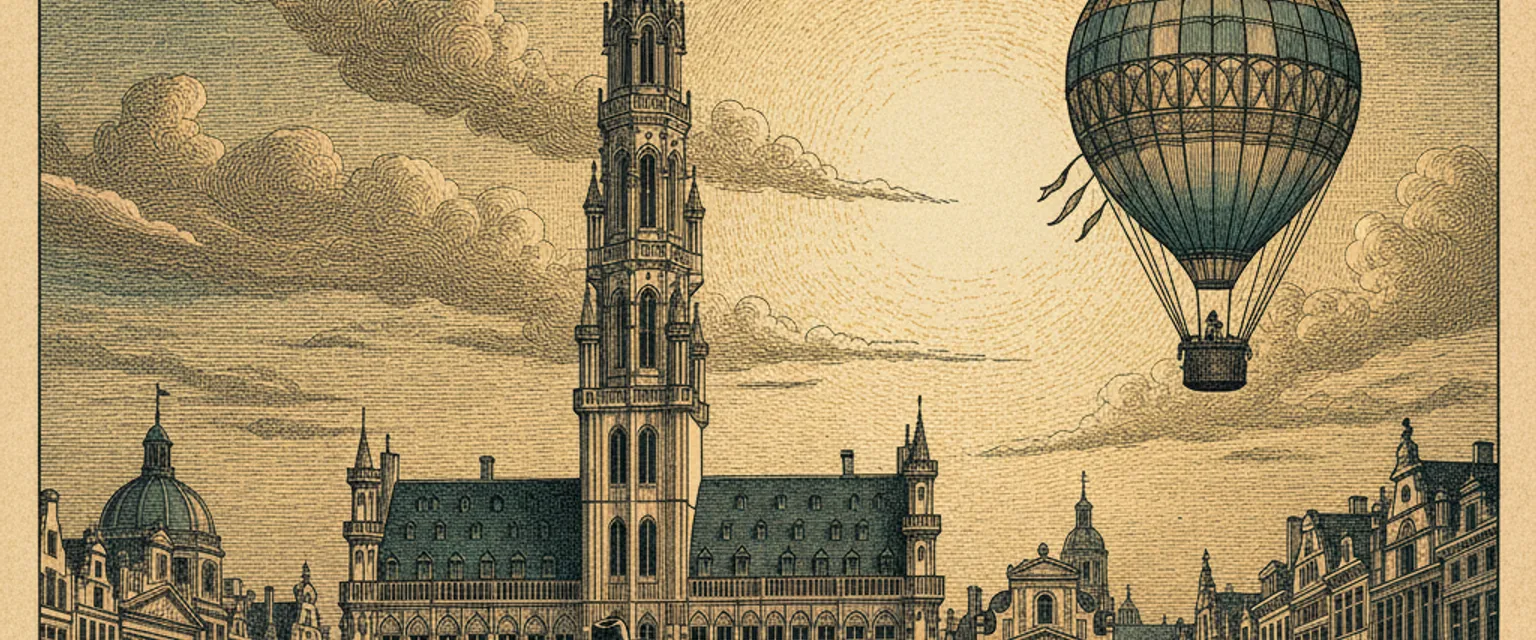
Everyone told me Brussels was boring. Then I turned a grey, unremarkable corner near the old stock exchange and walked straight into the Grand Place at dusk, the gilded guild houses catching the last light, and I actually said something rude out loud. That is Brussels in a sentence. It undersells itself ruthlessly, hides its best bits down nothing alleys, and then ambushes you with a square so beautiful Victor Hugo called it the most splendid in the world. The trick is simply to look harder than the city asks you to.
Two days nails the essentials. You orbit the jaw-dropping Grand Place, eat frites from a proper friterie, drink Belgian beer the way it should be drunk, and spend a couple of hours with Magritte's bowler hats. Brussels is compact, so a weekend genuinely delivers.
Stay near the Grand Place or Sainte-Catherine so you can walk everywhere and skip the patchy public transit at night.
Add a Bruges day trip
Day three is the classic move: a 60-minute train to Bruges, the impossibly pretty medieval town of canals and belfries. It is touristy and worth it anyway. Climb the belfry, eat moules, and be back in Brussels for dinner.
Art Nouveau, the EU quarter, and Ghent
Four days digs into what makes Brussels itself: the Art Nouveau houses of Victor Horta, the surprisingly engaging museums of the European Quarter, and a swap of Bruges for the grittier, livelier student city of Ghent. The city stops being a checklist and gets interesting.
All of Flanders and Wallonia from one base
A week lets Brussels be your base for the whole country. Add Antwerp's fashion and Rubens, the WWI memory of Flanders Fields, the comic-strip heritage that runs deep here, and enough beer cafes and chocolate counters to develop strong opinions. Belgium is small and brilliant for slow travel.
Estimated budget:$260-$520
Estimated budget:$390-$760
Estimated budget:$520-$1000
Estimated budget:$950-$1800
Day 1
The historic core
Grand Place, frites, and your first abbey beer
Grand Place
A UNESCO square of gilded baroque guild houses
The Grand Place is the reason to come, a tight square ringed by ornate 17th-century guild halls and the Gothic Town Hall, all gold leaf and stone filigree. It hits hardest at dawn or after dark when the crowds thin and the facades are lit. Stand in the middle and just turn slowly.
Friterie or Maison Antoine
Belgian frites, double-fried, in a paper cone
Belgians invented the chip and they take it seriously: twice-fried, crisp outside, fluffy in, served in a cone with a sauce that is not ketchup. Maison Antoine in Place Jourdan is the legend, but any busy friterie does the job. Get andalouse sauce and eat them standing up.
Delirium Cafe and Impasse
Famous for its thousands of beers, down a hidden alley
Tucked in the Impasse de la Fidelite, Delirium holds a Guinness record for its beer list, which is overwhelming in the best way. Skip the gimmicky main hall and find the quieter rooms or a nearby classic like A la Mort Subite. Order a Trappist and let the bartender steer you.
Day 2
Art, the Marolles, and the upper town
Magritte, antiques, and a panoramic view
Magritte Museum
The world's largest collection of the surrealist's work
Belgium's most famous artist gets a dedicated museum near the Royal Palace, tracing Rene Magritte from early ads to the bowler hats and clouded skies. It is compact, well curated, and genuinely fun rather than reverent. Buy a combined ticket if you also want the neighbouring Old Masters.
The Marolles and Place du Jeu de Balle
A working-class quarter with a daily flea market
The Marolles is old Brussels with the rough edges intact: a daily flea market on Place du Jeu de Balle, vintage shops, and bars where the local dialect still survives. Hunt for junk in the morning, then grab lunch at a corner cafe. It is the city's most characterful neighbourhood.
Mont des Arts
A terraced garden with the best free city view
Between the upper and lower towns, this elegant tiered garden frames a postcard view back over the rooftops to the Town Hall spire. It is a five-minute stop that ties the city's geography together. Lovely at sunset and right next to the main museums.
Day 3
Bruges day trip
Medieval canals an hour up the line
Bruges Belfry and Markt
A 13th-century tower over a perfect market square
Bruges is an hour by train and looks like a fairy tale survived intact. Climb the 366 steps of the Belfry for a view over the terracotta rooftops, then wander the Markt below. Yes it is full of tourists; it is also genuinely one of Europe's best-preserved medieval towns.
Bruges canals and Begijnhof
A boat through the canals and a hushed beguinage
Take a short canal boat to see Bruges from the water, then walk to the Begijnhof, a tranquil walled courtyard of white houses once home to lay religious women. Eat moules-frites or duck into a chocolatier on the way. Get the late-afternoon train so you dodge the day-tour crush.
Day 4
Art Nouveau and the EU quarter
Horta houses and a Ghent evening
Horta Museum
Victor Horta's own home, an Art Nouveau masterpiece
Brussels was the cradle of Art Nouveau, and architect Victor Horta's preserved house-studio is the best place to see it, all curving ironwork, stained glass, and a flooding glass roof. It is small and limits visitors, so book ahead. Then walk the Saint-Gilles streets to spot more facades for free.
Parc du Cinquantenaire
A triumphal arch and museums in the EU district
The grand park beside the European institutions is anchored by a 19th-century triumphal arch and houses solid art, history, and car museums. It is a green, monumental counterpoint to the glass EU buildings nearby. Climb the arch colonnade for a view if it is open.
Ghent
A lively student city of medieval towers, lit up at night
Half an hour by train, Ghent is Bruges with a pulse: the same medieval beauty along the Graslei waterfront, but a young, unpolished energy and great bars. The illuminated towers at night are stunning. Go for dinner and drinks and take a late train back, or stay over.
Day 5
Antwerp
Fashion, diamonds, and Rubens
Antwerpen-Centraal Station
Possibly the most beautiful train station in Europe
Antwerp is 45 minutes away and you arrive inside a cathedral-like railway station of marble and gilded domes, regularly voted the world's most beautiful. It sets the tone for a city that is Belgium's most stylish. Pause to gawk before you even leave the building.
Rubenshuis and old town
The painter's lavish home plus a great cathedral
Antwerp was home to Peter Paul Rubens, and his restored house gives a vivid sense of a Baroque celebrity's life and studio. Pair it with the Cathedral of Our Lady, which holds several of his altarpieces, and the fashion boutiques of the Het Zuid district. A rich, walkable day.
Day 6
Comics, chocolate, and Atomium
The quirky, modern, very Belgian side
Belgian Comic Strip Center
Tintin, the Smurfs, and a Horta-designed building
Comics are a serious art form here, the home of Tintin and the Smurfs, and this museum inside a former Horta department store celebrates the whole heritage. Even non-fans enjoy the building. Afterwards, hunt the giant comic murals painted across the city centre walls.
Atomium
A 102-metre model of an iron crystal from Expo 58
Built for the 1958 World's Fair, the Atomium is nine giant steel spheres you can ride between, with a panorama from the top one. It is delightfully retro-futurist and a quick metro ride north of the centre. Pair it with the nearby Mini-Europe park if you have time.
Day 7
Slow Brussels: chocolate and one last beer
Shop, taste, and say goodbye
Galeries Royales Saint-Hubert
Europe's oldest covered shopping arcade, from 1847
This glass-roofed arcade is a glorious place to do your serious chocolate shopping, with historic houses like Neuhaus and Mary lining the gallery. Buy a mixed box of pralines to take home and try a fresh one on the spot. Elegant, calm, and quintessentially Brussels.
Cantillon Brewery
A working family lambic brewery you can tour
Cantillon still brews tart, wild-fermented lambic and gueuze by hand in a creaky 1900s building, and the self-guided tour ends with a tasting of beers you cannot get anywhere else. It is a fitting, slightly funky farewell to Belgian beer culture. Cash helps, and check the opening days.
Brussels has an image problem, and it is mostly self-inflicted. The city is shorthand for grey EU bureaucracy and roadworks, and it does little to argue otherwise. So let me argue otherwise: this is one of the best food-and-drink cities in Europe, with a square that will stop you mid-sentence, a deep streak of surrealism and comic-strip whimsy, and a whole brilliant country reachable within an hour.
The key to enjoying Brussels is to come in with the right expectations. It is not a polished open-air museum like Bruges. It is a real, slightly scruffy capital that rewards the curious. The best things are often down an unpromising alley or behind a plain door, and the payoff is bigger because you had to find them.
How to use this plan
The plan nests, so you only see the days that fit your trip. Two days covers the core: the Grand Place, proper frites, a deep dive into Belgian beer, and an hour with Magritte. Three days adds the obligatory and genuinely lovely Bruges day trip. Four days swaps in the Art Nouveau houses of Victor Horta, the EU quarter, and the livelier student city of Ghent. A full week makes Brussels a base for Antwerp’s fashion and Rubens, the country’s comic-strip heritage, the Atomium, and a closing tour of a wild lambic brewery.
A few practical notes. Stay near the Grand Place or Sainte-Catherine and you can walk to almost everything; the centre is small. Belgium’s trains are cheap, frequent, and the secret weapon of any Brussels trip, so use them liberally for day trips. Spring and early autumn are ideal, and December brings a genuinely magical Christmas market. Above all, do not believe anyone who tells you Brussels is boring. They simply did not look hard enough.
This article contains affiliate links marked with rel="sponsored". We may earn a commission at no extra cost to you.