
[ GUIDE · THE DISPATCH ]
Where to Stay in Montreal: Plateau Charm vs. Old Port Cobblestones
The brochure wants you in Old Montreal. The metro map and your own two feet have a different opinion. Here's where to stay in Montreal if you care about actually walking places.
If you want the whole thing mapped out, see the our full Montreal itinerary, with maps.
Every first-timer wants to know where to stay in Montreal, and every search result shoves them toward Vieux-Montréal — the Old Port, the cobblestones, the horse-drawn carriages. And look, it’s pretty. Genuinely. But I’ve put friends up there and watched them come back on night two going “where is everyone, why is it so quiet, why did dinner cost what it did.” So let me save you that.
I’m going to compare the two bases people actually argue over — Old Montreal and the Plateau — using the only metrics that matter once you’ve landed: can you walk to good food, and will the metro betray you?

The fast version
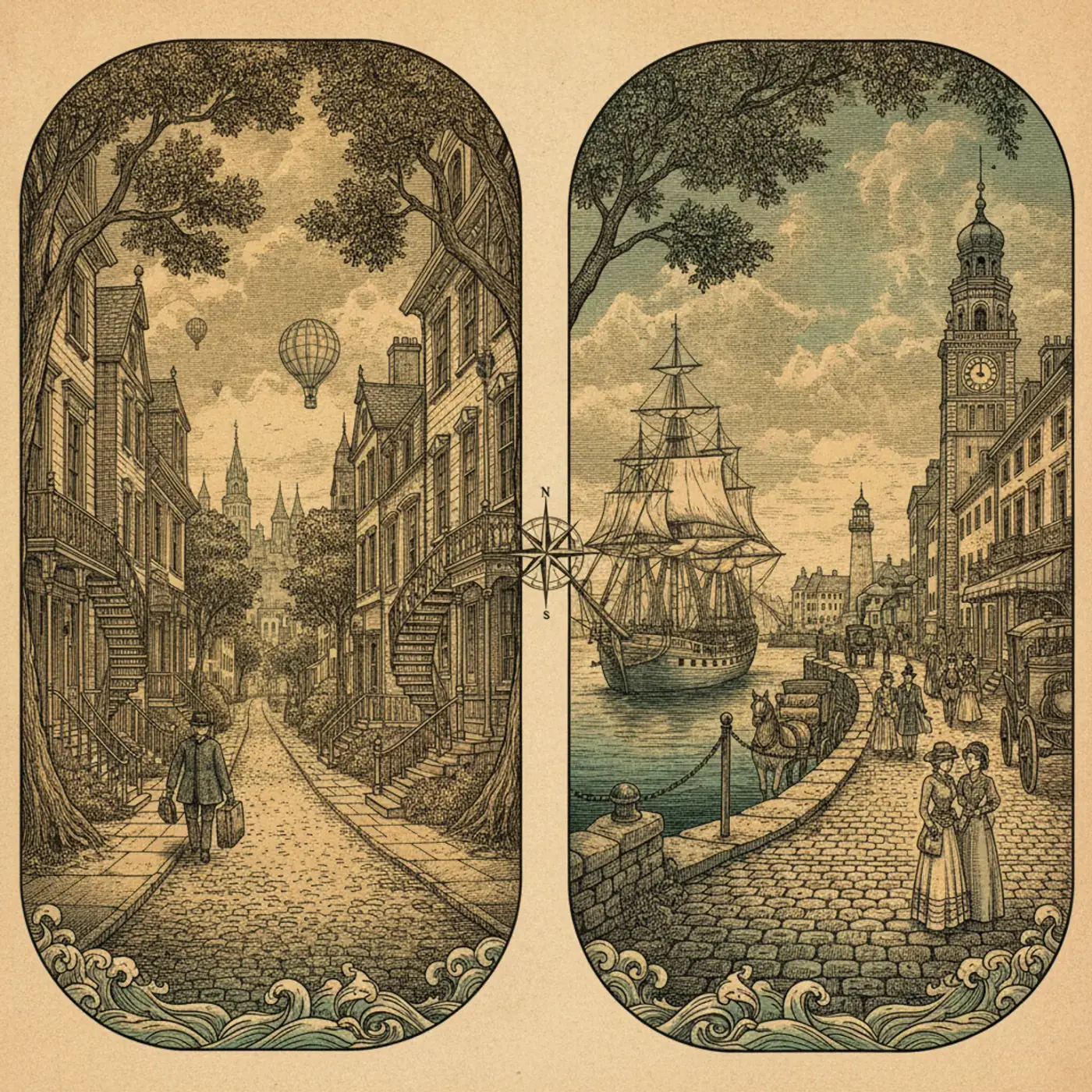
Old Montreal (Vieux-Montréal) is the historic riverside quarter — 17th-century stone, the Notre-Dame Basilica, boutique hotels in converted warehouses. It looks like a film set because it sort of is one. The Plateau-Mont-Royal is the leafy, low-rise residential heart a bit north — the spiral staircases, the murals, the cafés, the streets where Montrealers genuinely live and eat.
Old Montreal is for a romantic two nights and the postcard. The Plateau is for understanding why people love this city. If you only book one and you’re here three-plus nights, book the Plateau. There, I’ve said the quiet part.

Old Port / Old Montreal: the beautiful bubble
Here’s what’s true: the cobblestone lanes around Rue Saint-Paul and Place Jacques-Cartier are lovely, especially at dusk when the cafe lights come on and the river is right there. The boutique hotels — Hotel Nelligan, Hotel Gault, the Hotel William Gray with its rooftop — are genuinely special, the kind of stone-and-exposed-beam rooms you’d happily honeymoon in. Walking distance to the Basilica, the river path, the Bonsecours Market.
And here’s the catch. It’s a tourist quarter, which means restaurants priced for tourists, a thin local crowd, and a real dead-zone feeling outside summer. In winter — and Montreal winter is five months long, let’s be honest — the Old Port empties out. The charm calcifies into “why is nothing open.” You’ll also pay top dollar for the address.
Stay here if: you’ve got two or three nights, it’s a special trip, you want the romance and you’ll happily metro out for dinner. Skip it if you want nightlife, value, or the sense that you’re somewhere people live.

The Plateau: where I send everyone
The Plateau-Mont-Royal is the answer for most people and I’ll die on this hill. Tree-lined streets, those iconic exterior spiral staircases, murals on every other wall, and a density of good cheap food that the Old Port can’t touch. You’re walking distance to Mile End’s bagels and brunch, to the bars and bistros of Avenue du Mont-Royal and Rue Saint-Denis, to Parc La Fontaine for a morning run, to the whole pulse of the place.
Accommodation here skews toward apartments and small guesthouses rather than grand hotels — which suits the neighborhood. A one-bed apartment is generally better value than an Old Port boutique room, and you get a kitchen, which matters when there’s a 24-hour bagel place six minutes away (you’ll see).
The honest downsides: fewer big-name hotels, some streets get loud on weekend nights (a Saint-Denis-facing room near the bars is a mistake — ask for the back), and it’s a short metro hop or a 25-minute walk from the main downtown sights. None of that has ever bothered me. The walkability more than pays it back.
Stay here if: you want real Montreal, good food on foot, value, and a base for a longer stay. It’s also my pick for solo travellers — the streets feel lived-in and safe well into the night.
The downtown wildcard
Quick aside, because someone always asks. Downtown (around the Quartier des Spectacles and Rue Sainte-Catherine) is the practical, slightly soulless option — big chain hotels, the Underground City for January, on top of the metro, close to the bus terminal. It’s fine. It’s convenient. It’s where you stay if you’re here for a conference and one nice dinner. It is not where you stay to fall for the city.

Walkability and the metro, plainly
Montreal’s metro is clean, warm (a genuine winter blessing), and runs roughly 5:30 a.m. to past midnight. The Plateau isn’t directly on the metro spine the way downtown is — the closest stations are Mont-Royal and Sherbrooke on the Orange Line, a few blocks’ walk in. That walk is part of the appeal. But it means you want to base near one of those rather than deep in the residential grid if you’re metro-dependent.
From the airport, the 747 bus runs 24 hours to downtown (about C$11, exact change or an Opus card), and from downtown it’s one short metro hop to the Plateau’s edge. Don’t taxi from the airport unless you enjoy lighting C$45+ on fire.
A small thing that’s actually big: Montreal is properly walkable in the warm months and a snowy-but-doable kind of walkable in winter if you have real boots. Pick a base where your dinners are a walk, not a commute. That’s the whole game.

So, where?
If it’s a short romantic break and the postcard matters: a boutique room in Old Montreal for two or three nights, eyes open about the prices and the quiet. If it’s anything longer, or you want value, food, and the actual texture of the city: the Plateau, near Mont-Royal metro, back-facing room. Downtown only if convenience trumps character.
I’ve stayed in all three across different seasons. The Plateau is the one I keep going back to. It’s the version of Montreal that made me want to learn enough French to order properly. Alot of cities give you sights. This one gives you a neighborhood to belong to for a week.
Book the Plateau, get the back room, and let the city come to you on foot.
This article contains affiliate links marked rel="sponsored". We may earn a commission at no extra cost to you.