
[ GUIDE · THE DISPATCH ]
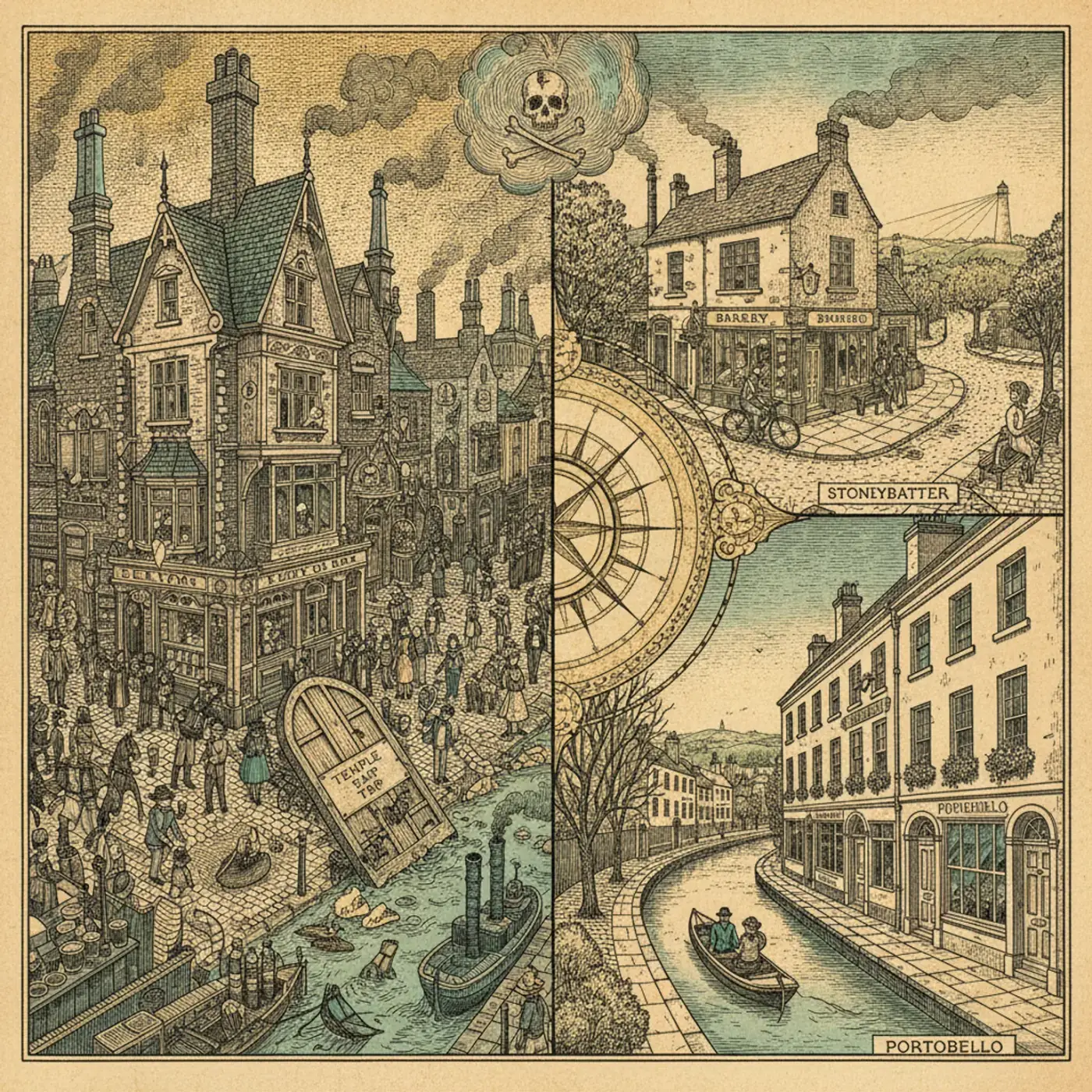
Where to Stay in Dublin: Temple Bar Trap vs. Stoneybatter & Portobello
Where to stay in Dublin without paying tourist-trap prices for a pint. I'll steer you out of Temple Bar and toward the neighbourhoods where locals actually drink, eat, and sleep.
If you want the whole thing mapped out, see the Dublin itinerary with an interactive map.
Where to stay in Dublin is a decision the city tries very hard to make for you, and it wants you to choose Temple Bar. Resist. I paid nine euro fifty for a pint of Guinness in a Temple Bar pub once while a man played “Galway Girl” for the fourth time that hour, and a five-minute walk away the same pint was six euro in a pub full of people who actually live here. That gap is the whole lesson.
Let me save you the nine-fifty.

Why not Temple Bar
Look, Temple Bar isn’t evil. The cobbled lanes are pretty, it’s central as anything, and you should walk through it. But staying there is a mistake. It’s the loudest part of the city — stag and hen parties, buskers, traffic of the human kind till the small hours — and everything inside its few blocks is priced for people who don’t know better. The pubs are theme-park versions of Irish pubs. The hotels charge a premium for the postcode and you pay it in lost sleep.
Stay near the centre, sure. Just not in the tourist-trap bullseye. The good news is Dublin is small and flat and walkable, so you can sleep somewhere with a soul and still reach everything in fifteen minutes.

Stoneybatter — the real northside
Stoneybatter, on the northside near the Phoenix Park, has had the inevitable “hippest neighbourhood” headlines and the inevitable backlash, but underneath the hype it’s just a genuinely lovely old working-class area that aged well. Low brick terraces, a proper local feel, and the kind of pubs you came to Ireland for.
Walsh’s on Stoneybatter is a perfect old-man pub that lets in everyone — sit, get a pint, talk to whoever’s beside you. L. Mulligan Grocer does excellent food and a serious whiskey list in a beautiful old shop space. For coffee, the area’s full of good independents now. And the Phoenix Park is right there — one of Europe’s biggest city parks, free, full of wild deer, perfect for shaking off a hangover.
You’re maybe a 20-minute walk or a short Luas tram into the centre. Rooms here run cheaper than the touristy core and you wake up in an actual neighbourhood.

Portobello and the canal — calm with character
If you’d rather be southside, Portobello is my pick. It sits along the Grand Canal just south of the centre, all redbrick and tree-lined, and it’s the quietly cool, slightly bohemian end of town. On a rare sunny Dublin day the canal banks fill up with people drinking cans and pretending it’s the Mediterranean, and it’s one of my favourite city scenes anywhere.
The food and drink here are great and unpretentious. The Bernard Shaw (it’s moved around, but wherever it lands it’s a good time), the little brunch spots, the curry houses and falafel joints — it’s got a younger, looser energy than the centre. You’re a ten-minute walk from St Stephen’s Green and the main sights, and a world away from the Temple Bar racket.
The first time I stayed in Portobello I got hopelessly distracted on the canal walk and missed a dinner reservation entirely. Worth it. There’s a particular gold light on that water around 8pm in summer that makes you forget you had plans.

The honest budget picture
Dublin is not a cheap city, full stop — it’s one of the pricier capitals in Europe for accommodation, and that surprises people. Expect a decent central hotel to start around €150–180 a night and climb fast, more during rugby weekends and big concerts (check if anything’s on at the Aviva or Croke Park before you book, prices spike brutally).
Staying in Stoneybatter or Portobello rather than the dead centre usually saves you a chunk and buys you a far better neighbourhood, with the only cost being a short walk or tram you won’t mind. If you’re really watching money, the area around Smithfield (near Stoneybatter) and parts of the northside near the centre have solid mid-range options.

One more option: the Georgian southside
If Stoneybatter feels too far-flung and Portobello too hip, the streets around St Stephen’s Green, Merrion Square, and Baggot Street give you elegant Georgian Dublin — the redbrick, the famous colourful doors, the fanlight windows — within a few minutes’ walk of Grafton Street and the main museums (the National Gallery, the Natural History “Dead Zoo”, the archaeology museum, most of them free and excellent). It’s the polished, grown-up part of the centre.
It’s not cheap, and it’s a touch sedate in the evenings, but it’s safe, central, and genuinely beautiful in a way the tourist core isn’t. Good pubs nearby too — Toner’s and Doheny & Nesbitt on Baggot Street are proper old Victorian boozers where civil servants and politicians have been drinking for a century. None of the Temple Bar nonsense, all of the atmosphere.
So where do you actually stay? If you want hip and real and a park on your doorstep, Stoneybatter. If you want canal-side calm and good brunch with the centre in walking distance, Portobello. And if some part of you still wants to be near the Temple Bar buzz — fine — book a quiet street a few minutes outside it, walk in for one overpriced pint and a singalong, then walk back out to where the pints are six euro and the locals are real.
Sleep where Dubliners actually drink, not where they sell the postcard — your wallet and your ears will both write me a thank-you note.
This article contains affiliate links marked rel="sponsored". We may earn a commission at no extra cost to you.