
[ GUIDE · THE DISPATCH ]
Where to Eat in Tbilisi: Khachapuri, Supra Feasts, and the Wine Nobody Warned You About
Georgian food will ruin other cuisines for you, gently. Here's where to eat in Tbilisi — the cheese-boat that defeats grown adults, the dumplings you eat wrong, and the amber wine that sneaks up like a friendly ghost.
Where to Eat in Tbilisi (and Why You’ll Think About It for Months)
I came to Georgia for the mountains and stayed an extra week for the bread. That’s the honest reason I can tell you where to eat in Tbilisi with any confidence — I ate my way through a worrying amount of it, took notes between food comas, and now I evangelize about a Caucasus country most of my friends couldn’t find on a map.
Here’s the thing nobody quite prepares you for: Georgian food is genuinely one of the great cuisines, and almost nobody outside the region knows it yet. Cheap, generous, deeply weird in the best way, and built around a feast-as-religion thing called the supra. Let’s eat.

Start with khachapuri (then show some restraint)
Khachapuri is cheese bread, technically. Calling it that is like calling a cathedral “a building.” There are regional types, but the one that’ll change you is the adjaruli — a boat of bread filled with molten sulguni cheese, with a raw egg and a knob of butter cracked into the middle, which you stir into a hot golden lava and tear bread into. It is absurd. It is wonderful. One of them is a meal for two.
For my money the best in town is at Retro on the riverside near the Dry Bridge, but honestly a slightly grubby neighborhood bakery doing them for 8-10 lari (about three dollars) will scratch the itch just as well at midnight. The mistake people make is ordering one each on day one. Don’t. You will not eat anything else, and you will lie down.

Khinkali — and how to not embarrass yourself
Khinkali are the big juicy soup dumplings, twisted into a thick doughy knot at the top. Here’s the etiquette, because Georgians notice: you pick one up by that knot with your fingers, bite a small hole in the side, slurp the broth out first (it’s scalding, careful), then eat the rest — and you leave the chewy top knot on your plate. Counting the knots is how the old-timers tally who ate the most. Never, ever stab one with a fork; the juice runs out and a babushka somewhere feels it.
Get them at Zakhar Zakharich or any spot with a queue of locals. Order the kalakuri (the spiced-meat city style) and a plate of mtsvadi — pork skewers grilled over grapevine cuttings — and you’re set.
The supra, and the wine that gets you
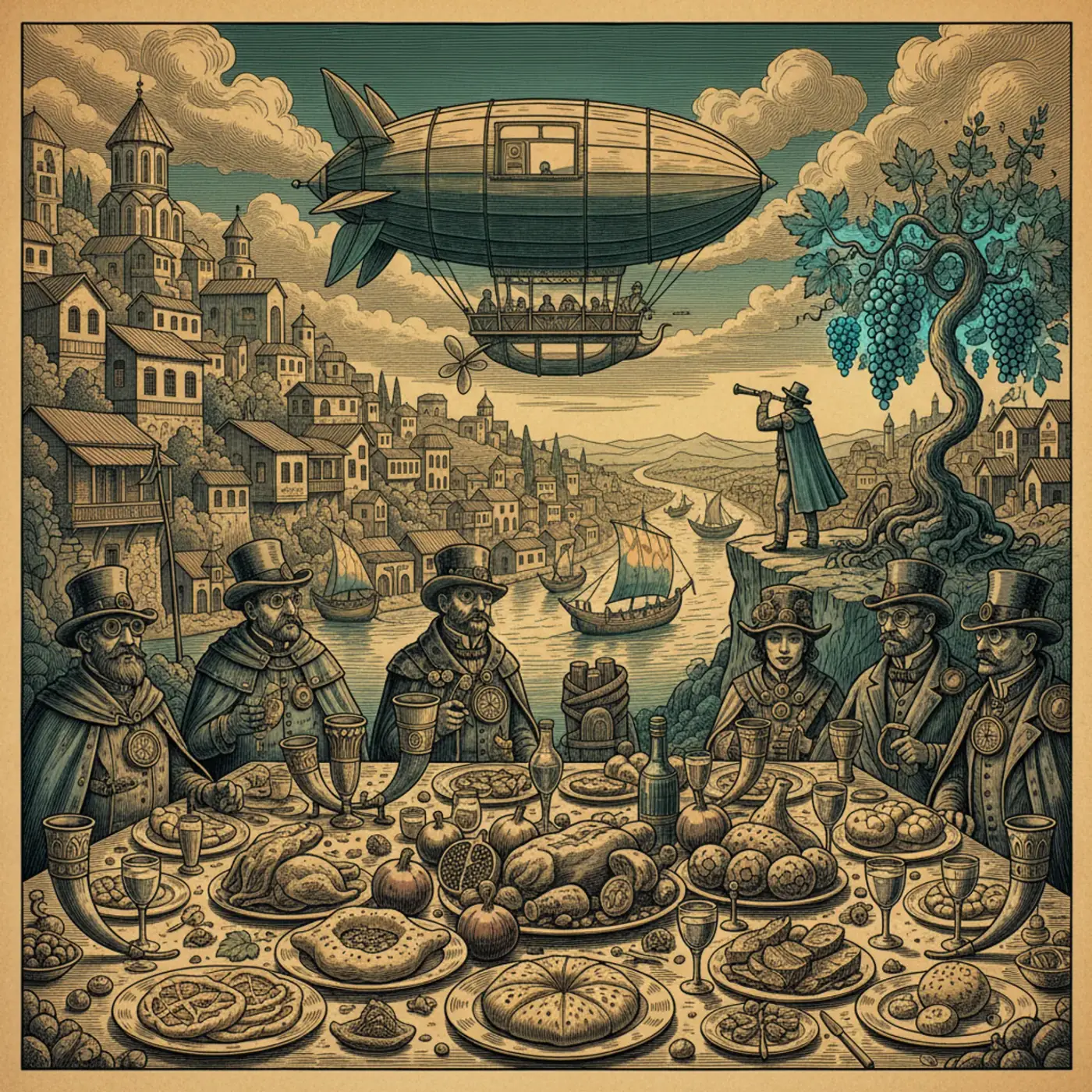
A supra is a Georgian feast, and if you get invited to a real one — say yes, cancel everything. There’s a toastmaster called a tamada who runs a series of long, heartfelt, slightly tipsy toasts, and the table groans with food the whole time. It is one of the warmest things I’ve ever sat down to.
But the wine. Oh, the wine. Georgia’s been making it for 8,000 years in clay vessels buried in the ground (qvevri), and the amber stuff — white grapes fermented on the skins — is dry, tannic, faintly orange-y, and it does NOT taste as strong as it is. It goes down like juice. It does not behave like juice. I learned this the hard way at a guesthouse table in the Kakheti countryside, where a man named Giorgi kept refilling my horn — an actual drinking horn, which you cannot put down until it’s empty — and the next morning is a smudge.
So pace yourself. When a toast comes, you can sip for the small ones and save the big gulps for the important toasts (to peace, to mothers, the heavy hitters). And eat constantly while you drink, which is sort of the whole point of a supra anyway.

Markets and the cheap genius stuff
Go to the Dezerter Bazaar near the train station in the morning. It’s a sprawling food market — mountains of spices, churchkhela (nuts dipped in grape-must, looking like wrinkly candles, weirdly delicious), pickled everything, fresh sulguni still squeaking. Even if you don’t cook, wander it. Buy churchkhela for the road, it lasts forever and it’s perfect hiking fuel.
And do not skip the lobiani (bean-stuffed bread) or a bowl of kharcho, a sour-spicy beef soup that’s the best thing going on a rainy day. Vegetarians, by the way, eat like royalty here — pkhali (veggie-and-walnut pâtés), badrijani (eggplant rolls with walnut paste), beans every which way. Georgian Orthodox fasting tradition basically invented great vegan food by accident.

What it all costs
Almost nothing, is the lovely answer. A blowout dinner for two with a bottle of natural wine runs maybe 80-120 lari — call it $30-45 total. A street khachapuri and a beer is pocket change. You can eat brilliantly here for less than a sad airport sandwich back home.
Anyway, go hungry, stay humble at the wine table, and learn to twist your khinkali knot. The food here doesn’t need any marketing. It just needs you to show up with an appetite and a little time.
Order the cheese boat, count your khinkali knots, and when Giorgi refills your horn — sip, don’t chug. Future you is begging.
This article contains affiliate links marked rel="sponsored". We may earn a commission at no extra cost to you.