
[ GUIDE · THE DISPATCH ]
Where to Eat in Mumbai: Vada Pav, Irani Cafés, and Mohammed Ali Road
From the dawn chai at a hundred-year-old Irani café to the kebab smoke of Mohammed Ali Road after dark, this is how to eat across Mumbai in one glorious, greasy, perfectly planned day.
Where to Eat in Mumbai: A Dawn-to-Midnight Street Food Plan
People ask me where to eat in Mumbai street food guide style, expecting a list of restaurants. Wrong question, slightly. Mumbai isn’t a city you eat in restaurants — it’s a city you eat on the move, on a kerb, out of a paper plate, with traffic six inches from your elbow. So here’s not a list but a day. One absurd, delicious day, dawn to midnight, mapped the way I actually do it.
A warning before we start: I once tried to “do Mumbai food” in a single afternoon and ended up horizontal in my hotel by 4pm, defeated. Pace yourself. The city is a marathon.

Dawn: an Irani café and the gentlest start
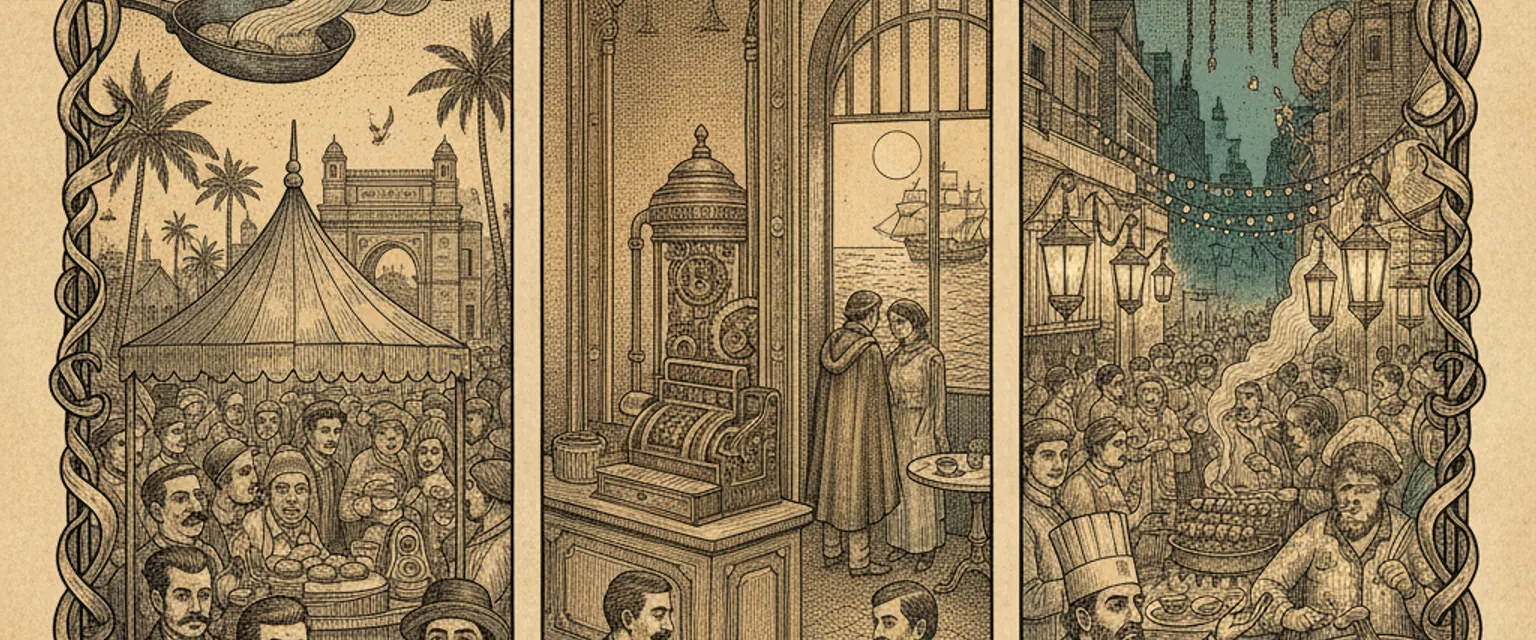
Begin where Mumbai has begun for over a century — an Irani café. These are the old Persian-run coffee houses, with their high ceilings, marble-top tables, bentwood chairs, and a beautiful air of faded grandeur. There aren’t many left and that’s exactly why you go.
Order chai — sweet, milky, strong — and bun maska, a soft bread roll slathered with butter that you dunk in the tea. Maybe a plate of keema (spiced mince) if you’re hungry. Sit. Read the rules on the wall (the old signs banning everything from spitting to “discussing politics” are half the charm). This is the slow, civilised opening before the city revs up.

Mid-morning: vada pav, the city’s true signature
Now the main event. Vada pav is Mumbai in a bun: a spiced, deep-fried potato dumpling jammed into a soft bread roll with chutneys — sweet, garlicky, and a green one that’ll wake you fully up. It costs almost nothing, maybe 15-25 rupees, and it is genuinely one of the great street snacks of the world. Locals call it the Bombay burger and they’re not far off.
Find a stall with a queue of office workers and rickshaw drivers. That’s your signal. The famous ones near the train stations — there’s a legendary stall outside one of the suburban stations that’s been frying since the seventies — do a brisk, no-nonsense trade. Ask for it with extra fried green chilli on the side if you’re brave. And get a cutting chai to wash it down.

Afternoon: the snack belt and a breather
After vada pav, ease off. Wander toward the chowpatty beaches in the evening for bhel puri and pani puri — the crunchy, tangy, water-bomb snacks that are best eaten where you can see them being assembled fresh. Sev puri, pav bhaji griddled in vast quantities of butter on a flat-top — this is the city’s snack religion. Eat lightly here, because the night is where it gets serious.
A word on the the water and the chutneys: at busy, popular stalls with high turnover you’re generally fine, and that’s where the locals eat for a reason. Carry small notes, because nobody has change for big ones, and trust the queue over the signboard.

Night: Mohammed Ali Road, the grand finale
As it gets dark, head to Mohammed Ali Road in the old Muslim quarter. By day it’s a wholesale street; by night it transforms into a wall of smoke, sizzle, and grilled meat that goes on for what feels like forever.
This is kebab and curry country. Seekh kebabs grilling on long skewers, baida roti (a sort of egg-stuffed fried bread parcel), nihari, biryani served from cauldrons the size of bathtubs. And during Ramadan — if your timing’s lucky — the whole street becomes the single greatest food crawl in India, with stalls staying open past midnight and the famous malpua and phirni for dessert. I’ve been once during Ramadan and i still dream about it.
Eat slowly, share plates, and don’t try to finish anything. The trick is many small things, not few big ones.
The rules that’ll save you
A few hard-won lessons. One: high turnover is your friend — a busy stall is a safe stall. Two: carry hand sanitiser and small cash, always. Three: pace it across a whole day with long gaps, or the heat and the richness will flatten you. Four: a scam to dodge — if a “guide” insists on walking you to a specific “famous” restaurant, he’s getting a commission and you’re getting the tourist price. Pick your own stall, the one the locals are queuing at.
Mumbai feeds you better, and cheaper, than almost anywhere on earth — but only if you eat on its terms, on the street, on the move.
Skip the fancy restaurant. Find the longest local queue, join it, and order whatever they’re ordering.
This article contains affiliate links marked rel="sponsored". We may earn a commission at no extra cost to you.