
[ GUIDE · THE DISPATCH ]
Where to Eat in Delhi: Old Delhi Street Food and Where Not to Get Sick
Where to eat in Delhi, honestly — including the hygiene part nobody writes about. A street-food map from Chandni Chowk to the South Delhi institutions, plus where butter chicken was actually born.
Where to eat in Delhi is a question with two answers running in parallel: where the best food is, and where the food won’t lay you flat for two days. I’m going to give you both, because the guides that pretend “Delhi belly” isn’t a thing are doing you no favours, and the ones that tell you to avoid all street food are robbing you of the entire point of the city.
I’ve eaten my way across Delhi over several trips and gotten sick exactly once — early on, from a fruit juice with ice, which I’ll come back to. Everything else I learned the safe way, by watching how Delhiites actually eat.

The one hygiene rule that matters
Forget the long lists. Here’s the rule: eat what’s cooked hot, fast, and in front of you, at the stall with the longest local queue. High turnover means fresh food and a vendor who can’t afford to poison his regulars. A samosa pulled from oil that’s bubbling right now, a paratha griddled to order, a kebab off live coals — these are safe, because heat is the great steriliser.
What gets people is the cold stuff and the water. Skip the cut fruit that’s been sitting out. Skip the ice (this is what got me — a fresh sugarcane juice, lovely, ruined by ice made from who-knows-what). Drink bottled or filtered water only, check the seal. Chutneys made with raw water are the silent culprit, so go easy on the watery ones at iffy stalls. Do that and you’ll be fine. Genuinely.

Chandni Chowk — the old city, hungry
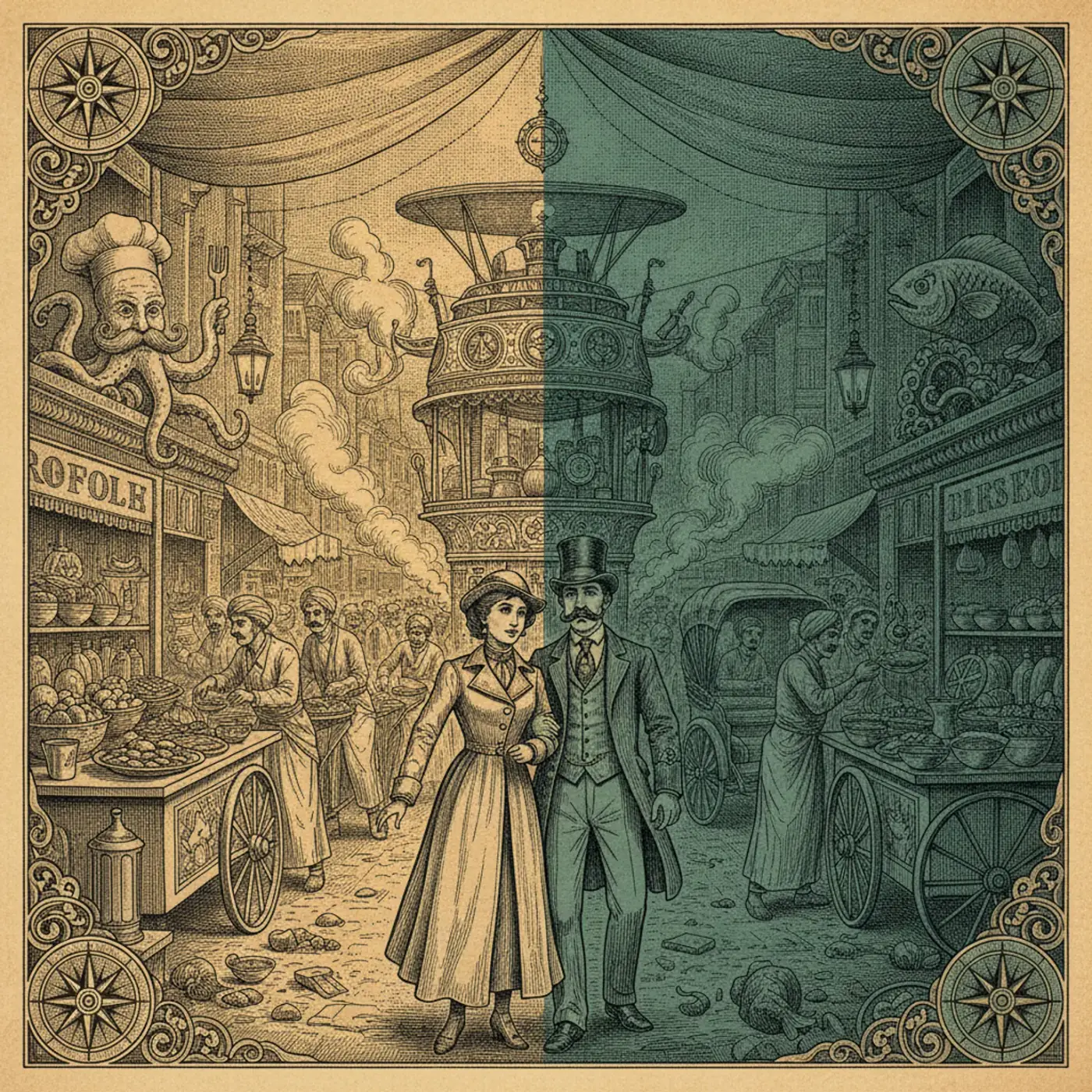
Old Delhi’s Chandni Chowk is the deep end and the best end. It’s chaos — rickshaws, wires overhead, narrow lanes, a wall of smell and sound — and it is the single greatest street-food district I’ve eaten in anywhere.
Start at Paranthe Wali Gali, the lane of stuffed-paratha shops that have been frying since the 1870s. Order a few — the classic potato, the wild ones stuffed with things like banana or cashew — eaten with pickle and a dollop of curd, maybe ₹80–120 a plate. Then Natraj for dahi bhalla and aloo tikki (lentil dumplings and potato patties in tangy yoghurt). For the legendary, ridiculous dessert, Jalebi Wala at the corner of Dariba Kalan — hot, syrup-soaked, deep-orange jalebis fried in ghee, an institution since 1884.
And the Karim’s near Jama Masjid for Mughlai meat — the mutton korma and the seekh kebabs are why people make the pilgrimage. It’s not street food exactly, it’s a warren of an old restaurant, but it belongs on any honest Delhi eating list.
Where butter chicken was born (and it’s real)
Here’s a food-origin story that actually checks out. Butter chicken — murgh makhani — was genuinely invented in Delhi, at Moti Mahal in Daryaganj, in the years after Partition. The story goes that the cooks didn’t want to waste leftover tandoori chicken that had dried out, so they simmered it in a gravy of tomato, butter, and cream to revive it. The same kitchen is also widely credited with dal makhani, that rich black-lentil dish. You can still eat at Moti Mahal, and while purists argue about which branch is the “real” one, eating butter chicken at its birthplace is a genuinely satisfying bit of food pilgrimage. Order it with garlic naan and don’t talk to me until you’ve finished.
South Delhi — the sit-down institutions
When you want air-con, a table, and a gentler introduction, head south. Khan Market and the surrounding areas have everything from old-school to modern. For the classic, beloved, slightly upscale-but-honest experience, the chains like Saravana Bhavan (South Indian, the dosas and idli are spotless and excellent and very safe if you’re easing in) are a reliable soft landing.
And don’t miss chaat done well — the sweet-sour-spicy-crunchy snack family. Golgappe (pani puri), papdi chaat, bhel — a good chaat counter is one of the great joys of Indian eating, just choose a busy, clean one and ask for the chutneys on the side if you’re being careful those first days.

A few more places, and a few more rules
Beyond the headline stops, a couple of things worth knowing. Connaught Place (CP), the colonial-era circle of colonnaded shops in the centre, has reliable mid-range restaurants and the famous Kake Da Hotel for hearty Punjabi food and Wenger’s bakery (since 1926) for patties and pastries. It’s a good, safe, central place to eat when you’re not feeling the deep-end street crawl.
For the full-on regional sampler under one roof, Dilli Haat (the INA branch) is a government-run craft-and-food market with stalls representing different Indian states — a clean, easy, slightly touristy way to try Naga, Kashmiri, or South Indian dishes you might not otherwise find, all in one go. Small entry fee, worth it.
And the drinks. A lassi — sweet or salted yoghurt drink — is the perfect foil to spice, just make sure it’s from a busy, clean spot (the famous lassi shops near Chandni Chowk are fine). Masala chai from a roadside stall is safe because it’s boiled to within an inch of its life, and at ₹10–20 a cup it’s the cheapest joy in the city. Nimbu pani (fresh lime water) is great too — just, again, hold the ice if you’re being careful. Are you sensing a theme? Heat good, ice bad. That’s basically the whole survival guide.
The first time I ate proper Old Delhi street food I was nervous to the point of silly, hovering at a paratha stall trying to spot germs. The vendor, a man with flour to his elbows, just handed me a hot one and said “eat, madam, it is fresh.” It was perfect. I’d been overthinking the the whole thing.
Eat hot, eat where the locals queue, skip the ice, and let Old Delhi feed you the way it’s fed people for a hundred and fifty years — your stomach will keep up, I promise.
This article contains affiliate links marked rel="sponsored". We may earn a commission at no extra cost to you.