
[ GUIDE · THE DISPATCH ]
Where to Eat in Lyon: Bouchons, Quenelles, and France's Real Food Capital
Where to eat in Lyon, the city the French quietly agree is their food capital. How to tell a real bouchon from the fakes, what to order beyond the clichés, and where I'd send my hungriest friend.
If you want the whole thing mapped out, see the how to spend 3 perfect days in Lyon.
Where to eat in Lyon is, if you ask any French person who isn’t from Paris, the same as asking where to eat in France. Lyon is the food capital and Lyon knows it and Lyon will not let you forget it. I came here expecting a smaller, quieter Paris and left with my belt loosened two notches and a new understanding of what butter is for.
But there’s a catch, and it’s the same catch as everywhere now: the famous thing has been counterfeited. So let’s get you into a real bouchon and out of the tourist version.

How to spot a real bouchon
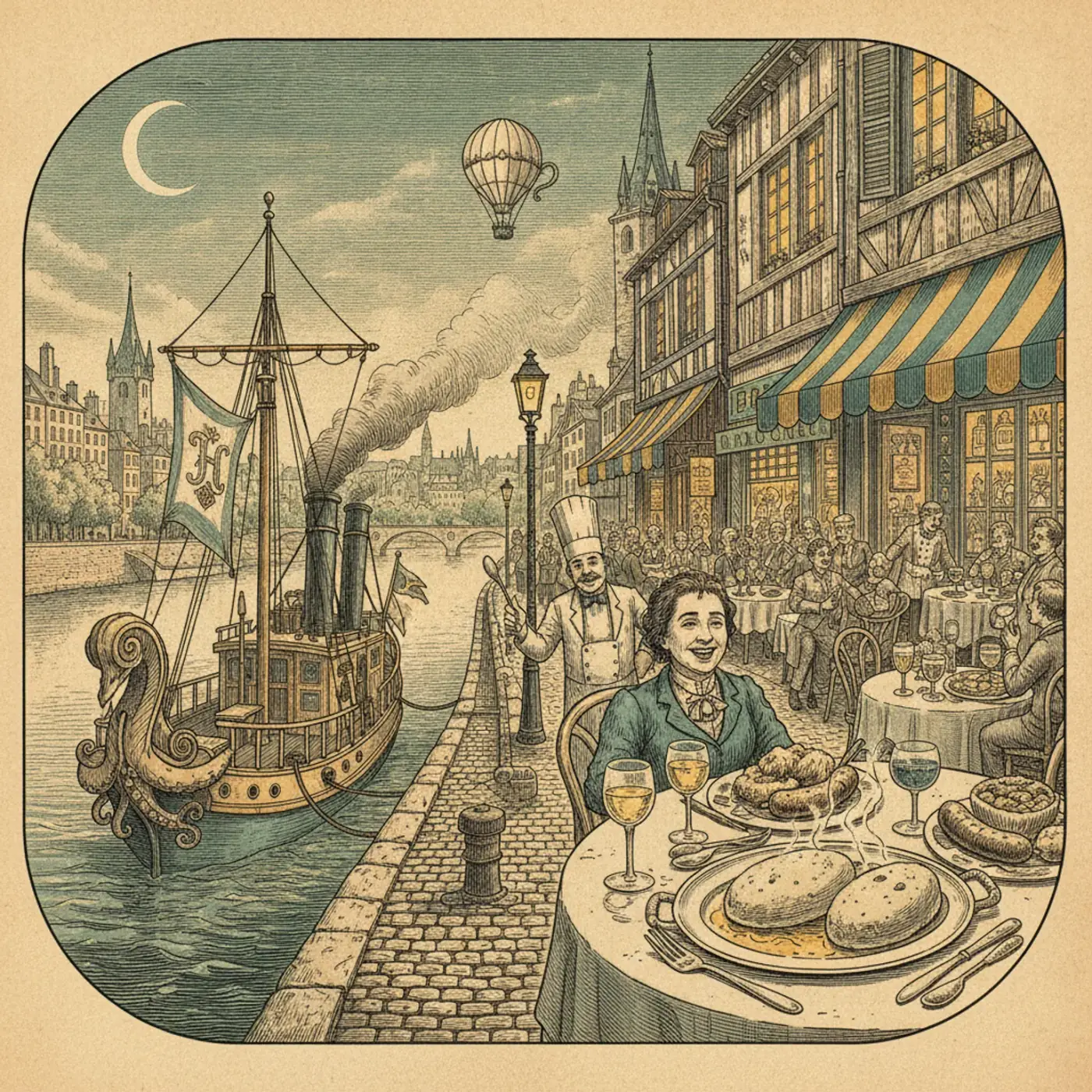
A bouchon is the traditional Lyonnais tavern — small, packed, red-checked cloths, the kind of place where the cooking is rich, porky, generous, and entirely uninterested in your cholesterol. The problem is that “bouchon” sells, so half the places near the cathedral slap the word on the awning and serve you frozen quenelle with a tourist smile.
Here’s how I tell them apart. A genuine one usually carries the “Authentique Bouchon Lyonnais” certification — there’s an official association, look for their little plaque or sticker. The menu is short, often handwritten or on a chalkboard, and it changes. The owner is probably also serving. There’s no laminated photo menu in six languages. And critically, locals are eating there, often regulars greeted by name.
Daniel et Denise (a few locations) is the reliable, certified, genuinely excellent option — their pâté en croûte won a world championship and tastes like it. Café des Fédérations and Le Garet in the Presqu’île are the old-school institutions, the kind where you’ll sit elbow to elbow and the waiter will gently bully you into ordering more.

What to actually order
Everyone orders the quenelle — a poached dumpling of pike (brochet) and semolina, usually drowned in a creamy crayfish sauce (sauce Nantua), and a good one is light and rich at once, a bad one is a wet pillow. Order it. But don’t stop there.
Be a little brave. Andouillette is the famous one that divides the room — a coarse tripe sausage with a powerful, funky, unmistakable barnyard kick. I love it. Many don’t. If that’s a bridge too far, get tablier de sapeur, breaded fried tripe that’s far gentler and genuinely delicious. Saucisson brioché, sausage baked in brioche, is a perfect, crowd-pleasing starter. And the salads — a salade lyonnaise with a poached egg, lardons, and frisée is a thing of beauty.
For dessert, the tarte aux pralines, that shocking-pink almond-praline tart, looks like a cartoon and tastes incredible. You’ll see it in every bakery window. Get a slice.
Les Halles — graze, don’t sit
Les Halles de Lyon-Paul Bocuse is the covered market named for the city’s legendary chef, and it is a temple of cheese, charcuterie, oysters, pastry, and praline everything. Here’s my honest take: it’s a fantastic place to wander, taste, and shop, and a slightly disappointing place to sit down for a full meal — the sit-down counters are good but pricey and you’re better off eating your real dinner in a bouchon. Come mid-morning, taste cheese from the Mère Richard stall (their Saint-Marcellin is legendary), buy a few things, and treat it as a delicious pre-lunch.

Where I’d send you, neighbourhood by neighbourhood
Vieux Lyon (the old town) is gorgeous and worth wandering for the traboules, the secret covered passageways between buildings, but eat just outside the main tourist drag, not on it. Presqu’île, the peninsula between the two rivers, is the centre of gravity for serious bouchons and good shops. And Croix-Rousse, the old silk-weavers’ hill to the north, is where the locals live and the cool, more modern bistrots have opened — climb up there for the views, the village feel, and a younger, looser food scene.

Beyond the bouchon: where Lyon eats now
Lyon isn’t only old-school. It’s also a serious modern food city, partly because so many great chefs trained in Paul Bocuse’s orbit and stayed. If you want to spend properly, the city has a genuine fine-dining scene, but you don’t have to — the bistrot wave has given you places doing inventive, market-driven cooking at fair prices. Ask around Croix-Rousse and the 6th arrondissement for the spot of the moment; they turn over fast and the locals always know.
Don’t miss the wine, either. Lyon sits between Beaujolais to the north and the northern Rhône (Côte-Rôtie, Condrieu) to the south, so the house pours in any decent bouchon are usually excellent and cheap — a pot lyonnais (a 46cl bottle with a thick glass base, the traditional measure) of Beaujolais for a few euro is the correct accompaniment to everything porky.
And for a sweet, cheap, very Lyonnais snack on the move, grab a bugne in winter (a fried, sugar-dusted carnival pastry) or a slice of that pink praline tart any time of year, and eat it walking along the Saône. Few cities reward aimless eating like this one does.
I had my best Lyon meal not in a famous place but in a tiny Croix-Rousse spot a waiter named Thierry pointed me toward after I admitted I was overwhelmed. Six tables. No English menu. A pork dish I couldn’t name and a glass of Côtes du Rhône and a tarte that nearly made me emotional. That’s the Lyon you’re hunting. It hides in plain sight on the un-pretty streets.
Eat where the menu is handwritten and the locals are regulars, be brave with the tripe at least once, and let Lyon settle the France-food-capital argument with one quenelle.
This article contains affiliate links marked rel="sponsored". We may earn a commission at no extra cost to you.