
[ GUIDE · THE DISPATCH ]
Where to Eat in Hong Kong: Dai Pai Dong, Dim Sum, and Cha Chaan Teng
A where-to-eat Hong Kong food guide built on three institutions: smoky dai pai dong, proper dim sum, and the gloriously cheap cha chaan teng. Real names, prices, and the times to go.
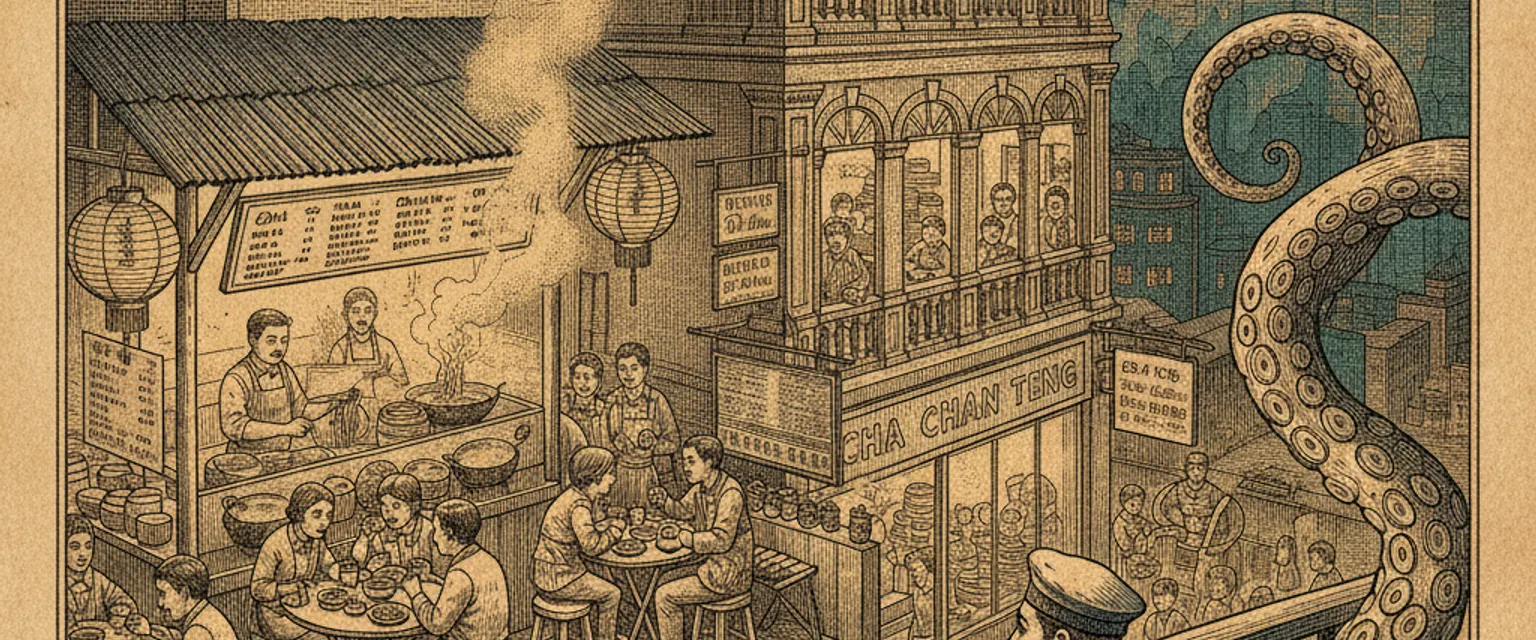
If you want to know where to eat in Hong Kong, here’s the only food guide framework I trust: three institutions, one day, in roughly this order. Dim sum in the morning, cha chaan teng whenever you’re flagging, and dai pai dong once the sun’s gone and the woks come out screaming. Get those three right and you’ve eaten the actual city, not the airport-lounge version of it.
I lived off these for two weeks once and I’d do it again tomorrow. Let me walk you through them.
Dai pai dong: the loud, smoky, best one
These are the open-air stalls — green tin sheds, red plastic stools, a wok the size of a satellite dish throwing flames a foot high. There used to be hundreds. The city licensed most of them out of existence, so the ones left feel a bit like survivors, which honestly makes the food taste better.
The thing you’re chasing here is wok hei — that charred, smoky “breath of the wok” you genuinely cannot get on a home stove. Order beef chow fun and watch whether the noodles come out with proper sear marks. If they’re pale and limp, you picked wrong. Move on.
Where I’d point you: the cluster up on Stanley Street in Central, around dinner. Sing Heung Yuen does a tomato-and-egg instant noodle thing that sounds insane and is, somehow, perfect at 9pm. And clay-pot rice — bo jai fan — is the move when it gets cooler. The rice at the bottom goes crispy and slightly burnt and you scrape it up like treasure. A clay pot runs maybe HK$60-90. Bring cash. They will look at your card like you’ve handed them a leaf.

Dim sum: a morning sport, not a brunch
Here’s where people go wrong. They treat dim sum like a leisurely Sunday brunch. It is not. The real ones are loud, fast, and over by lunch. You want to be in the door before 11, ideally with a newspaper and zero plans.
Go to a trolley place if you can still find one. The carts rattle past, lids come off, steam everywhere, and you just point. Har gow (shrimp dumplings), siu mai, cheung fun (those slippery rice rolls with soy), and a basket of char siu bao if you’ve any sense. The bill gets stamped on a little card at your table and you have no idea how it adds up until the end. It’s part of the fun.
Lin Heung Tea House was the classic — chaotic, share-your-table, slightly hostile in the best way. Worth chasing whatever’s carrying that torch now. And tea matters: when you want a refill, leave the lid ajar on the pot. Don’t wave. Don’t shout. Just tilt the lid and someone appears. It’s the most elegant thing in a room that is otherwise pure mayhem.
Cost? You can eat genuinely well for HK$120-150 a head. Cheaper than the sad sandwich you’d buy back home.
Cha chaan teng: the everyday genius
And this is the one tourists skip, which is a crime. The cha chaan teng is the Hong Kong diner — fluorescent lights, laminated menus, a guy who takes your order without writing anything down and never gets it wrong. It’s where the city actually eats, three times a day.
Get the yuenyeung — coffee mixed with milk tea, which sounds wrong and is genius. The milk tea itself is strong enough to wake the dead, strained through a cloth sock until it’s silky. Order a pineapple bun (no pineapple, just a sweet crackly top) with a cold slab of butter wedged inside while it’s warm. That’s a bo lo yau. I think about it more than I’d like to admit.
For something bigger: macaroni in soup with ham for breakfast (don’t argue, just eat it), or baked pork chop rice that comes out volcanic. The whole meal, maybe HK$50. You’ll be in and out in twenty minutes because the turnover is ferocious and they want your seat. Don’t take it personally. Thats just the rhythm.
One I’ll always remember — a tiny place in Sham Shui Po, no English at all, where the auntie running it saw me squinting at the wall menu and just brought me what she thought I needed. Pork chop rice and a yuenyeung. She was right. She’s always right.
How to actually do it
Don’t overthink the where. The neighborhood matters less than the timing. Dim sum before 11. Cha chaan teng to patch the gaps. Dai pai dong after dark, when the heat drops and the woks roar. Walk a lot in between — Hong Kong is dense and vertical and you’ll burn it all off climbing some hill you didn’t expect.
And cash. I’ll say it a third time because you won’t believe me until you’re standing there. The best meals of your trip will be at places that don’t take cards, don’t speak much English, and don’t care that you found them on a list. That’s the whole point.
Eat where the queue is locals, not luggage. Every single time.
Skip the fancy harbour-view restaurant. Your best meal in Hong Kong will cost you eight dollars and a bit of nerve.
This article contains affiliate links marked rel="sponsored". We may earn a commission at no extra cost to you.