
[ ITINERARY · THE DISPATCH ]
Two Days in Nikko: Lavish Shrines, Waterfalls, and Cedar Forests North of Tokyo
A Nikko 2 day itinerary that pairs Japan's most over-the-top shrine with a quiet mountain lake. Carved monkeys, a 97-metre waterfall, and cedar roads older than your country.
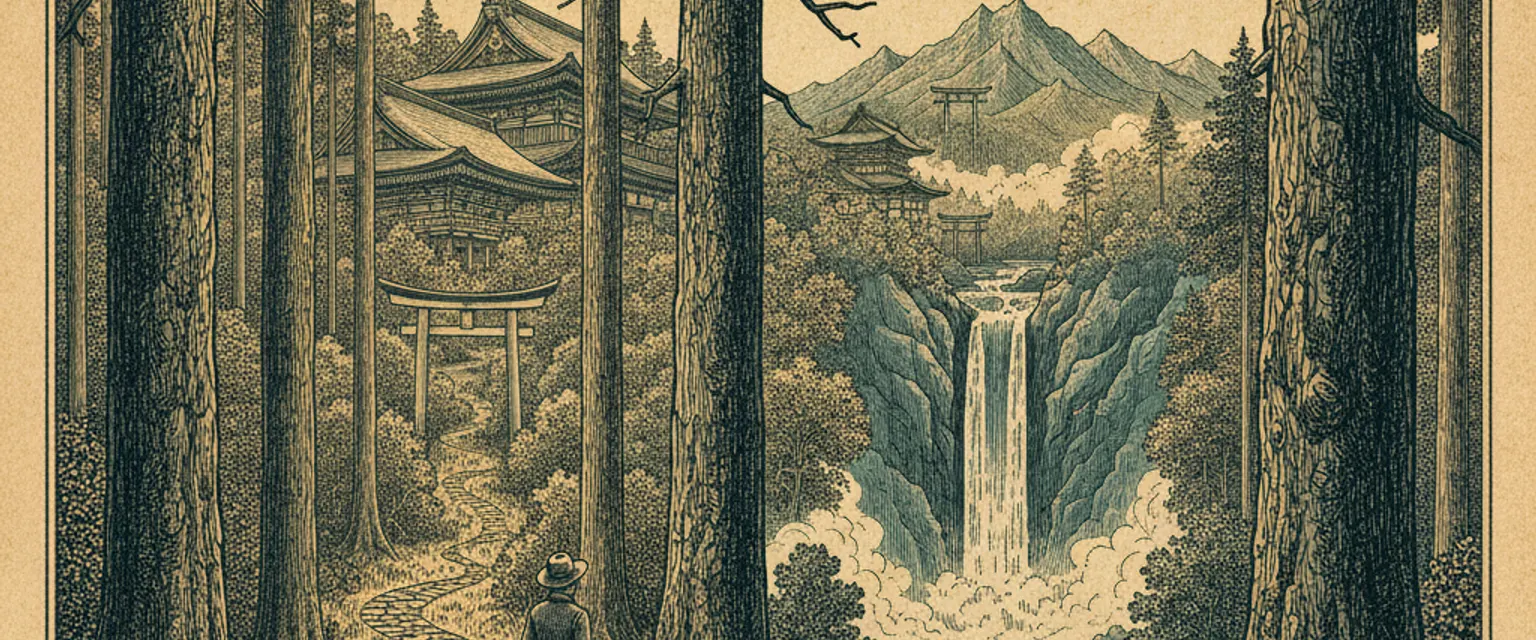
There’s an old saying in Japan: never say “splendid” until you’ve seen Nikko. And once you stand under the Yomeimon gate at Tosho-gu — every inch of it carved, painted, gilded, swarming with dragons and sages and gold leaf — you get the boast. A solid Nikko 2 day itinerary leans into the contrast, because Nikko is two places: the most extravagant shrine in the country, and then, an hour uphill, a still mountain lake and a waterfall that’ll quiet you right down.
What stuck with me, oddly, wasn’t the gold. It was the cedars. Some of these trees were planted as a memorial avenue four hundred years ago, and walking the old road between them in the morning mist felt like stepping into something much older and stranger than the shrines they lead to.
Day 1: The Shrines and the Sleeping Cat
Get to Tosho-gu early. I mean it — it’s the mausoleum of Tokugawa Ieyasu, the shogun who unified Japan, and it is the single most decorated building complex you’ll see anywhere in the country. By 10am the school groups and tour buses arrive and the narrow staircases jam up. Go at opening and you get the carvings almost to yourself in the soft light.
The detail is genuinely overwhelming. On the sacred stable there’s the original “see no evil, hear no evil, speak no evil” monkeys, carved in the 1600s — yes, those monkeys, this is where they’re from. Tucked above another doorway is the tiny Nemuri-neko, the sleeping cat, so famous it’s basically Nikko’s mascot. People crowd under it craning up; it’s about the size of a hand and you’ll walk past it if you’re not looking.
Climb the stone steps behind the main hall up through the cedars to Ieyasu’s actual tomb — quieter up there, fewer people make the effort, and the forest closes in around you.
The two shrines and temple next door — Futarasan and Rinno-ji — are part of the same UNESCO complex and worth the combined ticket. Don’t skip the giant gold Buddhas in Rinno-ji’s main hall; they’re huge and most people rush past on their way to the famous gate.
Eat yuba for lunch — tofu skin, a Nikko speciality tied to the temple’s vegetarian tradition. It comes a dozen ways: rolled, in broth, fried. Sounds dull, isn’t. There are little yuba places all along the main street up toward the shrines.
Day 2: Up to the Lake and the Falls
Today you go up. The bus to Lake Chuzenji climbs the Irohazaka, a road of 48 hairpin bends (one for each character in the old Japanese syllabary — they actually labelled the curves with them). It’s a wild, twisting ride and if you’re prone to motion sickness, sit near the front and look ahead. Worth it.
At the top, the air’s cooler and thinner and the whole mood shifts. Lake Chuzenji sits in an old volcanic basin, ringed by mountains, and in autumn the slopes go absolutely insane with red and gold. I went in early summer and it was green and calm and almost empty, which suited me fine.
The headline act is Kegon Falls, where the lake spills 97 metres straight down a cliff in a single thundering drop. There’s a free viewing platform up top, but pay the small fee for the elevator that takes you down to a deck at the base — standing level with the bottom of the falls, spray on your face, the roar of it filling your whole head, is a completely different experience. Do the elevator. Don’t be cheap about it like the guy ahead of me who turned back at the ticket window and clearly regretted it.
If you’ve got time and legs, the easy walk along the lakeshore from the falls toward Ryuzu Falls (the “dragon’s head” cascade) runs through quiet woods and past smaller, prettier waterfalls that nobody photographs. I had it almost to myself and it was the highlight of the day, weirdly. Sometimes the small unranked thing beats the famous one.
Head back down the hairpins in late afternoon. The light coming through the cedars on the lower road is gorgeous, all green and gold and dappled, and. it’s a good way to end.
Two days, and Nikko gave me both ends of Japan — the wildly ornate and the deeply quiet, the gold-leaf gate and the cold mountain lake. The shrines are the reason everyone comes. The cedars and the falls are the reason I’d go back. Don’t be the person who does only the shrine and trains home by lunch; you’d be skipping half of what makes the place.
See the gate, find the sleeping cat, ride the 48 bends — and take the elevator down to the bottom of the falls. Trust me.
This article contains affiliate links marked rel="sponsored". We may earn a commission at no extra cost to you.