
[ ITINERARY · THE DISPATCH ]
Two Days in Montevideo: Steak, Mate, and Uruguay's Easygoing Capital
Two days in Montevideo, the South American capital that refuses to hurry: the Rambla at dusk, a port market full of wood-fire grills, and a thermos of mate that never leaves anyone's arm. Here's how I'd spend a slow, delicious weekend.
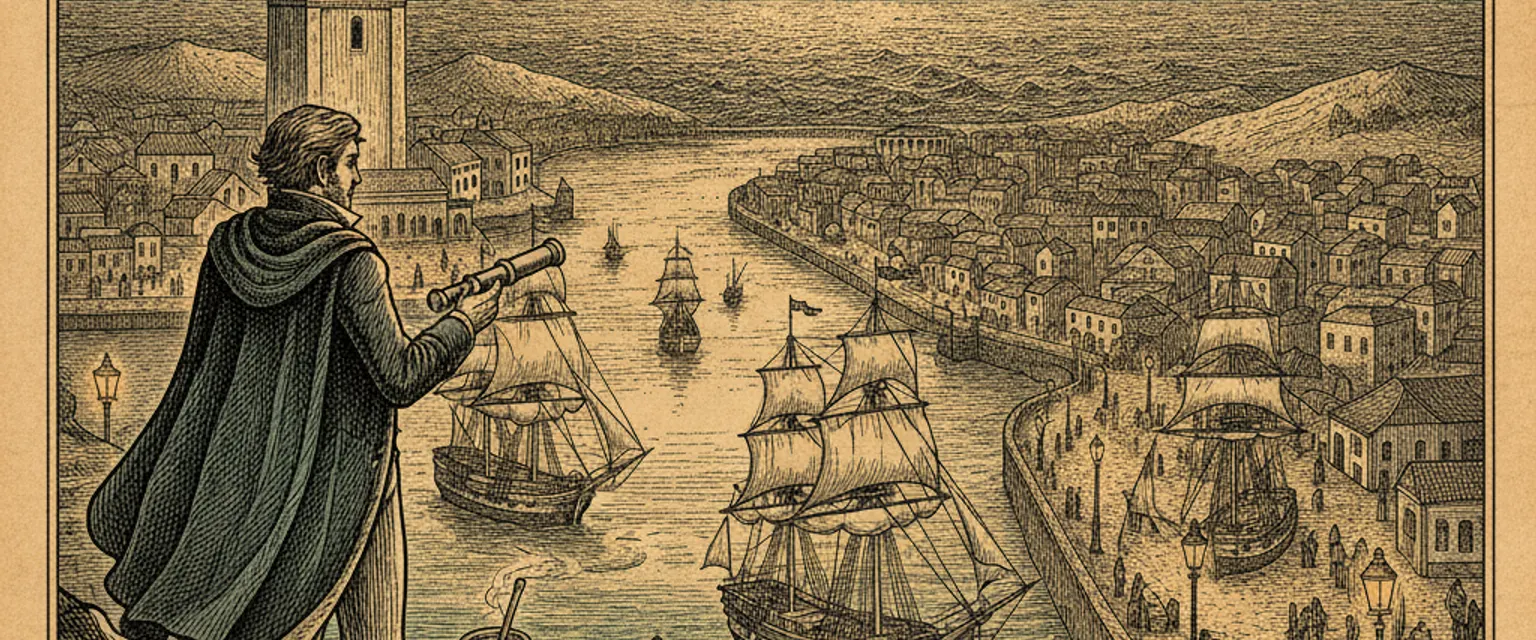
I planned my 2 days in Montevideo around eating, walking, and not much else, and honestly it’s the only itinerary this city wants you to have. The first thing I noticed, stepping off the ferry from Buenos Aires, was how quiet it was. Not empty. Just… unhurried. People walked slower. Everyone, and I mean everyone, had a thermos tucked under one arm and a gourd of mate in the other hand, sipping as they went like it was a second heartbeat.
A guy at the port — Diego, sold me a SIM card and then spent ten minutes telling me where NOT to eat — said something that stuck with me. “Acá no corremos.” Here, we don’t run. He was right. So don’t fight it.
Day 1: The Rambla, Ciudad Vieja, and that first asado
Start in Ciudad Vieja, the old town, before the heat sets in. It’s a grid of crumbling-grand buildings, some restored and gleaming, some held together by what looks like optimism. Plaza Matriz, the cathedral, the Teatro Solís if it’s open. But the real reason you’re here is Mercado del Puerto, and you want to arrive hungry around 1 p.m.
This place is a barn of a building packed with parrillas — open wood-fire grills — and the smoke hits you before you’re even through the door. Grab a stool at one of the counters (Estancia del Puerto is my pick, but they’re all good and you genuinely can’t go wrong). Order a chivito if you want the sandwich that defines Uruguayan eating — steak, ham, cheese, egg, the works, a heart attack with a side of fries — or just point at whatever’s on the grill. The asado here is exceptional. Argentina gets the headlines but I think Uruguayans quietly do beef better, and I will die on this hill.
Then walk it off on the Rambla. This is the thing to understand about Montevideo: the Rambla is the whole city’s front porch. It’s a 20-something-kilometre waterfront promenade along the River Plate, and at dusk it fills up — runners, families, couples, old men playing cards, fishermen, teenagers, dogs. Everybody with mate. Walk from Ciudad Vieja toward Pocitos beach as the light goes orange. You don’t need a plan. You just need shoes.
The river, by the way, is so wide it looks like the sea, and the sunsets do this slow purple thing that I wasn’t ready for the first time. I sat on the wall near Punta Carretas for maybe an hour. Just sat there. It was great.
Day 2: Markets, mate, and the neighborhoods
If your second day lands on a Sunday — try to make it land on a Sunday — head to the Tristán Narvaja flea market. It spills out across blocks: antiques, books, vinyl, live chickens (yes), gaucho knives, junk, treasure, more junk. I bought a dented mate gourd from a man who insisted on showing me, in detail, how to cure it properly. I had no idea what he was saying for about half of it. Bought it anyway.
Spend the rest of the morning in Pocitos or Punta Carretas — the leafy, well-off residential neighborhoods where regular Montevideo actually lives. Coffee in a corner café, a wander, maybe the small beach. There’s no big-ticket monument you’re obligated to see here and that’s sort of the point. The city is the attraction.
For lunch, skip the touristy spots and find a parrillada de barrio — a neighborhood grill. I ended up at one near the Mercado Agrícola (which is also worth a poke around for cheese, dulce de leche, and fresh produce) where the bill for a mountain of grilled meat, salad, and a glass of tannat came to about $18. Tannat, by the way, is Uruguay’s signature red — big, bold, a bit rough around the edges. Drink it. It suits the place.
In the late afternoon, go back to the Rambla. I know, I know, I already sent you there. Do it again. It’s different in different light and you’ll have earned it. End the day with dinner in Pocitos — there’s a clutch of good restaurants near the beach — or, if you’ve still got room (you won’t, but), one last chivito.
Getting around and a few honest notes
Montevideo is flat, walkable, and small for a capital. You can get most places on foot or with a cheap bus ride; taxis and apps work fine too. Two days is genuinely enough to feel like you know the place a little, which is rare.
Is it a “wow” city? Not in the postcard sense. There’s no Eiffel Tower moment. What it has instead is a mood — calm, friendly, deeply un-flashy — and a food scene that punches way, way above its weight. I came for one night on a Buenos Aires side trip and stayed three because I couldn’t make myself leave the Rambla.
| Thing | Where | Cost approx. |
|---|---|---|
| Asado lunch | Mercado del Puerto | $15–25 |
| Chivito sandwich | Anywhere, honestly | $8–12 |
| Tannat by the glass | Neighborhood grills | $3–5 |
| Tristán Narvaja market | Cordón (Sundays) | Free to browse |
| Mate gourd + bombilla | Flea market | $5–15 |

FAQ
Is two days enough for Montevideo? For the city itself, yes — it’s compact and low-key, and two days lets you do the Rambla, Ciudad Vieja, the markets, and eat very well. If you want to add Punta del Este or the beach towns, you’ll need more.
Is it safe? Mostly very. Ciudad Vieja can feel sketchy after dark in the quieter blocks, so keep your wits at night, but in daylight and on the busy Rambla it’s about as relaxed as capitals get.
Best day to visit? Sunday, for the Tristán Narvaja market and the slowed-down, everybody-out-walking energy. Just know some restaurants close.
You will leave craving mate and slightly suspicious of every steak you eat back home — and that, I’d say, is the trip working exactly as intended.
This article contains affiliate links marked rel="sponsored". We may earn a commission at no extra cost to you.