
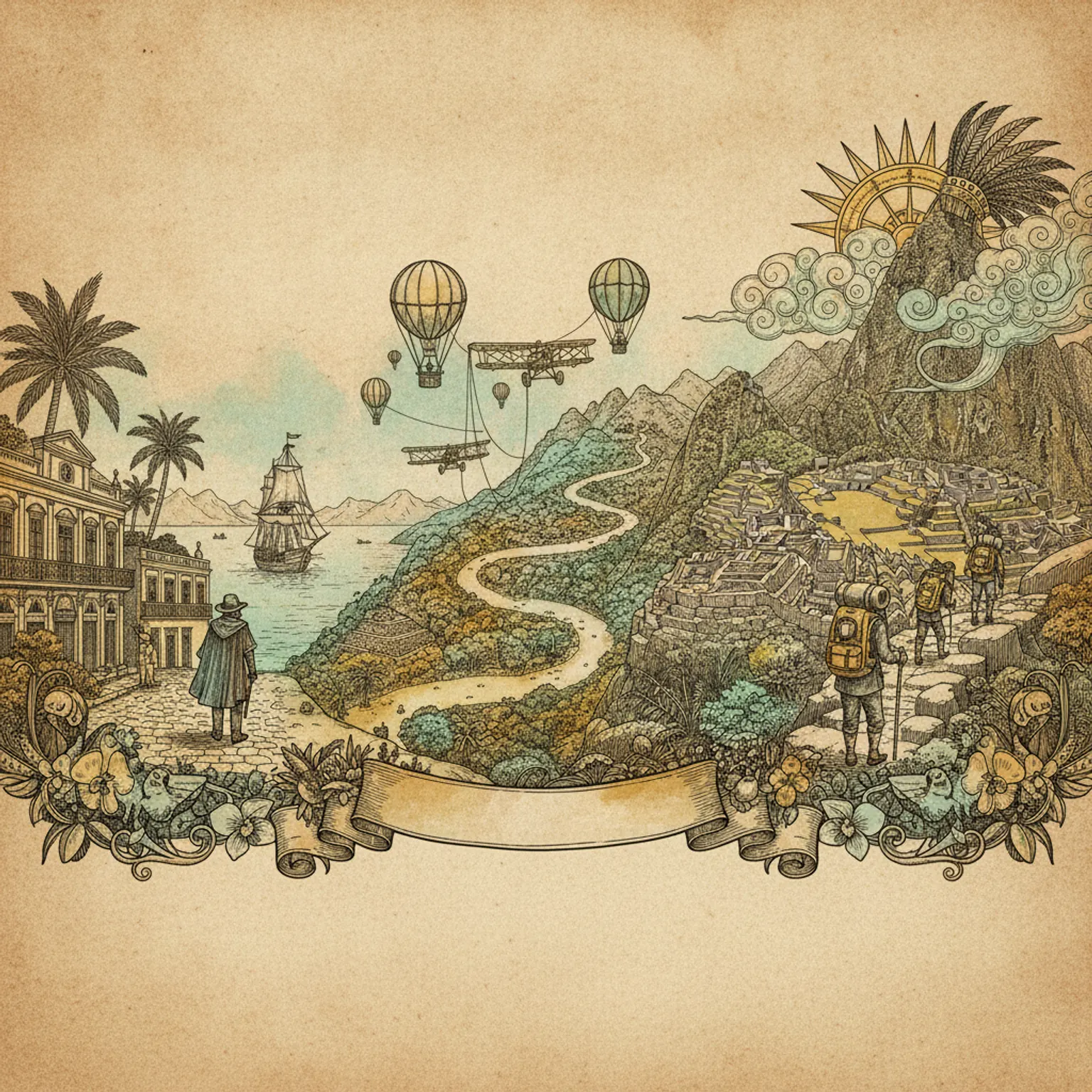
[ ITINERARY · THE DISPATCH ]
Seven Days in Peru: Lima to Machu Picchu Without a Tour Group
Peru in seven days, done independently: ceviche in Lima's Miraflores, altitude training in Cusco, and one sunrise at Machu Picchu that will become the story you tell at every dinner party forever.
I arrived in Lima on a red-eye and went directly to eat ceviche for breakfast, because it was 9 a.m. and that seemed like the right call. The woman at the counter looked at me with the expression of someone dealing with the tenth jet-lagged tourist of the morning, set down a bowl of the best fish I’ve ever tasted, and handed me a glass of leche de tigre — the citrus-chilli liquid left in the bottom of the ceviche bowl — without being asked.
“This fixes everything,” she said.
She was right. Seven days in Peru will do this to you: fix everything, scramble your altitude tolerance, and leave you with a story about Machu Picchu that you will repeat at dinner parties until your friends politely ask you to stop.
Days 1–2: Lima
Lima surprises people who’ve written it off as a transit city. Miraflores and Barranco are two of the best coastal neighbourhoods in South America — cliffs above the Pacific, a culinary scene that genuinely deserves the word “world-class,” and an energy that’s nothing like the chaotic gateway city people expect.
Day 1: The Larco Museum in Pueblo Libre houses pre-Columbian gold, textiles, and ceramics across an 18th-century colonial mansion — the most beautiful museum context in Peru. Afternoon: Huaca Pucllana, an adobe pyramid rising from the middle of Miraflores, completely incongruous and completely magnificent.
Dinner: Central (book months ahead, worth every hoop) or Maido for Nikkei (Japanese-Peruvian fusion) or La Mar in Miraflores for the best lunch ceviche in the country at a completely reasonable price.
Day 2: Slow morning in Barranco — the bohemian neighbourhood with murals, the Bridge of Sighs, and half a dozen small galleries. Afternoon: the Circuito Mágico del Agua water park (yes, really — it’s extraordinary after dark) or more food exploration. Evening flight to Cusco.
Days 3–4: Cusco Acclimatisation (This Is Not Optional)
Cusco sits at 3,400 metres and altitude sickness is not a myth it tells to hypochondriacs. Fly in, check into your accommodation, drink coca tea, and do not attempt strenuous activity on Day 3. Walk slowly. Drink water. Take altitude medication if your doctor recommends it. Your body will argue with Peru’s geography for exactly 36 hours and then mostly stop.
Day 3: Slow walk around Plaza de Armas, into Qorikancha (the Inca Temple of the Sun, then a Spanish cathedral, now both simultaneously), and the San Blas neighbourhood for ceramics workshops and the best views over Cusco’s terracotta rooftops.
Day 4: Sacsayhuamán — the Inca fortress above Cusco with stone blocks so perfectly fitted that a piece of paper cannot be slid between them. Archaeologists still argue about how they got there. Walk down through the Inca terraces back into town. Dinner at Cicciolina for the best risotto in the Andes (this sounds absurd; it is true).
Day 5: Sacred Valley
Hire a private driver (around $60–80 for the day from Cusco) or join a Sacred Valley tour for the most flexible itinerary: Pisac market in the morning for textiles and ceramics at considerably lower prices than Cusco, the Pisac Inca ruins above the market (the agricultural terraces are extraordinary), and Ollantaytambo in the afternoon — a living Inca town where people still live within the original street grid and the fortress ruins look genuinely unfinished, as if the Spanish arrived on a Tuesday and everyone just stopped mid-construction.
Sleep in Ollantaytambo to catch the morning train to Aguas Calientes.
Days 6–7: Machu Picchu
The train from Ollantaytambo to Aguas Calientes (1.5 hours) is scenic and pleasant. Book ahead via Peru Rail or Inca Rail. From Aguas Calientes, buses run to the ruins from 5:30 a.m. — take the first one.
Day 6: Machu Picchu at sunrise. The site opens at 6 a.m. and the first hour, before most of the day visitors arrive, is extraordinary — mist in the valleys below, llamas on the terraces, the whole ruined city emerging from cloud. Hire a guide at the entrance (around $20) for 2 hours of context that transforms the site from “impressive pile of rocks” to “extraordinary feat of imperial urban planning.” Afternoon: soak in the thermal baths in Aguas Calientes. Evening back by train.
Day 7: Return to Lima for your flight home, or extend with a flight to the Amazon basin (Iquitos) or Lake Titicaca (Puno) if you have more time.
Peru logistics at a glance
| Leg | How to get there | Time | Cost approx. |
|---|---|---|---|
| Lima → Cusco | Domestic flight | 1.5 hrs | $60–120 |
| Cusco → Ollantaytambo | Private taxi / bus | 1.5–2 hrs | $15–60 |
| Ollantaytambo → Aguas Calientes | Train | 1.5 hrs | $35–80 each way |
| Aguas Calientes → Machu Picchu | Bus | 25 min | $24 return |
| Machu Picchu entry | Must book online | — | $50–60 per slot |
FAQ
Do I need a tour group for Machu Picchu? No — entry tickets are now time-slotted and sold online (book at least 3 weeks ahead in peak season), and you can hire a guide independently at the entrance. A tour group handles logistics but removes flexibility. Independent travel is completely feasible.
Is altitude sickness guaranteed? Not guaranteed, but common above 3,000 metres. Mild symptoms — headache, fatigue, slight nausea — affect most visitors in the first day or two. Serious HACE/HAPE is rare but requires immediate descent. Diamox (acetazolamide) is available by prescription and genuinely helps; ask your doctor before the trip.
What’s the best time to visit Peru? May–October is the dry season and the most popular time — clear skies for Machu Picchu, ideal hiking conditions, but also peak prices and Inca Trail crowds. November–April is wetter but greener, cheaper, and notably less congested.
This article contains affiliate links marked rel="sponsored". We may earn a commission at no extra cost to you.