
[ ITINERARY · THE DISPATCH ]
Two Days in Hiroshima: Peace Park, Oysters, and the Floating Torii at Miyajima
A Hiroshima 2 day itinerary that gives the Peace Park the weight it deserves, then sends you off to oysters, okonomiyaki, and the floating torii at Miyajima.
I will be honest with you. I almost didn’t write this Hiroshima 2 day itinerary, because for a long time I couldn’t work out how you’re supposed to talk about a city like this without sounding either glib or like a school textbook. And then I went, and I got it. Hiroshima isn’t a memorial you visit. It’s a living, ordinary, slightly cheeky city that happens to carry the heaviest morning in human history, and somehow it does both at once.
So here’s two days. Give the hard part the time it needs. Then let the city feed you.
Day 1: The Peace Park, and Then the Rest of the City
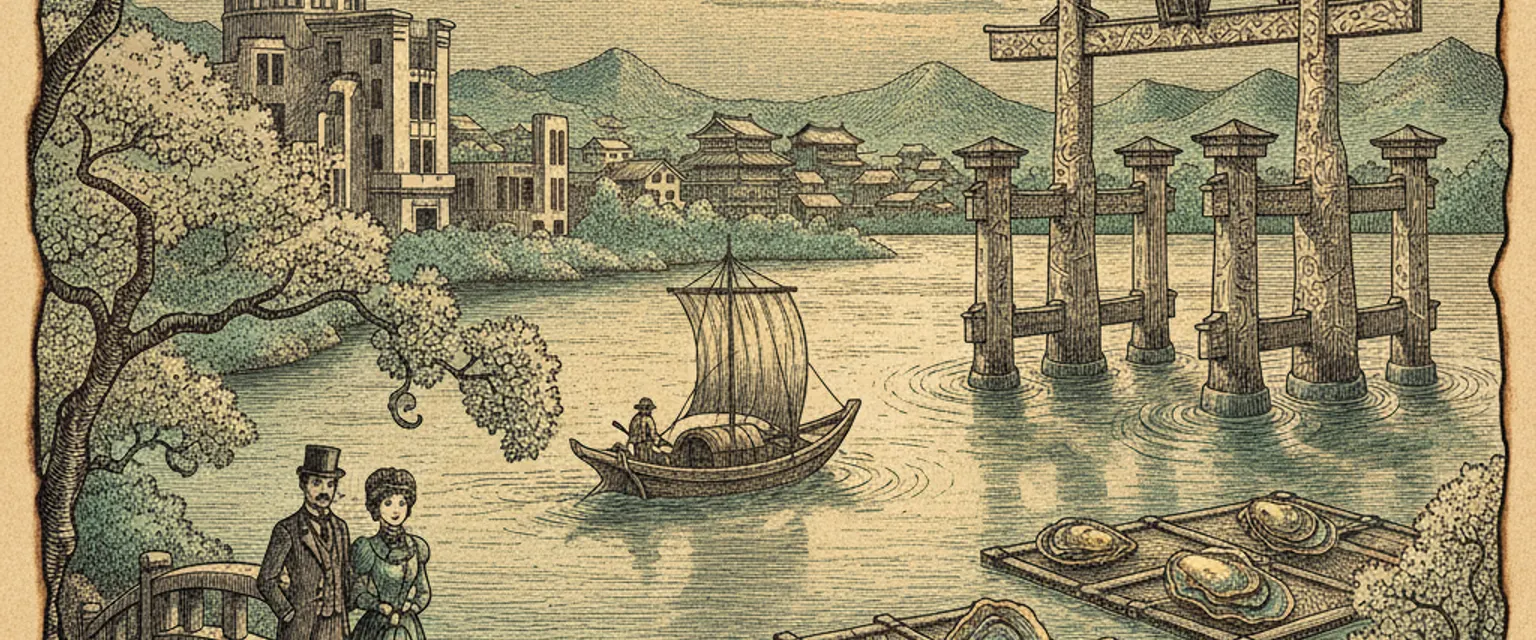
Go to the Peace Memorial Park first thing, while it’s quiet and the light is low. Start at the A-Bomb Dome — the skeletal building left standing almost directly under the blast, deliberately never rebuilt. You walk up to it expecting to feel something on cue and instead you just go very, very still. I did, anyway.
Then the Peace Memorial Museum. It is hard. It is meant to be. Give it two hours and don’t rush the personal objects — a child’s tricycle, a wristwatch stopped at 8:15. The the museum doesn’t lecture you. It just shows you, and lets you do the rest. Outside, ring the Peace Bell yourself; you’re allowed, and you should.
When you come out, you’ll want food and air. Good. That’s the point.
Lunch is okonomiyaki, and not the Osaka kind. Hiroshima layers it — batter, then a small mountain of cabbage, then noodles, then egg, pressed down on the griddle into something glorious. Skip the famous tourist tower and go to Okonomimura, a building stacked with tiny stalls, or better, find a counter spot where you eat it straight off the hotplate with a little metal spatula. Around 1,000 yen. Get the one with oyster on top if it’s winter.
Afternoon, walk it off at Shukkeien Garden, a 400-year-old strolling garden with a pond full of fat koi and a bridge that photographs itself. Then Hiroshima Castle, a faithful reconstruction (the original was lost in 1945, like everything else here), with a quiet little museum inside and a view from the top.
Dinner: oysters again, because this is one of the great oyster regions of Japan and you’d be daft not to. Grilled, fried as kaki furai, in a hot pot. The waters off here grow them fat.

Day 2: Miyajima, the Floating Torii, and a Temple Most People Skip
Take the streetcar or train to Miyajimaguchi, then the ferry across. Get the JR ferry if you’ve got a pass; it swings closer to the torii on the way over for the photo. The crossing’s only ten minutes and the island appears out of the haze like a green hump in the sea.
The floating torii — that giant vermillion gate of Itsukushima Shrine — is the shot everyone comes for, and yes, it earns it. But here’s the thing nobody tells you: it changes completely with the tide. At high tide it floats, gate standing in the water. At low tide you can walk right out across the mud to its feet and touch the barnacles. Both are worth seeing, so check the tide chart before you go and aim to catch the turn if you can.
The deer will mug you. They’re tame, bold, and one absolutely tried to eat my ferry ticket out of my hand. Keep food and paper in your bag, not your pocket. And don’t feed them, you’ll just make it worse for the next person.
Lunch on the island is grilled oysters from a stall (about 500 yen for two big ones, smoky and dripping) and anago-meshi, sea eel over rice, which is the local specialty and far better than the unagi you get elsewhere. The maple-leaf cakes, momiji manju, are everywhere — get them hot off the press, not the boxed ones.
Now the bit most day-trippers miss because they’re chasing the last ferry. Walk up to Daisho-in, the mountain temple above the shrine. It’s a climb of mossy steps lined with hundreds of little jizo statues, some in knitted red hats, and prayer wheels you spin on the way up. Quiet, weird, beautiful. Hardly anyone’s there. If you’ve got the legs and a few hours, the ropeway and the hike up Mount Misen behind it gives you the whole Inland Sea spread out below.
Where to Stay and How to Get Around
Base yourself near Hiroshima Station or the central Hondori shopping arcade. The streetcar (the Hiroden) is the way to move around town — old, rattly, charming, and a flat 240 yen a ride for most trips. It’s slow but you see the city, and frankly after the museum you won’t want to rush anyway.
Two days is honestly the right amount. One full day for the park and the city, one for Miyajima. Add a third only if you want to slow Miyajima down to a full sleepover, which… actually, do that. Stay the night on the island once the crowds go. I wish I had.
Hiroshima will surprise you. You arrive braced for grief and you leave full of oysters, slightly in love with a rattly tram, and oddly hopeful. That contrast is the whole point of the place.
Is two days enough for Hiroshima? Yes — one day for the Peace Park and the city, one for Miyajima. But if you can steal a third, sleep on Miyajima and watch the torii after dark with nobody else around. That’s the memory.
This article contains affiliate links marked rel="sponsored". We may earn a commission at no extra cost to you.