
[ ITINERARY · THE DISPATCH ]
Three Days in Tunis: A Medina, Mosaics, and Carthage Next Door
An honest 3 days in Tunis itinerary: the UNESCO medina, the world's best mosaics at the Bardo, blue-and-white Sidi Bou Said, and Carthage ruins. Real prices and timing.
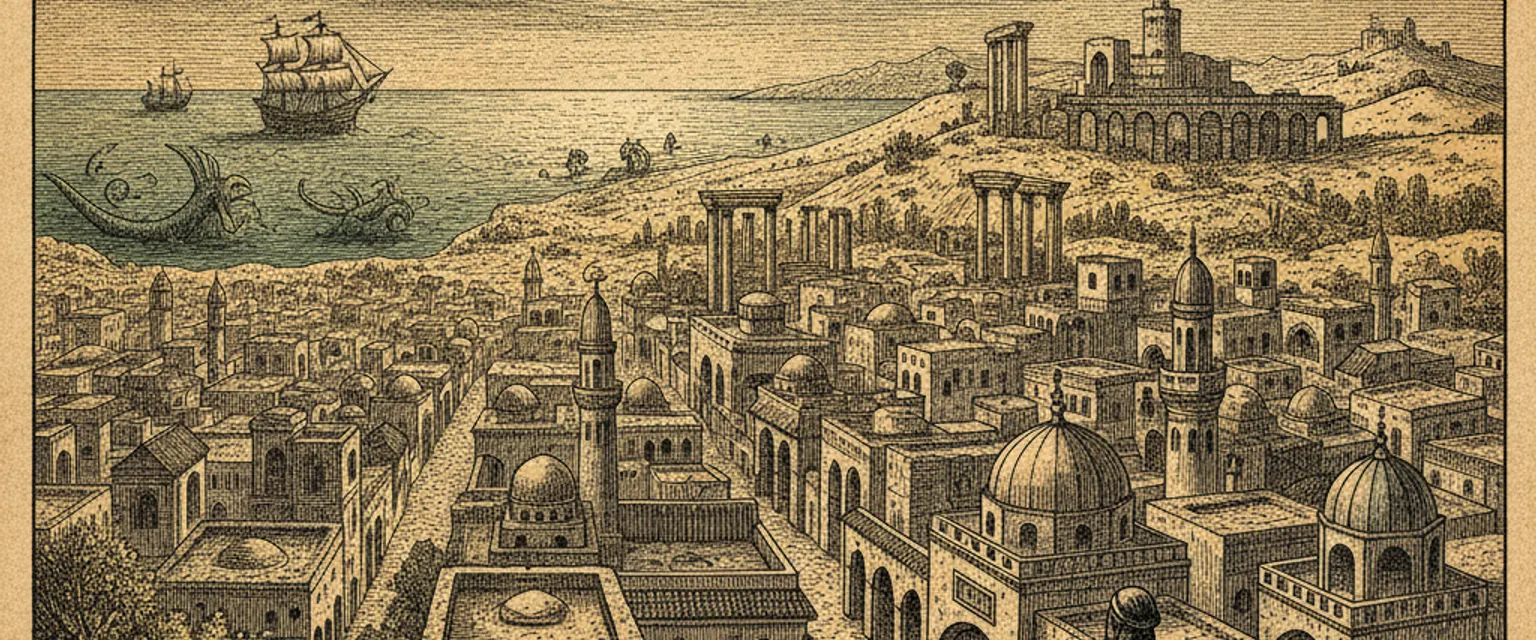
Tunis doesn’t shout. That’s the first thing you notice and honestly the thing I came to love about it. After the full-throttle assault of the bigger North African cities, the Tunisian capital just gets on with being itself — a layered, slightly faded, completely fascinating place where you can walk through a thousand-year-old souk in the morning, stand in front of the finest Roman mosaics on the planet by lunch, and have a mint tea in a clifftop village that’s painted entirely blue and white by sundown. That’s the whole pitch for this 3 days in Tunis itinerary, and it overdelivers.
Here’s the geography that makes it work: the old medina and the French-built new town sit in the centre, and a short, cheap suburban train (the TGM line) runs out along the coast to the ruins of ancient Carthage and on to the village of Sidi Bou Said. So you base yourself in town and day-trip out. Simple. And it’s all far cheaper than you’d guess.
Day 1: the medina
Start in the medina, the UNESCO-listed old city — a proper labyrinth of covered souks, each historically devoted to a trade (the perfume sellers, the chèche scarf-makers, the gold). Make for the Zitouna Mosque at its heart, the great old mosque the whole medina grew around; non-Muslims can’t enter the prayer hall but can visit the courtyard, and the building anchors you when the lanes start to spin.
The souks here are a pleasure precisely because the hassle is light by regional standards — you can actually browse. Haggle for leather, ceramics, the famous chèche cloth, but do it warmly; start around half. Get a touch lost on purpose. Then climb — several spots around the medina have rooftop cafes or terraces (some shops will walk you up “just to see the view,” then hope you’ll buy a carpet; the view’s usually worth the soft sell).
For lunch, hunt down a brik — a crisp fried pastry with egg and tuna inside that runs out the moment you bite it, messy and brilliant — and a bowl of harissa-laced anything. Cheap and very good.
Day 2: the Bardo and Carthage
Morning: the Bardo Museum, and I’m going to oversell it because it deserves it. It holds the largest collection of Roman mosaics in the world, room after room of them, floors lifted whole from villas across Tunisia — sea gods, hunting scenes, the famous portrait said to be the poet Virgil. Set in an old beylical palace, the ceilings as ornate as the floors. Even if museums normally bore you, this one is staggering. Give it a good two hours.
Afternoon: ride the TGM out to Carthage. This is the Carthage — Hannibal’s city, the great rival Rome flattened and then rebuilt on top of. So what you see is layered: Punic remains underneath, grand Roman stuff on top. The Baths of Antoninus down by the sea are the most impressive, a tumble of giant columns and arches with the Mediterranean right behind. The Byrsa hill has the museum and the best overview. It takes some imagination — much was carted off over the centuries — but standing where Hannibal’s city stood, with the sea glittering, does something to you.
Day 3: Sidi Bou Said and a slow finish
Save the prettiest for last. Sidi Bou Said is the clifftop village just past Carthage, all whitewashed walls, cobalt-blue doors and shutters, bougainvillea spilling over everything, perched above a marina and the blue Med. Yes it’s the postcard, yes there’ll be others there, and yes it’s still completely lovely. Wander the lanes, photograph the famous studded blue doors, and climb to the top.
Then do the one thing you must: a mint tea with pine nuts floating on top at the Café des Délices (or any of the terrace cafes near it) looking out over the gulf. It’s a little touristy, the tea’s a couple of dinars more than down the hill, who cares — the view of the white village dropping to the impossibly blue sea is worth every coin. Buy a small ceramic or a birdcage (the ornate painted birdcages are a Sidi Bou Said thing) on the way back down.
Back in town for your final evening, eat seafood — Tunisia does grilled fish beautifully — and have a last wander through the new town’s tree-lined Avenue Habib Bourguiba, the local Champs-Élysées, where everyone’s out for the evening stroll.
A few honest notes. The TGM coastal train is your best friend — cheap, frequent, easy, and it strings together Carthage and Sidi Bou Said in one go. Carry small cash; dinars only, and you can’t take them out of the country, so spend the last of it. Dress modestly-ish for the medina and mosque courtyard. Most people speak French alongside Arabic, so a “bonjour” and “merci” smooth everything. And taxis are metered and cheap — insist on the meter (the compteur).
Three days and Tunis quietly won me over. It doesn’t perform for you or wear you out — it just lays out a medina, the world’s best mosaics, a flattened empire’s ruins, and a blue-and-white village by the sea, all within a short train ride, and lets you take it at your own pace. North Africa without the bruises. Go before more people clock how good it is.
Hit the medina early, lose a couple of hours to the Bardo mosaics, ride the little coastal train to Carthage and Sidi Bou Said, and end with a pine-nut mint tea over that ridiculous blue gulf — that’s the trip, and it costs almost nothing.
This article contains affiliate links marked rel="sponsored". We may earn a commission at no extra cost to you.