
[ ITINERARY · THE DISPATCH ]
Three Days in Matera: Sleeping in a Cave Without Feeling Like a Caveman
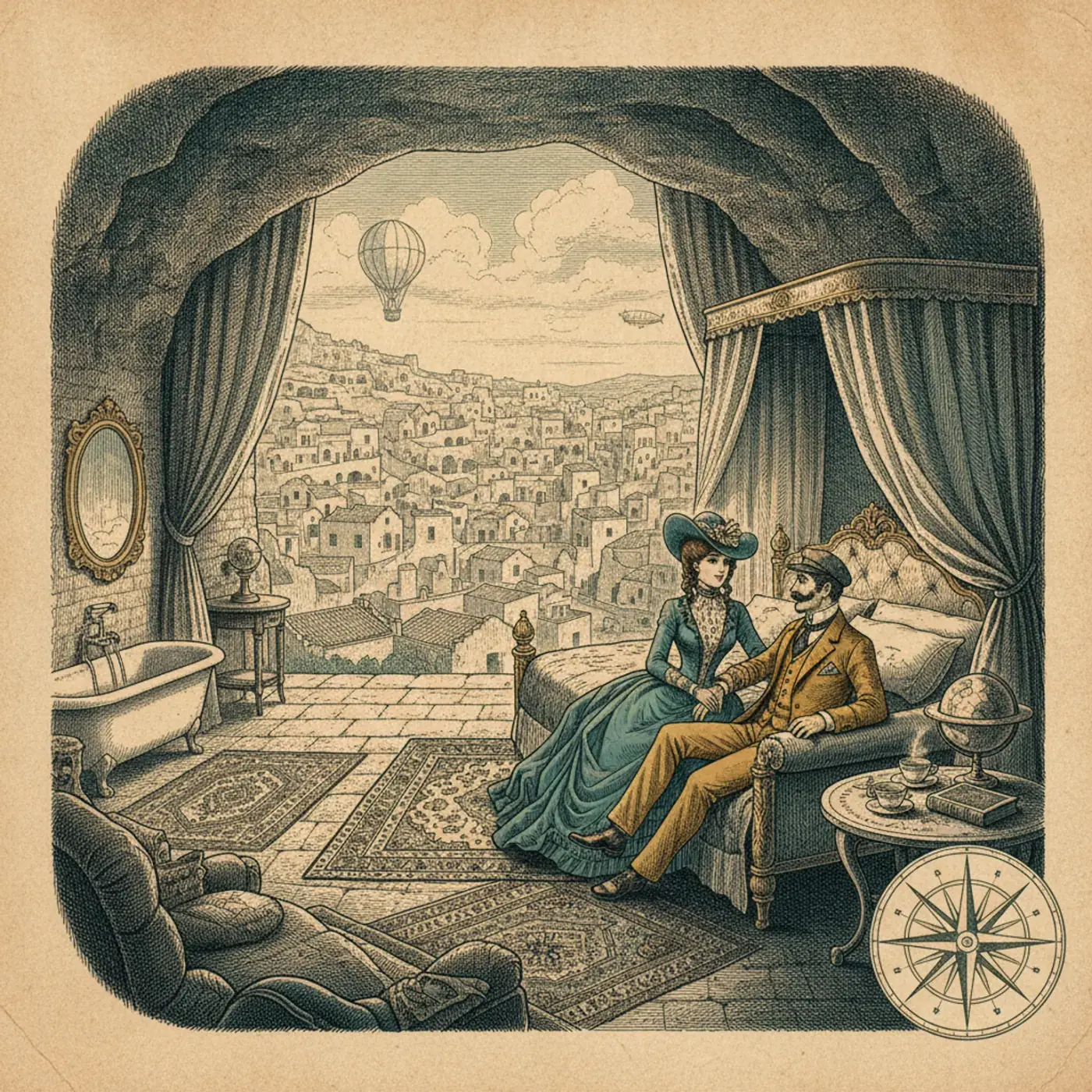
This Matera itinerary is for design lovers who want to sleep in a 9,000-year-old cave that somehow has a rain shower and a Nespresso machine. Three days in Italy's strangest, most photogenic city, done with taste.
I’ll be honest about what hooked me on this Matera itinerary in the first place: the idea of sleeping in a cave that’s older than the pyramids but has underfloor heating and a freestanding stone bathtub. Matera is, depending on how you count, one of the oldest continuously inhabited places on the planet — people have lived in these caves carved into the ravine for some 9,000 years. Until the 1950s it was a national disgrace, families crammed in with their livestock, no sanitation, called “the shame of Italy.” Then it got emptied, abandoned, and slowly, beautifully, reborn — and now design-obsessed hotels have moved into those same caves, and you can sleep where Paleolithic people slept, except now there’s a Nespresso machine and very good lighting.
It’s the most cinematic place in Italy that most people skip. (You’ve seen it without knowing — it’s stood in for ancient Jerusalem in about a dozen films.) Three days is right: enough to live in it, not so much you run out of caves.
First, the obvious move: stay in the Sassi. Don’t book a normal hotel in the modern upper town and visit the caves like a museum. The whole experience is sleeping in it. There are proper cave hotels — Sextantio Le Grotte della Civita is the famous, candlelit, almost monastic one; Aquatio is the slicker spa version; and there are smaller independent cave B&Bs that are more affordable and just as atmospheric. Pick one with genuine design taste and a terrace. The view at golden hour is the trip.
Day 1: Get lost in the Sassi on purpose
Don’t plan Day 1. The two cave districts — Sasso Caveoso and Sasso Barisano — are a tumbling maze of stone lanes, staircases that turn out to be someone’s roof, dead ends, churches dug into rock. A map is nearly useless and that’s fine. Wander. The honey-coloured stone glows differently as the sun moves, so just follow the light.
Get oriented at the Belvedere di Murgia Timone if you can swing it — it’s across the ravine, a viewpoint looking back at the whole Sassi piled up against the sky, and it’s where the postcard shot lives. Late afternoon there, or first light, is unreal. Otherwise the terraces and the Piazza Vittorio Veneto edge in the upper town give you the panorama too.
Eat dinner somewhere with a cave dining room — half the restaurants here are carved into rock. Try the cavatelli pasta with cime di rapa (turnip tops) and the local crusty pane di Matera, a bread so good it has its own protected status.
Day 2: The rock churches and the ravine
This is the substance day. Matera and the gorge opposite are riddled with chiese rupestri — rupestrian churches, dug into the rock by monks from the 8th century on, many with faded medieval frescoes still clinging to the cave walls. The Cripta del Peccato Originale (the Crypt of Original Sin), a few kilometres out of town, is the showstopper — they call it the “Sistine Chapel of rock churches” and the frescoes are genuinely jaw-dropping. It’s by guided visit only, so book ahead; it’s worth the trip out.
Closer in, Santa Maria de Idris and San Pietro Barisano are easy to reach and give you the rock-church experience without a car. Buy the combined church ticket; it pays off fast.
In the afternoon, if you’re up for it, hike down into the Gravina ravine — there’s a path across the bottom and up to the Murgia plateau on the far side, past more caves and an old monastery. It’s hot and exposed in summer, so go early or late, take water. The reward is standing on the opposite rim looking back at the city you slept in, understanding for the first time how it all clings to the cliff.
Day 3: The design and the deep history
Save this for the side of Matera that the cave-hotel crowd comes for. Visit a Casa Grotta — a cave dwelling preserved exactly as it was in the 1950s, family, donkey, chickens and all, which makes the whole reborn-luxury thing land with proper weight. The contrast between that and the boutique cave you slept in is the entire story of this place in two rooms.
Then lean into the contemporary side. Matera was a European Capital of Culture in 2019 and it kicked off a wave of small galleries, design shops, and artisan workshops tucked into the lanes — ceramics, the local cucù whistle (a clay bird, the city’s quirky symbol), modern art installations inside ancient grottoes. The MUSMA, a contemporary sculpture museum set inside cave dwellings, is the one for design lovers — sculpture in caves, exactly the kind of old-meets-new collision Matera does better than anywhere.
End with a long aperitivo on a terrace as the lights come on across the Sassi. There’s a moment, just after sunset, when the whole hillside flickers gold and the caves look like they’re glowing from within. Order a glass of Aglianico (the big southern red), and just sit with it.
Practical bits
Matera’s in Basilicata, the deep south, and it’s a bit of a faff to reach — there’s no proper big-city train line, so most people come via a bus or transfer from Bari (about an hour and a bit by bus, and Bari has the airport and the trains). Budget the travel time; it keeps the crowds thinner than they’d otherwise be, which is part of the magic.
Spring and autumn are ideal — summer in the stone bowl of the Sassi gets fierce, easily into the high 30s, the rock radiating heat back at you all evening. And bring cash for the smaller places; some of the tiny cave B&Bs and trattorias are still old-school about it.
Matera rewards the traveler who slows down and lets the strangeness of the place sink in — the layers of 9,000 years, the shame turned to beauty, the donkey-cave-turned-design-hotel you’re falling asleep in. Rush it and it’s just an unusual photo op. Live in it for three days and it gets under your skin in a way few places manage.
Sleep in the cave, hike the ravine, drink the Aglianico as the Sassi lights up. Matera’s the strangest, most quietly moving place I’ve slept in Italy — and yes, the cave had better water pressure than my flat back home. Buon viaggio.
This article contains affiliate links marked rel="sponsored". We may earn a commission at no extra cost to you.