
[ ITINERARY · THE DISPATCH ]
The First-Timer's 4-Day Rome Itinerary: Ruins, Carbs, and Outsmarting the Queues
Your first 4 days in Rome, built around skip-the-line timing and gelato pacing. The big sights, the carbs that matter, and how to not spend half your trip standing in a queue.
Short on time? The perfect 3-day Rome itinerary turns all of this into a route you can actually walk.
Here’s the truth about your first 4 days in Rome: the city is staggering, and it will also try to make you spend a third of your trip standing in queues in the sun. The whole art of doing Rome well as a first-timer is timing — when you book, when you arrive, when you eat. Get that right and it’s one of the great cities on earth. Get it wrong and you’re a sweaty, hangry person in a two-hour line. So let me get you the first version.
Rule one, do it before anything else: pre-book your Colosseum and Vatican tickets online, with timed entry, weeks ahead. The walk-up lines are punishing and the Colosseum especially limits numbers now. This single move saves you hours. I mean it.
Day 1: Ancient Rome — Colosseum, Forum, Palatine
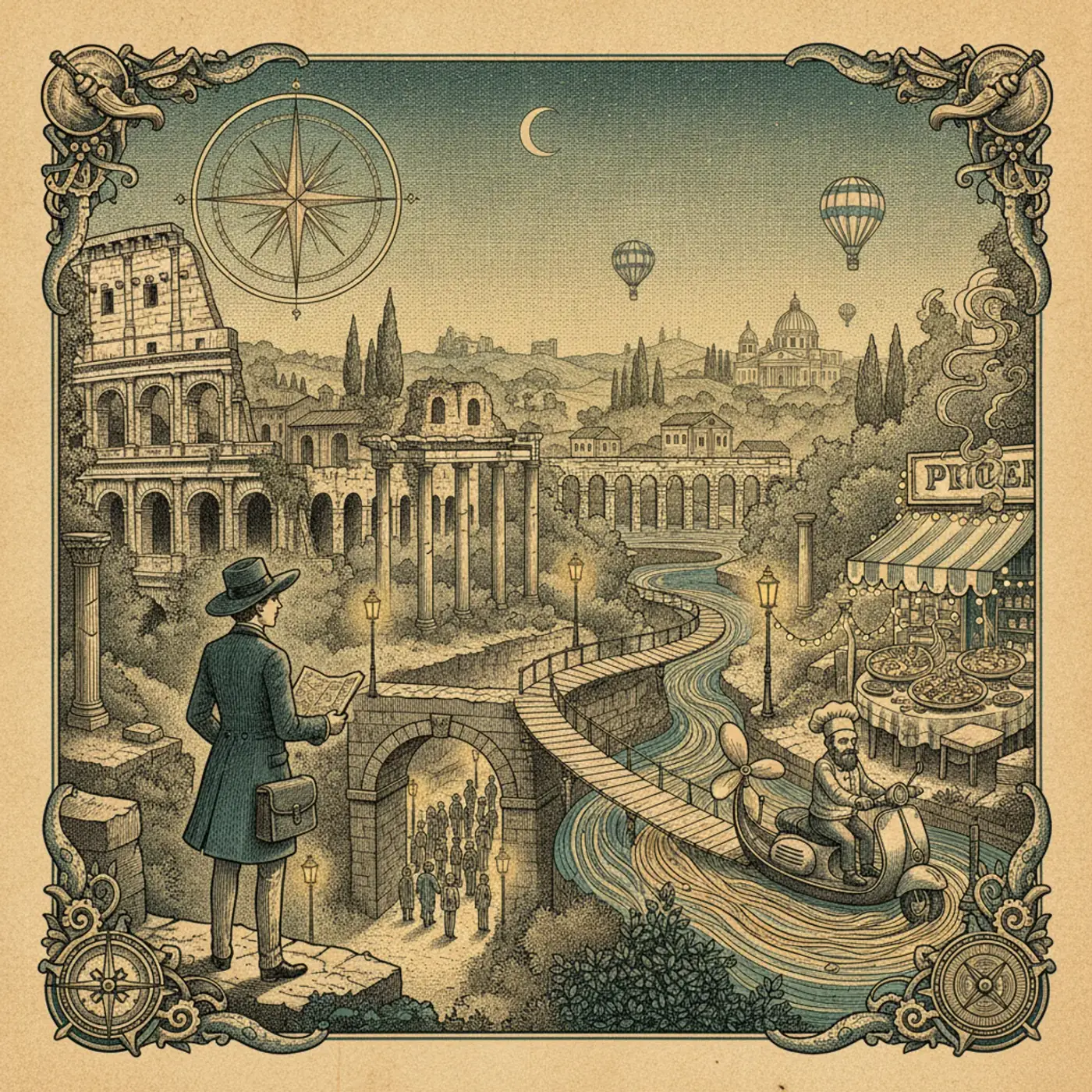
Start with the big one. Your timed Colosseum slot — go for a morning one. The combined ticket usually covers the Colosseum, the Roman Forum, and Palatine Hill, so do all three in one go while you’re in the zone (and they’re right next to each other).
The Colosseum’s astonishing in person — bigger and bloodier-feeling than you expect. Then wander down into the Forum, which is basically the rubble of the centre of the ancient world. Bring a bit of imagination (or download an app that overlays the reconstructions) because to the untrained eye it’s a field of broken columns — gorgeous broken columns, but you’ll get ten times more out of it knowing what you’re looking at. Palatine Hill above it has the emperors’ palaces and a great view back over the Forum.
By now you’ve earned lunch. Get your first supplì — a fried rice ball with mozzarella in the middle, the Roman cousin of arancini — from a hole-in-the-wall. Two euros, life-changing.

Day 2: The centre — Pantheon, Trevi, Spanish Steps
A walking day through the historic centre, no big tickets needed, which is a nice breather after day one.
Start at the Pantheon — nearly 2,000 years old, still has the largest unreinforced concrete dome in the world, and there’s now a small entry fee (around €5) but it’s worth it; standing under that open oculus with light pouring down is a genuine spine-tingle. Go early before the crowds.
Then loop the classics: Piazza Navona (Bernini’s fountain, street artists, an overpriced coffee you should not buy on the square itself), the Trevi Fountain (throw your coin, then leave fast — it’s a crush, mornings are calmer), and the Spanish Steps. These are quick stops; they’re famous, you’ll be glad you saw them, you won’t linger long. That’s fine.
Eat where the locals do, a few streets back from the monuments. Cacio e pepe — pasta with pecorino and black pepper, three ingredients, deceptively perfect — is the Roman dish to order. Sit down, no rushing. And your first proper gelato in the afternoon: look for natural colours (pistachio should be muddy green, not radioactive) and gelato stored in covered tubs, not piled in fluffy mountains. The mountains are aerated tourist stuff.
Day 3: The Vatican — and beating its queue
Vatican day. This is the big crush, so timing is everything. The Vatican Museums (which lead to the Sistine Chapel) get insane mid-morning. Book the earliest slot, or — my actual favourite trick — go for a Friday evening opening in high season, when it’s open late and the crowds thin out beautifully. Either way, pre-booked, never walk-up.
The Museums are a long march to the Sistine Chapel; pace yourself, the Raphael Rooms on the way are nearly as good and everyone speed-walks past them. The Sistine Chapel itself: necks craned, guards shushing everyone (no photos, they mean it), Michelangelo’s ceiling above you. It’s a lot of people but it delivers.
St Peter’s Basilica is free to enter (the queue is for security; mornings or late afternoon are quicker) and climbing the dome (a few euros, a LOT of stairs) gives you the best view in Rome. Worth the burning calves.

Day 4: Trastevere, a market, and a slower last day
End soft. Cross the river to Trastevere, the cobbled, ivy-draped neighbourhood that feels like the Rome of the films. No headline monuments — that’s the point. Get lost in the lanes, grab a coffee, find the church of Santa Maria in Trastevere with its glittering medieval mosaics.
In the morning, hit a food market — Campo de’ Fiori (touristy now but lively) or the better, more local Testaccio Market — and graze. Lunch in Trastevere should be a long one. Order whatever the menu says is the day’s special, get the house wine, finish with one last gelato.
A few first-timer logistics. Carry a refillable bottle — Rome’s nasoni (the little street fountains) run free, cold, drinkable water all over the city, a genuine lifesaver in summer. Validate transit tickets or you’ll get fined. And the restaurants right next to the monuments are tourist traps almost without exception, so walk three minutes away from any famous thing before you eat. Three minutes. It’s all it takes.
Four days won’t let you see everything — Rome’s got 3,000 years stacked on top of itself — but it’s enough to get the big hits, eat brilliantly, and leave already planning a return.
Book your tickets first, eat three streets back from every monument, and treat gelato as a four-times-a-day food group. That’s first-time Rome, queues beaten, properly done.
This article contains affiliate links marked rel="sponsored". We may earn a commission at no extra cost to you.