
[ ITINERARY · THE DISPATCH ]
Three Days in Kanazawa: Gold Leaf, a Garden Worth the Hype, and Zero Crowds
Kyoto is great and also drowning in selfie sticks. Kanazawa is the version where you get the samurai houses, the geisha district, and a top-three Japanese garden mostly to yourself. Here's three days done right.
Everyone keeps asking where to go in Japan now that Kyoto has tipped into a slow-motion crowd crush, with locals putting up signs begging tourists to stop blocking their front doors. My answer is Kanazawa, a former castle town on the Sea of Japan coast that got a high-speed rail link in 2015 and still, somehow, hasn’t been overrun.
It has the things people actually want from Kyoto — a feudal garden, preserved geisha and samurai districts, deep craft traditions — packed into a city you can cross in twenty minutes. Three days is the sweet spot.

Day 1: Kenroku-en and the castle, early
Take the Hokuriku Shinkansen from Tokyo; it’s about two and a half hours and one of the more underrated bullet-train rides in the country. Drop your bag and go straight to Kenroku-en, counted among the three great gardens of Japan and the one thing here that’s genuinely famous.
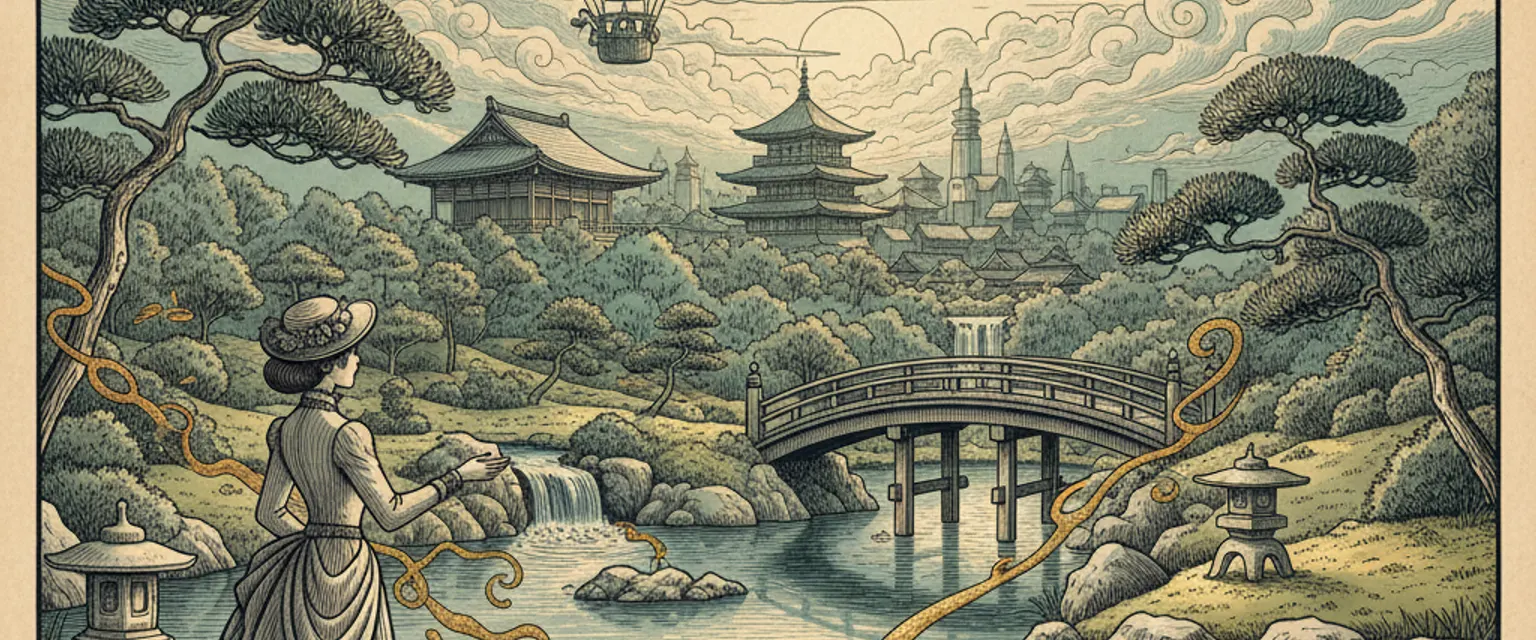
The hype is real and the trick is timing. It opens early, often before 7am in the warmer months for free, and that first hour is the difference between a serene stroll and a parade. Find the Kotoji-toro, the two-legged stone lantern that’s basically Kanazawa’s logo, then cross to Kanazawa Castle Park next door. The reconstructed turrets use traditional joinery with almost no nails, and the grounds are wide and quiet.
Day 2: Samurai houses and a geisha district
Spend the morning in Nagamachi, the old samurai quarter, where earthen walls line narrow lanes and you can step inside the Nomura-ke, a restored samurai residence with a tiny, perfect garden squeezed against the house. It’s the kind of place that’s mobbed in Kyoto and near-empty here.
In the afternoon, cross town to Higashi Chaya, the largest of the preserved teahouse districts where geisha (called geiko locally) still perform. The lattice-fronted wooden buildings glow at dusk. Go into Shima, an Edo-era teahouse turned museum, to see how the rooms were actually arranged for entertainment, and buy a sheet of edible gold-leaf-topped sweets while you’re there.

Day 3: Gold leaf, modern art, and the market
Kanazawa makes almost all of Japan’s gold leaf — sheets hammered down to a fraction of the width of a human hair. Do a leaf-application workshop (you stick gold onto a small box or chopsticks and take it home) at one of the studios near Higashi Chaya, then go full tourist and order the gold-leaf soft-serve ice cream, which is exactly as ridiculous and fun as it sounds.
Reset at the 21st Century Museum of Contemporary Art, a circular glass building with Leandro Erlich’s swimming-pool illusion where people appear to stand underwater. It’s a sharp contrast to the old town and proof Kanazawa isn’t a museum piece.
End at Omicho Market, the city’s covered food market for three centuries. The move is a kaisen-don, a bowl piled with raw seafood, or a plate of grilled sweet shrimp from the Sea of Japan eaten standing up. It’s cheaper and less frantic than Tokyo’s Toyosu and the fish is just as good.
Three days here leaves you with the rare modern-Japan feeling of having seen something properly without elbowing for it.
Is Kanazawa better than Kyoto? Not bigger or grander — but for a calm, crowd-free hit of old Japan, it quietly wins.
This article contains affiliate links marked rel="sponsored". We may earn a commission at no extra cost to you.