
[ DISCOVERY · THE DISPATCH ]
The Underground Cities I Crawled Through So You'd Believe They Exist
An eight-story city carved straight down into rock, big enough for 20,000 people. A town in the Australian desert where everyone lives underground to escape 50C heat. I went down all of them, mostly on my hands and knees.
The man at the entrance to Derinkuyu looked at my backpack, looked at the tunnel behind him, and said one word: “Smaller.” I did not understand until I was 40 meters underground, bent double, shuffling sideways through a passage carved for people who, eleven centuries ago, were apparently built like very determined cats. My backpack was not getting through. Neither, briefly, was my dignity.
But I went down. All the way down. Because I genuinely could not believe the thing existed until I was inside it.
Derinkuyu: a city carved straight down into the earth
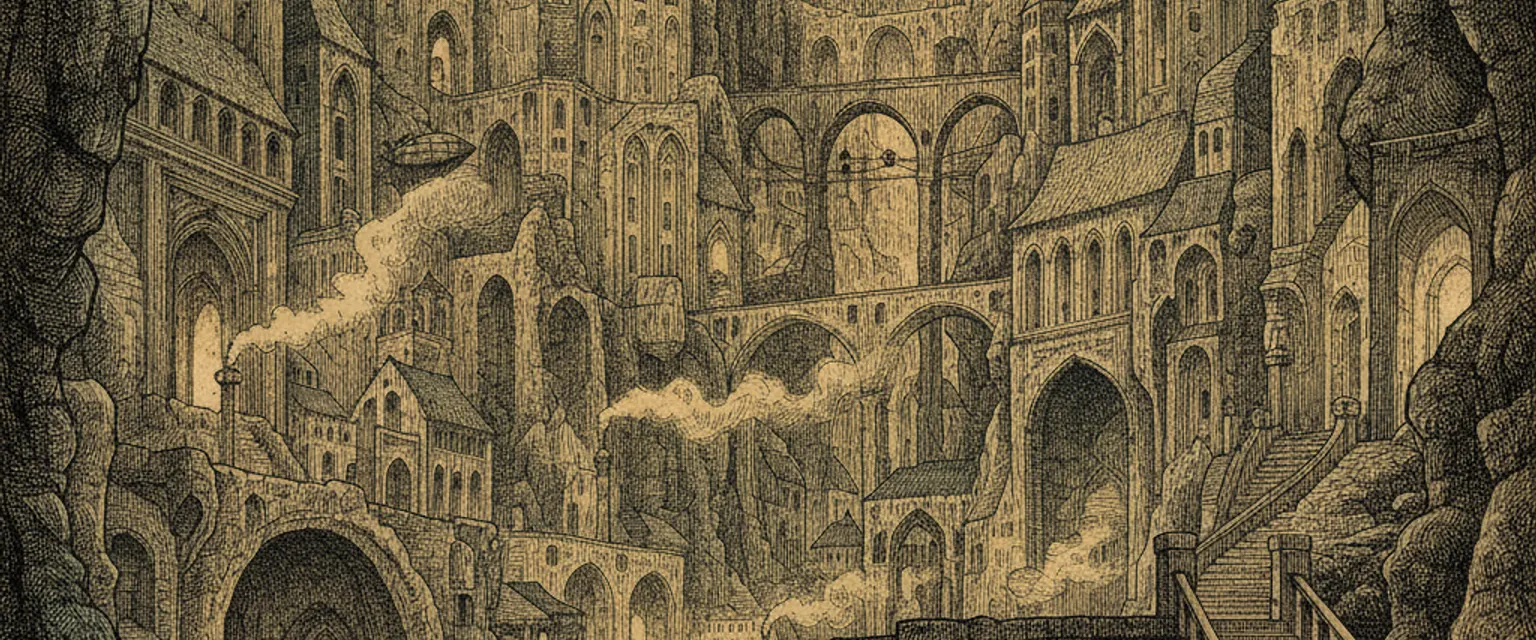
In Cappadocia, central Turkey, the rock is soft volcanic tuff — easy to carve, hard enough to hold a shape. People figured this out a very long time ago and started digging, and they did not stop until they had a city eight levels deep, plunging roughly 60 to 85 meters underground, with room for as many as 20,000 people plus their livestock, food stores, and wine presses.
Derinkuyu has everything a city above ground has, just inverted into the dark. Stables on the upper levels (so the animals didn’t have to be dragged too deep). A communal kitchen with soot still blackening the ceiling. A cruciform church far down near the bottom. A school. Wine and oil presses. And — the detail that made the back of my neck prickle — enormous circular stone doors, like millstones, that could be rolled across the passages from the inside only, sealing each level off from invaders who, even if they breached one door, would find themselves in a kill-corridor in total darkness.
The genius is the ventilation. More than 50 shafts run from the surface all the way down, and they doubled as wells. Standing on a deep level, I could feel air moving — cool, steady, fresh — through a city that has no electricity and was engineered before anyone had the word “engineer.” I held a hand over a shaft and felt my own town’s air conditioning suddenly seem like cheating.
Kaymakli, and the tunnel that may connect them
A short drive away is Kaymakli, a second underground city — wider, lower-ceilinged, and arguably more claustrophobic because the passages branch unpredictably. Locals will tell you a tunnel several kilometers long once connected Kaymakli to Derinkuyu, letting an entire population move between two fortresses underground. The full length of it has never been opened to visitors, which only made me want it more.
If you do both in a day, do Kaymakli second; after Derinkuyu’s sheer vertical drama, Kaymakli reads as the practical, lived-in suburb. I found a stone trough worn smooth by centuries of hands and just stood with my palm in it for a while, which is the kind of thing you do underground that would be deeply weird in a gift shop.

Coober Pedy: an entire town that lives below the desert
Now go to the other side of the planet and forward a thousand years. Coober Pedy, in the South Australian outback, is the opal-mining capital of the world, sitting in a desert so brutal that summer surface temperatures hit the high 40s Celsius. The solution the residents arrived at is beautifully blunt: live underground.
About half the town lives in “dugouts” — homes carved into the hillsides where the temperature stays a constant, pleasant 22-ish Celsius year-round, no air conditioning needed. And these aren’t caves. They’re full houses, with bedrooms, kitchens, sometimes a games room, all hewn from rock. There’s an underground church (the Serbian Orthodox one is genuinely stunning, all carved arches). There’s an underground bookshop, an underground bar, and a hotel — the Desert Cave Hotel — where you sleep in a windowless rock room and wake up with no idea what time it is, ever.
I stayed a night underground there. No traffic, no light leaks, no birds. Just absolute, total silence and a cool stone ceiling a meter above my face. I slept eleven hours. The whole town is half-buried, ringed by white mullock heaps from generations of mining, looking less like a place people live and more like a place a film about Mars was shot — which, repeatedly, it has been.
Naours: the underground city that hid a secret in plain sight
For a European one that isn’t on every list, go to Naours in northern France, near Amiens. Beneath a quiet wooded hill sits a vast network of medieval tunnels — a “muche” — that sheltered up to 3,000 villagers from raiders and war over the centuries, with chapels, stables, wells, and bakeries hollowed into the chalk.
The twist nobody expected: during the First World War, soldiers from the nearby Somme front came down here on leave and carved their names, regiments, and dates into the chalk walls. Thousands of them. The graffiti was largely overlooked for decades until researchers cataloged it — turning a medieval refuge into one of the most moving accidental war memorials anywhere. You walk past names of men who scratched them into the rock a century ago, on their way back up to the worst fighting of their lives.
How to do an underground-cities run
Cappadocia is the anchor. Fly into Nevsehir or Kayseri, base in Goreme or Urgup, and you can do Derinkuyu and Kaymakli in a single day with a rental car, plus the famous fairy-chimney valleys and a sunrise balloon ride above ground for contrast. Two to three days is plenty.
Coober Pedy is a long haul — fly from Adelaide, or stop there on a drive up the Stuart Highway toward Uluru. Book a dugout hotel and an opal-mine tour. For Naours, base in Amiens (90 minutes from Paris by train) and combine it with the Somme battlefields.
Bring a headlamp everywhere, wear clothes you don’t mind scuffing, and if a man at the entrance says “smaller,” believe him. I didn’t, and the tunnel won.
Are these underground cities safe to visit if I’m claustrophobic?
Mostly yes, with caveats: Coober Pedy and Naours have spacious, well-lit chambers and are fine for most people. Derinkuyu and Kaymakli have genuinely tight, single-file passages on the lower levels, so claustrophobic visitors should stick to the upper floors — both cities let you turn back at any point without going all the way down.
This article contains affiliate links marked rel="sponsored". We may earn a commission at no extra cost to you.