
[ ITINERARY · THE DISPATCH ]
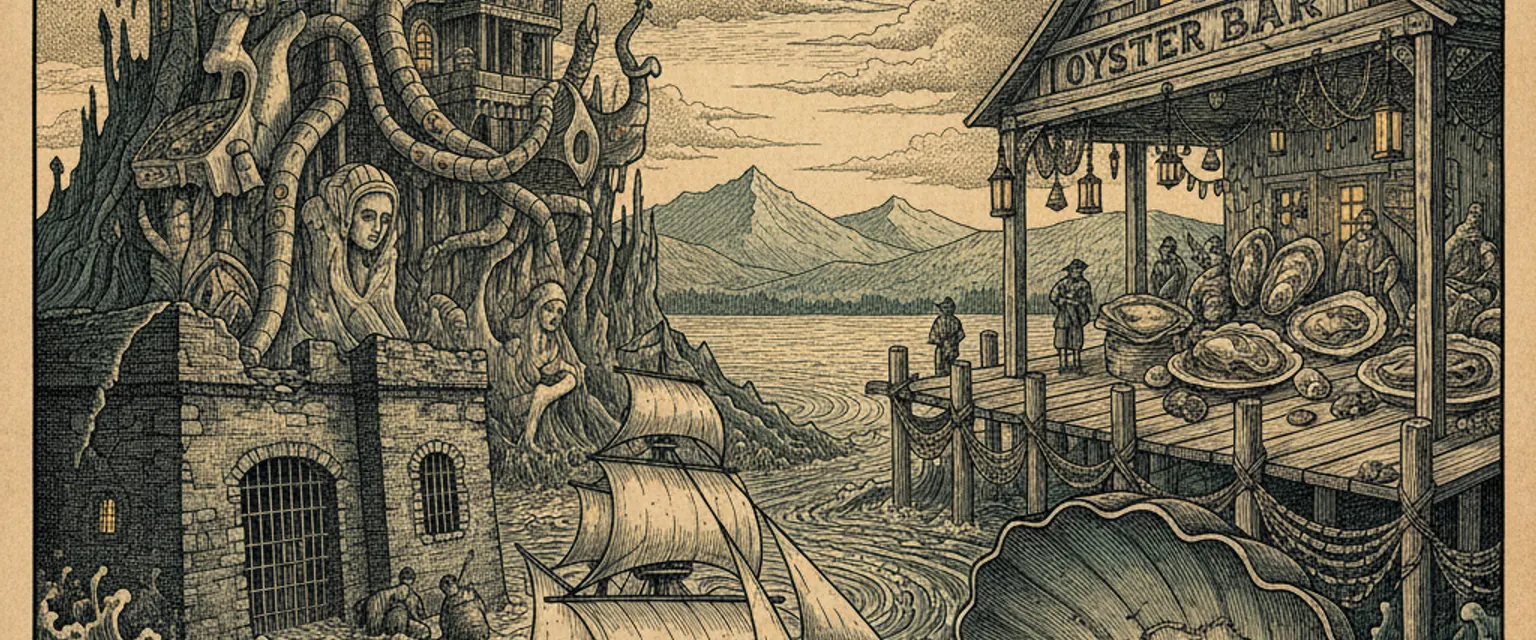
The 4-Day Hobart Itinerary: A Deranged Art Museum, Convict History, and Oysters
Four days in Hobart hung on MONA's beautiful weirdness, the heavy convict history at Port Arthur, and more Tasmanian oysters than is strictly reasonable.
Hobart is what happens when a small, gorgeous colonial port at the bottom of the world gets adopted by a gambling millionaire with a museum full of provocations. For most of its life it was a quiet sandstone town with a dark convict past and excellent seafood. Then MONA opened in 2011 and turned the place into a genuine destination, and now it’s this strange, brilliant collision of heritage cottages and a subterranean gallery that wants to mess with your head.
Four days lets you do all of it without rushing: the weird, the heavy, the scenic, and the very large amount of shellfish. Here’s the plan.
Day 1: Salamanca, the waterfront, and getting your bearings
Start gentle. The Salamanca Place sandstone warehouses along the harbor are the historic core — old whaling-era storehouses now full of galleries, cafés, and shops. If you’re lucky enough to land on a Saturday, the Salamanca Market takes over the whole strip with Tasmanian produce, crafts, and a frankly excellent scallop pie situation.
Wander up the steps into Battery Point, the old maritime neighborhood of tiny cottages and the picture-perfect Arthur Circus green. Then walk the waterfront around Constitution Dock, where the Sydney-to-Hobart yachts finish each New Year, and eat your first oysters off a punt at the floating fish-and-chip boats.
If the weather’s clear — a real “if” in Hobart — drive or bus up kunanyi / Mount Wellington in the afternoon. The summit is 1,270 meters straight up behind the city and the view down over the harbor and the Derwent is the orientation map you need for the rest of the trip. It’s freezing up top even in summer; bring the jacket.
Day 2: MONA, all day, by boat
Give MONA the whole day. The Museum of Old and New Art is the reason a lot of people fly to Tasmania at all, and it deserves more than a rushed two hours.
First rule: take the MONA ferry up the Derwent from the Brooke Street Pier rather than driving. The boat — covered in camo paint with sheep-shaped seats on deck — is part of the experience, and arriving by water at the bottom of the cliff-cut entrance sets the tone. Splurge on the “Posh Pit” tier if you want a glass of something and canapés on the way.
The museum itself is dug down into the sandstone, deliberately disorienting, with no wall labels — you get a device that tells you about each piece. The collection swings from ancient Egyptian artefacts to deeply confronting contemporary work, and the founder David Walsh frames the whole thing around sex and death on purpose. Some of it will delight you, some will make you deeply uncomfortable, and that’s the point. You’re not meant to “get” all of it.
Eat there. The on-site winery and restaurant are excellent, and the cellar door pours wines and beers made on the property. Make a long afternoon of it.
Day 3: Port Arthur, and the weight of it
Today is the heavy one, and it should be. The Port Arthur Historic Site is about 90 minutes southeast on the Tasman Peninsula, a former convict penal settlement that’s now one of Australia’s most important — and most haunting — heritage sites. This is where Britain sent its repeat offenders, and the ruins of the penitentiary, the church, and the chillingly modern “Separate Prison” tell a story about punishment and isolation that lands harder than any textbook.
Your ticket includes a walking tour and a short harbor cruise past the Isle of the Dead, the convict cemetery. Give it most of the day and read the displays properly. It’s beautiful and grim in equal measure, and treating it as a sober historic site rather than a photo stop is the only respectful way to do it — especially given the more recent tragedy here, which the site memorializes quietly and which staff appreciate visitors not turning into spectacle.
On the drive there or back, stop at the Tasman Arch and Devils Kitchen sea cliffs, and — if you eat oysters — the roadside farms selling them by the dozen, shucked, eaten on the tailgate looking at the water. This is peak Tasmania.
Day 4: Wineries, the historic spread, or just more oysters
Your flexible day. A few strong options depending on weather and mood:
- Coal River Valley wineries (Richmond), 30 minutes out, where cool-climate pinot and sparkling wine are the specialty, plus the historic village of Richmond with Australia’s oldest stone bridge.
- The Bonorong Wildlife Sanctuary if you want a guaranteed, ethical look at Tasmanian devils, wombats, and quolls.
- A Bruny Island day trip (a short drive plus a ferry) for the oysters, cheese, and wild coastline — basically a self-guided Tasmanian gourmet crawl.
Whatever you pick, end the trip the way Tasmania wants you to: a dozen Tasmanian oysters, cold and briny, with a local sparkling, somewhere with a water view. The cold Southern Ocean water makes them some of the best on earth, and you’ll have spent four days surrounded by them.
Is four days enough for Hobart? For Hobart itself plus the two essential day trips (MONA and Port Arthur), yes — it’s a comfortable amount. If you want to push deeper into Tasmania (Freycinet, Cradle Mountain, the east coast), you’d want a week and a rental car, with Hobart as the bookend.
When should I visit? Summer (December–February) for the warmest, longest days and the New Year yacht-race buzz. Winter draws people specifically for Dark Mofo, MONA’s gothic midwinter festival, when the whole city leans into the cold and the strange. Autumn is the quiet, golden, underrated pick.
This article contains affiliate links marked rel="sponsored". We may earn a commission at no extra cost to you.