
[ DISCOVERY · THE DISPATCH ]
The Dark-Sky Reserves Where the Milky Way Is the Main Attraction
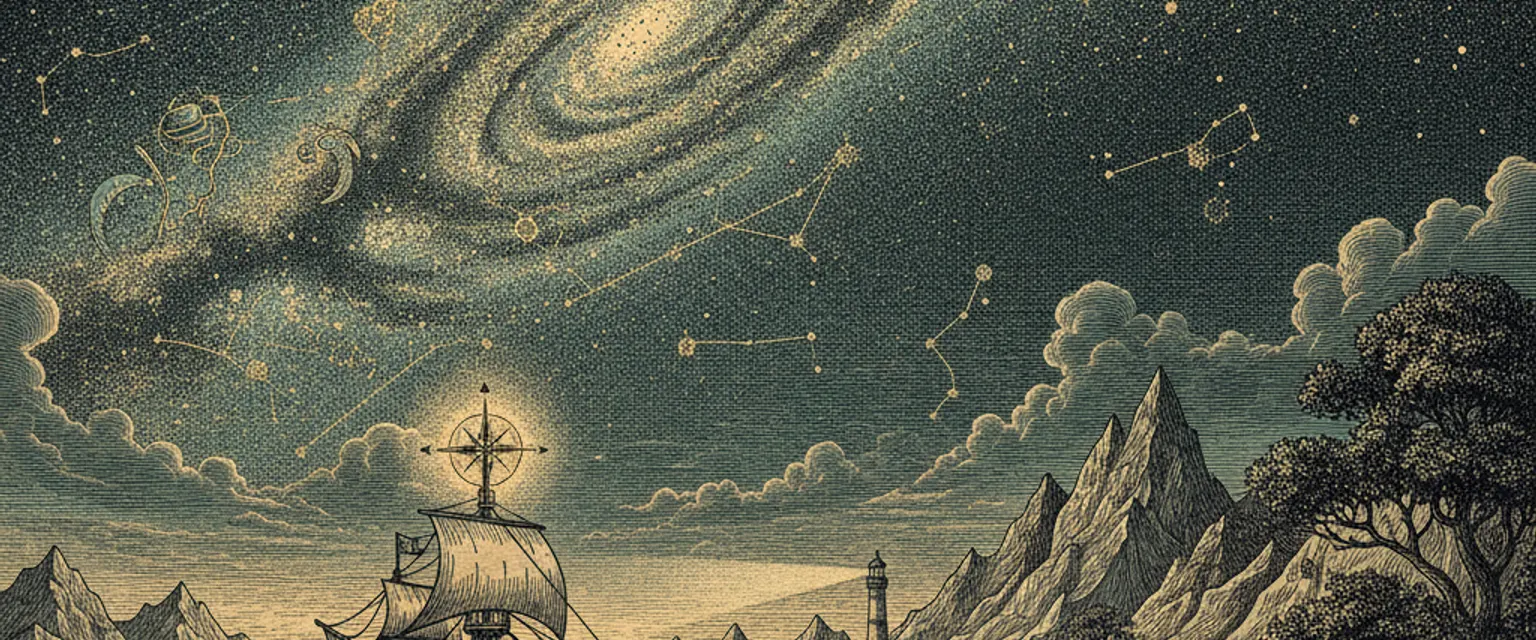
Some places are so unlit that the galaxy casts an actual shadow on the ground. The best dark sky reserves in the world are where the Milky Way stops being a faint smudge and becomes the main attraction. Here's where to go and when.
The best dark sky reserves in the world share one detail that sounds made up until you’ve seen it: the Milky Way is bright enough to cast a shadow. Your own shadow. On the ground. From a galaxy. I didn’t believe it either, and then I stood in the Namibian desert at 2am and watched my hands throw a faint shadow by starlight alone, and I had to sit down on the cold sand for a minute.
Most people have never actually seen the night sky. That’s not a poetic exaggeration, it’s a statistic — something like 80% of us live under skies too light-polluted to see the Milky Way at all. We’ve lit ourselves out of the oldest view there is. So when you finally get under a truly dark sky, it’s not “nice.” It’s a genuine shock. People cry. I’ve watched it happen.
Here’s where to go, and how to actually do it right, becuase showing up isn’t enough.

What “dark-sky reserve” actually means
It’s a real certification, not marketing fluff. DarkSky International (used to be the IDA) certifies places — reserves, parks, sanctuaries — that hit strict standards for sky quality and, crucially, for protecting it with proper lighting laws so it stays dark. A “Gold Tier” reserve is about as black as the sky gets on this planet.
The scale that matters is Bortle, 1 to 9. Your city is a 8 or 9 — you see maybe a dozen stars and call it a night sky. A certified reserve is a Bortle 1 or 2. The difference between the two isn’t “more stars.” It’s a different sky. At Bortle 1 the Milky Way isn’t a smudge, it’s a structured, three-dimensional river of light with dark dust lanes carved through it, and you can see the faint glow of zodiacal light, and the whole thing is genuinely too much to take in at once.
The ones worth crossing the planet for
NamibRand Nature Reserve, Namibia. Africa’s first International Dark Sky Reserve and, for my money, the darkest accessible sky on earth. Red desert, zero humidity, zero light for a hundred-plus miles in any direction. This is the shadow-casting one. Go in the dry season, May to October. It is not cheap or easy to reach and it is worth every bit of the effort and then some.
Aoraki Mackenzie, New Zealand. The South Island reserve around Lake Tekapo, and the most beginner-friendly of the great ones — there’s actual infrastructure, observatories, guided tours, a tiny stone church (the Church of the Good Shepherd) that’s become the icon shot. Southern Hemisphere sky, so you get the Magellanic Clouds and the Southern Cross, things a northern traveler has literally never seen. Winter (June–August) gives the longest, clearest nights.
The Atacama Desert, Chile. The driest place on earth and home to the world’s biggest professional observatories for a reason — the air is so thin and dry the stars barely twinkle. Around San Pedro de Atacama you can join astronomy tours run by actual astronomers with serious telescopes. Saturn’s rings, the moons of Jupiter, galaxies. High altitude, so go slow and bring layers, it gets brutally cold after dark.
A few more, closer to home for some of you
- Kerry, Ireland — the Kerry International Dark-Sky Reserve, the only Gold Tier reserve in the Northern Hemisphere this far north, on the wild Atlantic coast.
- Brecon Beacons / Bannau Brycheiniog, Wales — a genuinely dark sky a couple hours from major UK cities. No excuse, Brits.
- Pic du Midi, France — a mountaintop observatory in the Pyrenees you can actually sleep at, above most of the atmosphere.
- Big Bend & Death Valley, USA — vast, certified, and reachable on a US road trip. Death Valley is Gold Tier and the silence is as overwhelming as the sky.
- Exmoor, England — Europe’s first dark-sky reserve, surprisingly easy from London.

How to actually see it (most people get this wrong)
This is the part people skip and then wonder why it was underwhelming.
Give your eyes thirty minutes. Real dark adaptation takes about half an hour and most people quit after five. Your eyes physically change — the pupils dilate and the retina shifts to night chemistry — and the sky you see at minute 30 is twice the sky you saw at minute 5. Be patient. Lie down. Wait.
Kill every screen. One glance at a bright phone resets your night vision and you start the thirty minutes over. If you must see something, use a dim red light — red doesn’t wreck your adaptation the way white does. Astronomers live by this.
And dress for it. Clear nights are cold nights — no cloud means no blanket holding the day’s heat, so even a desert plunges to near freezing. I cannot count the number of people I’ve watched abandon an incredible sky after twenty minutes because they were shivering. Bring more layers than feels reasonable. A flask of something hot. A reclining chair or a mat so you’re not craning your neck.
Then just… stay out there. Let the sky do its slow thing. Watch a satellite cross. Wait for the meteor (there’s always one). Find the dark dust lanes in the Milky Way’s spine. It’ll rearrange your sense of scale in a way that, honestly, no cathedral or canyon ever has for me.
We spent every night for two hundred thousand years under this sky and forgot it in a single lit-up century. Going to a dark-sky reserve isn’t escapism. It’s remembering.
Pick a reserve, book the new moon, pack too many layers, and go look up properly. It is the cheapest profound experience left on earth.
This article contains affiliate links marked rel="sponsored". We may earn a commission at no extra cost to you.