
[ DISCOVERY · THE DISPATCH ]
Astrotourism Is the New Beach Holiday and the Best Skies Are Where You'd Never Look
People are now booking entire trips around darkness — chasing eclipses, auroras, and skies so black they hurt. I did it, lay in a frozen field at 2am, and finally understood the fuss.
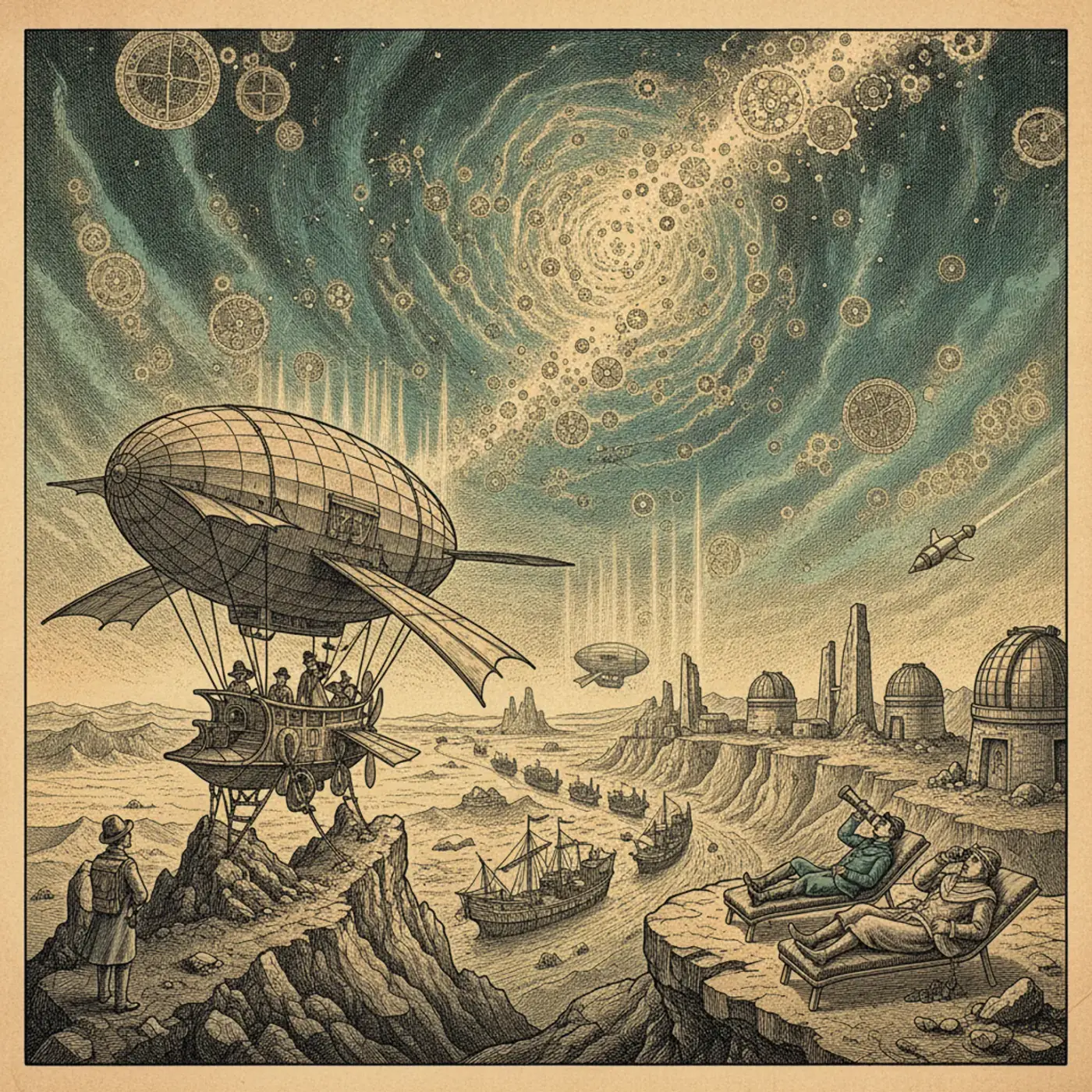
The beach holiday has competition, and it’s the exact opposite of a beach holiday. No sun. No crowd. Just you, a freezing field, and a sky so thick with stars it stops being pretty and becomes genuinely overwhelming. That’s the pitch behind every list of astrotourism destinations 2026 — people planning whole trips around darkness — and I rolled my eyes at it right up until the night I didn’t.
Let me tell you about that night, then I’ll tell you where to go.
The night I got it
I was in a field in rural Extremadura, Spain, at about two in the morning, lying on a blanket, freezing despite three layers, mildly grumpy about being awake. I’d come for the dark-sky thing more out of curiosity than belief. Then my eyes adjusted properly — and it takes a good twenty, thirty minutes, longer than you think — and the Milky Way didn’t just appear, it loomed. This bright, textured, almost three-dimensional river of light right across the whole sky. I actually said something out loud. Something undignified. A meteor went through it a minute later and I made a noise I’m not proud of.
That’s the thing nobody can sell you in a render. Real dark sky is a physical experience. Most of us have literally never seen it — over 80% of people live under light-polluted skies and have genuinely never seen the Milky Way. When you finally do, it reorders something.
Why 2026 specifically
Two things are driving this. First, the sun’s been in an active part of its cycle, which means stronger, more frequent auroras pushing further south than usual — people are catching northern lights in places that almost never get them. Second, there’s been a run of big solar eclipses, and eclipse-chasers are a genuinely obsessed tribe who plan years ahead and drag the rest of us along. Add the broader hunger for trips that aren’t another crowded city, and darkness became a destination.

The skies that surprise people
Here’s my actual argument: the famous certified dark-sky reserves are great, but they’re getting busy, and the truly mind-bending skies are in places nobody markets because there’s nothing else to do there by daylight. That’s a feature.
The Atacama in Chile is the headliner and it earns it — driest desert on earth, high altitude, observatories everywhere, skies that look fake. Not a secret, but unbeatable.
Rural Extremadura and parts of inland Portugal (the Alqueva dark-sky area) — boring farmland by day, jaw-dropping by night, and a fraction of the cost and crowds of the famous spots. This is where I had my moment.
Northern Finnish Lapland or the Faroe Islands for aurora if you want the cold-and-green-fire version. Remote, dark, and during a strong cycle the displays are absurd.
The Namib desert and parts of rural Mongolia for skies so far from any city the darkness is total. Combine with a wider trip and you get two experiences in one.
How to not ruin your own trip
A few hard-won bits, because there’s a real gap between the dreamy idea and the cold reality of standing in a field.
Dress for far colder than the daytime suggests. Clear skies mean cold nights — the same dry, cloudless air that gives you the stars sucks the heat away fast. I’ve been caught out by this more than once, shivering myself out of an otherwise perfect night. Bring more than you think.
Give your eyes time. People show up, glance up, see “some stars,” and leave disappointed after ten minutes. The good stuff only arrives once you’re properly dark-adapted, so commit to an hour, lie back, stay off your phone (the screen resets your night vision instantly — turn brightness to nothing or just put it away).
And manage expectations on the aurora. It’s weather, basically. It might be a faint grey-green smudge that the camera makes look spectacular, or it might be the dancing curtains of your dreams. You’re rolling dice. Go for several nights, not one, and treat a great display as a gift rather than a guarantee.

So, beach or stars?
I’m not telling you to give up the beach. A beach is a beach, it’s lovely, fine. But the strange truth is that lying in a dark field looking up has stuck with me longer than almost any sunny coast. It’s free, once you’ve got there. It doesn’t get crowded out (the dark spreads to fit everyone). And it makes you feel small in the good way, the way that quietly fixes a bad month.
The best part is that the very best skies are in the dullest-sounding places — the empty, the remote, the nothing-to-do-by-day. Go to the boring spot. Wait for the dark. Look up properly, for the first time in your life maybe.
Book the trip around the new moon, pack a coat that’s frankly excessive, and lie down in the dark until your eyes catch up. Then try not to make an undignified noise. You will.
This article contains affiliate links marked rel="sponsored". We may earn a commission at no extra cost to you.