
[ DISCOVERY · THE DISPATCH ]
The Cliffside Villages That Cling On Like They're Defying Gravity
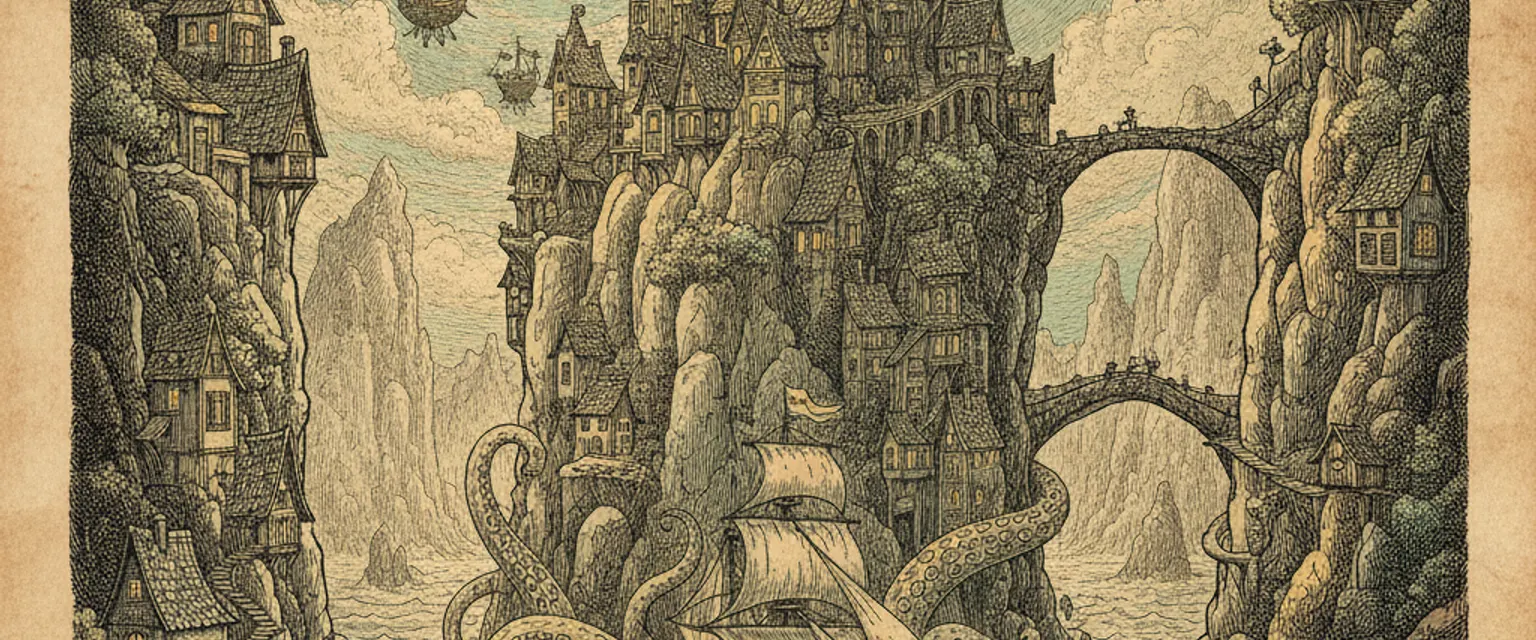
Houses stacked on a precipice as if the architect lost a bet. These are the cliffside villages to visit where the streets are stairs, the cars don't fit, and the view will reorganize your priorities.
The best cliffside villages to visit all share one thing: somebody, at some point, looked at a vertical wall of rock dropping into the sea and thought, yeah, I’ll build my house there. On purpose. With my hands.
I find that insane and I find it beautiful and I have spent an embarrassing amount of my life climbing the stairs these people left behind. Because that’s what a cliff village is, really. Stairs. Endless stairs. Your calves will write you a strongly worded letter.

Manarola, Cinque Terre — but at 7am, not 11
Everyone shows you the same photo of Manarola. The pastel houses tumbling down to a tiny harbor, a lone swimmer, the light doing that thing. What they don’t show you is the 11am reality: a river of day-trippers, all holding the same phone at the same angle, all blocking the one good viewpoint.
So get up early. I’m sorry. I know. But the village at 7am belongs to the cats and the old men mending nets and you, and the famous shot — from the little cemetery path that climbs the southern side — is empty and gold and yours.
The houses here aren’t painted bright for the tourists, by the way. Fishermen painted them so they could spot their own home from out at sea. Function. The Instagram came 800 years later.
Ronda, Spain — the village split clean in two by a gorge
Ronda isn’t on the sea. It’s worse, or better. It sits on top of a 100-meter gorge, the El Tajo, that slices the town in half, and the two halves are stitched together by the Puente Nuevo, a bridge that took 42 years to build and killed a number of the men who built it.
You walk across this bridge with cars and tour groups, and then you find the path down — toward the Jardines de Cuenca — and suddenly you’re below it, looking up at the underside, and the whole town is just… hanging there. Hemingway loved Ronda. Orson Welles had his ashes buried near here. You stand at the bottom of the gorge and you sort of get why.
I got lost on the way down (the signage is, charitably, a suggestion) and ended up in a quiet square where an old woman was selling oranges off a card table. Three for a euro. Best oranges I’ve ever had. She didn’t speak English and I don’t speak Spanish and we communicated entirely through me pointing and her laughing.

Oia, Santorini — overrated sunset, underrated everything else
Hot take. The Oia sunset is overrated. Not because it isn’t gorgeous — it is — but because 3,000 people cram onto the castle ruins to watch it, applaud it (genuinely, they clap, at the sun), and then trample each other to dinner. It’s a mess.
Here’s what’s underrated: Oia at literally any other hour. The whitewashed lanes between the blue domes, before the cruise crowd lands, when the only sound is a broom on a step somewhere. Walk the Karavolades stairs down to Ammoudi Bay — all 300-odd of them — and eat grilled octopus at a taverna with your feet practically in the water. The donkeys come up those stairs; mind your shoes.
The buildings are carved into the caldera, the rim of a volcano that blew its top around 1600 BC and may have helped sink a whole civilization. You’re sleeping in the wall of a volcano. Sleep on that.

Bonifacio, Corsica — the one that’s actually falling
If the others “cling on,” Bonifacio is mid-fall. The old town sits on white limestone cliffs that the sea has been gnawing at for millennia, and some of the houses on the Grain de Sable side hang so far over the edge that the rock beneath them is visibly, alarmingly thin. They jut out into nothing. You look up from a boat and think, those should not be standing.
But they are. For now. There’s a strange thrill to a place that’s honest about its own impermanence. The famous Escalier du Roi d’Aragon — 187 steps cut straight down the cliff face, supposedly carved in a single night during a siege (it wasn’t, but let the legend live) — drops you almost to sea level, and the climb back up will make you question several life choices.
And the light here is different from the Med clichés. Whiter, harder, almost surgical. It bounces off the limestone and turns everything that pale bone color, and the sea below goes a green you’ll struggle to describe to people back home.

How to do a cliff village without ruining it (for you or it)
A few honest rules I’ve learned the slow way. Stay the night — the day-trippers leave around 4pm and the village exhales; that’s when it’s actually yours. Wear real shoes, not the cute ones; cliff villages eat cute shoes. Go shoulder season, May or late September, when the heat backs off and the crowds thin and the locals are still glad to see you.
And take the stairs. All of them. The view from the bottom, looking up at homes that have no business standing — that’s the shot that means something, because you earned it with your legs.
Pick the village that scares you a little. The one that looks like it shouldn’t be there. Climb down, look up, and let your stomach drop. That’s the whole reason you came.
This article contains affiliate links marked rel="sponsored". We may earn a commission at no extra cost to you.