
[ DISCOVERY · THE DISPATCH ]
Taiwan's Outer Islands Glow Blue at Night and the Locals Call It Blue Tears
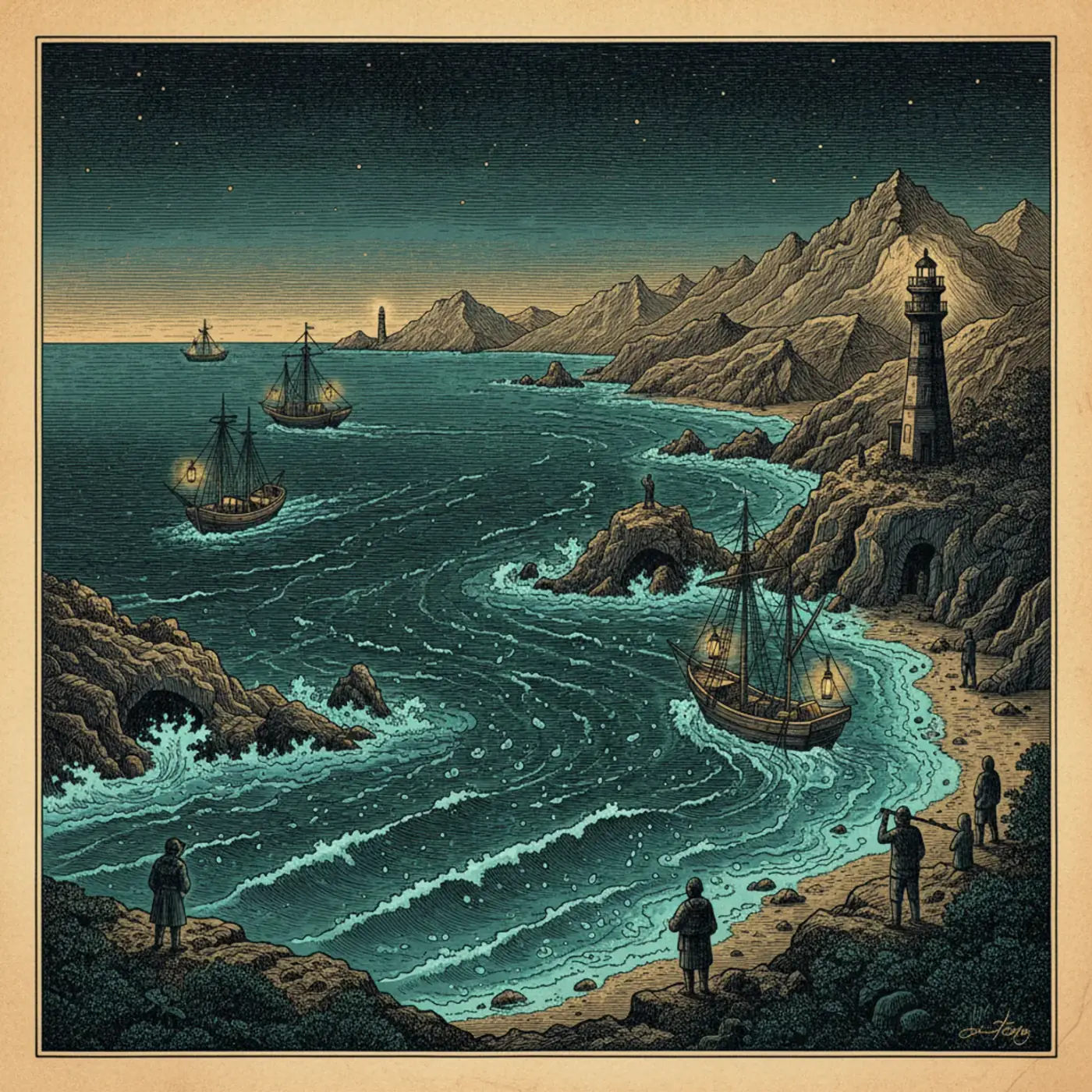
On Taiwan's least-visited islands, the sea lights up electric blue at night — handfuls of cold neon scattered in the surf. The locals call it Blue Tears. People now plan whole trips around catching it. I'm one of them.
Matsu blue tears bioluminescence is the reason I ended up on a tiny boat at 11pm, freezing, leaning over the side to drag my hand through black water and watching it light up like I’d just stirred a galaxy. The wake glowed. My fingers glowed. Every drop that fell back looked like cold blue neon. I made a noise I’m not proud of.
Most people, when you say “Taiwan,” think Taipei. Night markets, Taipei 101, beef noodle soup. All great. But Taiwan has these scattered outer islands almost nobody visits, and one cluster of them — Matsu, way up near the Chinese coast, closer to Fuzhou than to Taipei — does this thing in spring and summer that turns the sea into something out of a dream.
What “Blue Tears” actually is
The glow is bioluminescence, mostly from dinoflagellates — tiny single-celled organisms in the plankton that flash blue when the water around them gets disturbed. A wave breaks, a boat passes, you slap the surface, and they light up in self-defence (or to startle predators, the science is still arguing). When conditions line up, the whole shoreline can fringe with electric blue, the surf glowing as it rolls in.
The Mandarin name translates as something like “blue tears,” and once you’ve seen it the name makes total sense — it does look like the sea is crying light. It’s not guaranteed on any given night, which is the maddening, wonderful part. It depends on water temperature, the plankton bloom, the tides, and crucially how dark the sky is. Chase it like a hunt, not a sure thing.
When to go, and the moon trick
The season runs roughly April through August, peaking in the warmer late-spring and early-summer months. But the single biggest factor people get wrong is moonlight. A bright moon washes the glow right out — you need darkness for your eyes to catch the faint blue. So you plan your trip around the new moon, not the full one. Aim for the nights either side of new moon and you’ve stacked the odds massively in your favour.
I went in May, three nights, deliberately timed to new moon. First night, patchy — a few glimmers in the boat’s wake, nice but not the carpet I’d been promised. Second night, on a Blue Tears boat tour out of Nangan, the captain cut the engine in a sheltered bay and dropped a weighted line into the water, sweeping it, and the whole patch of sea lit up beneath us. People gasped. A kid on board started crying, the good kind. That was the night.
Matsu itself is the bonus
Here’s what nobody tells you: even if the Blue Tears no-show, Matsu is worth the trip on its own, and that’s rare for a one-phenomenon destination.
These islands were a frontline military zone for decades, staring across the strait at the mainland, and the legacy is everywhere. You can walk through Beihai Tunnel, an enormous cavern hacked into the rock by soldiers to hide boats, the water inside it black and still. There are old gun emplacements, slogans carved into cliffs, a whole atmosphere of a place that used to be tense and is now just quietly beautiful. The stone villages — Qinbi on Beigan especially — are these tight clusters of granite houses stacked up a hillside above the sea, eastern-Fujian style, and there’s almost nobody around. You’ll have whole lanes to yourself.
The food’s its own thing too — more Fujianese than Taiwanese mainland, lots of seafood, and a local rice wine culture. Try the “laojiu” rice wine and the dishes cooked with the leftover red yeast lees. Different from anything you’ll get in Taipei.
Getting there takes a little effort, which is exactly why it’s still quiet. You fly from Taipei (Songshan) to Nangan or Beigan — short hop, but flights get cancelled in fog with frustrating regularity, especially in spring, so leave buffer days and don’t book a tight onward connection. There’s also a slow overnight ferry from Keelung if the weather grounds the planes. Between the islands you hop by small ferry.
A couple of honest notes. Bring layers — the sea breeze at night is colder than the daytime sun suggests. Bring cash. And manage your expectations on the photos: the long-exposure shots you’ve seen online are real but they exaggerate. To the naked eye it’s more subtle, more magical-faint than neon-bright, and somehow that makes it better. You’re seeing something most people never will.
I sat on the deck on that second night long after the engine restarted, watching our wake trail blue all the way back to the harbour lights, and thought: how is this not the most famous thing in Taiwan. And then, selfishly: good. Keep it quiet.
Time it to the new moon, book the boat, and go drag your hand through the dark until the sea cries light. You’ll never see water the same way again.
This article contains affiliate links marked rel="sponsored". We may earn a commission at no extra cost to you.