
[ LISTICLE · THE DISPATCH ]
The 11 Best Islands That Somehow Don't Have a Crowd Problem (Yet)
Eleven islands where the ferry isn't packed, the good beach doesn't have a beach club on it yet, and nobody's filming a sunset reel six inches from your face. Catch them before everyone else does.
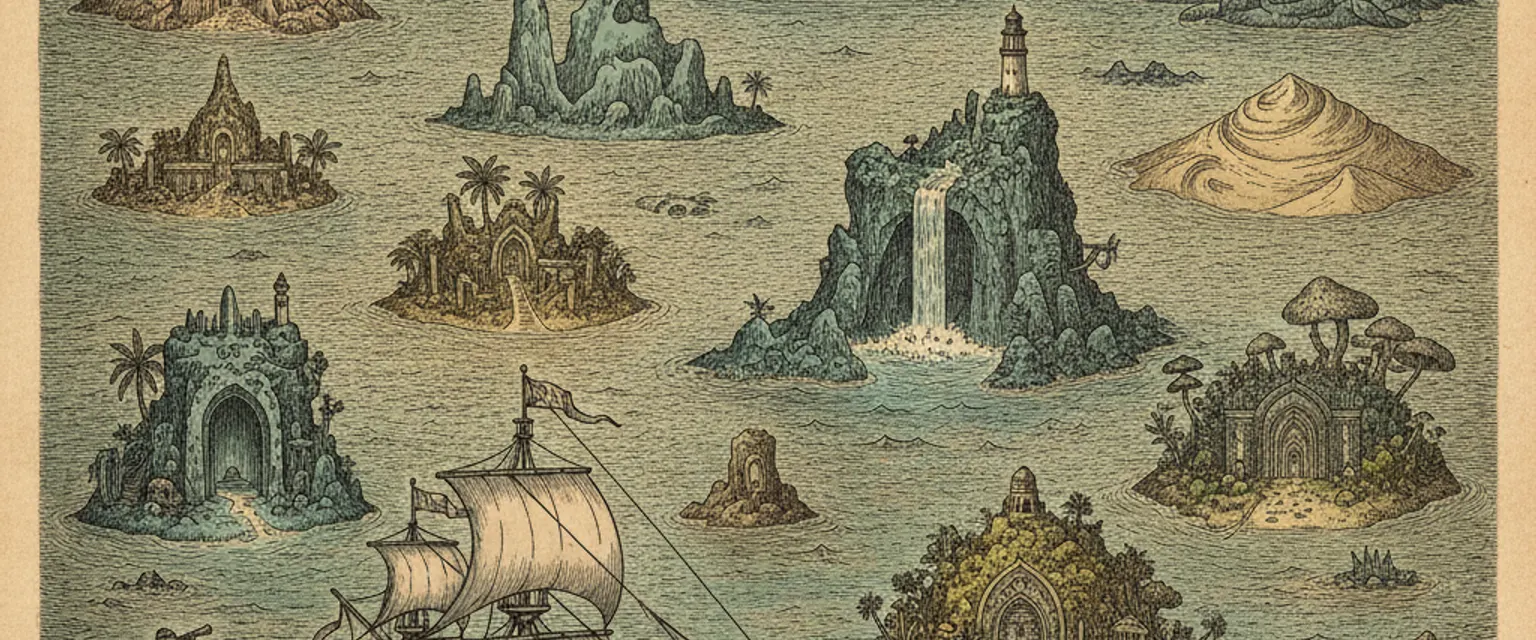
I have a personal rule about islands: if the harbour has more gelato stands than fishing boats, I’ve arrived ten years too late. These eleven still pass the test. I’ve ranked them by how genuinely empty they feel right now, with a quiet nervous eye on how fast that’s slipping. None of them are secret in the “you’ll need a satellite phone” sense. They’re just places the algorithm hasn’t fully eaten yet.
1. Príncipe, São Tomé and Príncipe
The least-visited corner of one of the least-visited countries on Earth, sitting in the Gulf of Guinea like it’s hiding. Jungle drops straight into the sea, the whole island has maybe a handful of proper hotels, and Praia Banana is the kind of beach that makes you suspicious. The flight connection is genuinely annoying, which is exactly why it’s still like this.
Will it stay empty? For now, yes — the airport handles a trickle, not a tide. That’s the whole moat.
2. Kihnu, Estonia
A tiny Baltic island run, more or less, by women — a matriarchal folk culture UNESCO actually flagged. Babushkas on motorbikes in striped skirts, no traffic lights, one shop. I went expecting quirky and left genuinely moved. The ferry from Munalaiu takes about an hour and nobody on it is filming anything.
Is there anything to do? Cycle the entire island in an afternoon, eat smoked fish, attend a wedding you weren’t invited to. That’s the itinerary.
3. Vis, Croatia
Yes, Croatia, I know. But Vis was a closed military island until 1989, so it never got the Hvar treatment. The Blue Cave gets day-trippers; the rest of the island doesn’t. Komiža harbour at dusk, a plate of grilled fish, zero people pretending to read a book for a photo.
Best time to go? June or September. July and August it gets a whisper of the mainland madness.
4. Ouvéa, New Caledonia
A 25-kilometre stretch of white sand that locals call the island closest to paradise, and for once the cliché is mathematically defensible. It’s a Pacific outpost of France, so the bread is excellent and the lagoon is unreasonably blue. Getting here means a flight to Nouméa then a small hop, which filters out 99% of humanity.
Is it expensive? It’s French-Pacific, so yes-ish. But you’re paying for emptiness, which is the rarest thing.
5. Folegandros, Greece
Santorini’s cleverer, shyer cousin. Same dramatic clifftop Chora, same blinding white-and-blue, roughly none of the cruise ships. I watched a sunset from the Panagia church path with about six other people and a cat. The ferry from Athens is long, the reward is silence.
How do I get there? Slow ferry from Piraeus, or hop from Santorini if you must — the inconvenience is the point.
6. Chiloé, Chile
Stilt houses, wooden churches, a sky that’s grey in a romantic way and damp in an honest one. Chiloé feels like a place where myths are still operationally active. The penguins at Puñihuil don’t care about your schedule. Bring a raincoat and abandon all hope of a tan.
Worth the trip from Santiago? Absolutely, if you like your beauty moody rather than bikini-shaped.
7. Sumba, Indonesia
The anti-Bali. An hour’s flight east and a different planet — wild horses, megalithic tombs, surf breaks with nobody on them. There’s one famously eye-watering resort, sure, but the rest of Sumba is villages and empty cliffs. Wekuri Lagoon was, the day I visited, populated by me and two confused goats.
Is it like Bali yet? No. The road network alone guarantees a few more peaceful years.

8. Saba, Caribbean
Five square miles of volcano with no beach to speak of, which is precisely why the cruise crowd ignores it entirely. Instead you get cloud forest, the world’s shortest commercial runway (terrifying, brief), and a dive scene that serious divers whisper about. The Caribbean without the buffet line.
No beach? Really? Really. You come for the hiking and the underwater. The lack of sand is the bouncer keeping the riff-raff out.
9. Koh Mak, Thailand
Between Koh Chang and Koh Kood, owned largely by a few local families who quietly decided not to let it become a full-moon-party situation. Flat, cycleable, hammocks everywhere. I rented a battered scooter and saw maybe four other tourists all day. It exists in defiance of everything that happened to Phuket.
Family-run paradise — how long? The families are protective. But “protective” and “Thailand’s tourism machine” are on a collision course, so don’t dawdle.
10. Sálvora, Spain
A genuinely uninhabited island off Galicia, accessible only by a permitted boat trip from the Ría de Arousa. Abandoned village, a lighthouse, a beach that’s never seen a sun lounger. You need a permit, the boats are limited, and that bureaucracy is the only thing standing between Sálvora and an Instagram apocalypse.
Can anyone just go? No — limited permits via the national park. Plan ahead and you’ll have an actual desert island.
11. Fanø, Denmark
A wide, hard-packed sand beach so vast you can legally drive a car on it, in the cold clean light of the Danish North Sea. Thatched cottages, kite-surfers, wind that reorganises your hair and your priorities. It’s beloved by Danes and almost unknown to everyone else, which is the most charming kind of secret.
Isn’t it cold? It’s Denmark, so bring a jumper. But you’ll have a kilometre of beach to yourself, and that trade is one I’ll make every time.
This article contains affiliate links marked rel="sponsored". We may earn a commission at no extra cost to you.