
[ DISCOVERY · THE DISPATCH ]
Socotra Looks Like an Alien Planet and Somehow You're Allowed to Go
There's an island off Yemen where a third of the plants grow nowhere else on Earth and the trees look like upside-down umbrellas bleeding red sap. It's part of a country at war. And, somehow, quietly, you're allowed to go. Here's how.
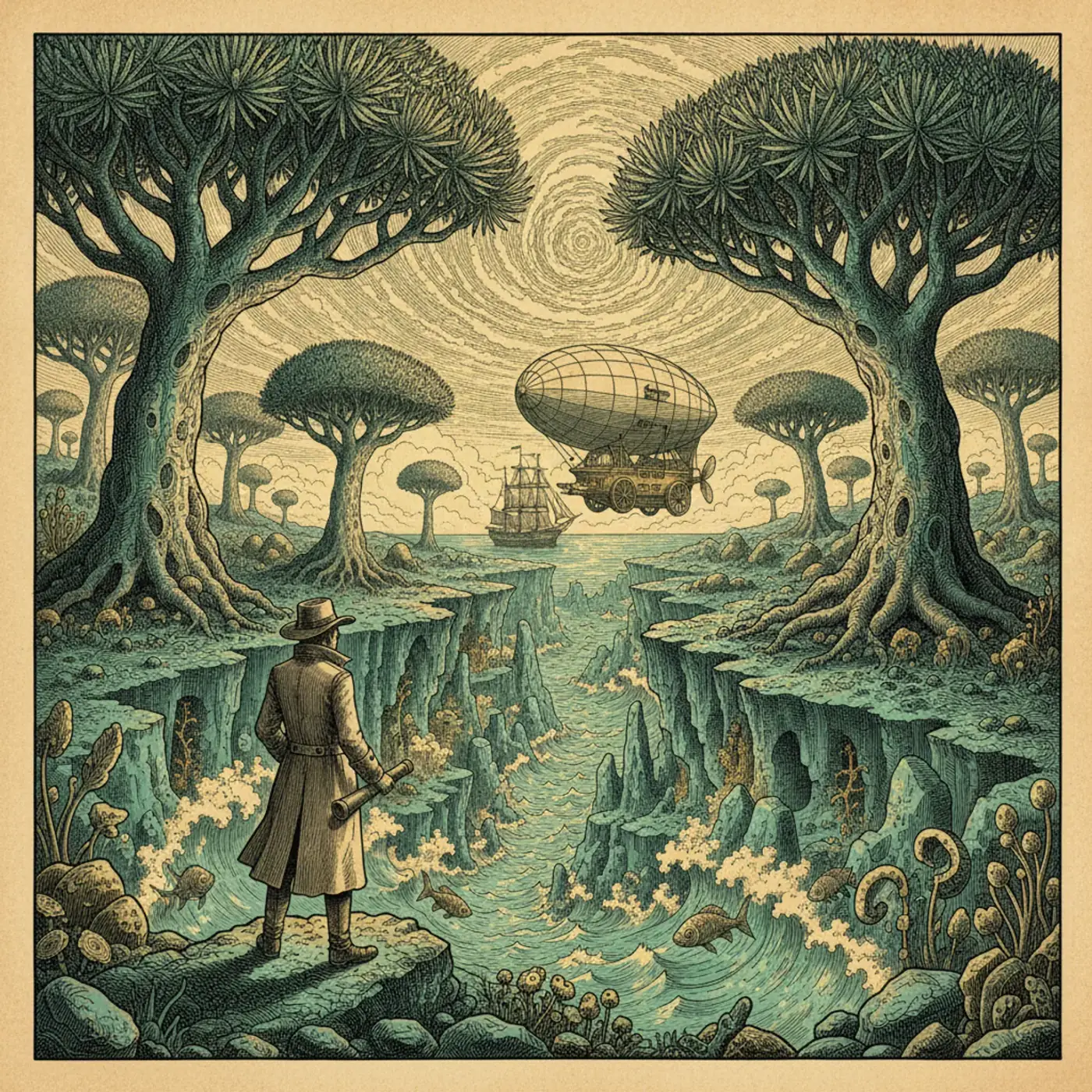
Socotra island travel sounds like a wind-up. An island off the coast of Yemen — yes, that Yemen — where a third of the plant life grows nowhere else on the planet, where the most famous tree looks like a flying saucer landed and put down roots and bleeds red when you cut it. And you can just… go. I didn’t believe it either until I was standing on the Diksam Plateau watching the sun set behind a forest of dragon’s blood trees, thinking, how is this allowed.
Let me back up.
What the place actually is
Socotra sits in the Arabian Sea, closer to Somalia than to mainland Yemen, isolated for so many millions of years that evolution went a bit feral. The dragon’s blood tree — Dracaena cinnabari — is the icon: a thick trunk that splits into a dense, upward umbrella of branches, so it looks like a mushroom designed by someone who’d only had mushrooms described to them. The red resin it weeps was traded as a dye and a medicine for centuries. There are bottle trees too, fat-trunked things that store water and bloom pink, clinging to bare rock like they’re sulking.
About 37% of the plant species here are endemic. UNESCO listed the whole archipelago back in 2008. It’s the kind of place biologists talk about in the same breath as the Galápagos, except hardly anyone’s heard of it, because — and I cannot stress this enough — it belongs to a country that’s been at war.
The “how are you allowed to go” part
Here’s the geography that makes it possible. Socotra is physically removed from the mainland fighting. For the last several years it’s been reachable via charter flights, mostly out of Abu Dhabi, run in coordination with local tour operators. The flight isn’t daily — it tends to run weekly, sometimes less, and schedules wobble, so you build in slack. You don’t fly through the Yemeni mainland and you don’t go independently. You go with a licensed Socotri operator who handles the permit, the guide, the driver, the camping setup.
I want to be honest, because the romance of this place makes people switch their brain off. Your government almost certainly has a “do not travel” advisory covering Yemen as a whole, and that advisory will tank your travel insurance. Read it. Take it seriously. Then make an adult, informed decision — plenty of people do go and come back raving, but go in with your eyes open, not on a vibe.

What it’s actually like on the ground
Rough, in the best way. There are a couple of basic hotels in Hadibo, the main town, but the real Socotra is camping. You sleep on beaches like Qalansiyah or in the canyons, your guide cooks fresh fish over a fire, and the stars are absurd — no light pollution for hundreds of miles, the Milky Way thrown across the whole sky like someone spilled it.
The first night I camped near the Detwah Lagoon, a fisherman wandered over with a small octopus he’d just caught and basically taught us how to clean it by gesturing, because we shared exactly zero words. We ate it twenty minutes later. Best thing I put in my mouth all year and I’ve eaten in places with stars on the door.
Bring cash. US dollars, clean newish bills, more than you think. There are no ATMs you can rely on, cards are a fantasy, and everything — the operator, tips, extras — runs on physical money. I’d budget the whole trip in advance and then add a generous cushion in twenties.
The roads are mostly not roads. You spend hours in a 4x4 bumping across riverbeds and up to plateaus, and it’s worth every bruise. Homhil, with its infinity pool of a natural basin looking out over the sea. Arher, where a massive white dune climbs straight up against the mountains and a freshwater stream runs past the bottom so you can swim in the sea and rinse in the river within the same minute. Shoab beach, reachable by boat, dolphins escorting you out, sand so white it hurts.

The window might be closing
This is the bit that nags at me. Right now Socotra exists in a strange, precious in-between — reachable, still wild, still mostly free of the machinery that grinds famous places down. But “Instagram’s favourite alien planet” energy is building. More flights, more operators, more drone footage. The dragon’s blood trees regenerate painfully slowly and goats eat the saplings, so the forests are already under quiet pressure. The Socotra of five years from now will not be the Socotra of today.
If you go — and I think, carefully, that some of you should — go light, tip well, follow your guide’s lead on what’s okay to touch and photograph, and don’t carve your initials into anything that took two thousand years to grow.
I keep trying to describe the dragon’s blood forest to people and failing. It doesn’t look real. It looks like a film set, or a dream, or a planet from a paperback sci-fi cover. And then the wind moves the branches and you remember it’s alive, it’s been alive longer than your whole civilisation, and you got to stand in the middle of it.
Go before the saplings lose and the umbrellas thin out. Just do your homework first — this one earns its romance and its risk in equal measure.
This article contains affiliate links marked rel="sponsored". We may earn a commission at no extra cost to you.