
[ DISCOVERY · THE DISPATCH ]
Mongolia Is the Trip Nobody Suggests and Everyone Comes Back Obsessed With
No one puts Mongolia on the shortlist. Then someone goes, comes home different, and won't shut up about the silence. I'm now that person. Here's the trip that wrecked me in the best way.
If you ask ten well-traveled friends where to go next, not one of them will say Mongolia. It’s just not on the list. And then — this is the pattern, I’ve watched it happen — one of them actually goes, comes back quieter and a bit changed, and spends the next year working it into every conversation. I am now, embarrassingly, that friend. So consider this the Mongolia travel guide I wish someone had shoved at me sooner.
Here’s the thing it does that nowhere else does for me. It empties you out. There’s so much space and so little signal that your brain, after a couple of days, just… stops buzzing. I didn’t know how loud my own head was until it went quiet on the steppe.
The silence is the actual attraction
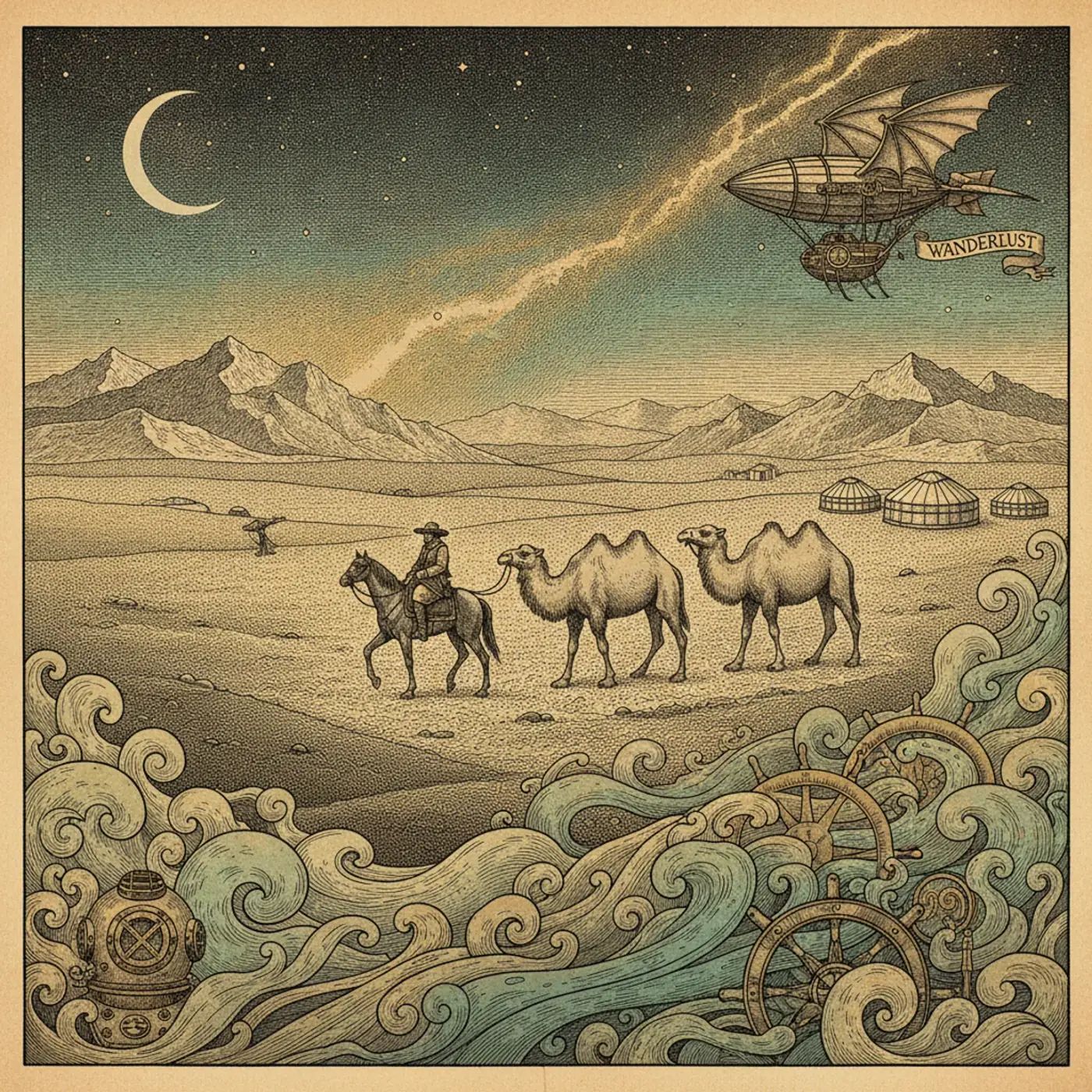
I want to be clear about what you’re going for, because it’s not “sights” in the normal sense. You’re going for nothing. Glorious, enormous nothing. You drive for hours across grassland so vast it does something funny to your sense of scale — no fences, no buildings, no other cars, just green rolling out to a horizon that feels too far away to be real, and sky on top of it that takes up two-thirds of everything you can see.
The first night I stood outside the ger after dinner and there was no sound. None. No traffic hum, no distant anything. Just wind and the occasional horse somewhere. I’m a city person and it honestly frightened me a little at first, that much quiet. By night three I was addicted to it.
Sleeping in a ger (and eating what they eat)
You stay in gers — the round white felt tents nomadic families have lived in forever. A proper ger camp isn’t roughing it exactly; there’s a wood stove, beds, often a shared bathroom block. But it’s simple, and it’s wonderful for it. You wake up, unzip the door, and the steppe is just there.
The food is going to test some of you and I won’t lie about it. It’s meat and dairy, heavily. Mutton, lots of mutton. Dried curd (aaruul) that’s hard as a rock and an acquired taste — I never quite acquired it, gnawed politely. And airag, fermented mare’s milk, mildly alcoholic, sour, fizzy, and genuinely an experience. A herder family I stayed with poured me a bowl with such pride that I drank the whole thing and asked for more, and the grin I got back was worth the slightly uncertain stomach. (Pace yourself. It does things.)
Where I’d actually point you
A week or so, realistically, to do it without rushing (and rushing Mongolia is a sin). Most trips start in Ulaanbaatar, which is a chaotic, fast-changing capital — give it a day, see the Gandan monastery, eat well, then get out into the country, which is the point.
The Gobi if you want desert drama — singing sand dunes at Khongoryn Els, the flaming red cliffs where they dig up dinosaur bones, the surreal feeling of standing in a desert in a country most people picture as only grassland. Or central Mongolia and the Orkhon Valley for the classic green-steppe-and-rivers version, ancient sites, hot springs, and herders who still move with the seasons. Time your trip around the Naadam festival in July if you possibly can — wrestling, archery, and horse racing across the plains, the real cultural heart of the place, not a show put on for tourists.
The honest warnings
This is not a soft trip and you shouldn’t pretend it will be. Distances are punishing — a “short” drive is four hours of bouncing. The temperature swings are wild; I had a baking afternoon and a near-freezing night in the same 24 hours, in summer. Pack proper layers, a warm hat even in July, and don’t trust the daytime sun to last. Plumbing is basic in the countryside. And the food, again, is not for fussy eaters.
But here’s the trade. In exchange for the discomfort you get something almost nowhere else on earth still offers: emptiness that isn’t curated, a way of life that’s real and not performed, and a silence so complete it resets something in you. There’s no queue. There’s no entrance fee to the steppe. There’s barely anyone else.
I came back with sand in my bag, a stomach that took a week to forgive me, and this stubborn, low-grade ache to go back that hasn’t faded. That’s the obsession everyone warned me about. It’s real. And it’s why this is the trip nobody suggests and everybody, eventually, can’t stop talking about.
Go for the nothing. The nothing is the whole point — and it’ll be louder in your memory than any city you’ve ever photographed.
This article contains affiliate links marked rel="sponsored". We may earn a commission at no extra cost to you.