
[ DISCOVERY · THE DISPATCH ]
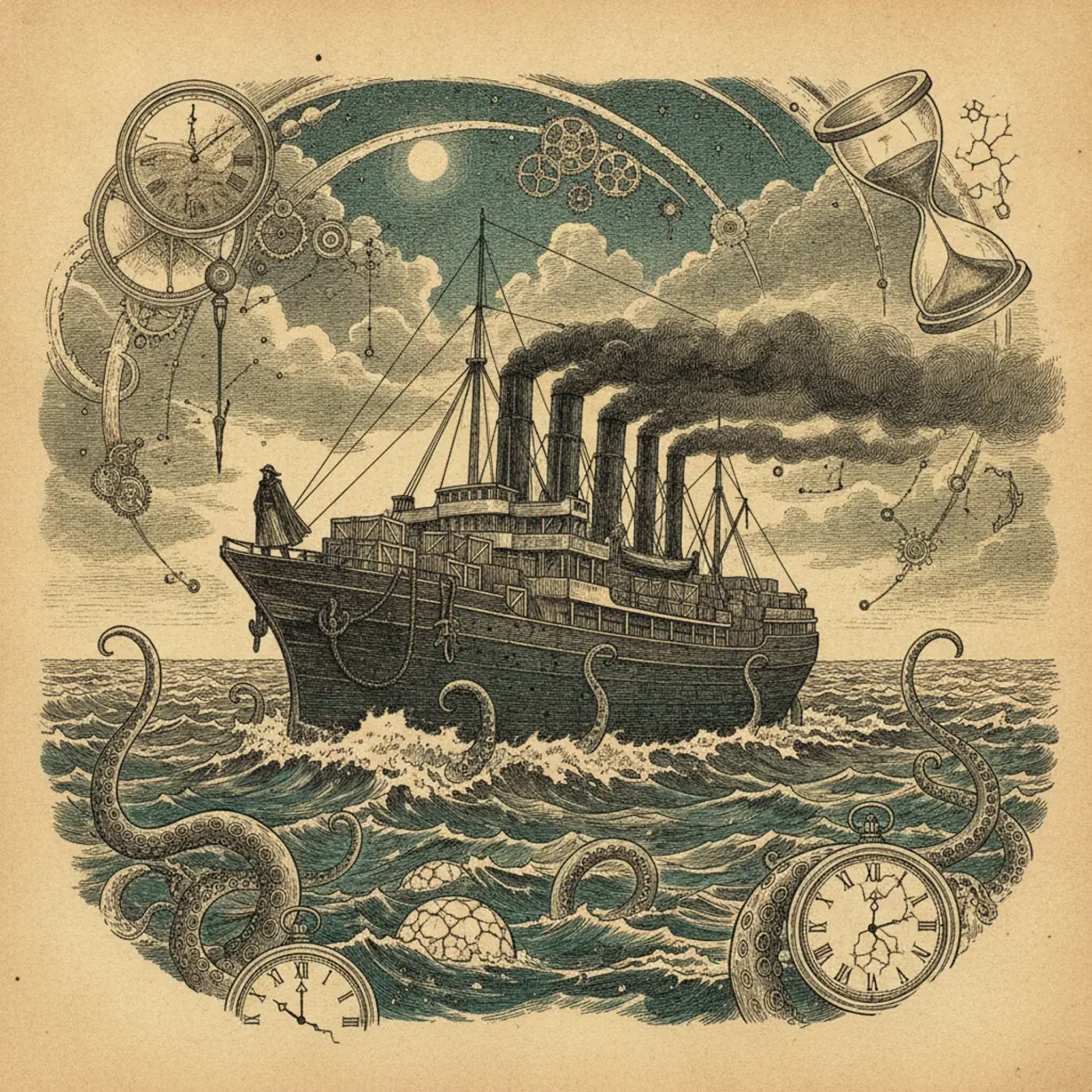
I Took a Cargo Ship Across an Ocean Instead of Flying and Time Stopped Working
Cargo ship passenger travel is real, you can book it, and I did — eleven days across the Atlantic in a freighter cabin with eleven crew and no Wi-Fi. Here's what it actually costs and what it does to your brain.
Cargo ship passenger travel sounds like something from a 1950s novel, but I want to be clear before anything else: you can actually book this. Today. I did, last autumn, and I crossed the Atlantic in eleven days on a container ship with eleven crew, one other passenger, and a cabin bigger than most apartments I’ve rented.
And it broke my relationship with time in a way I’m still not over.
The first morning out of Antwerp I woke up and reached for my phone, the way you do, the involuntary reflex. No signal. No Wi-Fi (you can buy a tiny satellite allowance, expensive and slow, but I’d decided not to). And there was this small panic, then a much larger nothing, and the nothing turned out to be the best part.

How you actually book one
Nobody stumbles onto this. You go through a specialist — there are maybe three or four reputable freighter-travel agents in the world, and they broker the spare cabins that lines like CMA CGM keep for the odd paying passenger. You email, you wait, you get quoted a sailing that may or may not still be running by the time you confirm, because cargo schedules bend to cargo, not to you.
Mine cost about €1,450 for eleven days. That’s full board — every meal, the cabin, the lot. Works out around €130 a day, which for accommodation plus three meals plus crossing an entire ocean is, when you think about it, absurdly reasonable. It’s not the cheap option versus a budget flight. It’s the option for people who want the days, not just the arrival.
You sign a lot of paperwork. You need a doctor’s letter saying you’re fit, because — and they are very firm on this — the ship will not divert for a medical problem. The nearest hospital might be four days away. You’re agreeing to that. Sobering to sign.

A day at sea, which is to say: nothing, beautifully
People ask what you do all day. The honest answer is you learn to do almost nothing, and it takes about three days to stop fighting it.
Meals anchor everything. You eat with the officers at fixed times — 0730, 1200, 1730 — in the officers’ mess, and the food was hearty Filipino-and-European crew cooking, more than I could finish, the cook clearly a little baffled that a passenger cared. (His name was Rolando. He made a chicken adobo I think about probably once a week now.)
Between meals? I walked the deck. You can roam most of the ship if you wear the hard hat and stay clear of the working areas. I’d do laps along rows of containers stacked five high, the sea sliding past, and there was genuinely nothing on the horizon for days. No other ships. No land. Just water and the engine’s deep, constant hum that you stop hearing by day two and that becomes a kind of silence.
I read four books. I wrote, badly, in a notebook. I watched the wake. I slept like I haven’t slept since I was a teenager — nine, ten hours, the gentle roll of the ship doing something to my nervous system that no app has ever managed. By the end I’d stopped checking the time at all. Time stopped working. There was light and dark and three meals and that was the entire architecture of a day, and it was enough.

The new crowd doing this on purpose
Here’s what surprised me. I assumed I’d be the only weirdo. But the agent told me bookings are up, sharply, driven by the flight-free crowd — people who’ve decided, for climate reasons or just for their own sanity, that they’re done with airports.
And I get it now. The other passenger on my crossing was a retired teacher who’d sworn off planes three years ago and now moves around the world entirely by ship and train. He wasn’t preachy about it. He just seemed… unhurried, in a way I found quietly enviable. He’d been to Australia and back without a single flight. It takes him months. He has the months. He’d decided that was the trade he wanted.
A cargo crossing isn’t carbon-free — a container ship burns serious fuel — but per passenger, slotting into a ship that’s sailing anyway with or without you, the footprint is a fraction of flying. That’s the climate logic. The personal logic is simpler and, for me, won: the journey stopped being the annoying bit between two places and became the actual point.

Would I do it again? And should you?
Yes. But know what you’re signing up for.
You will be bored. Properly bored, the kind we’ve nearly engineered out of modern life. If you can’t sit with your own head for eleven days you will hate this and there’s no early exit — you’re on the ship until the ship docks. There’s no entertainment, no other guests to befriend if you don’t click with the one or two aboard, and the weather does what it wants. We hit a gale off Newfoundland and I was useless for a day, green and horizontal.
But if some part of you is tired — and I think a lot of us are tired in a way a beach holiday doesn’t fix — this resets something. I came off that ship in Halifax slower, calmer, and weirdly reluctant to turn my phone back on. The notifications, when they finally flooded in, felt like noise from another planet.
Eleven days, no Wi-Fi, one ocean. Cheapest therapy I’ve ever bought, and Rolando’s adobo was included.
This article contains affiliate links marked rel="sponsored". We may earn a commission at no extra cost to you.