
[ TIPS · THE DISPATCH ]
How to Haggle in a Market Without Being That Rude, Sweaty Tourist
There is a way to haggle that's fun, fair, and leaves both of you smiling — and there's the red-faced tourist barking numbers like it's a hostage negotiation. I've been both. Here's how to be the first one.
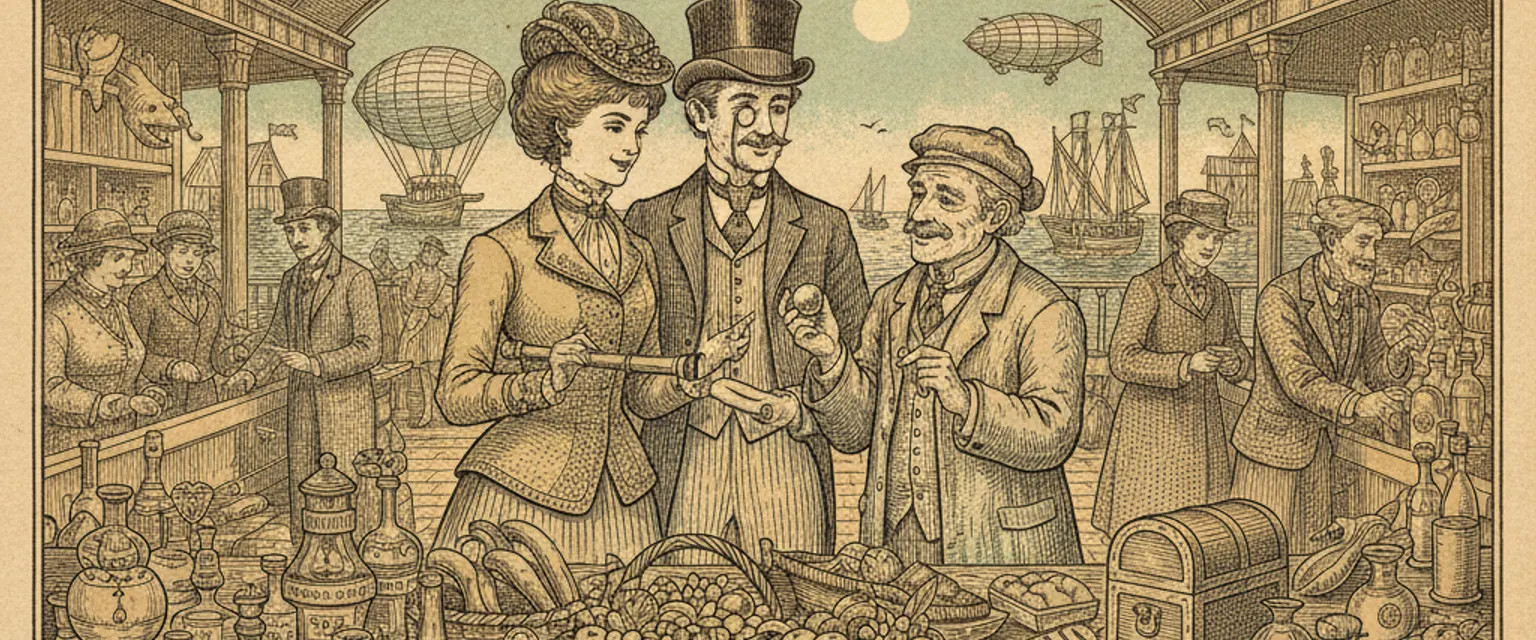
Learning how to haggle when traveling took me one truly mortifying afternoon in a Marrakech souk, where I turned a friendly negotiation over a leather bag into something that felt like a divorce court. I was sweating. I was clutching the bag. I’d read somewhere you should “always offer a third” and I was wielding that like scripture, repeating my number louder each time as if volume were the issue. The vendor — patient man, far more graceful than me — eventually just looked tired. I bought the bag for too much anyway, having extracted nothing but my own dignity. Hated it.
Here’s the thing I’ve since understood: haggling done right is not combat. It’s a small social dance, often a genuinely warm one, and the tourists who treat it like a war are both worse at it and deeply unpleasant to deal with. Let me save you that afternoon.
The walk-away is the whole game
Strip away every clever tactic and what’s left is one move: the willingness to leave. That’s it. That’s your only real leverage. Price is a conversation about whether you’ll buy, and the moment you obviously must have the thing, you’ve lost.
The walk-away isn’t a trick where you flounce off and lurk hoping to be called back (though that does happen, often). It’s a genuine internal state. You have to actually be okay not buying it. The second a vendor senses you’ve fallen in love with the rug, the rug’s price stops moving. Stay a little detached. “It’s nice. Maybe.” Browse the next stall. Mean it.
When I do walk, I do it pleasantly — a smile, a “thank you, maybe later.” Not a huff. About half the time I hear a new, better number called after me before I’ve gone ten steps. The other half, I just… didn’t need it that much, and that’s fine too. The walk-away only works if you can live with both endings.
Anchoring without being insulting
Yes, you open below the asking price. No, “always offer a third” is not a universal law — it’s a lazy bit of travel-blog folklore that gets people into trouble. The right opening depends wildly on the place, the item, and how inflated the first ask is.
A decent rule of thumb in markets where haggling is genuinely expected: start somewhere around half, and understand that’s an opening, not your goal. You’ll likely meet somewhere in the middle. But read the room — if the first price is only slightly above fair, lowballing to half is just rude and signals you’ve no idea what the thing’s worth. If the first price is wildly inflated tourist-tax nonsense, you’ve got more room.
How do you know what’s fair? Do a lap first. Ask prices at three or four stalls before engaging seriously at any. You’ll quickly triangulate the real range, and you’ll negotiate from knowledge instead of from a number you read on the internet. Knowing the going rate is worth more than any single tactic.
And keep it light. A little theatre is part of it — the mock-horror at the first price, the laugh, the “you’re killing me.” Done with a smile it’s a game both of you enjoy. Done with a scowl it’s just an Englishman being difficult, and nobody’s having fun, least of all the person who has to do this all day.
Reading whether you should haggle at all
This is the bit the tourists who embarrass us all skip entirely, and it matters more than any technique: in plenty of places, haggling is not expected — and in some, it’s actively rude.
Walk into a market in Bangkok, Marrakech, Istanbul, Delhi, and yes, the first price often has air in it and a friendly back-and-forth is the norm. But try to haggle over a fixed-price meal in Japan, or in most shops across northern Europe, or at a café, and you’ve just made everyone uncomfortable and marked yourself as the clueless one. Haggling where it doesn’t belong reads as you implying the seller is a cheat. In some cultures it’s genuinely insulting.
A few signals it’s a haggle situation: no price tags, a market or bazaar setting, souvenirs and crafts, a vendor who quotes you a suspiciously round and high number while watching your face. Signals it absolutely is not: posted fixed prices, supermarkets, restaurants with menus, anything in a country where the whole economy runs on set prices. And food stalls are usually fixed even in haggling cultures — the €1 dumpling is €1, don’t be the person quibbling over a dumpling.
When you’re unsure, the kindest move is just to ask, gently. “Is the price fixed?” Asked with a smile, it offends no one, and it tells you instantly which world you’re in.

Be the good tourist
Look — the vendor is a person doing a job, often a long hot one, and the difference of a euro or two that you’re fighting over means far less to you than to them, even if the principle nags at you. Haggle, sure. Get a fair price, definitely. Don’t get fleeced. But the goal isn’t to win. The goal is a price you’re both happy with, reached without anyone feeling cheated or cornered.
The best market moments I’ve had ended in a handshake, a laugh, sometimes a tea I didn’t ask for. The worst was that sweaty Marrakech bag, where I “negotiated hard” and walked away with a thing I overpaid for and a sour taste. Don’t be that. Be relaxed, be fair, be ready to leave, and be kind. It’s a market, not a battlefield, and the people who get this are the ones who go home with both a good price and a good story.
Haggle like you’re playing, not fighting — set your real ceiling, keep the smile, and never want anything badly enough that you can’t walk away from it.
This article contains affiliate links marked rel="sponsored". We may earn a commission at no extra cost to you.