
[ TIPS · THE DISPATCH ]
How Much Local Cash to Carry on Arrival: The Airport-Day Wallet Plan by Country Type
Landing with the wrong amount of cash is a quiet stress nobody plans for. Here's my tiered first-24-hours wallet plan, sorted by whether you land somewhere card-friendly, cash-only, or full of airport scammers.
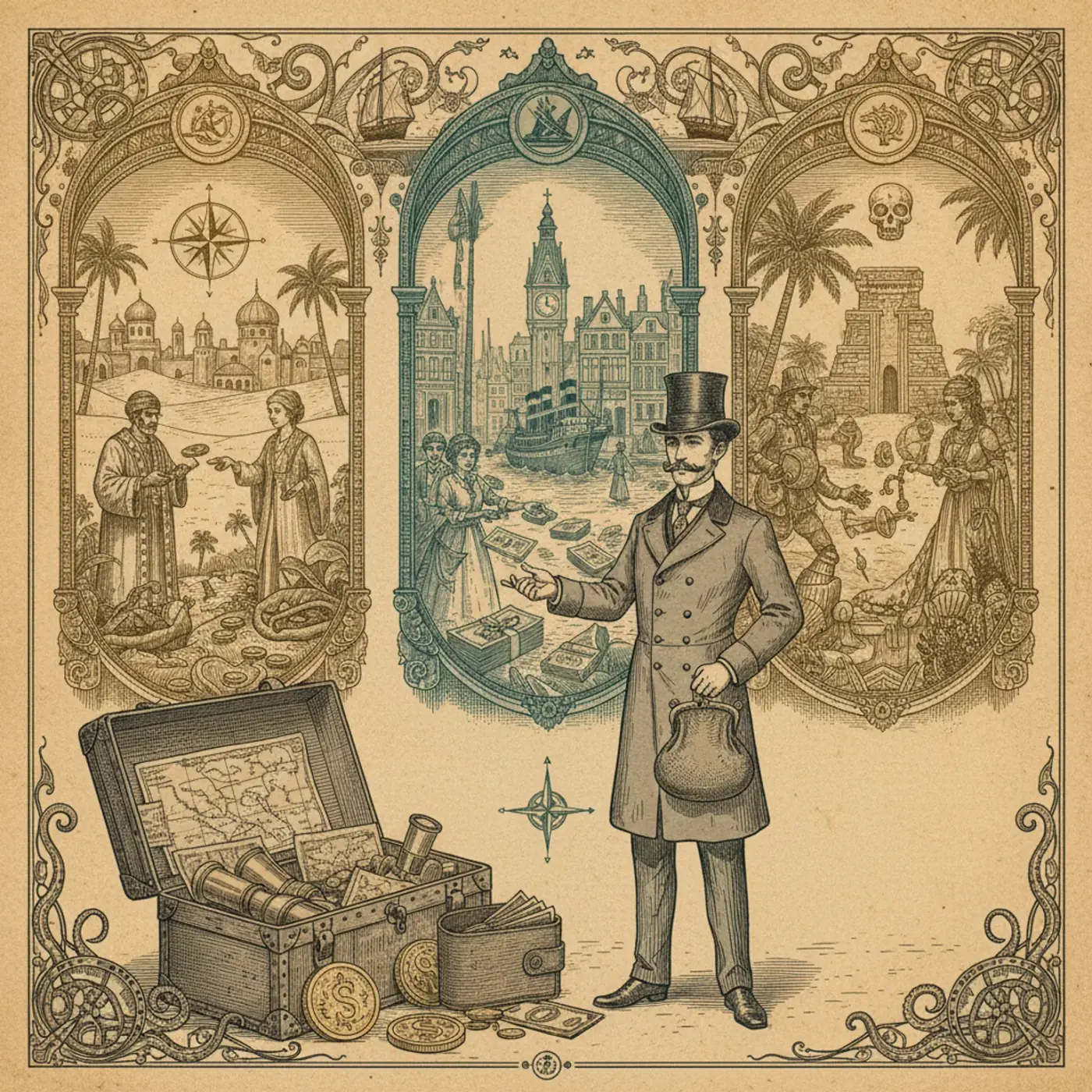
How much cash to bring when traveling is one of those questions that feels too basic to research, right up until you’re standing in an arrivals hall at 1am, no signal, a taxi driver who only takes notes, and an ATM that just ate your hopes. Been there. Cairo. Don’t recommend it.
So I built a system. It’s simple and it has saved me real money and real panic, and it all comes down to one question: what kind of country am I landing in?
First, the rule that applies everywhere
Do not change money at the airport currency desk. Ever. Those desks — the bright ones with the flashing rates near baggage claim — give you a spread so wide it’s almost art. I’ve seen 12% worse than the real rate, dressed up as “0% commission.” The commission isn’t the trick. The rate is.
Instead, use a real bank-branded ATM inside the terminal. And when it asks if you want to be charged in your home currency, say no, always, take the local one — that home-currency offer (dynamic currency conversion) is another 5-ish percent stolen with a smile.
Country Type 1: Card-friendly (most of Europe, Japan now, much of the rich world)
Here you barely need cash at all. Tap-to-pay runs everything — trains, coffee, museums, that little bakery. So my arrival cash is tiny: just enough for the one stubborn thing that’s still cash-only.
My plan: pull about €50–80 equivalent from a terminal ATM. That covers a possible cash-only locker, a tip, a market stall, the rare taxi that “forgot” the card machine works. Then I basically stop thinking about cash and let the card do the lifting.
The mistake people make is over-withdrawing here, then schlepping €300 in foreign notes around for a week and changing it back at a loss. Don’t. In card-land, less is more.

Country Type 2: Cash-only (Georgia, much of the Balkans, rural Japan, lots of Southeast Asia)
Different game entirely. Cards work in the cities, sure, but the actual good stuff — the family guesthouse, the night-market grill, the shared minivan, the temple donation box — runs on notes. Here, arriving short of cash is genuinely limiting.
My plan: pull the equivalent of about $150–200 on arrival, in a mix you can actually spend. And that last bit matters — ask for, or break down into, small notes fast. The first time I landed in Tbilisi I had a fat stack of 100-lari notes and not a single shop could break one before noon. Useless. A 100 is just paper if nobody has change.
So: a chunk of cash, broken small, refilled every few days at city ATMs where the fees are lower and the machines actually work.

Country Type 3: Scam-heavy airports (you know the reputation)
Some airports are a gauntlet the second you clear customs. Fake “official” taxi touts, ATMs with skimmers, “your hotel is closed, I’ll take you to a better one” guys. Cairo, certain Delhi terminals, a few others. Here the strategy is about minimizing your exposure, not maximizing your cash.
My plan: arrive with just enough pre-arranged. Book the airport transfer in advance so I’m not negotiating with a tout while jetlagged. Carry maybe $40–60 of small local notes for the unavoidable bits, kept in a front pocket, with the bulk of any cash hidden separately. Pull more later, in daylight, at an ATM attached to a real bank branch with a guard out front — never a freestanding machine in a dim corner.
And split your money. Some in the wallet, some in a shoe or a money belt, a backup card somewhere else. The day someone lifts your wallet you’ll be very glad it wasn’t your entire trip’s funds in one sad little pouch.

A quick packing note for arrival day
Whatever the country type, I keep a small “landing kit” in my carry-on: a little local cash if I had leftover from a previous trip or could get some at home, one backup card separate from my main wallet, and the transfer or first-night address written on paper. Phones die. Apps need signal. Paper just works.
The whole point is to not be solving the cash problem while exhausted and exposed. Solve it before, or solve it calmly inside the secure terminal, then walk out looking like someone who knows exactly where they’re going. Even if you definately don’t yet.
A note on coins and “useless” small denominations
One thing that trips people up everywhere, regardless of country type: getting stuck with a pocket of coins and tiny notes you can’t spend and can’t change back. Coins are basically dead weight — most exchange desks won’t take them at all, and you’ll find them rattling in a drawer at home for years like little souvenirs of bad planning.
So in the back half of any trip, start spending down your cash deliberately. Pay for the small stuff — coffee, water, the metro top-up — in cash and notes to clear the float, and let the card handle the big stuff. By the last day you want to be walking out of the country with almost no physical money left. A clean wallet is a sign you did it right.
And if you do end up with leftover notes of a currency you’ll use again? Keep them. That little stash becomes your next trip’s landing kit, so you arrive already holding spendable cash and skip the whole arrivals-hall scramble entirely. I’ve got a little zip pouch with euros, yen, and lari in it, ready to go. It’s saved me more than once.
After the first 24 hours you’ve found your feet, you know the local ATM situation, and you can settle into a rhythm — top up small and often, never huge and rarely. That’s the real secret. Not how much you carry. How often you refill, and where.
Match the cash to the country, break your big notes early, and never let the airport desk touch a single one of your dollars.
This article contains affiliate links marked rel="sponsored". We may earn a commission at no extra cost to you.