
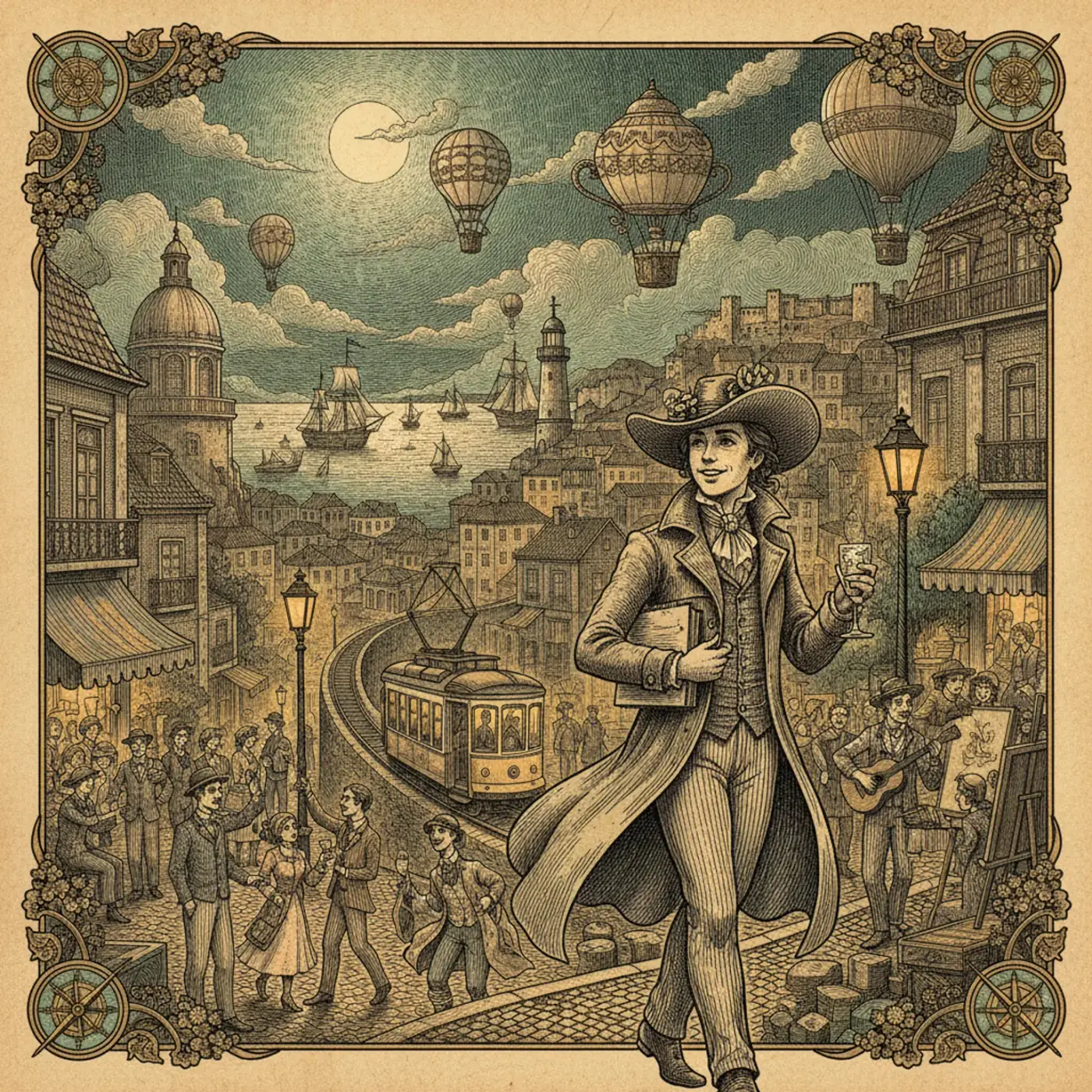
[ ITINERARY · THE DISPATCH ]
How I Did 4 Days in Lisbon Completely Sober (and Loved Every Night)
Everyone warned me Lisbon was a drinking city. They were wrong — or at least, they were only half right. Here's how four sober nights in one of Europe's wildest capitals turned into my favourite trip in years.
For the full day-by-day version of everything below, read the perfect 3-day Lisbon itinerary.
Let me be upfront: I went to Lisbon expecting to feel left out.
The city’s reputation is basically one long sentence about wine, ginjinha, and rooftop bars. Every travel piece I’d read before my trip read like a love letter to getting blurry in Bairro Alto. I’d been sober for about fourteen months at that point, and I almost cancelled twice.
I didn’t cancel. I went. And four days later I flew home having had the best nights of any trip I’d taken in my thirties. Not “best sober nights.” Best nights, full stop.
Here’s exactly how I did it.
Why Lisbon Actually Works Sober
Here’s the thing the drinking-focused travel writing misses: Lisbon’s nightlife is built on atmosphere, not alcohol. People eat dinner at 9pm and linger until midnight over coffee. Fado is listened to in near-silence, where a rogue cough earns a death stare. The city’s famous miradouros — hilltop viewpoints — fill up at sunset with people who are genuinely just there for the view and maybe a pastel de nata.
The booze is incidental. The culture isn’t.
If you’ve been nervous about a sober trip through Europe feeling like you’re perpetually watching everyone else have fun, Lisbon will genuinely surprise you.
Day 1: Arrive, Eat Everything, Find Your Feet
Land, drop bags, and immediately walk to Time Out Market in Cais do Sodré. I know, I know — it’s touristy. Go anyway. It’s enormous, loud, full of locals too, and the food is exceptional. I had a beef croquette and a bacalhau à Brás that still haunts me. Fresh lemonade with mint from one of the juice stalls: about €3.50.
Then walk uphill — always uphill — to Alfama. Get deliberately lost. The neighbourhood is small enough that you can’t lose yourself badly, and stumbling onto a quiet tile-fronted square with nobody else around is the kind of thing you only find by wandering. Check your full Lisbon itinerary for specific route suggestions, but on Day 1, honestly: resist the map.
By 8pm, you’re hungry again. Tasca do Chico in Madragoa is tiny (book ahead, seriously — they seat maybe 30 people), cash-only, and does fado caseiro: informal, passionate, local. A three-course meal with sparkling water ran me about €25. The music starts around 9:30 and the room goes utterly still. I cried. There’s no way not to.
Sober note: the wine flows freely around you, but nobody will notice or comment if your glass stays empty. I just asked the waiter early: “I don’t drink — can I have still water through dinner?” He smiled and that was the end of it.

Day 2: Sintra Day Trip (Worth Every Minute)
Sintra is 40 minutes by train from Rossio station (under €5 return) and absolutely worth a full day. Palácio Nacional da Pena, the yellow-and-red fantasy palace on the hill, costs about €14. The gardens alone justify the trip.
Bring food from Lisbon or eat at one of the village cafés — the tourist restaurants near the palace gates are mediocre and overpriced. The Piriquita bakery in Sintra village does travesseiros (almond-and-puff-pastry pillows) that are so good I bought six for the train home.
Back in Lisbon by 7pm, I walked the Ribeira waterfront until dark. The Tagus at sunset is the kind of view that makes you feel like you’re watching a film of someone else’s incredible life. Stop at Quiosque da Ribeira for a passionfruit juice (€2.50). Sit on the steps. Stay a while.
Day 3: Bairro Alto Night — The Real Test
This was the night I was most anxious about. Bairro Alto on a Friday is Lisbon’s closest thing to a classic bar-crawl neighbourhood: narrow streets, open doors, music spilling out, everyone clutching a plastic cup. It’s where you’re “supposed” to get wrecked.
I walked in at 10pm and ordered a sparkling water at the first place I liked the look of. Nobody blinked. Ordered another at the next. Same.
Here’s what I actually discovered: the fun in Bairro Alto is the street. You’re not really inside any bar — you’re flowing in and out, chatting on the cobblestones, listening to whoever’s playing. Alcohol makes you do that more aggressively, maybe, but it doesn’t create the experience. The experience is the street.
I ended up having a two-hour conversation with a couple from Porto and a chef from Setúbal who was visiting her sister. We talked about everything except what I was drinking. At midnight I bought a toasted sandwich from a counter window (€2, magnificent) and walked home through Chiado feeling more connected than I have on a lot of nights when I was drinking.
If you’re the kind of traveler who goes hard at night by yourself — check out the piece on Mexico City nights for solo female travelers, which has a lot of the same energy and similar advice about navigating nightlife sober and safe.
Day 4: Mouraria, Ginjinha Alternatives, and Going Home Properly
Mouraria is Alfama’s less-photographed neighbour and it’s brilliant. The Intendente square has been renovated beautifully and the cafés around it are genuinely local. I had the best pastéis de nata of the trip at a place called Pastelaria Mouraria — flakier pastry, slightly less sweet, eaten standing at the counter for €1.20.
The ginjinha question comes up a lot with sober travelers: it’s the famous cherry liqueur sold from tiny hole-in-the-wall bars near Rossio, and it feels like a Lisbon rite of passage. The answer: skip it, or buy a small cup and pour it on your ice cream (yes, this is a thing). The experience is really about the tiny cups and the cramped doorways, not the drink itself. You can stand there, take the photo, buy a chocolate ginja, and have definately participated in the ritual.
My last afternoon: LX Factory in Alcântara, a converted industrial space with independent shops, a good bookshop, and a rooftop bar where I ordered a cucumber lemonade and watched the 25 de Abril Bridge turn orange in the late sun. It costs nothing to wander around. Budget about two hours.
The Practical Stuff: What to Know Before You Go
Getting around: Trams are scenic but rammed. Walk where you can, Uber where you can’t. Day 1-3 I walked everything except Sintra.
Food budget: Very reasonable. Lunch at a tasca (local canteen): €8–12. Dinner at a proper sit-down with water and coffee: €20–30. Pastéis de nata: €1.20–1.50.
Non-alcoholic drinks: Freshly squeezed orange juice everywhere (€2–3), excellent coffee, galão (milky latte, brilliant), mint lemonade, homemade iced teas at most cafés. You will not go thirsty.
Will people pressure you? In my experience: absolutely not. Portugal isn’t a culture of peer-pressuring people into drinking. Say “I don’t drink, thanks” and move on.
For reference on planning the broader structure of the trip, see the full Lisbon itinerary page — it covers transport, neighbourhoods, and timing in more detail than I have space for here. And if you’re building out a wider sober Europe trip, the Europe itinerary hub is a good starting point. (The Seville piece on visiting in August is worth reading if you’re combining cities, since timing genuinely matters in southern Europe — the same logic applies in Lisbon in July and August.)
Would I Do It Again?
Without hesitation. And I’d tell anyone who’s sober-curious or newly sober and scared of “missing out” in Europe: Lisbon is alot kinder to you than its reputation suggests. The city runs on beauty, food, music, and connection. The wine is just one instrument in a much bigger band.
The real Lisbon isn’t in the glass — it’s in the streets, the music, and the view from every hill you climb.
This article contains affiliate links marked rel="sponsored". We may earn a commission at no extra cost to you.