
[ GUIDE · THE DISPATCH ]
Getting Around Istanbul: The Istanbulkart, the Ferries, and Crossing Continents for Pennies
Getting around Istanbul is shockingly easy once you have one little blue card. Here's how the Istanbulkart works, which ferry is the best cheap cruise on the planet, and the rookie mistakes I made so you don't have to.
Planning the trip? Start with the plan your Istanbul trip day by day — it lays out exactly where to go, and when.
Getting around Istanbul comes down to one card, one habit, and one glorious open secret. The card is the Istanbulkart. The habit is topping it up before you need to. And the open secret is that the cheapest, best thing you can do in this city floats: a commuter ferry across the Bosphorus that costs about as much as a tram ride and feels like a cruise people pay hundreds for.
I’ll get you sorted. First-timer rookie to smug local in about three taps.
The Istanbulkart is the whole game
You buy the card at a machine (look for the blue Istanbulkart kiosks) at any major tram stop, metro station, or ferry terminal. The card itself is a small one-time fee, then you load credit on top. Tap it on tram, metro, the Marmaray cross-Bosphorus rail, ferries, funiculars, and most buses. One card. Everything.
And here’s the part nobody tells you up front: the same card works for a group. Tap it for yourself, hand it back, your friend taps. The turnstile waits a few seconds and lets the second tap through. So two people can share one card if you’re traveling light. I did a whole weekend with my brother on a single Istanbulkart because he kept “forgetting” to buy his own. Cheers, mate.
Transfers are discounted too. Tap into a tram, then onto a funicular within a window, and the second ride is cheaper than the first. The system quietly rewards you for chaining trips, which you’ll do constantly here.
The ferry that’s a cruise in disguise
You will get sold a “Bosphorus cruise.” Skip it. Or at least skip it first.
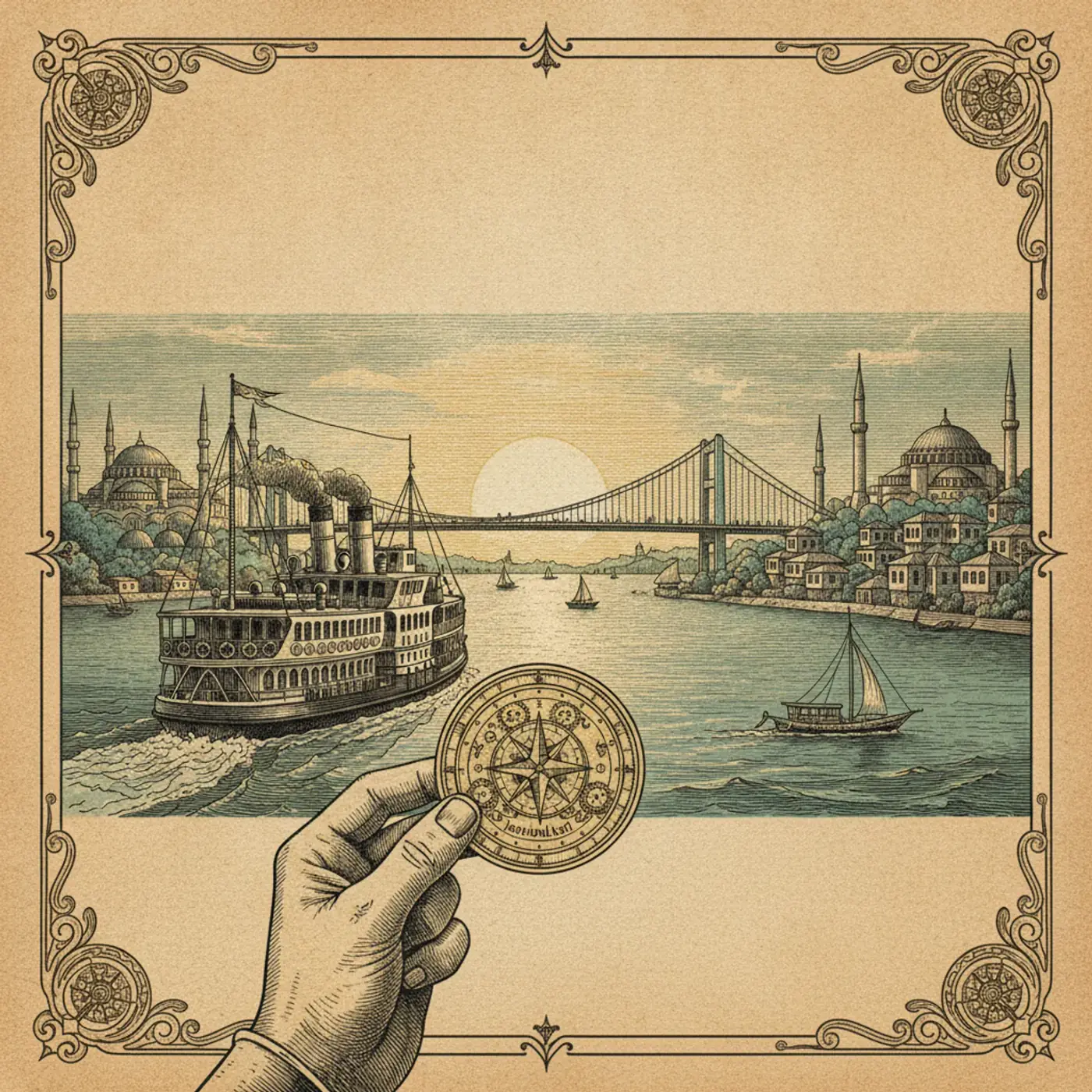
Instead, walk to Eminönü and take the regular commuter ferry to Kadıköy, or to Üsküdar, on the Asian side. It runs all day, every twenty minutes or so, costs a single tap of your Istanbulkart, and takes about twenty minutes. You’ll stand at the rail with a tulip glass of tea (the man with the tray comes round, get one, it’s a few lira) and watch the old city skyline slide past, the gulls dive-bombing the wake for bread, the Maiden’s Tower out in the strait. It is the best thing in Istanbul and it is, functionally, free.
When you land in Kadıköy you’re on the Asian side, which most tourists never bother with, and it’s got the best food market and a genuinely good bar street. So the cheap ferry isn’t just a ride. It’s a whole afternoon. Go around sunset if you can, the light on the water does something silly.
What goes where (the bits first-timers get wrong)
Sultanahmet, the postcard bit with the Blue Mosque and Hagia Sophia, sits on the T1 tram line. That tram is your main artery for the old city, it runs from across the Galata Bridge straight past all the big sights. Learn it.
To get from the old city up to the Galata Tower and the İstiklal nightlife, you take the Tünel, a tiny historic funicular that’s been hauling people up that hill since the 1870s. It’s two stops. It’s adorable. It saves your legs a brutal climb.
The airports trip people up. New Istanbul Airport (IST) is far out, and the metro reaches it now but with changes, so for a first arrival with luggage, frankly, an airport bus (HAVAIST) or a taxi might be saner. Sabiha Gökçen (SAW) is over on the Asian side, even further from the tourist core, budget a solid hour-plus into town and don’t book a 30-minute connection. I have watched people miss things assuming Istanbul is small. It is not small. It’s two continents.
One more thing. Taxis. Most are fine, but insist the meter (“taksimetre”) is running before you move, and have your destination written down or pinned on a map. The classic scam is the “broken meter” and a price invented at the end. The the meter solves all of it. If they won’t run it, get out, there’s another taxi behind it.
A word on the dolmuş and the buses, since people ask. The dolmuş is a shared minibus that runs fixed routes and leaves when it’s full, you pay cash to the driver, and honestly as a visitor you’ll rarely need one, the rail and ferries cover the tourist map. The city buses are vast and confusing and I wouldn’t bother learning them for a short trip. Stick to the things that show up clearly in your maps app: tram, metro, Marmaray, ferry, funicular. That’s a tight, legible network you can actually hold in your head, and it goes everywhere you’re going.
One more habit worth building. Keep a little credit on the card at all times, more than you think you need, because topping up means finding a machine and queueing, and the machines near the busy ferry terminals can have lines at rush hour. I keep mine loaded with enough for a full day so I’m never the person holding up the turnstile at Eminönü while a hundred commuters sigh behind me. Top up in the morning, ride freely all day.
That’s basically the whole system. One card, the T1 tram for the sights, a funicular for the hills, the Marmaray under the water, and that ferry for the soul. You really don’t need much else.
Get the Istanbulkart in your first hour, take the Kadıköy ferry in your first evening, and Istanbul stops feeling enormous and starts feeling like yours. Tea on the top deck. Trust me.
This article contains affiliate links marked rel="sponsored". We may earn a commission at no extra cost to you.