
[ ITINERARY · THE DISPATCH ]
Four Days in Budapest That Cost Less Than Your Average Dinner Out
Budapest is the rare European capital where you can have a thermal bath, a castle tour, a riverboat dinner, and four nights in a hotel and still spend less than a Paris lunch. Here's the four-day proof.
A friend told me that Budapest had become “the new Prague” — by which she meant expensive and overcrowded — and I went anyway out of stubbornness, fully prepared to be proven right. I was not proven right. I ate goulash soup in a ruin bar, soaked in a 1913 thermal bath, walked across the Chain Bridge at sunset, and paid less for four days of accommodation than I’d recently spent on a single dinner in Zurich.
Budapest is still Budapest, which is to say: monumentally beautiful, historically fascinating, extremely affordable, and fully capable of ruining all other cities for you.

Day 1: Buda Castle and the Western Bank
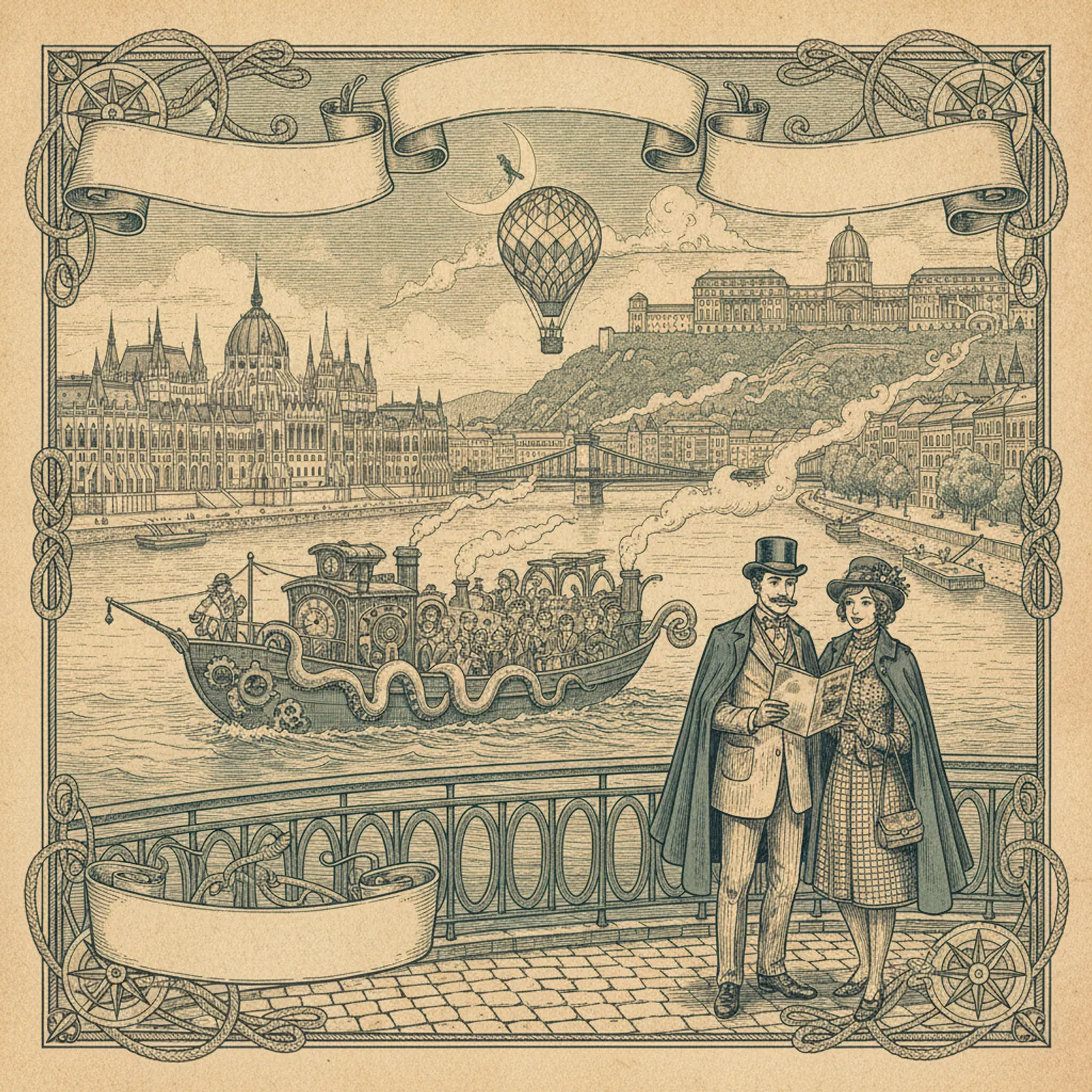
Cross to the Buda side — take the historic Funicular from Clark Ádám Square (¹ it costs about €4 and is very small and very charming) up to Castle Hill. The Buda Castle complex houses the Hungarian National Gallery and the Budapest History Museum; the views from the castle terrace over the Danube, the Pest side, and the Parliament are the defining image of the city.
Walk north along Castle Hill to Fishermen’s Bastion — a neo-Romanesque terrace with seven towers (one for each Magyar tribe) that looks so photogenically medieval it feels staged. It is not staged. It genuinely looks like that, even in person.
Descend via Matthias Church, one of Europe’s more extraordinary Gothic interiors, with its patterned tile roof and ceiling paintings that are technically medieval but feel contemporary in their abstraction.
Evening: back across to Pest, dinner at Menza on Liszt Ferenc Square — retro Hungarian design, excellent goulash, reasonable prices — followed by a wander through the Jewish Quarter’s ruin bar district.

Day 2: The Thermal Baths (Pick One)
Budapest sits on 125 thermal springs and has been building baths above them for centuries. This is not optional. You are going to a thermal bath.
Széchenyi (outdoor pools, yellow palace exterior, chess players in the water) is the most famous and justifiably so. Book in advance in peak season. The 15-pool complex is extraordinary in any weather, but especially in winter when steam rises off the outdoor pools into cold air.
Rudas Baths (Ottoman-era domed interior, 16th century) is the most atmospheric; the original Turkish bath has a star-patterned skylight that filters light into the octagonal pool in a way that makes you feel you’ve been transported. Adults-only on weekdays, mixed on weekends.
Gellért (Art Nouveau hotel spa, formal indoor pools) is the most beautiful but also the most expensive and most touristy.
Spend the morning bathing; afternoon is free for the Great Market Hall (Vásárcsarnok) — a vast 1897 market with paprika, Tokaj wine, embroidered tablecloths, and a genuinely good lángos (fried dough) on the upper floor.
Day 3: Jewish Quarter and Parliament (from the Outside)
Dohány Street Synagogue: the largest synagogue in Europe and one of the most moving buildings in Budapest — the cavernous interior, the memorial garden with the metal weeping willow, and the Jewish Museum adjacent. Book tickets ahead; it sells out.
Walk the Jewish Quarter (the 7th district): the greatest concentration of ruin bars, also some of the city’s best coffee (try My Little Melbourne on Madách Imre Square or Éspresso Embassy on Arany János) and excellent food at every price point.
Parliament Building: the exterior from across the Danube is the shot everyone takes. Interior tours run for about €20 and are genuinely worthwhile — the Gothic Revival interiors are extraordinary and the Hungarian Crown Jewels are displayed inside. Book ahead online.
Evening: Szimpla Kert — the original ruin bar, a converted factory filled with mismatched furniture, street art, cats, and multiple bars — for drinks. It’s touristy, but it’s touristy because it’s excellent.
Day 4: Margaret Island and Departure
Margaret Island in the middle of the Danube is a park with almost no cars, thermal baths (Palatinus Strand for outdoor pools), Japanese garden, and medieval ruins — the kind of place Budapest residents use for Sunday runs while tourists mostly ignore it. Rent a bike at the bridge.
Last lunch: Borkonyha (Wine Kitchen) near the Parliament for Hungarian cuisine at a Michelin-starred level with prices that are reasonable by any European standard.
Budapest budget breakdown
| Category | Budget | Mid-Range | Splurge |
|---|---|---|---|
| Hotel (per night) | €30–50 | €70–120 | €150+ |
| Lunch | €5–10 (street food/bistro) | €15–25 | €35+ |
| Dinner | €10–18 | €25–45 | €60+ |
| Thermal bath entry | €15–22 (Széchenyi basic) | €25–35 (with cabin) | €50+ (Gellért full) |
| Museum entry | €5–10 | €15 (Parliament) | — |
| Beer in a ruin bar | €2–3 | — | — |
FAQ
Is Budapest safe for tourists? Yes — it’s one of Central Europe’s safer capitals. Pickpocketing occurs in tourist areas and on trams (especially line 2 along the Danube), so standard precautions apply. The ruin bars are boisterous but generally fine.
Do I need to exchange money to forints? Yes — Hungary is not on the Euro. Card payment is increasingly common at restaurants and shops, but the thermal baths and markets often prefer cash. Exchange at a bank or ATM rather than airport kiosks for better rates.
Is the Jewish Quarter safe late at night? Yes — the concentration of bars makes it one of the city’s liveliest areas at night and well-populated until 3–4 a.m. on weekends. The nightlife is the reason people are there.
This article contains affiliate links marked rel="sponsored". We may earn a commission at no extra cost to you.