
[ TIPS · THE DISPATCH ]
What No One Tells You About Visiting Europe in August (It's Ugly)
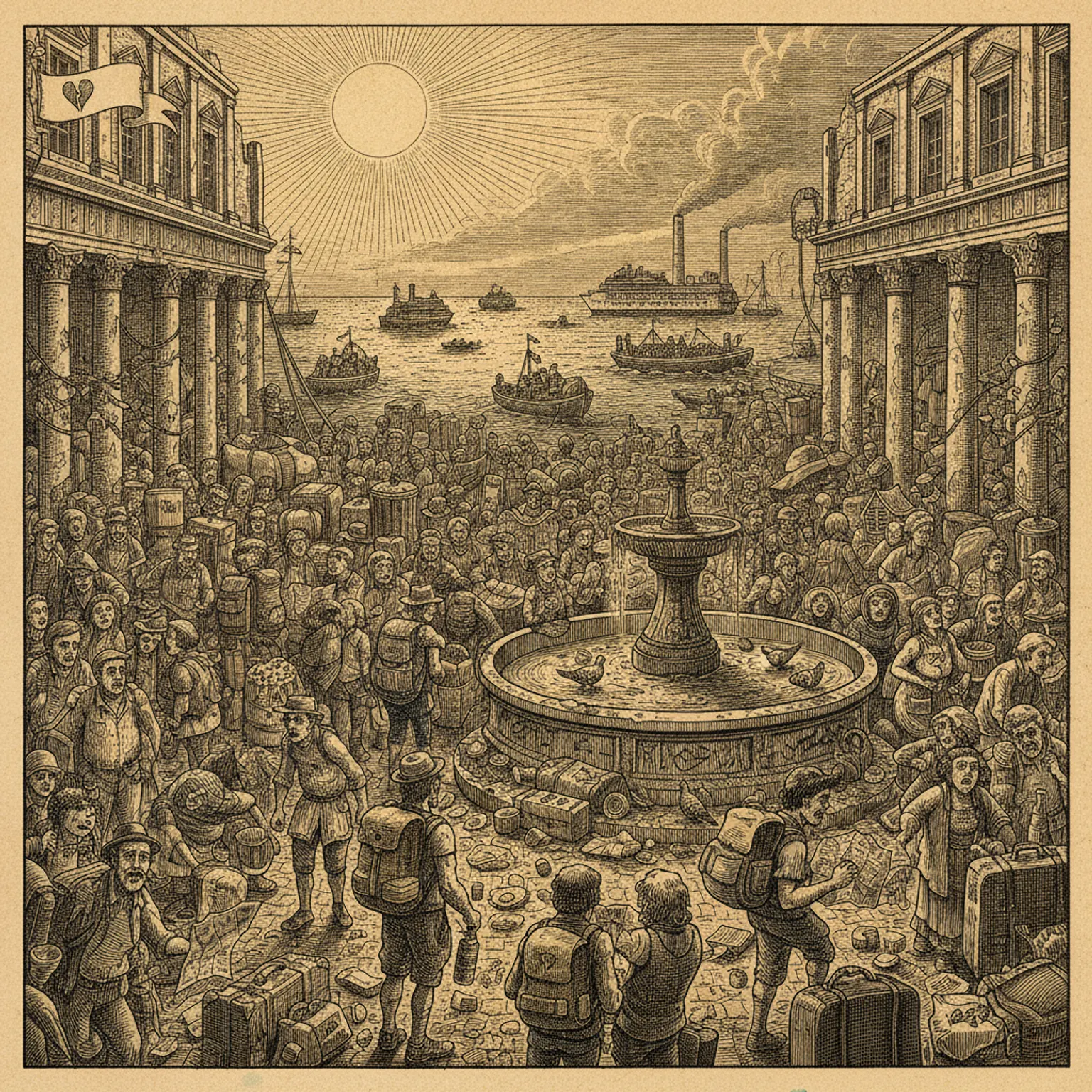
August in Europe is hot, crowded, and expensive — and half the restaurants are closed because the owners have gone on holiday, which is a sentence that will make you insane when you're there.
I went to Rome in August once. The temperature was 38°C. The Colosseum line stretched around the block in full sun. A café I’d marked on my map had a handwritten sign on the door that said, in Italian, essentially “closed for holiday, back in September, ciao.” It was 11am on a Wednesday. I stood there in the heat reading the sign and thinking: this is the most European thing that has ever happened to me.
August in Europe is not a secret — everyone knows it’s busy, it’s expensive, and it’s hot. What nobody tells you is how specifically annoying it is, or how to work around it.
Why August Is Actually the Worst
August is when Europeans take their own summer holidays. This sounds harmless until you realize it means: the family-run trattoria you were excited about is locked until September, the dry cleaner has the same sign on the door, and the charming neighborhood you read about has been colonized entirely by people like you, because the locals have left.
| Problem | How bad is it actually |
|---|---|
| Crowds at major attractions | Genuinely brutal. The Vatican in August is a spiritual test of a different kind |
| Heat | Southern Europe runs 35–40°C. Northern Europe around 25–30°C, which is manageable |
| Prices | Peak season. Accommodation is 40–70% more expensive than May or October |
| Local businesses closed | Common in France, Italy, Spain, Portugal. Budget for backup options |
| Beach towns vs cities | Everyone from the cities is at the beach. Cities are tourists plus heat |
| Public transport | Reduced schedules in some countries because staff are also on holiday |

The Cities That Handle August Worst
Worst of all worlds: Rome, Paris (much of the city goes on vacation), Venice (hot, smelly canals, astronomical crowds), Barcelona (locals flee to the coast; beach is packed), Athens (40°C and you’re trying to walk to the Parthenon).
Least terrible in August: London (doesn’t have the same holiday exodus culture, and “warm” means 22°C), Amsterdam (still crowded but more manageable), Scandinavian cities (this is their best weather and they handle tourism relatively gracefully), Prague (old town is rammed but the city is big enough to escape).
The Specific Things To Do If You’re Going Anyway
You’ve already bought the flights. Fine. Here’s how to make August work.
Book everything in advance. Not just accommodation — restaurants, museum entry, train seats. In August, the things you can walk up to are the things nobody wants. The Uffizi, the Sagrada Família, Pompeii: these need pre-booked time slots or you’re standing in the sun for two hours.
Start very early or go very late. The best time to visit any major attraction in summer is 8am when it opens, or an hour before it closes. The crowds are thinnest, the light is better for photos, and you still have the rest of the day.
Accept the afternoon. In southern Europe, noon to 4pm in August is not for doing things. It’s for finding shade, having a long lunch, swimming if there’s a pool, or doing what the locals do before they all leave: absolutely nothing. Build this into your itinerary and stop fighting it.
Go north. Scotland, Ireland, Iceland, the Baltic states, Scandinavia — these are genuinely good in August. The rest of Europe is peak-pricing you for the privilege of melting. The north is giving you good weather, fewer crowds, and often better value.

What August Is Actually Good For
Festivals: Europe runs an enormous number of summer festivals in August. Edinburgh Fringe (the world’s largest arts festival), Notting Hill Carnival in London, Sziget in Budapest, La Tomatina in Spain. If there’s a festival you specifically want to attend, August delivers. If there isn’t, September is usually better in every other way.
Beach holidays: if a beach is the point, the Mediterranean in August is hot and the water is warm and crowded but fine. You’re not going to the Amalfi Coast for the peace and quiet. Own the chaos and it becomes fun.

FAQ
Is it really that bad? It’s not dangerous or ruined. It’s just busy, hot, and expensive in ways that surprise people who didn’t research it. Go in with adjusted expectations and you’ll be fine.
What’s the actual best time to visit southern Europe? May, early June, late September, or October. Warm, manageable crowds, lower prices, and the restaurants are open.
What if my kids are only off school in August? Then you’re going in August like everyone else and you have no choice, which means you pre-book everything, start early, and embrace the chaos. It’s still Europe; it still works. Bring sunscreen.
This article contains affiliate links marked rel="sponsored". We may earn a commission at no extra cost to you.