
[ DISCOVERY · THE DISPATCH ]
Ethiopia Has a Place So Hot and Acidic It's the Closest Thing to Another Planet
Neon sulfur springs, a permanent lake of lava, salt caravans crossing a furnace. The Danakil Depression is the most extreme, most alien place I've ever sweated through. Here's how it actually works.
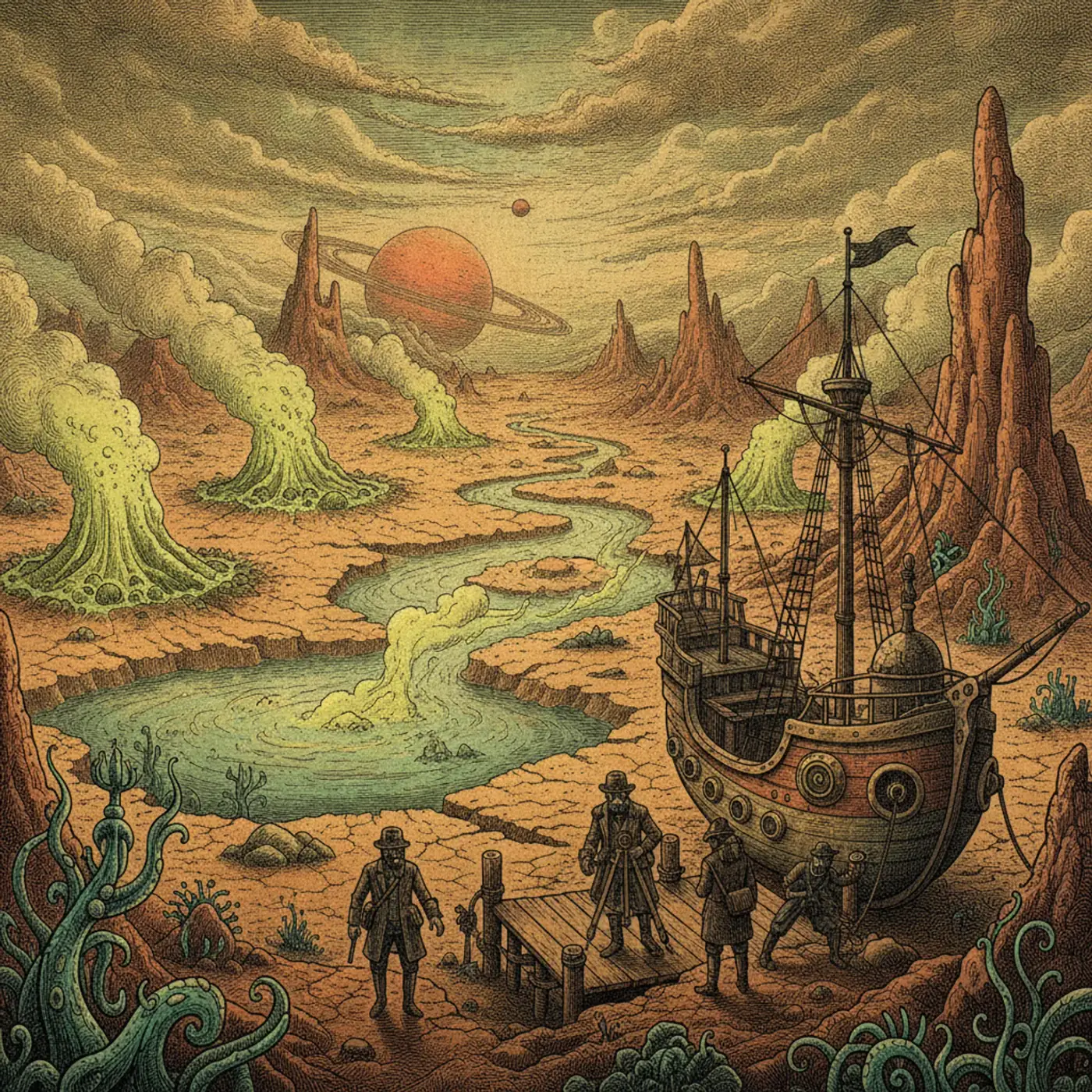
The Danakil Depression in Ethiopia is the only place I’ve ever stood where I genuinely felt like I’d left the planet. There’s a spot called Dallol where the ground bubbles up in acid pools the color of a highlighter pen — electric yellow, sour green, rust orange — crusted with salt and hissing sulfur, and you walk between them on a thin track because stepping wrong means stepping into acid. NASA tests instruments here because it’s about as close to Mars or the early Earth as you can get without a rocket. I just kept whispering, “this can’t be real.”
It is. It’s also one of the hottest, lowest, most punishing places on Earth, sitting more than 100 metres below sea level in a furnace of a desert. You don’t visit Danakil casually. You commit to it. And it pays you back in pure astonishment.
Two things you came for
There are two main events, and they could not be more different.
The first is Dallol — that hydrothermal field of neon acid springs, salt towers and mineral crusts. It’s small, you spend maybe an hour or two there, and it’s the most photographed bit because it looks flatly impossible. Acidic, scalding, beautiful in a way that feels almost toxic, which it is. You go in the morning before the heat becomes unbearable, follow your guide’s footsteps exactly, and try not to breathe too deeply where the sulfur’s thick.
The second is Erta Ale, an active volcano with one of the only permanent lava lakes on the planet. This is the harder, wilder one. You drive across black lava fields, then hike — usually at night to dodge the heat, several hours over sharp volcanic rock — to camp at the rim, and look down into a churning, glowing lake of molten rock. At night it lights the whole crater orange and the ground rumbles under you. I have never felt smaller. Or more awake.
You cannot do this alone
Let me be blunt, because it matters for safety as much as logistics. The Danakil is not a place you wander into independently. It’s harsh, remote, and politically sensitive (it’s near the Eritrean border and has seen instability over the years), so you go on an organized multi-day 4x4 tour with a registered operator, a guide, drivers, cooks and, depending on conditions and current rules, a local escort.
These tours run out of Mekele in northern Ethiopia, typically as 2-, 3- or 4-day loops that bundle Dallol, the salt flats, the camel caravans and (on the longer ones) Erta Ale. You sleep rough — basic camps, beds outdoors under the stars because it’s too hot for tents, simple food cooked by the crew. It is not luxury. It is an expedition.
Crucially: check current safety and access advice before you book, because the situation in the region can change, and reputable operators will know whether a given route is running.
The salt and the camels
In between the two headliners there’s a third thing that quietly floored me: the salt trade. The Danakil’s vast salt flats have been worked the same way for centuries. Afar men cut blocks of salt by hand in temperatures pushing 45°C and load them onto endless caravans of camels that plod across the white plain toward the highlands. Watching a line of hundreds of camels move through the heat-shimmer, led by men who do this brutal work every day, was as moving as any landscape there.
I shared tea one evening with our Afar guide, a wiry man named Hassan who’d grown up in these flats, and he talked about the salt routes like other people talk about the family business. Because that’s exactly what it is.
How to survive it (and what to pack)
Timing is non-negotiable. Go in the coolest window — roughly November to February. Even then it’s blistering. Outside that, it crosses into genuinely dangerous heat, and many tours don’t run.
Hydrate relentlessly. Bring far more water than you think; the tours provide some, but carry extra. Electrolytes help.
Pack light but smart: sturdy closed shoes for the lava rock, a hat, high-SPF everything, a headlamp for the night hike, and as little else as you can stand because you’ll be living out of a 4x4.
Manage expectations on comfort. Sleeping outdoors, squat toilets or none, dust in everything. If that’s a dealbreaker, this isn’t your trip. If it isn’t — if you can trade comfort for standing at the edge of a lava lake at 2am — there is genuinely nowhere on Earth like it.
I’ve chased “extreme” places before and found them overhyped. The Danakil is the opposite. It’s more intense, more alien, more humbling than I’d braced for. The morning I walked out into the Dallol acid field at sunrise, with steam rising off neon pools and not a sound but the hiss of the earth, I felt like a visitor to somewhere we were never really meant to be.
If you’ve got the grit for the heat and the dust, go to the Danakil — it’s the closest thing to another planet you’ll find without leaving this one, and it will recalibrate what you think Earth can do.
This article contains affiliate links marked rel="sponsored". We may earn a commission at no extra cost to you.