
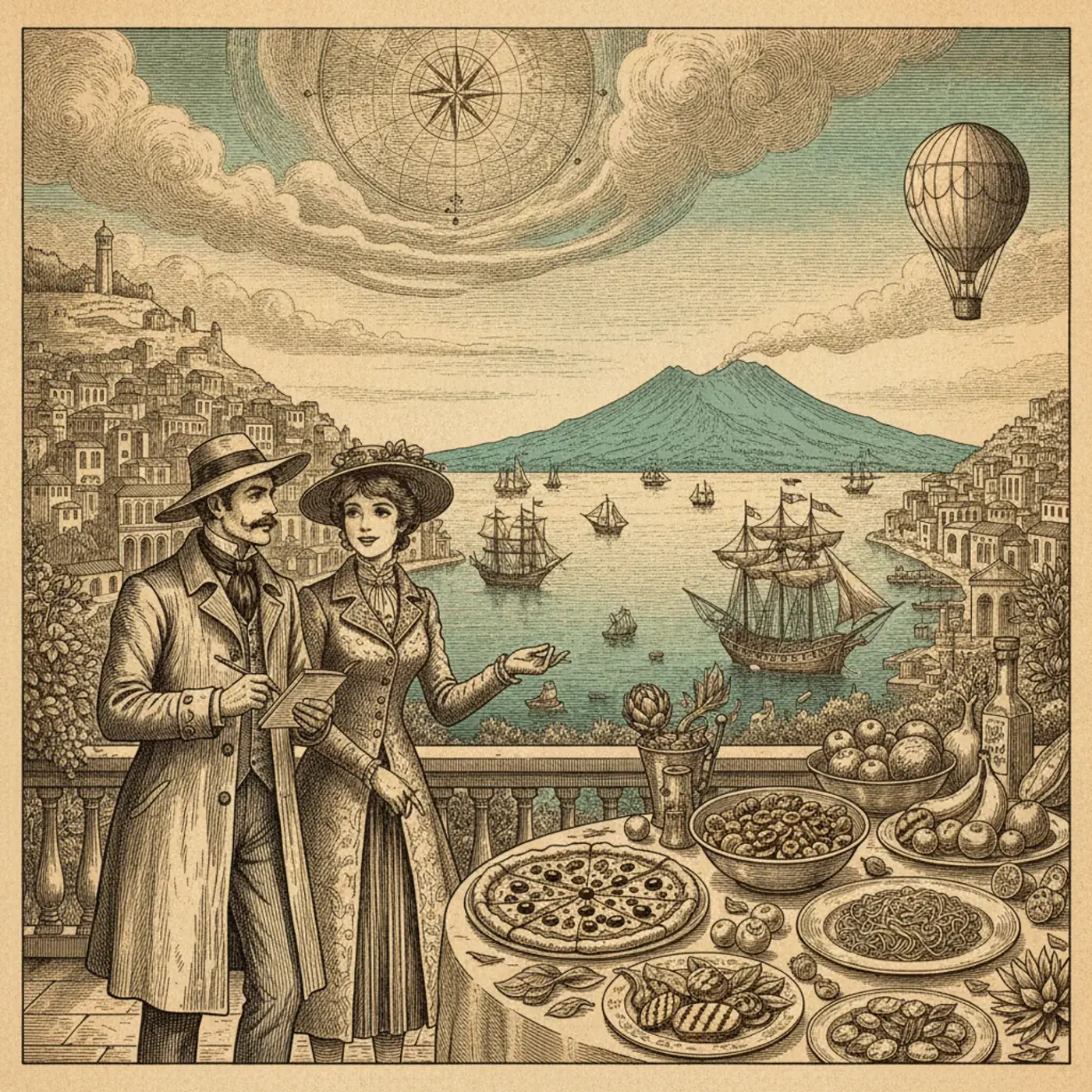
[ ITINERARY · THE DISPATCH ]
A Plant-Based Foodie's 4 Days in Naples: Yes, It's Possible
Everyone told me Naples would destroy me as a vegan. Four days later, I came home five pounds heavier and completely converted. Here's exactly how I pulled it off.
Planning the trip? Start with the plan your Naples trip day by day — it lays out exactly where to go, and when.
Let me tell you what I was warned about before my trip to Naples.
“You’re vegan? In Naples? Good luck.” My Roman friend said this with genuine pity, the kind you reserve for people about to do something irrevocably dumb. She had a point, technically. Naples is the home of pizza Margherita, buffalo mozzarella, and ragù that simmers for six hours. It’s a city that takes its animal products very seriously.
And yet. Four days in, I was eating some of the most satisfying food of my entire Italian trip. Turns out the same working-class ingenuity that made Neapolitan cucina povera famous — stretching cheap ingredients into magic — also produced a city where vegetables, legumes, and bread are treated with near-religious respect. You just need to know where to look.
This is the vegan Naples itinerary I wish I’d had. If you’re already planning your broader time in the south, the complete Naples Italy itinerary covers the cultural and logistics side in depth. This post is specifically about eating well without the cheese.

Day 1: Arrival, Centro Storico, and Your First Reality Check
Land in the afternoon and walk straight into the historic center. Your first mission is orientation, not food research — get your bearings on Spaccanapoli, figure out which vicoli (narrow alleys) you can actually navigate, and let the chaos wash over you.
By evening, head to Pizzaria Starita a Materdei in the Materdei neighborhood, about a 15-minute walk from the centro. Wait — a pizzeria on a vegan Naples trip? Yes. Starita has been doing a dedicated vegan pizza since before it was fashionable: olive oil, San Marzano tomatoes, roasted vegetables, no cheese. Order the pizza marinara (which has always been vegan — just tomato, garlic, oregano, oil) and watch the locals eat theirs next to you. Costs around €5-6 for a full pizza. You’ll feel immediately less anxious.
For a pre-dinner snack, stop at any street stall selling pizza fritta — ask them to do it with just tomato and herbs, no ricotta. Some stalls will, some won’t. The ones that will: absolute heaven, and under €3.

Day 2: Mercato di Porta Nolana and the Vegetable Markets
Naples produces some of the best vegetables in Italy, full stop. The volcanic soil around Vesuvius is stupidly fertile and this is where you start tasting it.
Start at Mercato di Porta Nolana in the morning (opens early, winds down by noon). This is a serious working market — fish, yes, but also towers of friarielli (a bitter broccoli rabe unique to Naples), papaccelle peppers, giant zucchini, dried legumes. Buy things. Eat them standing up with bread from a nearby baker.
For lunch, seek out Pizzeria e Trattoria dal Presidente near Via dei Tribunali. They do a rotating antipasto spread that can be almost entirely vegan if you point to the right things: roasted peppers, olives, marinated vegetables, bruschetta. Point, ask “senza formaggi” (without cheese), and they’ll tell you what works. Budget €12-15 for a full meal with a carafe of house white.
In the afternoon, take yourself to the National Archaeological Museum — it’s one of the great museums in Europe, and spending two or three hours there connects you to the Roman world in a way that changes how you see the rest of the city. If slow cultural immersion is your mode, you might also enjoy slow-travel weeks like this Florence art itinerary — that approach translates beautifully to Naples too.
Dinner: Vesi Social Food in the Chiaia neighborhood is one of the few explicitly vegan-friendly trattorias in Naples. The menu rotates but usually includes pasta e fagioli (pasta with beans — a Neapolitan staple that’s always been plant-based), eggplant dishes, and seasonal vegetable mains. Expect to spend €18-22 with wine. Book ahead; it fills up.

Day 3: Day Trip Logistics and the Food You Pack
Day 3 in my Naples trip was always going to involve Pompeii or Herculaneum — the archeological sites are too close and too extraordinary to skip. I chose Herculaneum because it’s smaller, better preserved, and less crowded. About 30 minutes by Circumvesuviana train from Napoli Centrale, costs around €2.80 each way.
Pack your lunch. I cannot stress this enough. The options around the sites range from mediocre to actively bad, and the vegan options at tourist-trap restaurants near Pompeii are basically “salad, no cheese.” Instead, stop at a panificio (bakery) near your hotel before you leave. Ask for pane e verdure — bread with vegetables. Most Neapolitan bakeries sell rolls stuffed with roasted peppers or eggplant caponata. Bring two, bring water, save €15 and eat better than everyone around you.
When you get back to Naples in the late afternoon, reward yourself with a pastry crawl. Sfogliatella — the iconic shell-shaped Neapolitan pastry — comes in two forms: riccia (flaky, filled with ricotta) and frolla (short pastry, same filling). Neither is vegan. BUT several of the older pasticcerie make a seasonal fruit version, and Pasticceria Carraturo on Corso Umberto occasionally has a vegan-adjacent option with candied fruit. It’s worth asking. Worst case: a tarallo (savory ring cracker with lard, so also not vegan — okay, this one’s tricky) — or just a good espresso standing at the bar.

Day 4: Quartieri Spagnoli, a Slow Morning, and One Last Meal
On your last day, skip the rush. The Quartieri Spagnoli (Spanish Quarter) is the grid of streets west of Via Toledo that tourists often bypass — don’t. It’s where Naples lives, loudly and specifically. Walk it slowly, buy an espresso, read something, watch the organized chaos.
For your last lunch, commit to pasta e fagioli done properly. This is the dish. It’s the definately Neapolitan answer to anyone who says vegan food is sad — thick bean soup with pasta, olive oil, a little rosemary, maybe some chili. Every traditional trattoria in the Spanish Quarter makes it. Ask if it’s vegetariana (it usually is; sometimes the base has pork, but many versions don’t). Order a half-liter of house red. Sit outside if there are seats. The meal will cost you €8-10 total and you will think about it for months.
In the afternoon, walk down to the waterfront along Via Partenope. The view of Vesuvius across the bay is one of those travel sights that earns its cliché. It’s genuinely beautiful. Think about how much more of southern Europe is worth exploring slowly and make some plans.
If you’re taking a night train or early flight out, try to squeeze in a final dinner at Salumeria Upnea — despite the name, they do outstanding vegan aperitivo boards with local olives, pickles, marinated artichokes, and bread. It’s the kind of send-off that makes you feel like you ate Naples well.
One broader note: the approach I used here — leaning into cucina povera classics, using the phrase cucina di magro, shopping markets early, and committing to one or two explicitly vegan-friendly spots — works across Italy. I found similar success in my Italy and Europe slow travel planning generally, and it’s worth thinking about as a method, not just a Naples trick. Also, if you’re building a bigger Southern Europe trip around train connections, the world train journeys piece has a few Italian routes worth knowing about.
Naples will feed you well as a vegan — not despite its food culture, but because of it.
This article contains affiliate links marked rel="sponsored". We may earn a commission at no extra cost to you.