
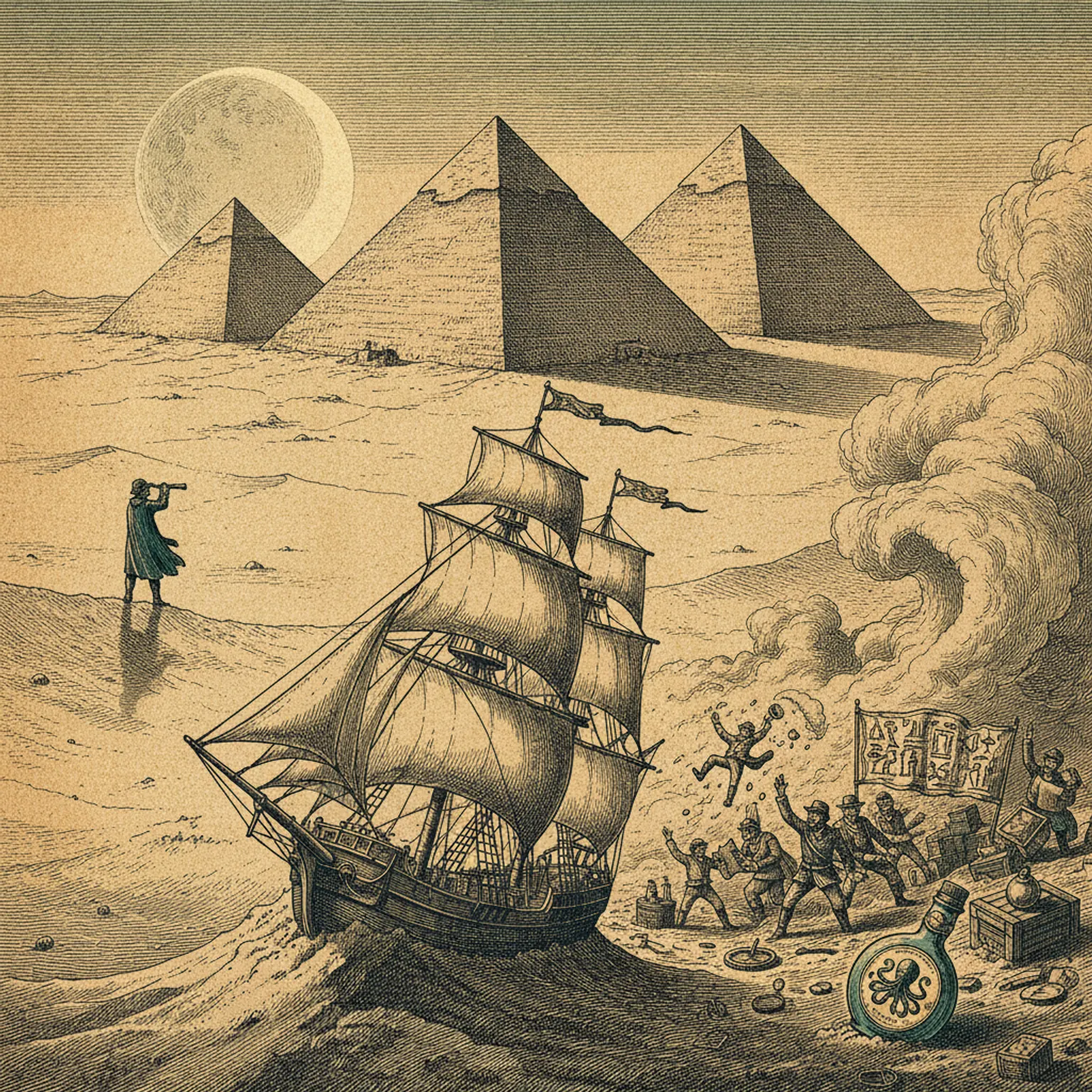
[ ITINERARY · THE DISPATCH ]
Five Days in Cairo: Pyramids First, Panic Second
Cairo will overwhelm you immediately and bewitch you shortly after. Five days is just enough time to understand the pyramids, survive the traffic, eat your weight in koshari, and fall slightly in love with a city that operates on its own logic.
My taxi driver from Cairo International Airport told me, without any preamble, that Cairo has 22 million people, the worst traffic in Africa, the best food in Egypt, and that I would love it or hate it within the first hour. He was correct on all four counts. By the time we hit the gridlocked Corniche el-Nil and he gestured grandly at the Nile as if he’d built it personally, I had already decided I loved this city.
That was the first forty minutes. Five days gave me enough to understand why.
Day 1 — Land, Breathe, Get Oriented: Zamalek
Base yourself in Zamalek, the island district in the Nile. It’s calmer than central Cairo by about 40%, which still means chaotic by most global standards, but the tree-lined streets, good cafes, and the Gezira Sporting Club nearby give you a quiet anchor.
First evening: walk along the Corniche el-Nil at dusk when the light on the river goes golden and everyone in Cairo seems to be on a felucca or watching people on feluccas. Eat at Abou El Sid in Zamalek — elevated Egyptian cooking in a lantern-lit townhouse. Order the molokhia, the grilled kofta, the fatteh. Order too much. This is not a mistake.

Day 2 — Giza: Get There Early or Cry
The Giza Plateau in the early morning, before 8am, is one of the genuinely moving experiences left in travel. The pyramids are more enormous than any photo prepares you for. The Sphinx is smaller than you expect but odder and more unsettling than any image conveys.
Hire a local guide at the gate — haggle a little, not aggressively — and they’ll take you inside Khafre’s pyramid (included with entry), explain the construction theories, and keep the hustlers at a polite distance. The Grand Egyptian Museum (GEM) just opened near Giza and contains Tutankhamun’s tomb objects: the golden mask, the shrines, the chariots. Budget half a day minimum.
Lunch: Koshary El Tahrir in central Cairo. Egypt’s national dish — pasta, rice, lentils, crispy onions, spiced tomato sauce, vinegar — for about €2. Order a large. Order a second if needed.
Day 3 — Islamic Cairo: A City Within the City
Al-Muizz Street is one of the most remarkable streets in the world: a medieval Islamic city preserved almost entirely, stretching between two great gates. Mosques, mausoleums, caravanserais, wikalahs — the architecture is extraordinary and mostly free to walk through. Go on foot and get genuinely lost.
Khan el-Khalili bazaar is overwhelming but unmissable — the spice souq, the gold souq, the stalls of papyrus and brass lamps. Drink tea at El-Fishawi café, which has been open without a single day’s closure since 1773 and shows no signs of stopping. Negotiate everything in the bazaar; first prices are aspirational.
Evening: Coptic Cairo — the Hanging Church, the Ben Ezra Synagogue, the narrow lanes of the old Christian quarter. Quieter, older, softer. A different layer of the city.
Day 4 — Memphis, Saqqara, Dahshur: The Older Pyramids
Half-day excursion south. Saqqara is where the step pyramid of Djoser stands — the world’s first pyramid, 2700 BCE, and far less visited than Giza. Dahshur has the Bent Pyramid and the Red Pyramid, which you can enter for a genuine archaeological crawl through a 4,600-year-old passage. Memphis has a fallen colossus of Ramesses II lying in a roofed museum and a great outdoor collection of statuary.
The contrast with Giza — quieter, more intimate, more archaeologically textured — is worth the half-day trip.
Afternoon return: Float on a felucca on the Nile at dusk. Negotiate directly with the felucca captains at the Corniche rather than through a hotel. Bring snacks, bring cold drinks, watch the city slip past from the water.
Day 5 — Slow Morning, Citadel, Goodbye
The Citadel of Saladin on the Muqattam Hills above Islamic Cairo gives you the best view of the city and contains the Mosque of Muhammad Ali — Ottoman, alabaster, enormous, free to enter in appropriate clothing. Arrive mid-morning when the light hits the dome.
Final lunch: Back to Zamalek. Somewhere on a terrace with a Nile view. Order anything.

Cairo by the Numbers
| Budget | Mid-range | Splurge | |
|---|---|---|---|
| Accommodation | Hostel in central Cairo (€15/night) | Boutique in Zamalek (€70–100/night) | Kempinski/Fairmont Nile (€200+/night) |
| Food/day | €10–15 (local joints) | €25–40 (mixed) | €60+ (restaurants) |
| Giza entry | ~€15 pyramids + GEM separate | — | Private guide adds €30–60 |
| Taxi | Negotiate or use Uber Egypt | — | — |

FAQ
Is Cairo safe to visit? Yes — the tourist areas are heavily policed and the city is welcoming to visitors. The typical precautions apply; don’t flash valuables, trust your instincts.
How bad is the traffic? Legendarily bad. Use the metro where possible (Line 1 covers central Cairo and Giza), take taxis off-peak, and build extra time into everything.
What should I wear? Dress modestly (shoulders and knees covered) when visiting mosques and Islamic sites. The heat argues for lightweight fabrics; a scarf is useful for women in conservative areas.
This article contains affiliate links marked rel="sponsored". We may earn a commission at no extra cost to you.