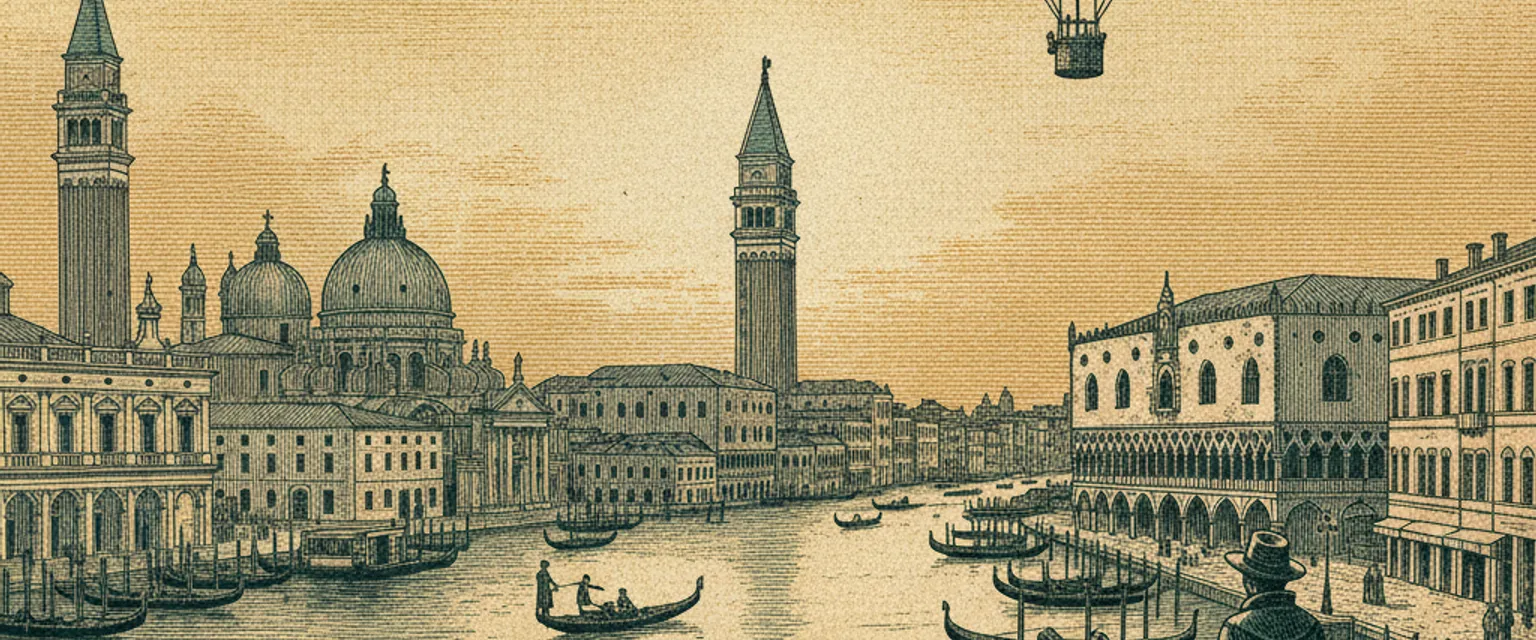
The first time I got hopelessly lost in Venice it was nearly midnight, the day-trip crowds had evaporated, and I turned a corner into a tiny campo where an old man was playing accordion to nobody. No shops, no signs, just water lapping stone and that music. I'd been trying to find my hotel for forty minutes and suddenly didn't care. Venice does that. It frustrates you with its impossible maze all day, then ambushes you with a moment so perfect you forgive it everything. Learn to surrender the map.
The Perfect Venice Itinerary (2, 3, 4 & 7 Days)
📅 Planning your dates? See the best time to visit Venice — season-by-season weather, crowds, and prices.
Two days covers San Marco, the Rialto, a vaporetto down the Grand Canal, and enough cicchetti to understand why Venetians eat standing up. You'll be among crowds at the big sights but you'll also slip into the quiet back-calle in the evenings. It's a proper taste, not a rush.
If you do one thing right: see San Marco at 8am before the cruise crowds, or after 6pm once they've gone.
Beyond the postcard, into the sestieri
A third day lets you breathe into the residential neighbourhoods — Cannaregio and Dorsoduro — where actual Venetians live. You add real art, a proper bacaro crawl, and the sense of a working city beneath the spectacle.
Venice plus the lagoon islands
Four days buys you the islands: Burano's painted houses, Murano's glass, and a quiet afternoon on Torcello. You stop trying to see everything and start enjoying the spaces between. This is the version I recommend most.
Living like you almost belong here
A week lets Venice stop being a checklist. You day-trip to the Veneto mainland, linger in galleries, find your own bacaro and your own bridge, and watch the light change on the same canal three days running. Seven days is how you fall properly in love.
Estimated budget:$450-$900
Estimated budget:$650-$1300
Estimated budget:$850-$1800
Estimated budget:$1600-$3500
Day 1
San Marco and the Grand Canal
The icons, timed to dodge the worst crowds
Piazza San Marco
Napoleon's drawing room of Europe, briefly yours before the crowds.
Get here early. By 10am the square is a sea of tour flags, but at 8 it's pigeons and a few locals crossing to work. The Basilica's gold mosaics are staggering — book a timed entry to skip the queue, and pay the small extra for the Pala d'Oro altarpiece.
Doge's Palace
Gothic power, Tintoretto ceilings, and the Bridge of Sighs.
The seat of the Venetian Republic for centuries. The Secret Itineraries tour, which takes you through the prisons and hidden chambers, is far better than the standard route — book it ahead. You'll cross the Bridge of Sighs from the inside, the way prisoners once did.
Grand Canal by Vaporetto Line 1
The world's most beautiful bus route for the price of a ticket.
Skip the overpriced gondola today. Board the Line 1 vaporetto at one end and ride the whole Grand Canal as the late light hits the palazzo facades. Stand at the back if you can. It's the single best-value thing you'll do in Venice.
Day 2
Rialto, Markets, and Cicchetti
Eat and drink your way through the Venetian everyday
Rialto Market
The lagoon's pageant of fish and produce, going strong since 1097.
The Pescaria fish market is liveliest before 10am — soft-shell crabs, scorpionfish, glittering sardines hauled in at dawn. Wander the produce stalls too. This is where Venice actually shops, and it's free theatre. The market is closed Sundays and Mondays for fish.
Rialto Bridge
The oldest, grandest crossing of the Grand Canal.
Yes it's mobbed, but the 1591 stone bridge earns its fame. The view down the canal from the top is the classic shot. Cross it early or late; mid-day it's a crush. Then dive into the quiet calle on the San Polo side immediately to escape.
Cannaregio Bacaro Crawl
Tiny bars, small plates, and an Aperol or ombra in hand.
The Fondamenta della Misericordia in Cannaregio is lined with bacari — Venetian wine bars. Hop between a few: order cicchetti (baccala mantecato on bread, fried olives) and an ombra of wine at each. This is dinner, Venetian style, and it's both cheap and joyful.
Day 3
Dorsoduro and the Art
The student-and-artist quarter, plus serious masterpieces
Gallerie dell'Accademia
The greatest collection of Venetian painting anywhere.
Bellini, Titian, Veronese, Tintoretto — the whole sweep of Venetian art under one roof. It's large but not exhausting; give it two hours. Go at opening to have the Carpaccio cycle nearly to yourself. A short walk from the wooden Accademia bridge.
Peggy Guggenheim Collection
Modern art in a heiress's unfinished palazzo on the Grand Canal.
Pollock, Picasso, Ernst and more in Peggy Guggenheim's former home, with a sculpture garden and a canal-side terrace. It's a refreshing jolt of the 20th century after all the gold and Gothic. The cafe terrace is a lovely lunch spot.
Zattere Waterfront
A long sunlit promenade facing the Giudecca canal.
Dorsoduro's southern edge is a wide quay where Venetians actually stroll in the evening. Get a gelato from Gelateria Nico and walk it as the sun drops behind the Giudecca. Far fewer tourists, far more real-life Venice.
Day 4
The Lagoon Islands
Glass, lace, and the silence of Torcello
Burano
A fishing island painted every colour in the box.
Take the vaporetto out to Burano, where the houses are painted in defiant brights so fishermen could spot home through the fog. It's wildly photogenic and famous for lace. Go early; day-trippers arrive late morning. Have lunch here — the risotto de go (goby fish) is the local dish.
Torcello
Where Venice began, now almost empty marshland and a 7th-century cathedral.
A short hop from Burano, Torcello was settled before Venice itself and now has a handful of residents. The cathedral's Byzantine mosaics — a vast golden Last Judgement — are extraordinary, and the silence is the opposite of San Marco. The most atmospheric island by far.
Day 5
Castello and the Quiet East
The vast, residential sestiere most visitors never reach
Via Garibaldi & Castello
Laundry lines, neighbourhood bars, and zero tourist shops.
Castello is Venice's largest and least touristy sestiere. Walk Via Garibaldi, the city's widest street, where locals do their shopping and gossip over coffee. This is the antidote to San Marco fatigue — a working neighbourhood that happens to be on water.
Giardini della Biennale
Rare green space and the national pavilions of the art Biennale.
Venice has almost no parks, which makes the Giardini precious. In Biennale years the national pavilions are open and worth a full afternoon. Off-years it's a leafy, quiet stroll with lagoon views and far more pigeons than people.
Day 6
Mainland Veneto Day Trip
Palladio, frescoes, and dry land for a change
Padua (Padova)
Giotto's frescoes and a thousand-year-old university, 30 minutes by train.
An easy train from Santa Lucia. The Scrovegni Chapel, painted by Giotto around 1305, is one of the most important fresco cycles in the world — book your timed slot well ahead. Pair it with a spritz in the grand Caffe Pedrocchi and a wander through the arcaded old town.
Prosecco Road, Valdobbiadene
Rolling vineyard hills where the real prosecco is made.
If you have a car, the UNESCO-listed prosecco hills northwest of Venice are stunning and barely touristed. Tour a small producer in Valdobbiadene and taste the genuine article on a terrace over the vines. A glorious change of scale and air after the watery city.
Day 7
Last Venetian Morning
One bridge, one bell tower, no agenda
San Giorgio Maggiore Campanile
The best view of Venice, and almost no queue.
Skip the long line for the San Marco bell tower and take the vaporetto to San Giorgio Maggiore instead. Its campanile gives you the postcard view of Piazza San Marco from across the water, with a fraction of the crowd. A perfect last-morning panorama.
Libreria Acqua Alta
A gloriously chaotic bookshop that stores its stock in a gondola.
Books piled in bathtubs and an actual gondola to survive the floods, plus a back staircase built from old encyclopedias. It's touristy now but genuinely charming and uniquely Venetian. A fitting, slightly absurd farewell to a city that refuses to make sense.
Venice is the only city I know that’s better when you stop trying to control it. People arrive clutching a map and a list, fight the crowds at San Marco for two sweaty hours, and leave saying it was overrated. They had it backwards. The crowds are real — Venice gets crushed by day-trippers and cruise passengers — but they’re also predictable, and you can simply step around them in both time and space.
How to use this plan
The trick running through every version of this itinerary is timing. See the marquee sights (San Marco, Rialto) early in the morning or in the evening, and spend the crowded mid-day hours in the residential sestieri or out on the lagoon islands, where the tour groups rarely go. Two days hits the icons plus a cicchetti crawl. Three adds Dorsoduro’s art and quieter neighbourhoods. Four — my favourite — gives you the islands of Burano and Torcello, which is where Venice gets genuinely magical.
The 7-day plan stops treating Venice as a sprint. You get the empty eastern sestiere of Castello, a mainland day trip to Giotto’s frescoes in Padua or the prosecco hills, and the slow luxury of watching the same canal change colour over several days. If you can spare the week, Venice repays it more than almost anywhere.
A few honest notes
Eat where you can’t see St Mark’s bell tower — the closer to the icons, the worse and pricier the food. Embrace bacari and cicchetti for cheap, excellent meals. Wear shoes that handle a thousand bridge steps and uneven stone. And accept that you will get lost; the satnav gives up in the calle anyway. Getting lost here isn’t a failure of the plan, it’s the best part of it.
This article contains affiliate links marked with rel="sponsored". We may earn a commission at no extra cost to you.