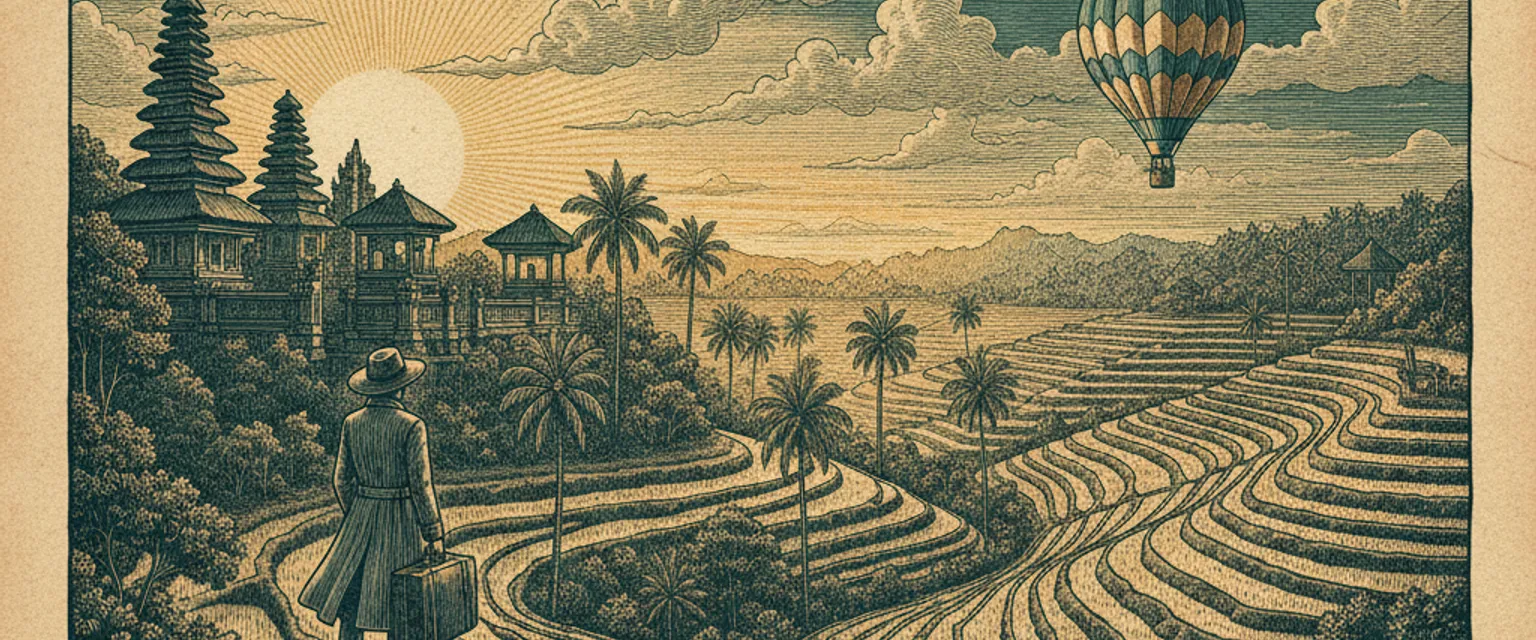
My first morning in Ubud I got up at five to beat the crowds to the Tegallalang rice terraces and found a farmer already there, hosing down his swing for the day's Instagram traffic. He charged me 50,000 rupiah to stand on a viewing platform that did not exist a decade ago. I paid it, took the photo, felt slightly absurd, and then walked ten minutes up a side path where the same terraces fell away with not a soul in sight. Ubud rewards the people who keep walking past the first thing.
48 Hours: Rice Terraces, the Monkey Forest & a Jungle Temple
Two days is the essential Ubud: the Tegallalang terraces at dawn, the Sacred Monkey Forest, the water temple of Tirta Empul, and a long dinner among the rice paddies. It moves fast but it touches everything the town is famous for.
Bring a sarong for temple visits, or rent one at the gate. Shoulders and knees covered is non-negotiable at the water temples.
72 Hours: Add a Waterfall and the Campuhan Ridge
Three days lets you slow to Ubud's actual pace: a sunrise walk along the Campuhan Ridge before the heat, a morning chasing one of the jungle waterfalls, and an afternoon free for a yoga class or a long lunch you do not rush.
4 Days: Mount Batur Sunrise Trek
Four days is enough to do the thing everyone debates and most people are glad they did: the 2 AM start, the headtorch climb up Mount Batur, and breakfast eggs cooked in volcanic steam while the sun comes up over the caldera lake. Then a hot spring to recover.
7 Days: The Full Highlands — Sidemen, Coffee, Temples & Nothing
A week unlocks the Ubud that the day-trippers never see: the Sidemen valley, the eastern temples of Besakih and Lempuyang, a real coffee plantation morning, and the deliberate empty afternoons that are the entire point of coming here. This is the slow Bali.
Estimated budget:$110-$220
Estimated budget:$180-$350
Estimated budget:$260-$500
Estimated budget:$520-$1000
Day 1
Rice Terraces, Monkey Forest & Tirta Empul
Ubud's greatest hits, sunrise to a holy spring
Beat the crowds with a dawn start at Tegallalang, then work back toward town for the Monkey Forest and out again to the water temple in the afternoon.
Tegallalang Rice Terraces
The valley of stepped emerald paddies that became Bali's signature image.
Tegallalang is the postcard, and at dawn before the tour buses it earns it: mist in the valley, the subak irrigation channels catching first light, farmers actually working. The viewing platforms and jungle swings near the road charge small fees and feel like a circus, so walk down into the terraces on the footpaths where it is quiet and real. Wear shoes you do not mind getting muddy.
Sacred Monkey Forest Sanctuary
A jungle ravine, three mossy temples, and 1,200 long-tailed macaques running it.
The Monkey Forest is a genuine sacred site, not a zoo, with ancient temples wrapped in strangler figs and a population of cheeky macaques who will absolutely steal your sunglasses if you let them. Keep bags zipped, do not bring food, and do not make eye contact with the big males. The mossy temple architecture alone justifies the ticket.
Babi guling at Ibu Oka
Bali's famous suckling pig, crackling and all.
Babi guling is the island's celebration dish, spit-roasted suckling pig with crisp skin, lawar, and spiced rice, and Ibu Oka in central Ubud made it a tourist institution. Locals will tell you other warungs do it better now, and they may be right, but the plate here is still a proper introduction. Not for vegetarians, obviously.
Tirta Empul water temple
A 1,000-year-old spring where Balinese come to purify themselves.
At Tirta Empul, worshippers move along a row of stone spouts in the holy spring, ducking their heads under each in a purification ritual called melukat. You can join with a guide and the right respect, or simply watch from the side. Either way it is one of the most genuinely moving places in Bali. Sarong required; rental at the gate.
Day 2
Campuhan Ridge & a Jungle Waterfall
A dawn ridge walk and a cold plunge under the canopy
Walk the ridge before 8 AM while it is cool and empty, then head out to a waterfall and keep the afternoon loose.
Campuhan Ridge Walk
A grassy spine of hill above the valleys, best before the sun.
This easy ridge trail runs along a narrow grass-covered hill flanked by river valleys, and at dawn it is one of the loveliest free things to do in Ubud. By nine it fills with influencers in flowing dresses, so go early. The loop back through Penestanan's artist lanes makes a good extension if you want coffee at the end.
Tibumana Waterfall
A single graceful curtain into a swimmable pool, minus the Instagram mob.
Of the cluster of waterfalls east of Ubud, Tibumana stays calmer than the famous Tegenungan, with a clean plunge pool you can actually swim in beneath a single elegant fall. The walk down is short and shaded. Go in the morning before tour groups arrive and you may have it nearly to yourself.
Lunch back in town
From famous tasting menus to rice-field warungs.
Ubud punches well above its weight on food. Splurge on a tasting menu at one of the celebrated local-ingredient restaurants, or do it the everyday way at a warung overlooking the paddies with nasi campur for a couple of dollars. Either is a legitimate Ubud lunch; the gap in price is vast and the gap in joy is small.
Day 3
Mount Batur Sunrise & Hot Springs
A pre-dawn volcano climb and a long recovery soak
This is a 2 AM start, so make day two an early night. Book a guide; the trail is unmarked in the dark and the rules require one.
Mount Batur sunrise trek
A headtorch climb up an active volcano for breakfast above the clouds.
The two-hour climb up Batur in the dark is steep but achievable for most reasonably fit people, and the payoff is the sun rising over the caldera lake with Mount Agung silhouetted behind. Guides cook eggs in the volcanic steam vents at the top, which is a gimmick that is also genuinely charming. Bring a warm layer; the summit is cold before dawn.
Toya Devasya hot springs
Volcanic mineral pools on the shore of the caldera lake.
After the descent, the natural hot springs on the edge of Lake Batur are exactly what your legs need: warm mineral water with a view straight back up at the volcano you just climbed. It is touristy and that is fine. Soak, eat, and let the early start catch up with you before the drive back to Ubud.
Slow afternoon in Ubud
You earned a nap and a sunset drink.
By mid-afternoon you will be running on no sleep, so keep this easy: a massage at one of Ubud's countless spas for a few dollars, then a sunset drink at a paddy-view bar. Do not schedule anything ambitious. This is the day the volcano collects its debt.
Day 4
Sidemen Valley Day Trip
The Ubud of twenty years ago, an hour east
Hire a driver for the day. Sidemen is everything Ubud used to be: terraced, quiet, and barely touristed.
Sidemen rice terraces
Tegallalang without the swings, crowds, or entrance fees.
The Sidemen valley sits under Mount Agung in a sweep of working rice terraces and small villages that feel like Ubud before the world found it. There are no viewing platforms charging admission, just farmers, footpaths, and the volcano on the skyline. Walk a loop through the paddies and let the quiet do its work.
Tenganan or a Sidemen weaving workshop
Watch double-ikat cloth made the way it has been for centuries.
The Sidemen and Tenganan area is a centre for traditional Balinese weaving, including the rare and painstaking double-ikat geringsing cloth. A workshop visit shows you the dyeing and looming up close, and buying a piece directly supports the weavers far more than a market stall would. The skill on display is genuinely humbling.
Lunch with a valley view
A simple warung where the view does the heavy lifting.
Sidemen's restaurants are mostly small family places with terraces facing the rice fields and Agung beyond. The food is honest Balinese home cooking and the setting is the point. Order nasi goreng, a cold Bintang, and stay longer than you planned.
Day 5
Eastern Temples — Lempuyang & Besakih
The Gates of Heaven and Bali's mother temple
A long day east. Start very early for Lempuyang or you will queue an hour for the famous gate photo.
Pura Lempuyang (Gates of Heaven)
The split gate framing Mount Agung, minus the secret about the reflection.
Lempuyang's lower temple gate frames Mount Agung perfectly, and the famous mirror-reflection photo is, you should know, made with a piece of glass held under a phone by an attendant. The temple itself is sacred and the climb to the upper temples is a real pilgrimage. Go at opening to avoid a multi-hour queue for the photo.
Pura Besakih (Mother Temple)
Bali's largest and holiest temple complex, on the slopes of Agung.
Besakih is a vast complex of more than twenty temples climbing the southern flank of Mount Agung, the spiritual centre of Balinese Hinduism. Hire a temple guide at the entrance to avoid the freelance hustlers and to understand what you are looking at. The scale and the volcano backdrop are extraordinary. Sarong required.
Lunch on the way back
A roadside warung between the temples and home.
There is no fine dining out here, and you will not want it. Stop at a roadside warung for nasi campur and a coffee, watch the trucks and motorbikes go by, and gather yourself for the drive back to Ubud. The simplicity is part of the day.
Day 6
Coffee, Crafts & the Goa Gajah
A plantation morning and an elephant cave
A gentler day close to town after two big drives. Sleep in a little.
A coffee and spice plantation
Luwak coffee, a tasting flight, and an honest look at the trade.
The plantations north of Ubud offer free tastings of Balinese coffees and teas and the chance to try the infamous kopi luwak. Be aware the luwak industry has real welfare problems; ask whether the civets are wild-collected before you buy. The standard tasting flight, set among the spice trees, is a pleasant low-pressure morning regardless.
Goa Gajah (Elephant Cave)
A 9th-century meditation cave behind a fearsome carved mouth.
Goa Gajah is a small but atmospheric archaeological site where you enter a meditation cave through a doorway carved as a monstrous face, with bathing pools and a leafy ravine below. It takes under an hour and pairs well with the coffee morning. Sarong required; the walk down into the ravine is shaded and lovely.
Ubud Art Market and palace
Wood carvings, batik, and the royal palace in the town centre.
The Ubud Art Market in the centre of town sells carvings, textiles, and the usual souvenirs; haggle hard and start at a third of the asking price. Across the road, the Puri Saren royal palace is free to wander and hosts traditional Legong dance performances most evenings. Book a dance ticket if you are around at dusk.
Day 7
Slow Ubud & Departure
A final paddy walk and the road to the airport
Keep it gentle. The airport is over an hour away in traffic, so leave more time than you think you need.
A sunrise yoga class
The thing Ubud is half-famous for, done properly at dawn.
Whatever your feelings about Ubud's wellness reputation, an early class at one of the open-air studios overlooking the jungle is a genuinely good way to spend a last morning. Drop-in classes are easy and cheap. You do not need to commit to a retreat to enjoy one hour of it.
Breakfast among the rice fields
One last view of the paddies over coffee.
Find a cafe with a paddy view, order a Balinese breakfast of black rice pudding or a fresh fruit plate, and take your time. This is the unhurried Ubud you came for, and it is worth lingering in before the chaos of the drive south to Denpasar.
Transfer to Ngurah Rai Airport
Bali's airport is in Denpasar, not Ubud — budget the time.
Ngurah Rai International is well over an hour from Ubud, and Bali's southern traffic can make it two. Arrange a private car the day before rather than gambling on a last-minute ride. Leave with plenty of buffer; the road through Denpasar is unpredictable at any hour.
Ubud has a reputation problem, and it is the wrong reputation. Say the name and people picture green juices, sound baths, and a particular memoir about eating and praying. That version exists, certainly, but it is a thin coating over something much older and more interesting: Bali’s cultural and spiritual highlands, a town of temples, rice terraces, and craft villages set in a jungle valley that has been the island’s artistic heart for a thousand years.
The trick to enjoying Ubud is to keep walking past the first thing. The famous rice-terrace viewpoint with the swing and the entrance fee is ten minutes from a stretch of the same terraces with nobody on it. The mobbed waterfall is twenty minutes from a quieter, prettier one. Ubud rewards the early riser and the side-path taker more than almost anywhere I know.
How to use this plan
The itinerary nests outward. Two days is the core: terraces, the Monkey Forest, and a water temple. Three adds a ridge walk and a waterfall. Four brings in the Mount Batur sunrise trek, which is the one big effort worth making. The full week opens up the eastern temples, the Sidemen valley, and a coffee morning, along with the deliberately empty afternoons that are the actual reason to base yourself in the highlands rather than the beach.
Two practical things. First, hire a driver for the day-trip days rather than renting a scooter for the long eastern runs; the roads are tiring and a good driver doubles as a guide. Second, carry a sarong everywhere. Bali’s temples require covered shoulders and knees, and while every gate rents them, having your own saves time and money across a week of temple-heavy days. Come in the dry season, roughly April through September, and give yourself permission to do nothing on at least one afternoon. That is not laziness here. It is the point.
This article contains affiliate links marked with rel="sponsored". We may earn a commission at no extra cost to you.