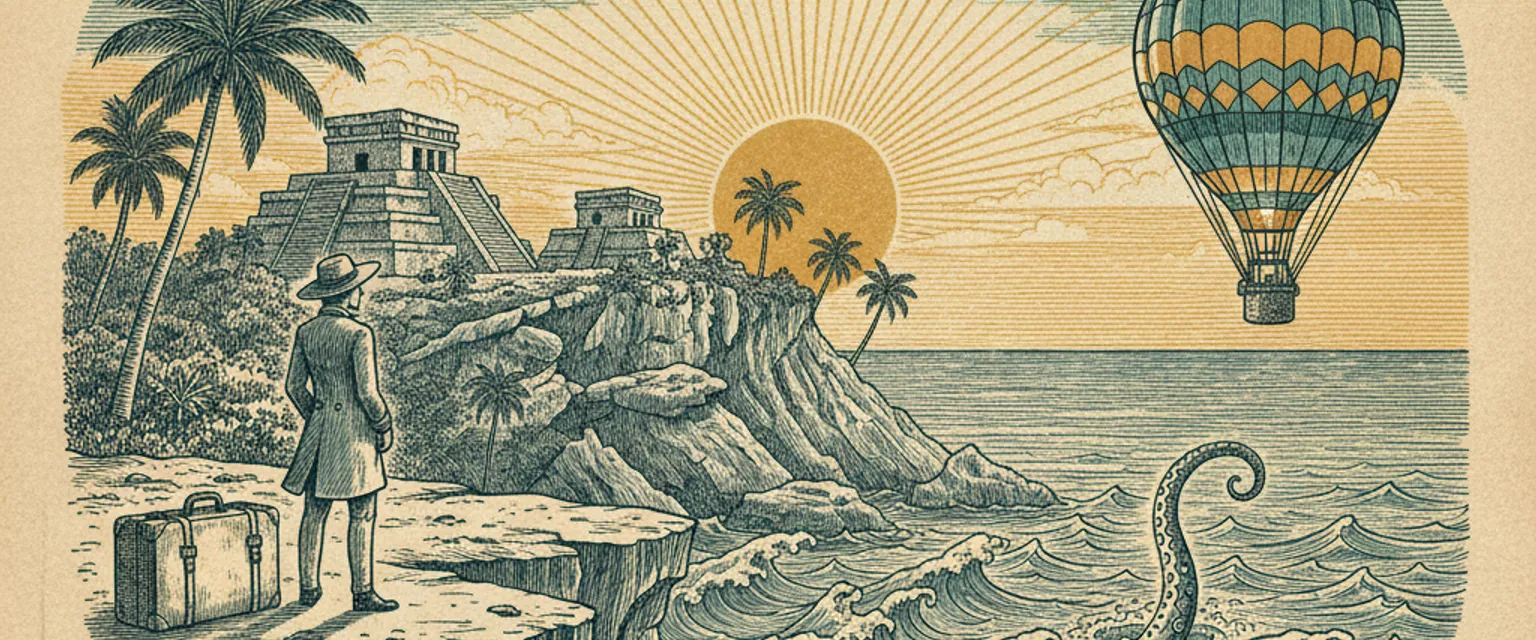
I got to the Tulum ruins at 8 AM, before the gate even had a queue, and stood alone at the cliff edge watching iguanas sun themselves on a thousand-year-old temple while the Caribbean did its impossible turquoise thing below. By 10 AM it was a slow river of selfie sticks. The lesson of Tulum, repeated everywhere here: the magic is real, it is just always one hour earlier than you think.
Two days is the clifftop ruins at opening, a swim in the Gran Cenote, and one slow evening on the beach road. You will not "do" Tulum in 48 hours, but you will see exactly why people overstay. Rent a bike; the town and beach are 4 km apart and taxis quietly fleece you.
Book nothing on the beach road for dinner without checking the price first. The zero-pricing menus are a genre.
72 Hours: Add a Second Cenote and the Lagoon
Three days lets you add Cenote Dos Ojos for snorkelling, the Kaan Luum lagoon for a float, and a proper Yucatecan lunch in the actual town (Pueblo) rather than the beach strip. This is where Tulum starts to feel less like an Instagram set and more like Mexico.
4 Days: Cobá, Coast, and a Day Without a Plan
Four days earns you a day trip to the Cobá ruins (climbable jungle pyramid, an hour inland) and a free day to do nothing but beach, cenote, and tacos. The fourth day is when you finally relax into the heat instead of fighting it.
7 Days: The Riviera Maya, Properly
A week opens up the whole corridor — Sian Ka'an biosphere, the Akumal turtles, a day in Valladolid, and enough cenotes that you stop counting. By day five the beach-club economy stops impressing you and the cenotes, the tacos, and the jungle quietly take over. That is the real Tulum.
Estimated budget:$220-$520
Estimated budget:$340-$760
Estimated budget:$460-$1000
Estimated budget:$850-$1900
Day 1
Tulum Ruins + Gran Cenote + Beach Road Sunset
The clifftop ruins at opening, then the cenote that makes the heat make sense
Tulum Archaeological Zone
The only major Mayan city built on the coast, on a cliff, facing the sunrise.
Tulum is the only walled Mayan city on the Caribbean and the views are the entire point — El Castillo perched on the cliff above a postcard beach. Arrive at 8 AM opening; by mid-morning the site is a crawl and the heat is brutal. The little beach inside the ruins is sometimes open for a swim, which is the rarest thing: an actual experience here that costs only the entry ticket.
Gran Cenote
Crystal cavern pools full of turtles and the best snorkelling you can reach by bike.
Gran Cenote, 4 km north of town toward Cobá, is a network of clear pools and half-flooded caverns where turtles glide and the snorkelling is genuinely excellent. Go early before the tour buses; bring your own mask to skip the rental. The water is a flat 24°C and after the ruins it feels like a religious experience.
Beach Road (Zona Hotelera) at sunset
The jungle-meets-Caribbean strip everyone photographs. Beautiful, and a financial trap.
The Zona Hotelera is the famous Tulum: candlelit beach clubs, macramé, and the giant wooden sculptures. It is genuinely lovely at golden hour and worth one slow walk and a beachfront drink. It is also the most expensive square kilometre in Mexico, so set the budget before you sit down. A cocktail at sunset, then dinner back in Pueblo, is the move.
Day 2
Cenote Dos Ojos + Kaan Luum Lagoon + Tulum Pueblo
The famous cave dive cenote, a milky lagoon, and the real town
Cenote Dos Ojos
Two linked cavern pools that are the most famous snorkel and dive cenote on the coast.
Dos Ojos ("two eyes") is a pair of connected sinkholes with some of the clearest cave water anywhere — divers come from around the world, but you can snorkel the bat cave and the cathedral-like main pool without any certification. Arrive at 9 AM opening. The light shafts cutting through the water around midday are the photo everyone is chasing.
Laguna Kaan Luum
A milky-blue lagoon with a deep cenote at its heart, ringed by a wooden walkway.
Kaan Luum is a shallow turquoise lagoon, warm and waist-deep across most of its width, with a 80-metre-deep cenote sinkhole at the centre (roped off, divers only). Float on the wooden deck, eat at the small on-site restaurant, and skip the overpriced beach clubs entirely. It is 15 minutes south of town and far calmer than the coast.
Tulum Pueblo — Antojitos La Chiapaneca + Burrito Amor
Real Yucatecan tacos al pastor for a fifth of beach-road prices.
The actual town of Tulum is where you eat well and cheaply. Antojitos La Chiapaneca does superb al pastor tacos off the spit until late; Burrito Amor does a more polished sit-down version. Walk Avenida Tulum in the evening when the heat finally breaks. This is the Mexico that the beach strip charges triple to imitate.
Day 3
Cobá Ruins + Cenote Tankach-Ha + Cycling the Jungle
An inland jungle pyramid you can still climb, plus its hidden cenotes
Cobá Archaeological Zone
A sprawling jungle city around Nohoch Mul, one of the few Mayan pyramids you could once climb.
Cobá, 45 minutes inland, is spread through dense jungle and connected by ancient white sacbé roads — rent a bike or a pedicab to cover it. Its great pyramid Nohoch Mul towers over the canopy; climbing is now restricted, but the scale and the jungle setting are unmatched in the region. Go at opening to beat both the crowds and the worst heat.
Cenote Tankach-Ha
A deep cavern cenote near Cobá with jump platforms and zero beach-club nonsense.
The cluster of cenotes near Cobá — Tankach-Ha, Choo-Ha, Multun-Ha — are quieter, cheaper, and more dramatic than the famous coastal ones. Tankach-Ha is a deep underground chamber with two diving platforms and cool, clear water. After climbing around Cobá in the heat, dropping into a cathedral of cold water is the best feeling on this whole itinerary.
Lunch near Cobá — Yucatecan home cooking
Cochinita pibil and lime soup at a roadside comedor, away from the tour menus.
The small comedores around Cobá village serve real Yucatecan food: cochinita pibil (slow-roasted pork in achiote), sopa de lima, and handmade tortillas, usually for a set price with a fresh agua fresca. It is the kind of unfussy, excellent lunch that the coast forgot how to make. Ask for whatever the family is cooking that day.
Day 4
Akumal Turtles + Sian Ka'an Edge + Slow Beach Day
Snorkel with sea turtles, brush the biosphere, then do absolutely nothing
Akumal Bay — snorkel with sea turtles
A shallow bay where green sea turtles graze the seagrass, 40 minutes north.
Akumal means "place of the turtles" in Maya, and the bay reliably has green sea turtles grazing in waist-deep water. Go at 8 AM before the guided groups and the boats churn the visibility. A licensed guide is now required to enter the protected core, but the public-beach side is free and you will still see turtles if you arrive early and float quietly.
Sian Ka'an Biosphere — Muyil entrance + float
A UNESCO wetland where you drift down a Mayan canal in a natural lazy river.
The Muyil entrance to the vast Sian Ka'an biosphere offers the famous "floating" experience — you drift down an ancient Mayan-built canal carried by the current, life jacket as a raft, between mangroves and open lagoon. It is the single best non-cenote water experience near Tulum and a reminder that the coast is wilder than the beach clubs let on.
Public beach (Playa Paraíso / Santa Fe) — the free coast
The same Caribbean as the beach clubs, minus the cover charge and the macramé.
Playa Paraíso and the public stretch near the ruins give you the exact white sand and turquoise water the beach clubs charge a fortune to sit on. Bring water, a towel, and tacos from town. Spend the late afternoon doing nothing. After three days of ruins and cenotes, an empty afternoon on a free beach is the luxury Tulum forgets to sell.
Day 5
Valladolid Day Trip + Cenote Suytun
A perfect colonial town and the most photographed cenote in Yucatán
Valladolid — Calzada de los Frailes + main square
A pastel colonial town two hours west, with the best Yucatecan food in the region.
Valladolid is the antidote to Tulum's beach-strip prices: a calm, colourful colonial town with the Calzada de los Frailes lined with restored houses, the convent of San Bernardino, and a main square that comes alive in the evening. Eat lomitos and longaniza, drink a horchata, and buy real Yucatecan handicrafts at a fraction of coastal cost.
Cenote Suytun
The cavern cenote with the stone walkway and the famous shaft of light.
Suytun, just outside Valladolid, is the cenote behind a million photos: a circular underground chamber with a narrow stone platform and a single beam of light dropping from the ceiling around midday. It is genuinely stunning and genuinely busy — there is a queue for the photo. Pair it with the quieter, swimmable Cenote Oxman nearby for actual swimming.
Dinner in Valladolid — Yerbabuena del Sisal
Slow Yucatecan cooking in a garden courtyard before the drive back.
Before the two-hour drive back to Tulum, eat at one of Valladolid's courtyard restaurants — Yerbabuena del Sisal does refined regional dishes in a leafy patio. It is the relaxed, well-priced dinner that the coast never quite delivers. Leave by dark; the inland road is fine but unlit, so an earlier dinner beats a late one.
Day 6
Cenote Carwash + Tulum Cycling + Pueblo Markets
A local jungle cenote, slow cycling, and the everyday town
Cenote Carwash (Aktun Ha)
An open jungle cenote where locals once washed cars, now a green-water swim spot.
Carwash, on the Cobá road, got its name when taxi drivers used to wash their cars here. It is an open, lily-fringed pool with resident turtles and small fish, a favourite of local divers, and far cheaper and quieter than the headline cenotes. The morning light through the green water is lovely, and you will likely share it with a handful of people.
Cycle the town-to-beach jungle road
The 4 km bike path that links Pueblo to the coast through the trees.
Tulum is best at bike speed. The dedicated path from Pueblo down to the beach road runs through low jungle and is flat, shaded in patches, and the cheapest way to move here. Stop at the cenotes, taquerías, and juice stands along the way. After a week, this unremarkable little ride is the thing that actually makes Tulum feel like a place you live in.
Tulum Pueblo evening — market stalls and El Camello Jr.
Local ceviche and grilled fish where the town actually eats.
El Camello Jr. on the edge of Pueblo is where locals go for ceviche and whole grilled fish at honest prices — loud, busy, and excellent. Walk the evening market stalls along Avenida Tulum afterward for fresh juice and pan dulce. This is the unglamorous, genuinely good Tulum that outlasts the beach-club hype every single time.
Day 7
Sunrise Beach + Cenote Calavera + Slow Farewell
One last dawn swim, a temple-of-doom cenote, and a gentle exit
Sunrise on the public beach
The Caribbean at dawn, before the clubs open and the road wakes up.
On your last morning, cycle to the coast for sunrise. The beach is empty, the sand is cool, and the sun comes up straight out of the sea since Tulum faces east. It is the same view as the famous ruins photo, free, and yours alone for twenty quiet minutes. This is the Tulum people fall in love with before the day's economy switches on.
Cenote Calavera (Temple of Doom)
A skull-shaped sinkhole with three holes and a rope swing, right by town.
Calavera ("skull") is named for its three openings that look like a skull's eyes and mouth. There is a ladder, a jump, and a rope swing into deep clear water, and it is a five-minute drive from Pueblo. Small, atmospheric, and a favourite first cenote for divers. A fitting, adrenaline-tinged last swim before you head for the airport.
Farewell brunch — Del Cielo or a Pueblo café
Strong Mexican coffee, chilaquiles, and a last look at the jungle town.
End with a long brunch — chilaquiles verdes, fresh juice, and proper coffee at a Pueblo café like Del Cielo. Tulum's airport runs are quick to the new Tulum airport and about two hours to Cancún, so build in buffer. Leave slightly sun-scorched, slightly broke, and already plotting how to spend longer at the cenotes next time.
Tulum is two completely different places wearing the same name. There is the Instagram Tulum of beach clubs, macramé, and forty-dollar smoothie bowls. And there is the real Tulum: a clifftop Mayan city, a jungle riddled with cold-water cenotes, and a dusty inland town that serves some of the best tacos in Mexico. This itinerary spends most of its time in the second one.
The single most useful rule here is to be early. The ruins, the cenotes, the turtle bays — all of them are transcendent at opening and a crowded slog by mid-morning. Get up, ride a bike, beat the buses, and you will have postcard scenes nearly to yourself. Then nap through the worst heat like a sensible person.
The 2/3/4/7-day versions move steadily inland and away from the beach-club economy. Two days is the ruins and the headline cenotes. Seven days is Cobá, Valladolid, Sian Ka’an, and a quiet swim at a cenote where local divers practice and nobody is filming. The longer you stay, the cheaper and the better Tulum gets.
Use the duration filter above to see your version of Tulum, and rent the bike. The taxis here are a tax on not reading this first.
This article contains affiliate links marked with rel="sponsored". We may earn a commission at no extra cost to you.