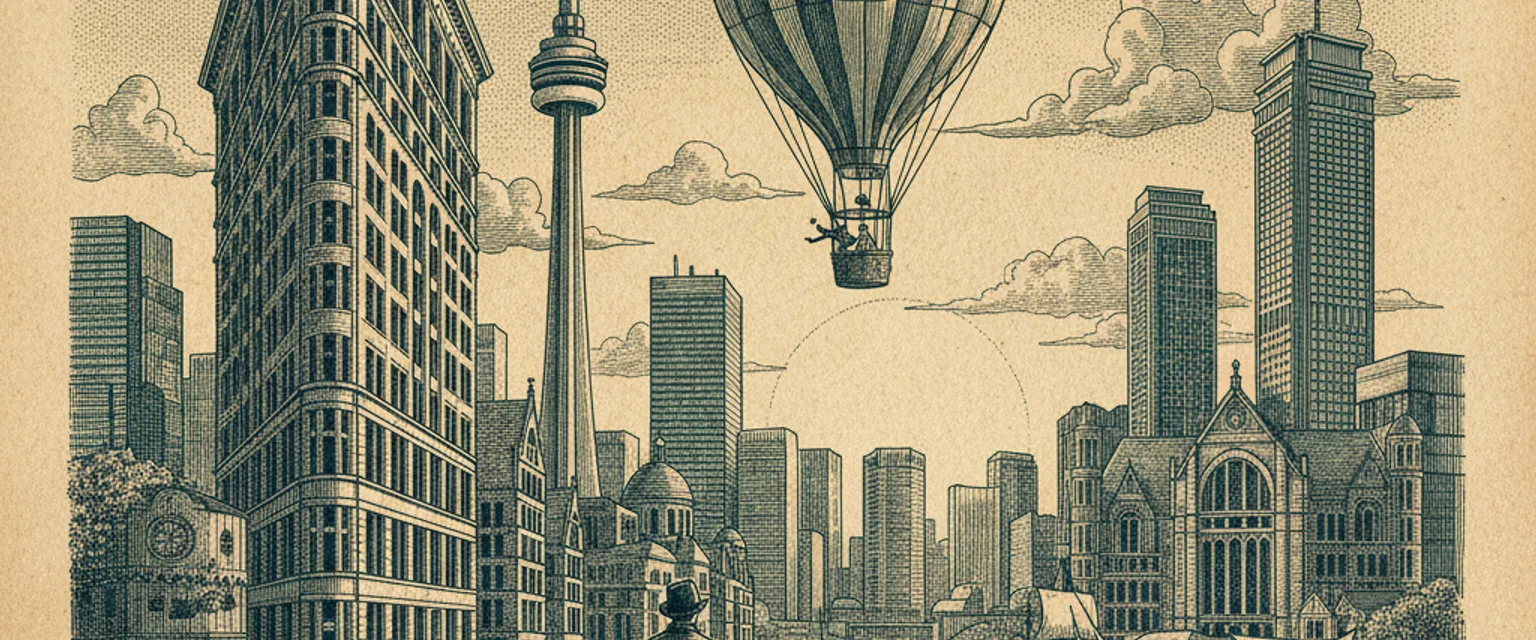
I asked a man at a Kensington Market taco counter where to get the best Tibetan momos, and he not only answered, he walked me three blocks to the door, introduced me to the owner in two languages, and refused a tip. Then he went back to his own lunch, getting cold. Toronto pretends to be a reserved, rule-following Canadian city, and then it does something like that. It is the most quietly generous place I know, hiding behind a polite apology and the worst sports luck in North America.
Two days hits the icons and the soul. The CN Tower for the lay of the land, St Lawrence Market for breakfast, Kensington and Chinatown for lunch and colour, and the ferry to the Toronto Islands for the skyline view everyone photographs. You leave fed, walked, and oriented.
Take the last ferry back from the Islands at dusk. The skyline lighting up over the water is the trip's best free show.
72 Hours: Add the Galleries and Distillery
Three days adds the culture. The Art Gallery of Ontario in its Frank Gehry shell, the cobbled Distillery District, and a night out on Ossington or in the West End. You start to feel the difference between the neighbourhoods instead of just the postcards.
4 Days: Museums and the West End
Four days lets you slow down. The Royal Ontario Museum, the High Park ravines, the Junction and Roncesvalles for a long brunch, and an evening of live music. This is the day Toronto stops being a checklist and starts being a place you could imagine living.
7 Days: Toronto and Beyond
A week means Niagara Falls and wine country, a day in the Scarborough Bluffs or Prince Edward County, and enough time to find your cafe and stop checking transit times. You learn the streetcar map, eat across four continents, and understand why people from everywhere end up here.
Estimated budget:$300-$520
Estimated budget:$450-$780
Estimated budget:$600-$1040
Estimated budget:$1050-$1850
Day 1
Downtown, the Tower, and the Market
Orient yourself from the top, then eat at street level
CN Tower
553 metres of 1976 ambition with a glass floor and the best orientation in the city.
The CN Tower was the tallest free-standing structure on earth for three decades and still anchors the skyline. Go at opening to skip the crowds, stand on the glass floor if your nerves allow, and use the 360-degree view to map out the city below before you explore it. Skip the overpriced revolving restaurant; eat in the market instead.
St Lawrence Market
A 200-year-old market hall and the home of the peameal bacon sandwich.
St Lawrence Market has fed Toronto since the 1800s and remains the best single building for lunch in the city. Get the peameal bacon sandwich at Carousel Bakery, a Toronto institution, then graze the cheese, mustard, and pastry stalls. The lower level and the Saturday farmers market upstairs reward a slow wander.
Distillery District
Cobblestoned Victorian distillery turned pedestrian arts and dining quarter.
The Distillery District is a beautifully preserved set of red-brick Victorian industrial buildings, now car-free and full of galleries, breweries, and restaurants. It is touristy and genuinely handsome. Have a drink at the Mill Street brewpub, browse the boutiques, and come back in December for the Winter Village if you are here in winter.
Day 2
Markets, Chinatown, and the Islands
The polyglot core, then the city's best view
Kensington Market
A ramshackle bohemian grid where vintage shops, taquerias, and cheese mongers share a block.
Kensington Market is the most beloved neighbourhood in Toronto, a few chaotic blocks of vintage clothing, global street food, fruit stalls, and coffee. It resists chains and gentrification with stubborn charm. Eat tacos, drink a flat white, dig through record bins, and do not bother with a plan. Getting lost is the entire point.
Chinatown on Spadina
One of North America's largest Chinatowns, best eaten one dumpling at a time.
Spadina Avenue and Dundas West form one of the largest Chinatowns on the continent, dense with dim sum halls, bubble tea, herbalists, and produce spilling onto the sidewalk. Duck into a busy dumpling house for lunch, then walk it off browsing the shops. The bahn mi and the Vietnamese pho here are quietly excellent too.
Toronto Islands
A car-free island park a ten-minute ferry away, with the postcard skyline view.
A short ferry from the downtown docks lands you on the Toronto Islands, a car-free chain of parkland, beaches, and the famous skyline panorama. Rent a bike, picnic at Ward's Island, or just walk the boardwalk. Time the return ferry for sunset, when the downtown towers light up across the harbour.
Day 3
Art, the West End, and a Night Out
Galleries by day, Ossington by night
Art Gallery of Ontario
A Frank Gehry-renovated gallery with a world-class Group of Seven collection.
The AGO holds one of the great collections of Canadian art, including the Group of Seven and Indigenous work, inside a swooping Frank Gehry renovation that is worth the visit on its own. The wooden spiral staircase and the Galleria Italia along Dundas Street are the architectural highlights. Allow two to three hours.
Queen Street West and Trinity Bellwoods
Toronto's coolest strip of boutiques, galleries, and a park full of picnicking locals.
West Queen West runs from the AGO toward the Drake Hotel through Toronto's design and gallery district, lined with independent shops, street art, and cafes. Trinity Bellwoods Park anchors it, a sloping green where the city's twenty-somethings picnic all summer. Browse, drink a coffee, and people-watch from the grass.
Ossington Avenue nightlife
A few blocks packed with the city's best bars, izakayas, and live rooms.
Ossington has quietly become Toronto's best night-out street, a tight stretch of cocktail bars, izakayas, natural-wine spots, and small live venues. Start with dinner, follow the noise, and end at a basement bar. It stays busy late and is walkable end to end, so you can sample several places without a cab.
Day 4
Museums, Parks, and Brunch
The ROM, High Park, and a slow West End day
Royal Ontario Museum
Dinosaurs, mummies, and a controversial crystal jutting out over Bloor Street.
The ROM is Canada's largest museum, a sprawling collection of natural history and world cultures behind a heritage facade pierced by Daniel Libeskind's polarising glass Crystal addition. The dinosaur galleries and the Chinese and Egyptian collections are the standouts. It sits in the leafy Yorkville district, good for a coffee afterward.
High Park
Toronto's biggest park, with ravines, a small zoo, and cherry blossoms in spring.
High Park is the city's largest green space, a sprawl of woodland ravines, ponds, gardens, and a free little zoo on the west side. In early May the cherry blossoms draw enormous crowds; the rest of the year it is a calm escape. Walk the trails, then head to nearby Roncesvalles for the Polish bakeries and brunch spots.
Roncesvalles brunch
A walkable Polish-and-hipster main street built for a long, unhurried meal.
Roncesvalles Avenue runs through Toronto's historic Polish district, now a family-friendly strip of cafes, brunch rooms, and old-school bakeries selling paczki and pierogi. Settle into a long brunch, pick up pastries for later, and browse the independent bookshops. It is the West End at its most livable and least touristy.
Day 5
Niagara Falls and Wine Country
The big waterfall and the vineyards beside it
Niagara Falls
The most famous waterfall in the world, roughly 90 minutes south by car or bus.
Niagara Falls is about ninety minutes from downtown and lives up to the hype despite the carnival sprawl around it. Take the Niagara City Cruise to the base of the Horseshoe Falls for the full thundering, drenching effect, then walk the promenade. Ignore the tacky Clifton Hill strip unless you have children to entertain.
Niagara-on-the-Lake wine country
A genteel lakeside town surrounded by some of Canada's best wineries and ice wine.
Twenty minutes from the falls, Niagara-on-the-Lake is a preserved colonial town of flower baskets and heritage inns at the heart of Ontario wine country. The region is famous for ice wine; tour a winery or two on the way, then stroll the main street. A guided tour from Toronto handles the driving so you can taste freely.
Day 6
The Bluffs and the East End
Clifftop lake views and the Greektown table
Scarborough Bluffs
Dramatic white cliffs dropping to Lake Ontario, a side of Toronto few visitors see.
The Scarborough Bluffs are a stretch of pale clay cliffs rising up to 90 metres above Lake Ontario, with parks along the top and Bluffers Park beach and marina at the bottom. It feels nothing like the rest of the city. Walk the clifftop trail for the views, then descend to the beach. A car or a longer transit ride gets you here.
Greektown on the Danforth
Toronto's lively Greek strip, best in summer when the patios spill onto the sidewalk.
The Danforth, east of downtown, is Toronto's Greektown, a long run of tavernas, bakeries, and patios that hum on warm evenings. Order souvlaki and saganaki, sit outside, and join the slow parade of families and dog walkers. In August the Taste of the Danforth festival shuts the street for one of the city's biggest parties.
Day 7
Prince Edward County Day Trip
Wineries, beaches, and small-town Ontario
Prince Edward County wineries
Ontario's most charming wine and food region, about two hours east of the city.
Prince Edward County, a peninsula jutting into Lake Ontario about two hours east, has become the province's most fashionable rural escape, full of cool-climate wineries, farm restaurants, and cideries. Tour a few tasting rooms around Hillier and Bloomfield, then have a long lunch at a vineyard table. A car is essential out here.
Sandbanks Provincial Park
Freshwater dunes and a long sand beach that feels improbably like an ocean coast.
Sandbanks Provincial Park protects one of the largest freshwater dune systems in the world, with broad sand beaches and shallow warm water that draws crowds all summer. Cool off after the wineries, walk the dune trail, and stay for the sunset over the lake before the drive back. Arrive early on weekends, as the park fills fast.
Toronto is the most diverse city on earth, and it does not make a big deal of it. More than half its residents were born somewhere else, 200-plus languages share the streetcars, and the result is a city you can eat your way around the planet in without changing transit zones. It is also clean, safe, walkable, and far more fun than its buttoned-up reputation suggests.
This itinerary is built around one fact: Toronto is a city of neighbourhoods stitched together by streetcars, and the visitors who never leave the CN Tower miss the actual place. The Tower and the Islands are worth a day. Kensington, the West End, and Greektown are where the city lives, eats, and quietly shows off.
The 2/3/4/7-day versions are real choices, not padding. Two days is the icons and the markets. Three adds the galleries and the night out. Seven gives you Niagara, the wine country, and Prince Edward County, plus enough time to stop checking the streetcar app.
How to use this plan
Use the day filter to match your trip length. Each day clusters by area so you walk more and commute less, and the streetcar and subway cover the rest. Come in summer for the patios, festivals, and Island ferries, or in autumn for the wine country and the colour, and always pack a layer because the lake makes its own weather.
This article contains affiliate links marked with rel="sponsored". We may earn a commission at no extra cost to you.