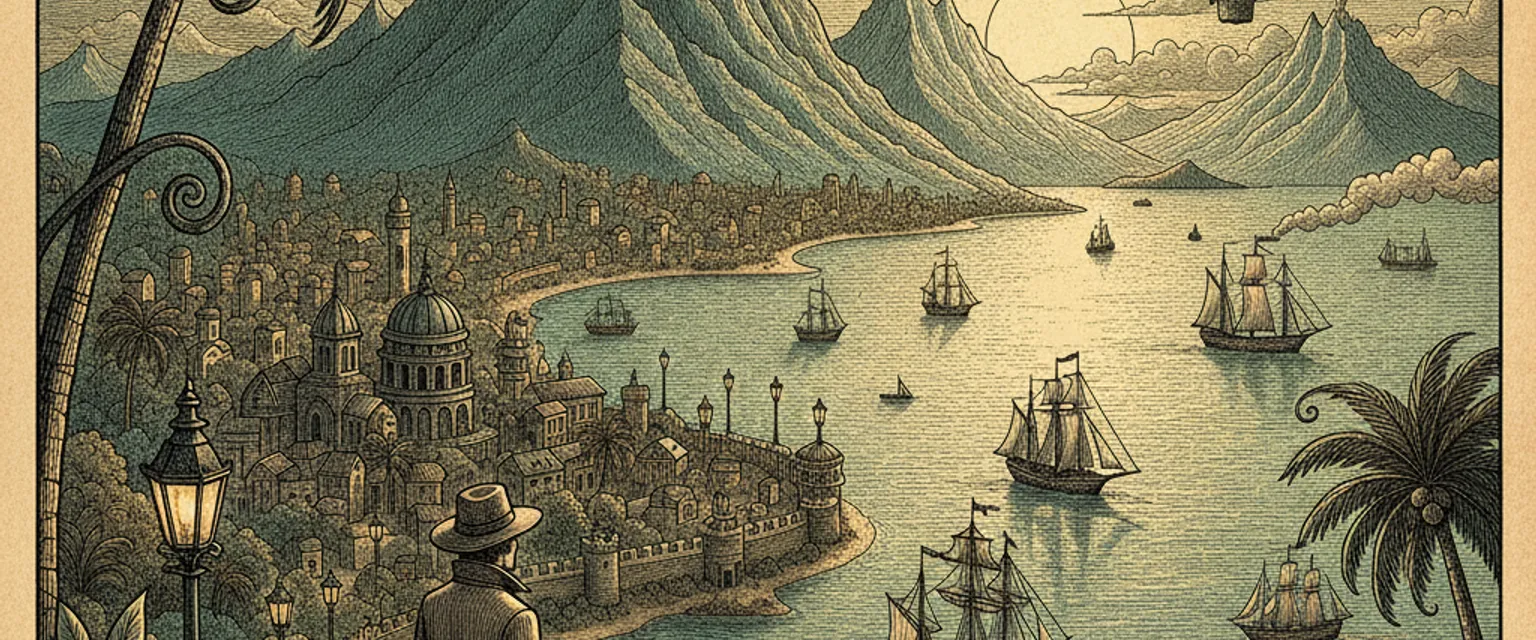
Everyone flies to Tahiti and immediately leaves for Bora Bora, which is a bit like landing in Rome and sprinting to the airport. My first morning I almost did the same. Then a vendor at the Papeete market handed me a slice of pamplemousse the size of a softball, pointed at the green mountains, and said 'you go up there first.' I did. I spent three days on the main island before any overwater bungalow, and it was the part I still think about. Tahiti is not a layover. It is the point.
Two days is tight but doable if you stay near Papeete and treat the lagoon as your living room. You will hit the market at dawn, snorkel the calm north reef, and watch the sunset turn Moorea pink across the channel. Skip the round-island drive; it deserves more time than you have.
Two days proves the point: you do not need to leave Tahiti to fall for French Polynesia.
Add the west coast surf and black sand
Day three buys you the legendary west coast: black-sand beaches, the Museum of Tahiti and Her Islands, and a sunset at PK18 where locals actually swim. You start to feel the rhythm of island time instead of fighting it.
Push into wild Tahiti Iti
With four days you escape to Tahiti Iti, the smaller peninsula most visitors never reach. Teahupo'o's terrifying surf break, the end-of-the-road feel at the Fenua Aihere, and a slower, rawer Polynesia await. This is where the island stops performing for tourists.
A full week: island, mountains, and a neighbour
Seven days lets Tahiti breathe. You add a serious interior hike to the Fautaua waterfall, a 4x4 trip up the lush Papenoo Valley, a full lagoon day with rays and reef sharks, and a ferry hop to Moorea. By the end you stop checking your phone for the time.
Estimated budget:$350-$650
Estimated budget:$520-$950
Estimated budget:$700-$1300
Estimated budget:$1400-$2800
Day 1
Papeete, the market, and the channel sunset
Land softly and let the capital introduce you
Marche de Papeete
The two-story public market where the island actually shops
Get here at dawn when the Saturday flower vendors and fishmongers are loudest. Buy pamplemousse, vanilla pods, and a monoi oil to take home, then grab a chao men breakfast from the upstairs food stalls. It is loud, fragrant, and the fastest way to understand Tahitian daily life.
Cathedrale de l'Immaculee Conception
A small yellow cathedral anchoring the old town
A quick, free wander through downtown Papeete using this 1875 cathedral as your landmark. The surrounding streets hold colourful murals and pearl shops where you can learn how Tahitian black pearls are actually graded before you ever pay for one.
Pointe Venus and the black-sand lighthouse
Captain Cook's old anchorage with the best channel sunset
Drive 15 minutes east to this black-sand point where Cook observed the transit of Venus in 1769. The candy-striped lighthouse and the view of Moorea glowing across the channel at sunset is the photo everyone wants. Bring a towel; the swimming here is gentle.
Day 2
North lagoon and Moorea views
Snorkel, eat, and ease into island time
North reef snorkel at Lafayette Beach
Calm, clear water steps from Papeete
The protected north reef has easy entry and reliable visibility for spotting parrotfish and the occasional ray. Rent gear in town the night before to save money. This is the lagoon swim that recalibrates your sense of what ocean water can look like.
Les Roulottes de Vaiete
Papeete's nightly food-truck square
Every evening this waterfront square fills with roulottes serving poisson cru, grilled mahi-mahi, and crepes at prices a fraction of the resorts. Order the raw tuna in coconut milk and eat at a plastic table beside fishermen. It is the best-value meal on the island.
Day 3
West coast black sand and museums
Culture, surf beaches, and a swimmable sunset
Museum of Tahiti and Her Islands
The cultural anchor of any real Tahiti trip
Recently renovated and set right on the lagoon, this museum walks you through Polynesian navigation, tattoo tradition, and the marae temple culture. Spend two hours here and the rest of the island reads differently. The waterfront grounds alone are worth the stop.
PK18 black-sand beach
Where locals swim on the west coast
Marked by the kilometer post 18 sign, this stretch of warm black sand is a genuine local hangout, not a resort beach. The water is calm enough for an easy afternoon swim and the sunset here, with surfers in silhouette, is hard to beat. Bring cash for the snack truck.
Day 4
Tahiti Iti and Teahupo'o
The wild peninsula most visitors skip
Teahupo'o surf break
The heaviest wave on earth, from the safety of shore
Drive to the literal end of the road on Tahiti Iti to see Teahupo'o, the slab wave that hosts world-tour surfing and Olympic events. Even when it is flat the setting is stunning. Hire a local boat to view the reef pass up close if conditions allow.
Maraa fern grotto and Iti coast drive
Dripping lava caves and an empty coastline
On the way back, stop at the ferny Maraa grottoes, cool freshwater caves set into the cliff. The drive along Tahiti Iti is the greenest, emptiest road on the island, with roadside fruit stands and views that feel a century removed from Papeete.
Day 5
Into the green interior
Waterfalls and the Papenoo Valley
Fautaua Valley hike
A jungle trek to one of the world's tallest falls
Get a permit in town, then hike the Fautaua Valley to a 300-meter waterfall pouring off a sheer cliff. It is a real half-day effort with river crossings, so wear shoes you can soak. The reward is a swimming pool at the base with almost nobody in it.
Papenoo Valley 4x4 safari
Up the only road into Tahiti's volcanic crater
Join a 4x4 tour up the rugged Papenoo Valley, the single track that climbs into the island's ancient caldera past waterfalls, marae temples, and a high crater lake. You cannot do this drive in a regular rental; the guides know the river fords and the history.
Day 6
A full lagoon day
Rays, reef sharks, and a motu picnic
Lagoon tour with rays and reef sharks
Stand waist-deep while stingrays glide past your legs
Book a boat tour onto the lagoon where gentle stingrays and blacktip reef sharks gather in clear, shallow water. Most tours include snorkeling a coral garden and a grilled-fish lunch on a sandbar. It is touristy, yes, and also genuinely magical.
Motu picnic and coral garden snorkel
Lunch on a sandbar in the middle of the lagoon
The tour drops you on a tiny motu for a Polynesian barbecue, fresh poisson cru, and a last drift over the coral garden. Float here long enough and the colour of the water genuinely stops making sense. This is the postcard, earned.
Day 7
Ferry to Moorea
A neighbour island day trip to close the week
Aremiti ferry to Moorea
A 30-minute crossing to Tahiti's prettier sister
The fast ferry from Papeete reaches Moorea in half an hour for a fraction of a flight. Rent a scooter at the dock and circle the island past Cook's Bay and Opunohu Bay. Moorea's jagged green spires make Tahiti look almost tame.
Belvedere Lookout, Moorea
The classic view over both of Moorea's bays
Drive up through pineapple plantations to the Belvedere, where you look straight down the spine of the island into two perfect bays at once. Pair it with a pineapple juice from a roadside stand and you have the best free view in French Polynesia.
Most people treat Tahiti as the airport you pass through on the way to somewhere more famous. That is a mistake, and an expensive one, because the main island is cheaper, friendlier, and more interesting than the overwater-bungalow brochures let on. This plan is built to keep you here long enough to get it.
How to use this plan
The days nest. If you only have two days, do days one and two and stay near Papeete; the lagoon and the market alone justify the trip. Three days adds the cultural west coast. Four days pushes you out to Tahiti Iti, the wild peninsula where the tour buses stop coming. A full week earns you the green interior, a proper lagoon day, and a ferry hop to Moorea.
A few honest notes. Tahiti is expensive once you are on the ground, so eat at the roulottes and the market rather than the resorts, and you will halve your food budget. Rent a car for at least a couple of days; the public buses are unreliable and the best beaches are spread around the coast road. The dry season from May to October is your window, with calmer seas and fewer mosquitoes.
Why bother with the big island
Because it is the real one. Bora Bora is a honeymoon set piece, beautiful and a little airless. Tahiti has a working market, a serious museum, volcanic valleys you can hike into, and a surf break that hosts the Olympics. It is a place where people live, not just visit, and that texture is exactly what makes it worth the long flight. Slow down, eat the pamplemousse, and let the island make its case.
This article contains affiliate links marked with rel="sponsored". We may earn a commission at no extra cost to you.