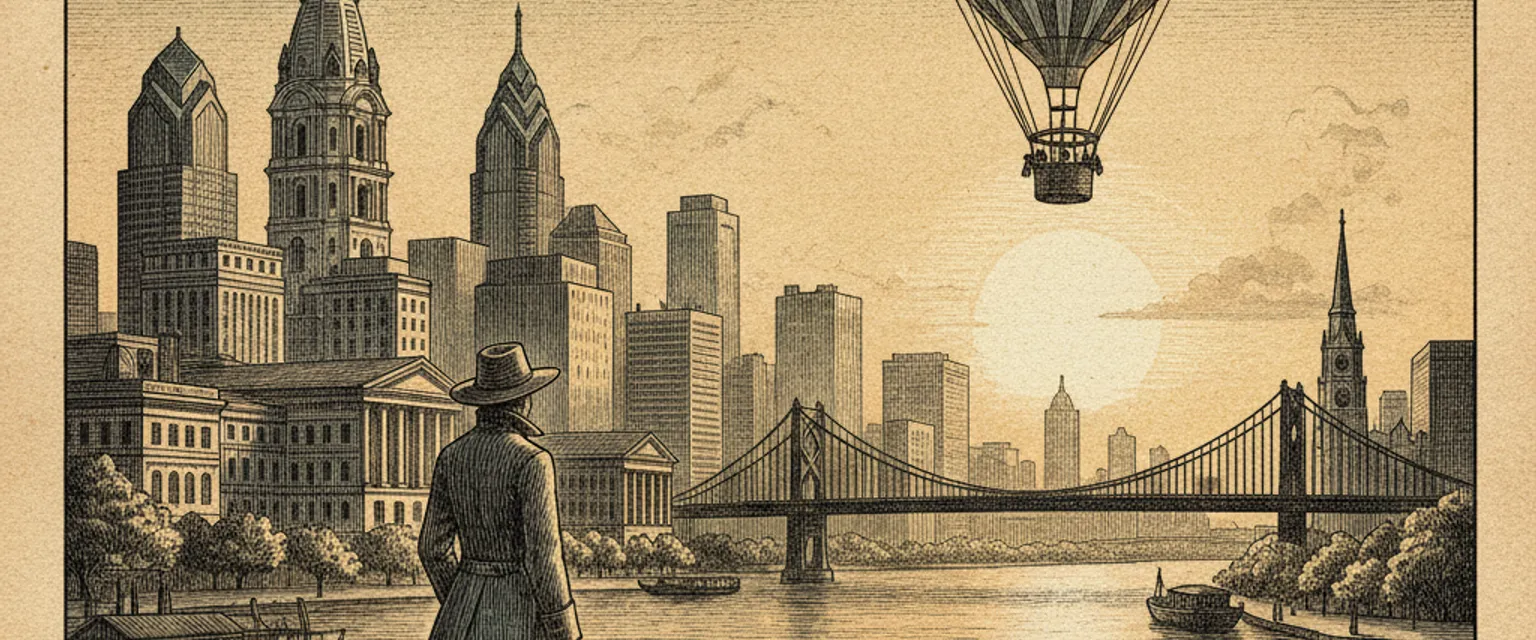
I ran up the Art Museum steps doing the Rocky shuffle, badly, and arrived at the top wheezing in front of a Japanese tour group who applauded out of what I can only assume was pity. I turned around to the view down the Parkway and the whole city laid itself out, and I got it. Then I ate a cheesesteak at Pats, walked across the street and ate another at Genos to be fair, and spent the rest of the trip unable to decide which I preferred. Philadelphia is a city that makes you take a side and then refuses to declare a winner.
The Perfect Philadelphia Itinerary (2, 3, 4 & 7 Days)
Two days covers the founding-fathers core and the Rocky steps. The Liberty Bell and Independence Hall, the Museum of Art and its famous stairs, Reading Terminal Market for lunch, and a cheesesteak settled by your own taste buds. You leave having walked through the actual rooms where the country was argued into being.
Reserve free, timed Independence Hall tickets online in advance March through December, or you may not get in.
72 Hours: Old City and the Museums
Three days adds the cobbled Old City and its galleries, the Barnes Foundation's astonishing collection, and a wander through the Italian Market. You move past the postcard sights into the neighbourhoods that give Philadelphia its grit and charm.
4 Days: Murals, Magic, and the Magic Gardens
Four days lets you slow down for South Street's mosaic Magic Gardens, the eerie Eastern State Penitentiary, and a mural-arts tour through a city that has more public murals than any other in America. This is where Philadelphia stops being a school trip and gets genuinely strange and good.
7 Days: The City and the Region
A week opens up the wider region: the gardens of the Brandywine Valley, a day in the Amish country of Lancaster, the battlefield at Valley Forge, and enough open afternoons to find your own corner bar and your own definitive cheesesteak. You stop being a tourist and start having opinions.
Estimated budget:$300-$540
Estimated budget:$450-$810
Estimated budget:$600-$1080
Estimated budget:$1050-$1900
Day 1
Independence and the Old City
The rooms where the country was founded
Independence Hall and the Liberty Bell
The room where the Declaration and Constitution were signed, plus the cracked bell.
Independence Hall is where both the Declaration of Independence and the Constitution were debated and signed, and standing in the actual assembly room is the rare history sight that delivers. Entry is by free timed ticket, reserved online for a small fee in peak season. Pair it with the Liberty Bell across the mall, where the queue moves fast and the famous crack is closer than you expect.
Reading Terminal Market
An 1893 covered market with the best single-roof lunch in the city.
Reading Terminal Market, open since 1893, is the city's great eating hall: Amish bakers, a roast-pork sandwich at DiNics that locals rate above the cheesesteak, soft pretzels, oysters, and more. Go hungry and graze. It is busiest at lunch on weekdays when the office crowd piles in, so arrive a touch before noon to beat the worst of it.
Elfreth's Alley and Old City
The oldest continuously inhabited residential street in America, cobbles and all.
Elfreth's Alley in Old City is billed as the oldest continuously lived-in street in the United States, a cobbled lane of brick row houses from the 1720s, still private homes. Wander it, then explore the surrounding Old City galleries, Christ Church where several founders worshipped, and Franklins grave through the cemetery fence, where visitors still leave pennies.
Day 2
The Parkway and the Steps
Grand museums and a famous run
Philadelphia Museum of Art
A world-class collection behind the steps Rocky made famous.
The Philadelphia Museum of Art is one of the great American collections, strong in European painting, arms and armour, and a recreated medieval cloister. But first, run up the 72 stone steps out front, do the arm-raise, and take in the Parkway view, because you will regret not doing it. Inside, allow at least two hours; the Pay-What-You-Wish evenings are good value.
Rocky Statue and the Parkway
The bronze Balboa at the foot of the steps, plus the city's grandest boulevard.
The Rocky statue sits at the base of the museum steps, and yes, you should queue for the photo. From there the Benjamin Franklin Parkway, modelled on the Champs-Elysees, runs back toward City Hall, flanked by the flags of every nation and the fountains of Logan Square. It is a fine walk that strings together several of the next stops.
Pat's and Geno's cheesesteaks
The two rival corner windows that started the whole cheesesteak war.
At Ninth and Passyunk in South Philly, Pats King of Steaks and Genos face each other across the street, the original cheesesteak rivals, both open 24 hours. Order with the proper shorthand, whiz wit for Cheez Whiz and onions, and eat standing at the counter. Buy one from each to settle the debate, or at least to claim you tried.
Day 3
The Barnes and the Italian Market
A singular art collection and a working market
The Barnes Foundation
One of the world's great Impressionist hoards, hung exactly as Dr Barnes left it.
The Barnes Foundation holds an almost unbelievable density of Renoir, Cezanne, Matisse, and Picasso, arranged in Albert Barnes's idiosyncratic floor-to-ceiling ensembles mixing paintings with ironwork and furniture. It is unlike any other museum visit. Book a timed ticket, allow two hours, and let the strange, deliberate hang work on you.
9th Street Italian Market
The oldest continuously operating outdoor market in the country, full of food.
The Ninth Street Italian Market is the oldest working outdoor market in the United States, a stretch of South Philly lined with butchers, cheese shops, produce stalls, and bakeries, plus newer Mexican and Vietnamese spots reflecting the changing neighbourhood. Graze your way along it, buy a cannoli at Termini Brothers, and watch the city shop.
East Passyunk Avenue
South Philly's restaurant-row diagonal, where the neighbourhood eats and drinks.
East Passyunk Avenue, cutting diagonally through South Philly, has quietly become one of the citys best dining strips, a row of bistros, BYOBs, and corner bars favoured by locals over the tourist core. Walk it in the late afternoon, claim a patio table, and have a drink before dinner. It is the un-touristy Philadelphia people actually live in.
Day 4
Murals, Magic, and a Prison
Public art and a Gothic ruin
Philadelphia's Magic Gardens
A half-block labyrinth of mosaic mirrors and tile, the city's most joyful weird place.
On South Street, Isaiah Zagars Magic Gardens is an immersive mosaic environment, an entire half-block of walls, tunnels, and grottoes built from mirror shards, bottles, bicycle wheels, and tile. It is dazzling and a little disorienting in the best way. Buy a timed ticket, then spot Zagars mosaics scattered across the surrounding blocks for free.
Eastern State Penitentiary
A crumbling 1829 prison with vaulted cellblocks and a genuinely eerie atmosphere.
Eastern State Penitentiary, opened in 1829, pioneered solitary confinement and once held Al Capone in a comparatively comfortable cell. Now a stabilised ruin, its cathedral-like cellblocks and peeling paint make for a haunting, excellent audio-guided visit narrated by Steve Buscemi. Allow two hours; in October it becomes a famous, very intense haunted attraction.
Day 5
Valley Forge and the Main Line
A revolutionary winter camp and leafy suburbs
Valley Forge National Historical Park
Where Washington's army survived the brutal winter of 1777, now rolling parkland.
Valley Forge, about 40 minutes northwest, is where the Continental Army endured the punishing winter of 1777 to 1778 and emerged a disciplined fighting force. The 3,500-acre park has reconstructed log huts, Washingtons headquarters, and a flat loop road good for biking or driving. It is a quiet, green, and genuinely affecting place to walk the founding story off the page.
Brandywine Valley gardens
Longwood's vast conservatory and fountains, an easy add to the western day.
The Brandywine Valley southwest of the city is garden country, anchored by Longwood Gardens, a former du Pont estate with a colossal glass conservatory, illuminated fountains, and over a thousand acres of grounds. It is one of the great display gardens in the world. Time a summer evening for the fountain show, or come in winter for the conservatory's Christmas display.
Day 6
Lancaster and Amish Country
Farmland, buggies, and a slower Pennsylvania
Lancaster County Amish Country
Horse-drawn buggies, covered bridges, and the country's oldest farmers market town.
Lancaster County, about 80 minutes west, is the heart of Pennsylvania Dutch country, a patchwork of Amish and Mennonite farms where buggies still share the roads. Skip the kitschy attractions and drive the back lanes past covered bridges and roadside produce stands. Lancaster Central Market, the oldest continuously operating farmers market in the US, is a fine lunch stop.
Kitchen Kettle Village, Intercourse
Jams, shoofly pie, and a buggy ride through working farmland.
In the village of Intercourse, Kitchen Kettle Village gathers Pennsylvania Dutch food makers, jam canneries, and craft shops, and you can book a horse-drawn buggy ride through the surrounding farms with an Amish driver. It tips toward touristy, but the shoofly pie and the chow-chow relish are the real thing. Buy a jar to take home.
Day 7
Slow Philly
A market breakfast and the riverfront
Rittenhouse Square
The city's most elegant park, ringed by cafes and the best people-watching in town.
Rittenhouse Square is the loveliest of William Penns original city squares, a leafy block of benches and sculpture surrounded by smart cafes and townhouses. Grab a coffee and a pastry from a nearby bakery, claim a bench, and watch the city go by. The surrounding streets have the citys best independent shopping for a final browse.
Spruce Street Harbor Park
A summertime Delaware River boardwalk of hammocks, lights, and floating bars.
On the Delaware River waterfront, Spruce Street Harbor Park is a seasonal boardwalk strung with hammocks, coloured lights, and floating food-and-drink barges, open late spring through early autumn. It is a perfect easy last afternoon, with skyline views across the river to New Jersey. Grab a hammock, order a frozen drink, and watch the water while the city winds down.
Philadelphia is the city where America was argued into existence, and it has been arguing ever since, about cheesesteaks, about its sports teams, about whether it gets the respect it deserves wedged between New York and Washington. It does not, which is part of its charm. This is a town with the founding history of a capital, the museums of a much bigger city, and the unpretentious, slightly chip-on-the-shoulder character of a great working neighbourhood.
This itinerary is built around two Philadelphias. The first is the founding-fathers core, Independence Hall, the Liberty Bell, the Art Museum steps, which earns its place and its first two days. The second is the neighbourhood city of South Philly markets, mosaic gardens, mural-covered walls, and corner BYOBs, which is where the place actually lives. The longer plans get you there, and out into the gardens and farmland of the wider region.
The 2/3/4/7-day versions are real choices. Two days is the history and a cheesesteak. Three adds the Barnes and the markets. Seven gives you Valley Forge, the Brandywine gardens, and Amish country, plus the slack to find your own corner of the city.
How to use this plan
Use the day filter to match your trip length. Each day clusters by neighbourhood so you walk a famously walkable city instead of fighting its traffic, and SEPTA covers the longer hops. The historic core, Center City, and South Philly all connect on foot; for Valley Forge, the Brandywine, and Lancaster you will want a car. Come in spring or autumn for the best weather, reserve your Independence Hall tickets ahead, and bring an appetite you are willing to ruin twice.
This article contains affiliate links marked with rel="sponsored". We may earn a commission at no extra cost to you.