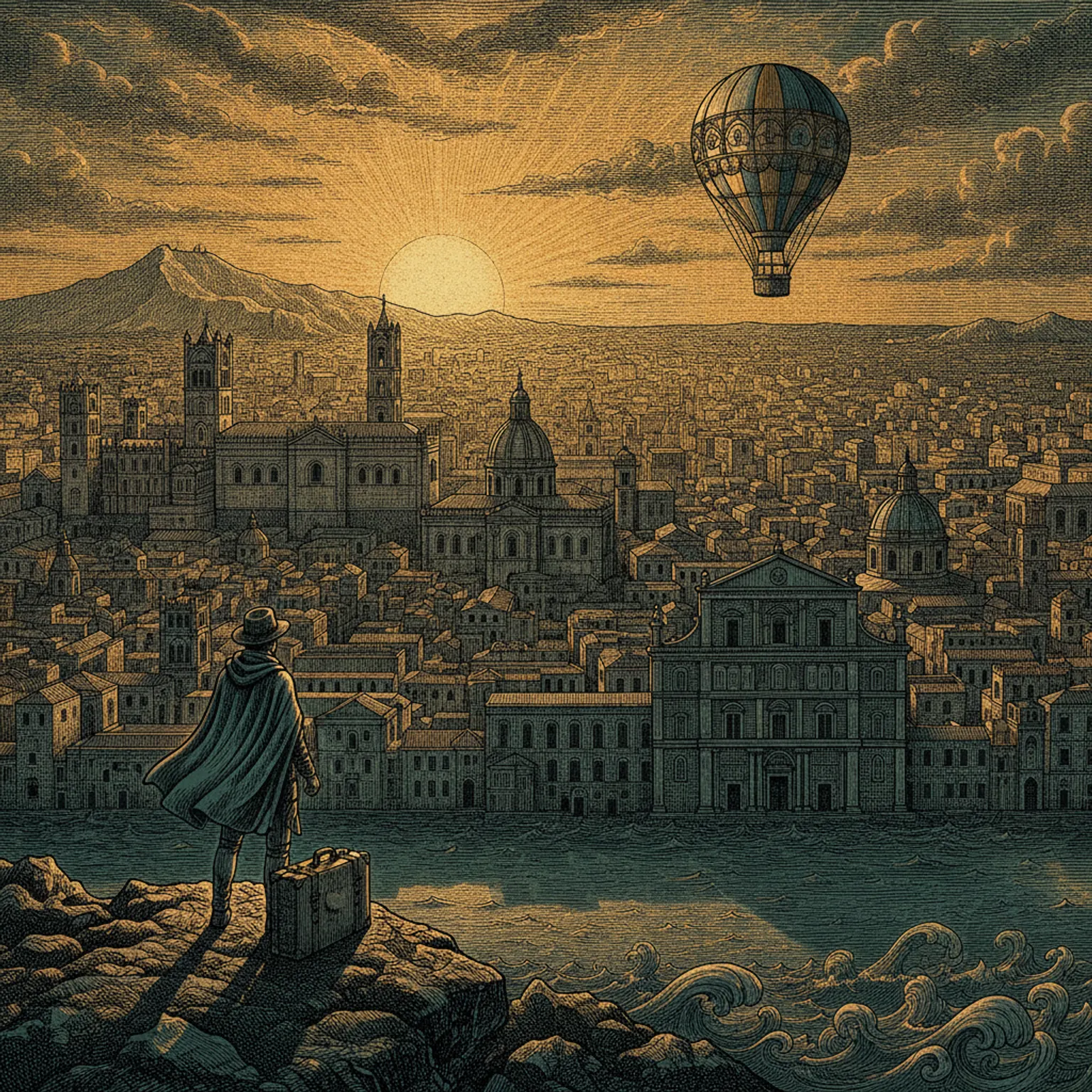
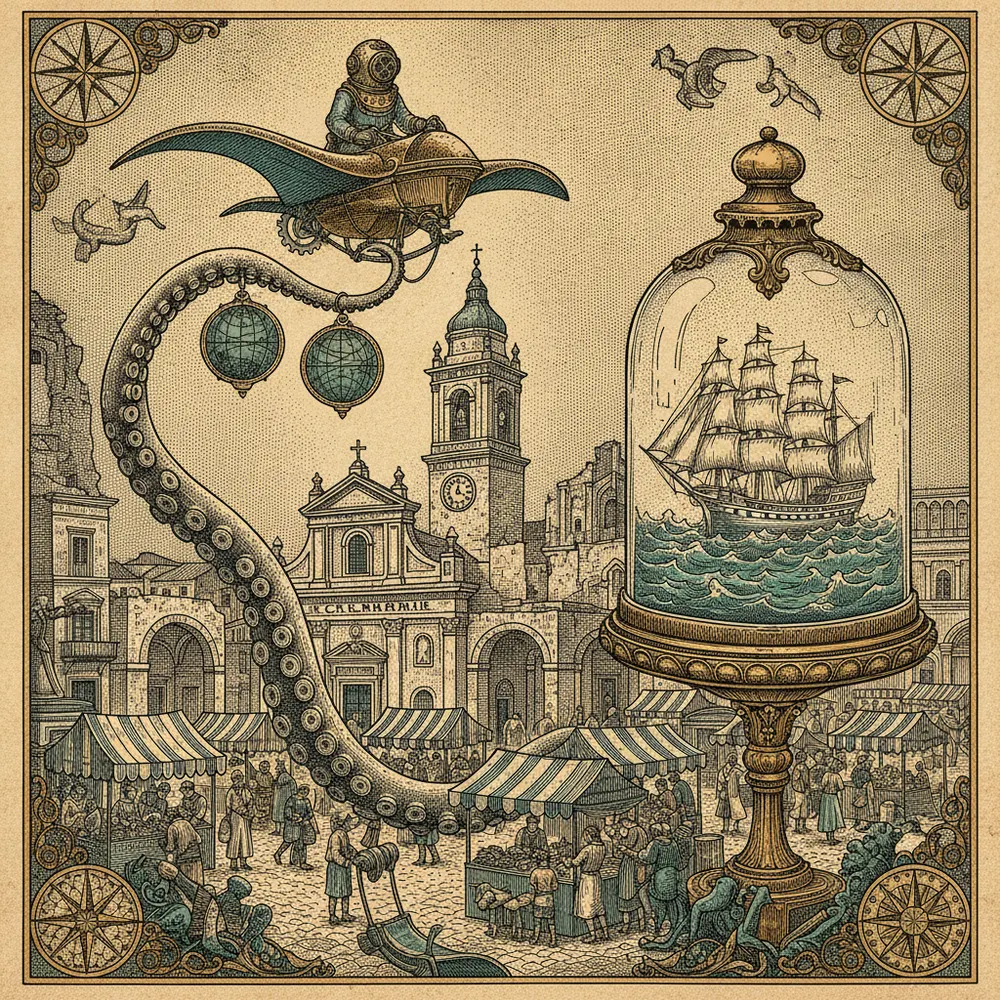
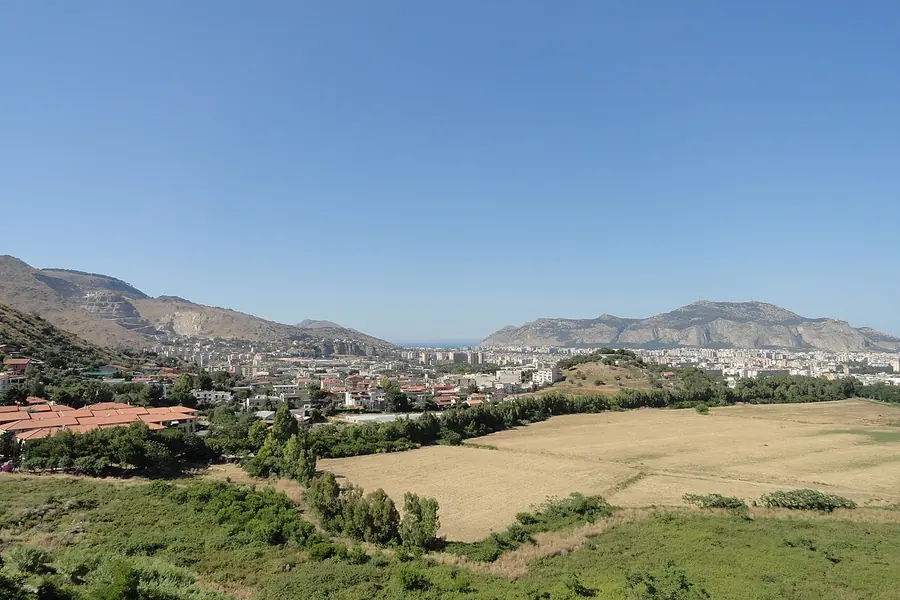
Palermo assaulted my senses in the best possible way. Within an hour of arriving I was lost in the Ballaro market, a vendor was shouting poetry about his tomatoes, a scooter nearly took my elbow off, and someone handed me a panelle sandwich I didn't order and refused to let me pay. I ate it standing in the chaos, grease running down my wrist, golden Arab-Norman domes peeking over crumbling palazzi, and thought: this is the most alive city in Italy. It's gritty, it's gorgeous, it's a glorious mess, and I loved every loud minute of it.
Two days is the dense historic core: the Cattedrale, the Quattro Canti, and the Ballaro market with street food on Day 1, then the Cappella Palatina's golden mosaics and the Vucciria by night on Day 2. Wear good shoes, accept the chaos, and eat with your hands.
Palermo street food rules: panelle (chickpea fritters), arancine, sfincione (spongy pizza), and the brave-only pani ca meusa (spleen sandwich). Eat standing, pay cash, and follow the longest local queue.
72 Hours: Add Monreale and the Catacombs
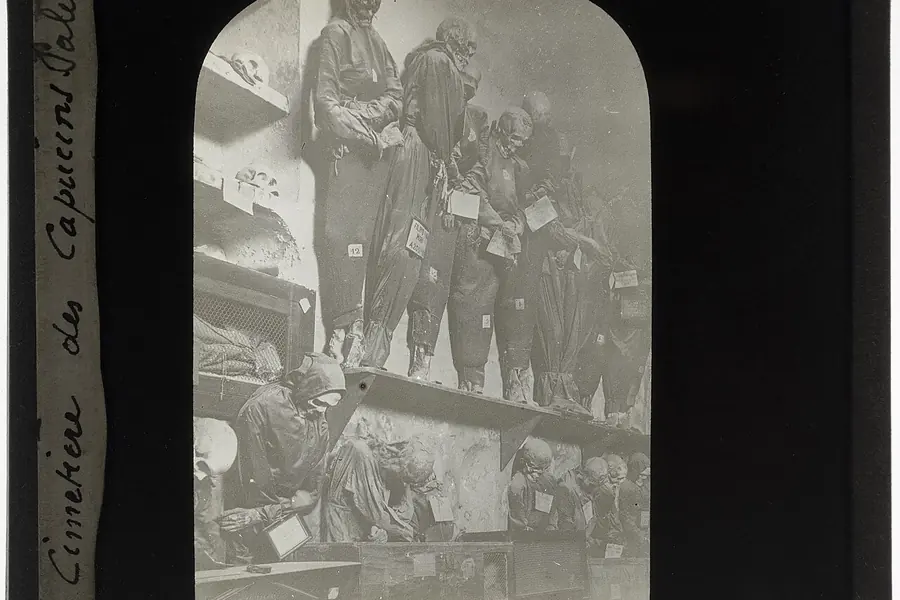
Three days adds the staggering golden cathedral of Monreale just outside town and the genuinely eerie Capuchin Catacombs. Day 3 takes you from Palermo's most sublime art to its most macabre — which is the whole range of this city in a single day.
4 Days: Cefalu or the Beach
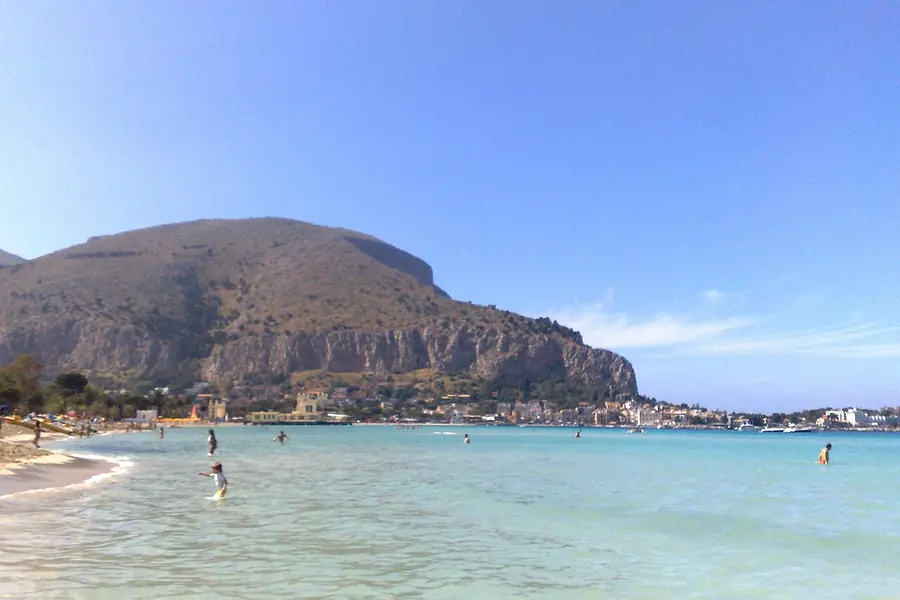
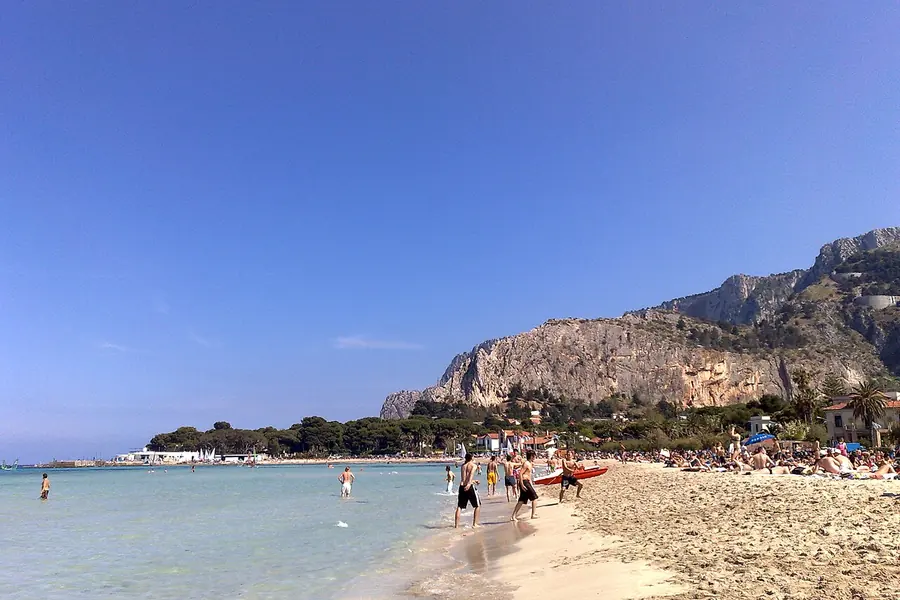
Four days means a day out: the gorgeous medieval seaside town of Cefalu (an hour east by train, with its own Norman cathedral and a real beach) or the closer beach escape at Mondello. After all that intensity, a swim in the Tyrrhenian is exactly what's needed.
7 Days: Western Sicily from a Palermo Base
A week turns Palermo into a base for the whole northwest — the hilltop temple town of Segesta, the salt pans and seafood of Trapani, the cliff town of Erice, and the wild Zingaro coast. By Day 5 you'll order arancine without thinking, cross the road like a local (with faith), and understand why Palermitans are so fiercely, justifiably proud.
Estimated budget:$170-$400
Estimated budget:$250-$580
Estimated budget:$340-$800
Estimated budget:$600-$1,400
[ THE DISPATCH · FIELD MAP ]
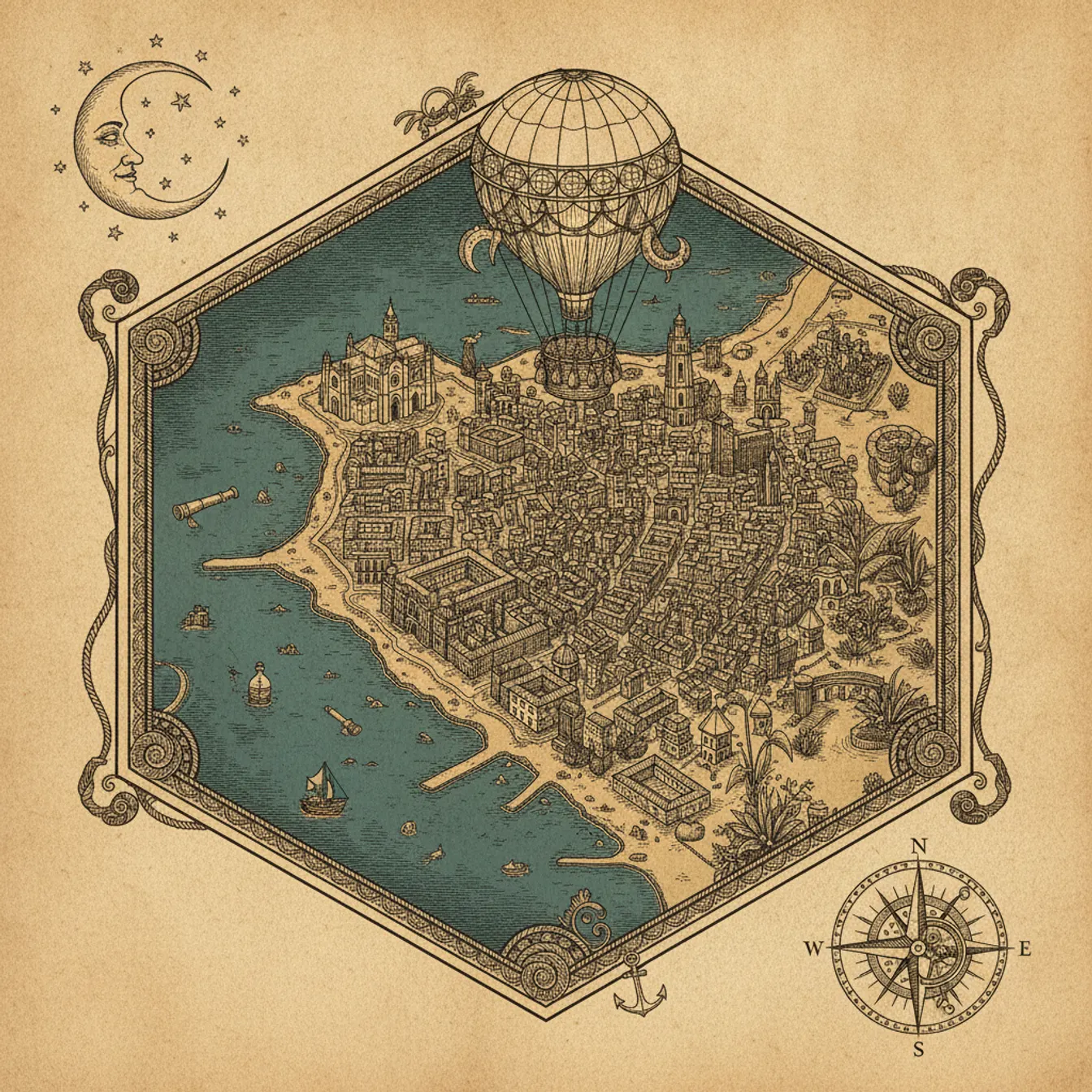
A tilted, hand-drawn dispatch of Palermo. Click a quarter to explode it open.
0 / 6 quarters explored
Legend · tap to highlight
[ CENTRO STORICO ]
Old stones, older stories.
Quattro Canti + CattedraleThe baroque crossroads of the old city and a cathedral that can't decide what century it's in.
Mercato di BallaroPalermo's oldest and rowdiest market — Arab-style chaos, shouting vendors, incredible food.
[ BALLARO MARKET ]
Grand squares and big ideas.
Vucciria by nightA dead market by day that erupts into open-air drinking and grilling after dark.
[ VUCCIRIA ]
Stays up later than you do.
Vucciria night marketA nightlife worth your time.
[ ALBERGHERIA / NORMANNI ]
Old stones, older stories.
Palazzo dei Normanni + Cappella PalatinaA royal chapel sheathed entirely in gold Byzantine mosaics — the most beautiful room in Sicily.
Teatro Massimo + lunchItaly's largest opera house — and the steps where The Godfather Part III ends.
[ LA KALSA ]
Where the city meets the water.
La Kalsa + the waterfrontThe atmospheric old Arab seaside quarter — faded palazzi, leafy squares, and the harbour.
[ MONDELLO ]
Boats, bridges and reflections.
Mondello beachPalermo's own white-sand bay, 20 minutes away, all liberty-style cabanas and turquoise water.
A farewell Sicilian feastPasta con le sarde, a glass of Nero d'Avola, and a final cannolo for the road.
Day 1
Centro Storico + Ballaro + Street Food
The chaotic heart, the great market, and Palermo's legendary street food
Quattro Canti + Cattedrale
The baroque crossroads of the old city and a cathedral that can't decide what century it's in.
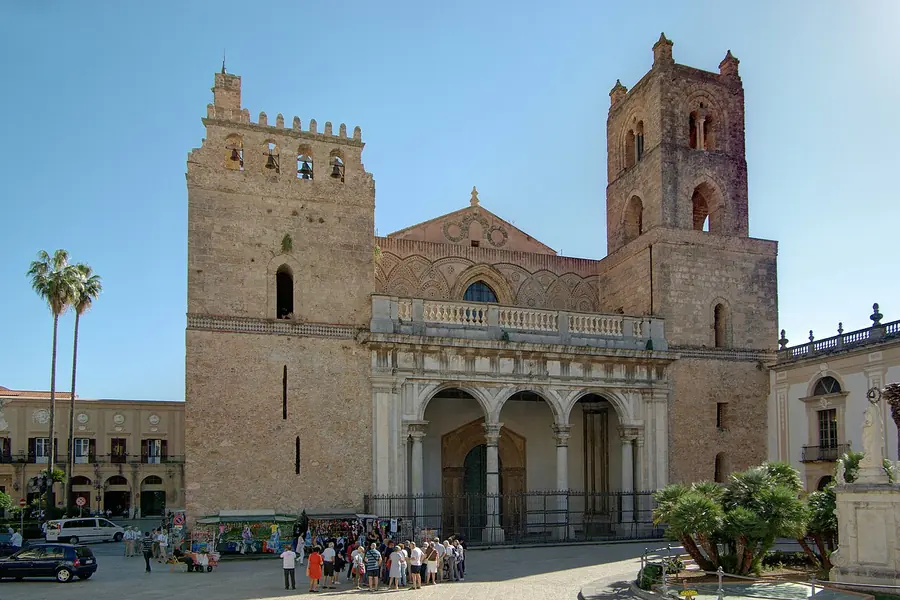
Start at the Quattro Canti, the baroque octagonal crossroads where Palermo's two main streets meet, then walk to the Cattedrale — an astonishing architectural mongrel of Norman, Gothic, Arab, and baroque elements layered over a thousand years (it was a mosque before it was a church). Climb to the rooftop for views over the domes and the mountains. It's the perfect first lesson in Palermo's gloriously tangled history.
The Ballaro is Palermo's oldest and most atmospheric street market, a loud, sprawling souk-like tangle of stalls where vendors sing the praises of their produce in the Sicilian "abbanniata" cry. This is where you eat: panelle (chickpea fritters), crocche, sfincione, and arancine from stalls slick with decades of frying. It's gritty, overwhelming, and the single most authentic experience in the city. Go hungry and bring cash.
Vucciria by night
A dead market by day that erupts into open-air drinking and grilling after dark.
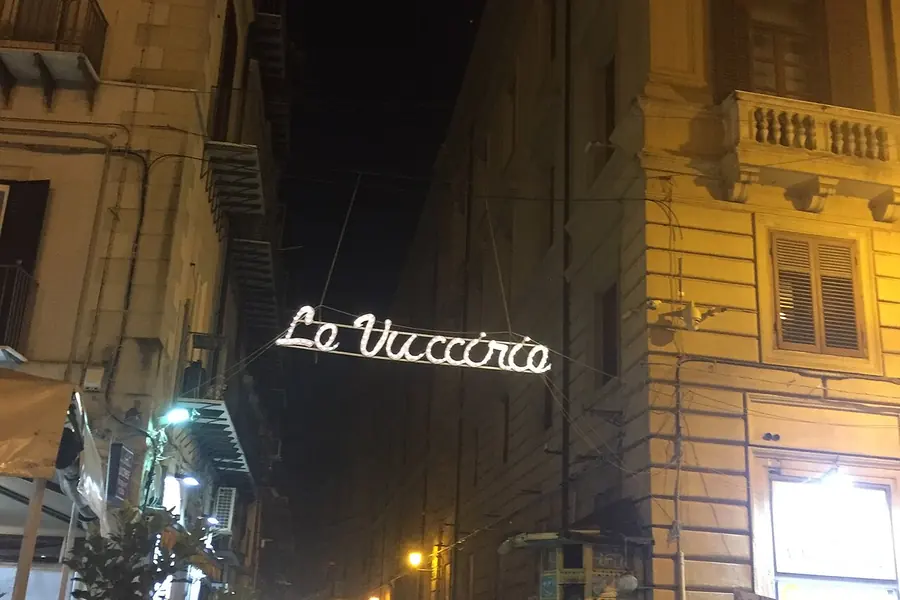
The Vucciria, once the city's grandest market, is faded and half-empty by day — but after dark it transforms into Palermo's rowdiest open-air party, with crowds spilling out of tiny bars, grills smoking with stigghiola (grilled offal), and cheap wine flowing in plastic cups. It's grungy, loud, and a Palermo institution. Have a drink, watch the chaos, eat something off a grill, and lean into it.
The golden chapel, royal Palermo, and the seaside quarter
Palazzo dei Normanni + Cappella Palatina
A royal chapel sheathed entirely in gold Byzantine mosaics — the most beautiful room in Sicily.
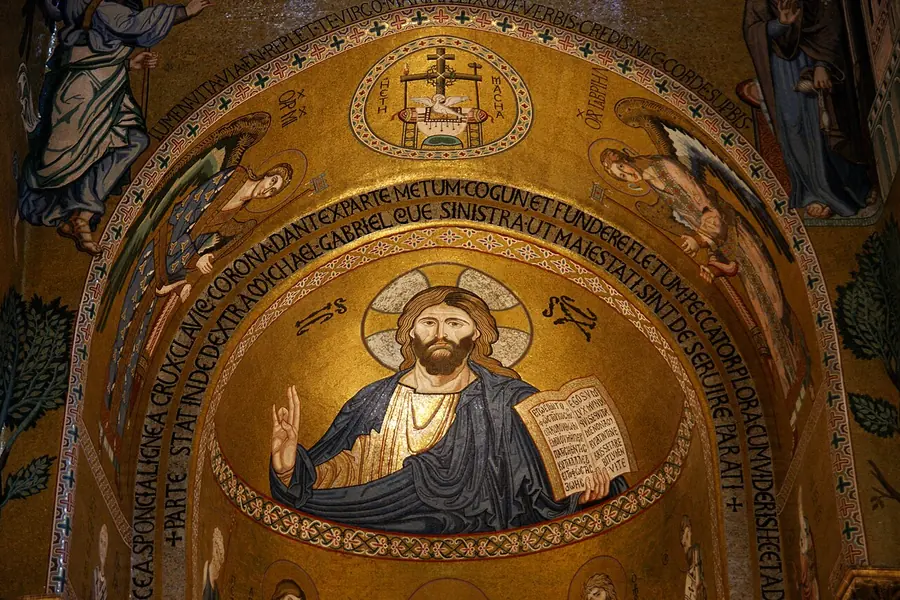
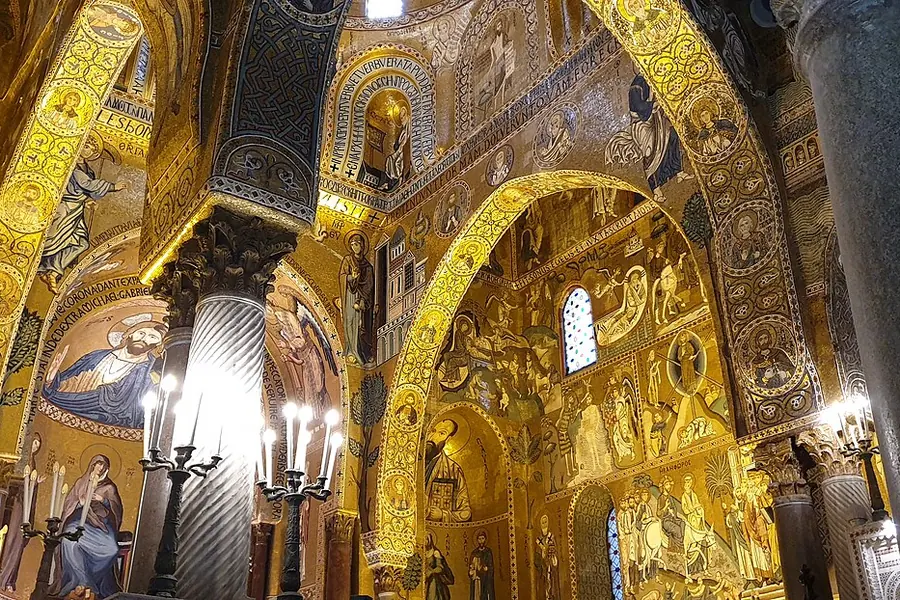
The Palazzo dei Normanni, seat of Sicily's regional parliament, holds the Cappella Palatina — a 12th-century royal chapel whose every surface is covered in shimmering gold Byzantine mosaics beneath a carved Arab muqarnas ceiling. It is, without exaggeration, one of the most beautiful interiors in Europe, a perfect fusion of Norman, Byzantine, and Islamic art. Go at opening to have it nearly to yourself. Genuinely unforgettable.
Italy's largest opera house — and the steps where The Godfather Part III ends.
The Teatro Massimo is the largest opera house in Italy and the third largest in Europe, a grand neoclassical pile whose steps you'll recognise from the operatic climax of The Godfather Part III. Take a tour of the gilded auditorium or, better, catch a performance if your dates align. Around it, the streets toward the Politeama have good lunch spots — try a proper Sicilian pasta con le sarde nearby.
La Kalsa + the waterfront
The atmospheric old Arab seaside quarter — faded palazzi, leafy squares, and the harbour.
La Kalsa, the old Arab quarter by the sea, is Palermo's most evocative neighbourhood — a mix of war-scarred palazzi, the lovely Piazza Marina with its giant banyan tree, the Galleria Regionale art museum in Palazzo Abatellis, and the green Foro Italico promenade along the water. It's slowly gentrifying but still raw. Wander as the light softens, then settle into an aperitivo at a Piazza Marina cafe as the swifts wheel overhead.
Day 3
Monreale + Capuchin Catacombs
The most sublime mosaics and the most macabre crypt in Sicily
Duomo di Monreale
A hillside cathedral with 6,000 square metres of golden mosaics — arguably the finest in the world.
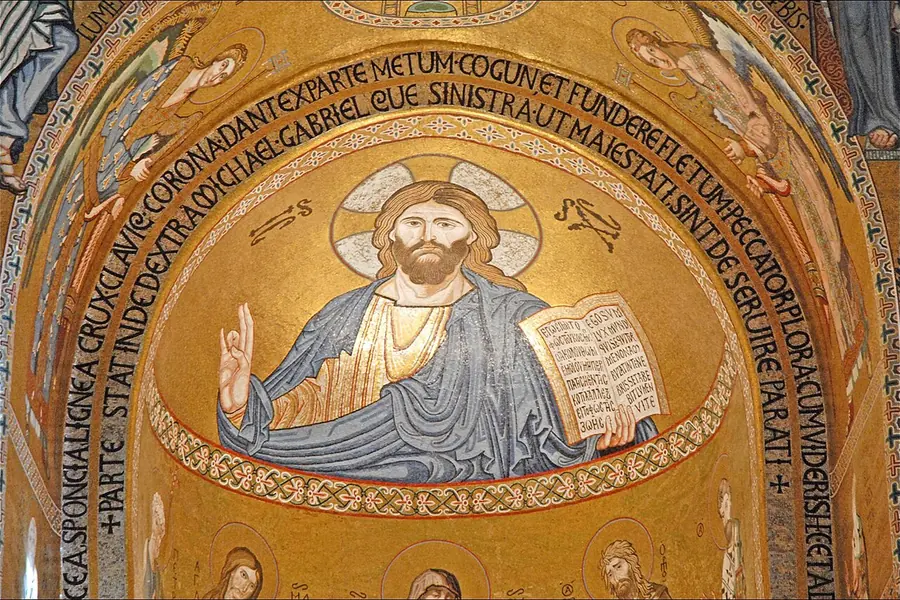
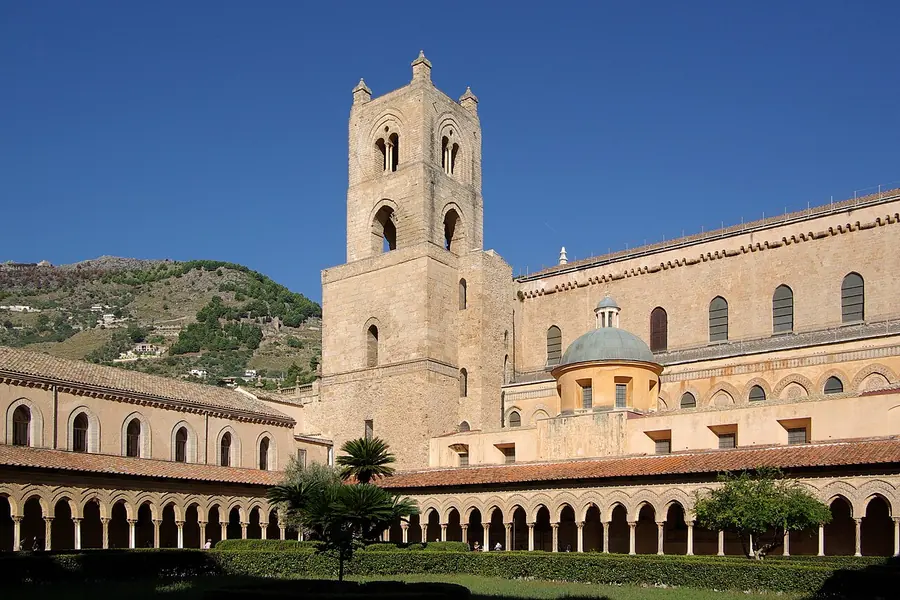
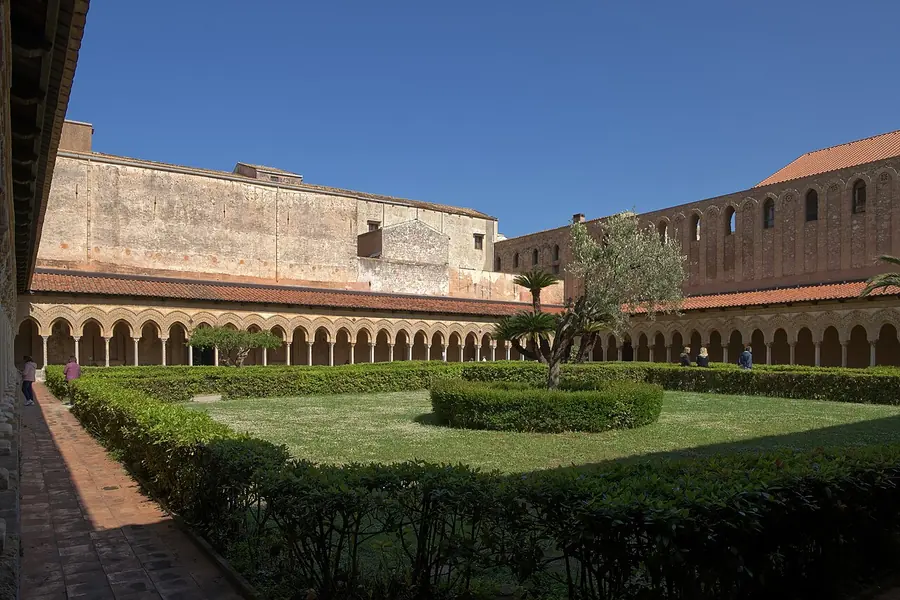
The Duomo di Monreale, on a hill just above Palermo (20 minutes by bus), is the crown jewel of Norman Sicily — a cathedral whose interior is lined with 6,000 square metres of breathtaking gold mosaics depicting the entire Bible, dominated by a vast Christ Pantocrator in the apse. The adjoining cloister, with its 228 carved twin columns, is equally extraordinary. It's a short trip for one of the greatest medieval art ensembles on earth. Go early.
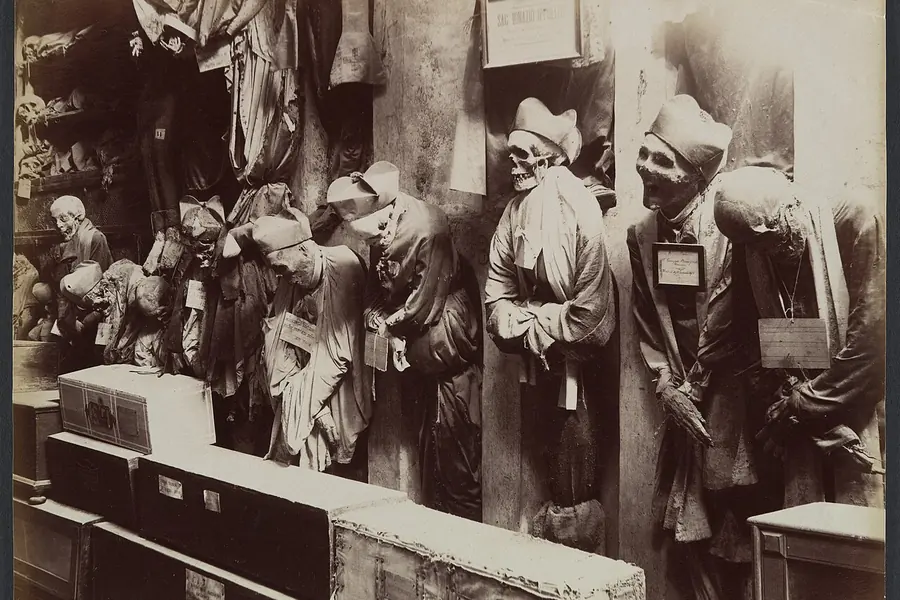
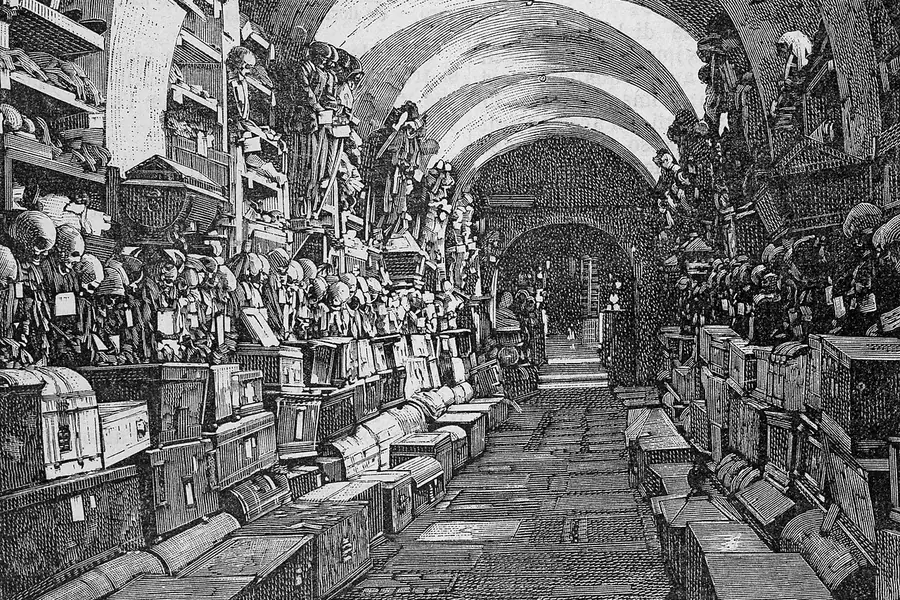
The Capuchin Catacombs are not for everyone: an underground labyrinth where some 8,000 mummified Palermitans, many still in their period clothes, hang and lie along the corridors, sorted by profession, gender, and status. The most famous is Rosalia Lombardo, a child so perfectly preserved she's nicknamed "Sleeping Beauty." It's macabre, unforgettable, and a uniquely Palermitan meditation on death. Photos are forbidden; just absorb it.
A medieval seaside town with a Norman cathedral and a real beach
Cefalu Cathedral + old town
A twin-towered Norman cathedral over a tangle of medieval lanes by the sea.
Cefalu, an hour east by train, is the perfect Sicilian seaside town: a tight medieval centre of cobbled lanes beneath the fortress-like twin towers of its Norman cathedral, which holds its own magnificent Christ Pantocrator mosaic. Wander the old town, peek at the medieval lavatoio (washhouse), and for the energetic, hike up La Rocca, the looming crag above town, for sweeping coastal views.
Cefalu beach + seafood lunch
A golden crescent of sand right beside the old town, plus the day's catch.
Cefalu's great gift is that its sandy beach sits right against the old town — swim in clear Tyrrhenian water with the cathedral and the rock as your backdrop. Have a long seafood lunch first: spaghetti ai ricci (sea urchin) or fresh grilled fish at a seafront trattoria. After the intensity of Palermo, a lazy afternoon on the sand here is exactly the reset you need before the train home.
Day 5
Segesta + Erice
A lone Greek temple and a mountaintop medieval town
Segesta Greek Temple
A perfectly preserved 5th-century BC Doric temple standing alone in empty hills.
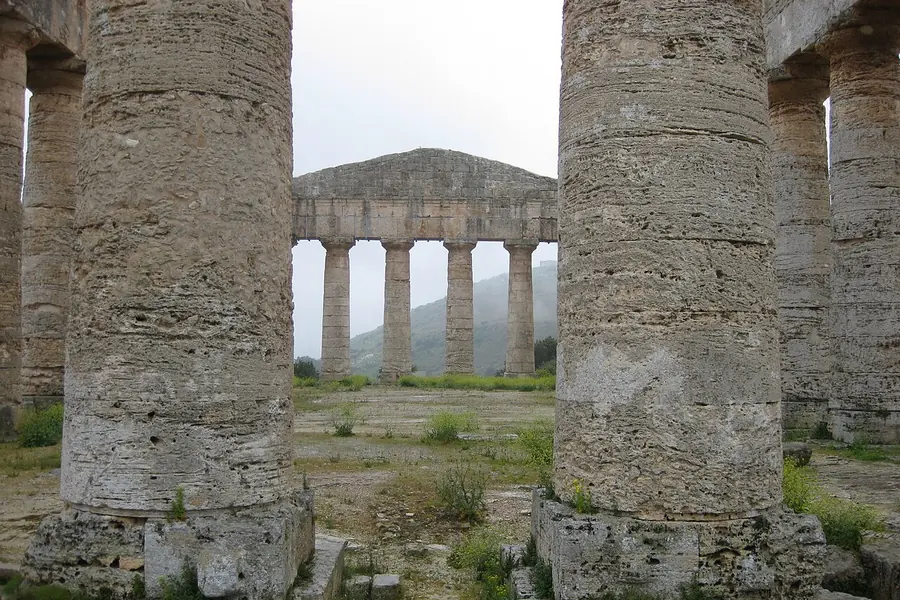
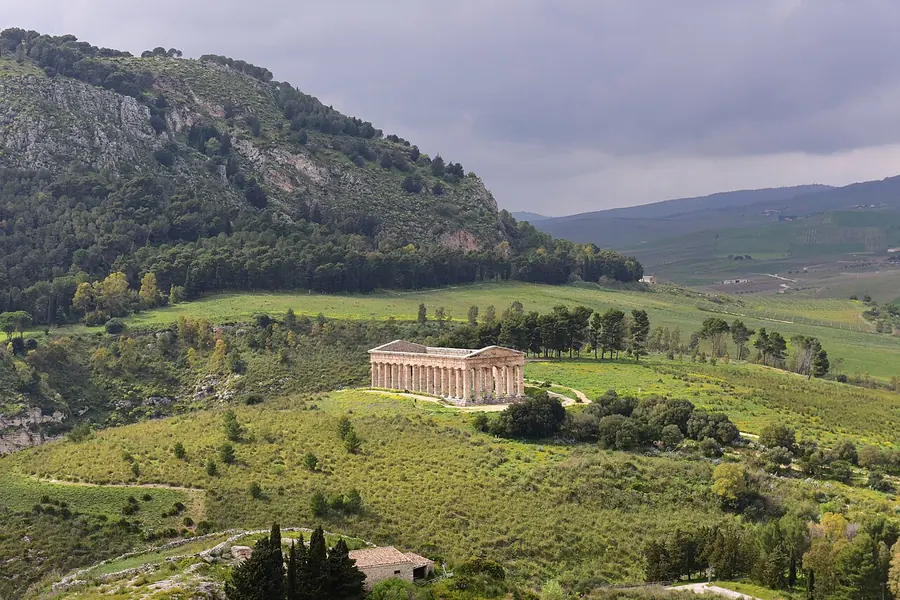
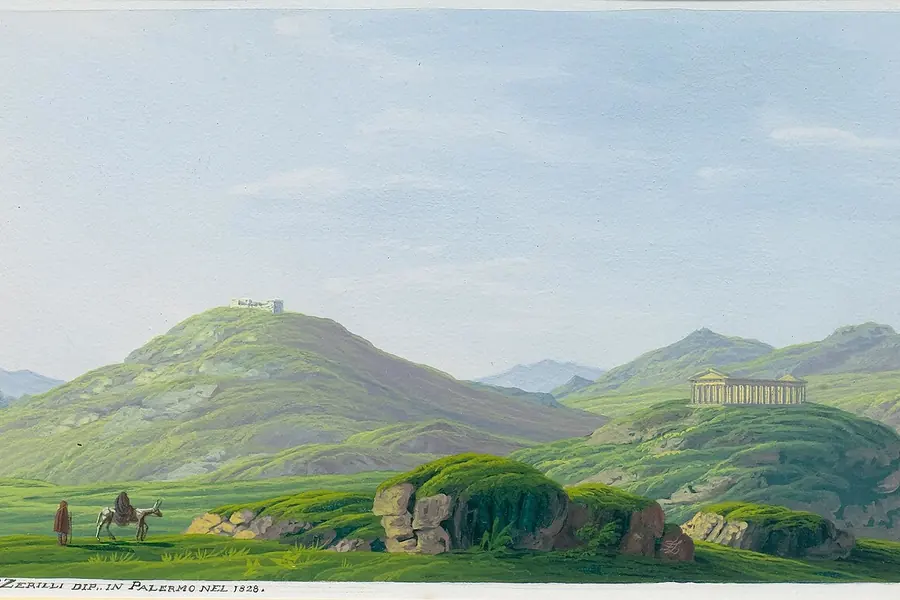
Segesta, about an hour west, is one of the most hauntingly beautiful ancient sites in Sicily — a near-complete 5th-century BC Doric temple standing in glorious isolation on a windswept hillside, never even finished, with a Greek theatre carved into the slope above commanding views to the sea. There are no crowds, no city, just the temple and the wind. It's a far more atmospheric ruin than the bigger sites at Agrigento.
A misty medieval town on a 750m peak, with cobbled lanes and the best almond pastries in Sicily.
Erice perches at 750 metres on a mountaintop, often wreathed in cloud, a perfectly preserved medieval town of cobbled lanes, stone churches, and Norman castles with staggering views over the salt pans and coast. It's reached by a dramatic cable car from Trapani below. Don't leave without the genovesi (warm custard pastries) and almond sweets from Pasticceria Maria Grammatico, a Sicilian legend. Cool, quiet, and magical.
Day 6
Trapani + the Salt Pans
Seafood, salt windmills, and the western coast
Trapani salt pans + windmills
Ancient salt flats striped pink and white, dotted with old windmills, at their best near sunset.
The salt pans (saline) stretching between Trapani and Marsala are a surreal, beautiful landscape — shallow flats of evaporating seawater shading from white to pink, studded with old windmills and conical salt mounds. The Museo del Sale explains the centuries-old harvest. Drive the coastal road, stop at a viewpoint, and time it for the golden hour when the pans turn rose-gold and mirror the sky.
Trapani seafood + couscous
Where Sicily meets North Africa — fish couscous and the best raw shrimp around.
Trapani, the port at Sicily's western tip, has a strong North African streak, and its signature dish proves it: couscous di pesce, fish couscous steamed and served in a rich seafood broth. The old town's trattorias also do sublime raw red prawns (gambero rosso) and fresh tuna. Have a long, leisurely seafood lunch on the harbour before the drive back to Palermo. Western Sicily eats very, very well.
Day 7
Mondello + Palermo Farewell
A beach day and a last Sicilian feast
Mondello beach
Palermo's own white-sand bay, 20 minutes away, all liberty-style cabanas and turquoise water.
Mondello, a 20-minute bus ride from the centre, is Palermo's beloved beach escape — a crescent of fine white sand and shallow turquoise water framed by two headlands, with a charming Art Nouveau bathing pavilion out on the water. It gets busy with locals on summer weekends, which is part of the fun. Swim, rent a lounger, and have a granita with brioche on the seafront. The perfect last morning.
Pasta con le sarde, a glass of Nero d'Avola, and a final cannolo for the road.
End with a proper sit-down Sicilian dinner — somewhere like Trattoria Ai Cascinari or Osteria dei Vespri. Order the island's classics: pasta con le sarde (sardines, fennel, raisins, pine nuts), caponata, fresh fish, a bottle of Nero d'Avola, and a cannolo filled to order. By now you eat arancine without thinking and cross Palermo's anarchic streets on faith. Raise the last glass to the loudest, most alive, most gloriously chaotic city in Italy.
Palermo is not a polite city, and that’s exactly why I love it. Where Florence preens and Venice poses, Sicily’s capital just gets on with the loud, chaotic, deeply human business of being alive. It’s a place of staggering Arab-Norman beauty — golden mosaics that rival anything in the world — coexisting with crumbling palazzi, anarchic markets, and the best street food in Italy. It rewards travellers who can roll with a bit of grit and chaos. If that’s you, you’ll fall hard.
The honest pitch: come for the mosaics, stay for the markets and the food. The Cappella Palatina and Monreale are among the most beautiful interiors on earth, but Palermo’s real soul is in the Ballaro market, the night chaos of the Vucciria, and the panelle eaten standing in a crowd. It’s also a superb base for western Sicily — Cefalu, Segesta, Erice, the salt pans of Trapani.
The 2/3/4/7-day versions scale from the dense centre outward. Two days is the historic core and the markets. Four days adds Cefalu and a beach. Seven days reaches the Greek temple at Segesta, mountaintop Erice, and the western coast.
A few practical notes. Wear sturdy shoes — the streets are uneven and the centro is best walked. Carry cash for markets and street food. Traffic is genuinely lawless; cross with locals and a little faith. Beware pickpockets in the busiest market crush, but don’t let the city’s old reputation scare you — it’s far safer than the clichés suggest. The best months are spring and autumn; high summer is brutally hot. Use the duration filter above to build your version of Italy’s most alive city.
This article contains affiliate links marked with rel="sponsored". We may earn a commission at no extra cost to you.