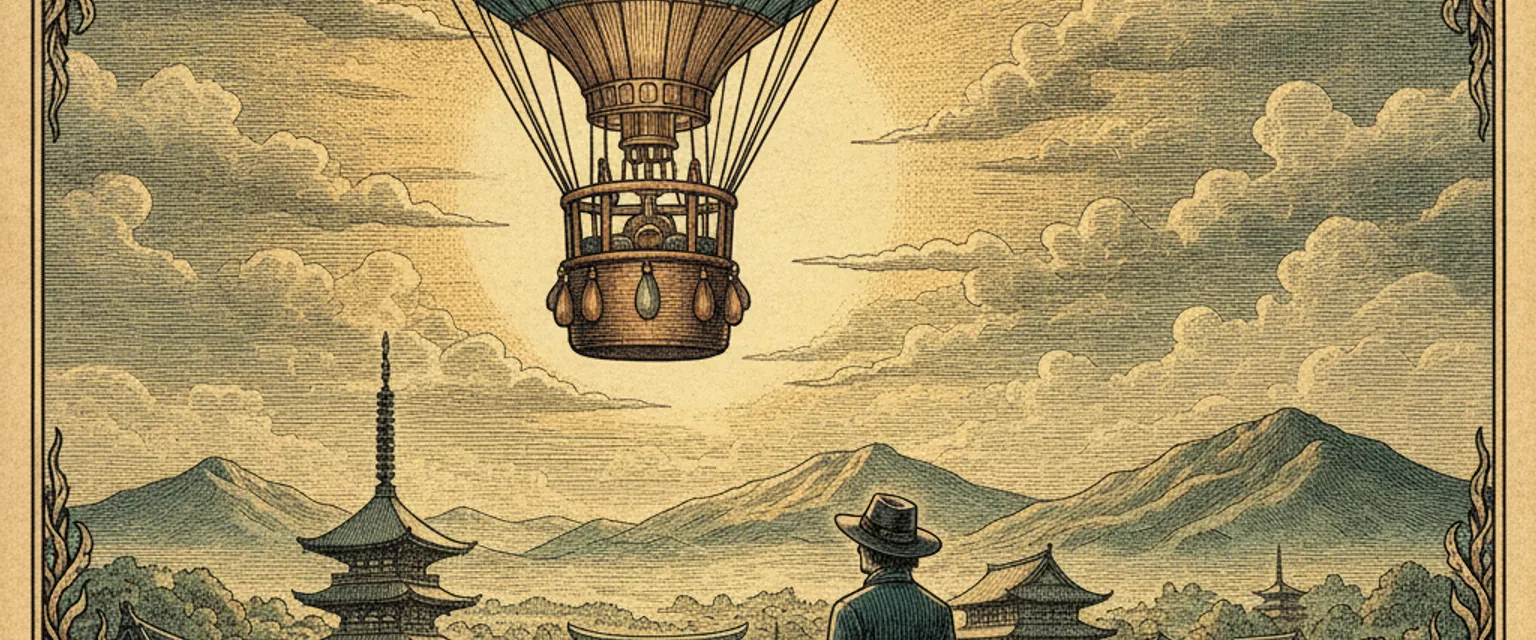
A deer ate my park map within ninety seconds of arrival. It bowed first — they're trained to bow for the shika senbei crackers vendors sell — and I, charmed, reached for my pocket. It took the map instead, chewed it thoughtfully, and walked off. I bought crackers from the next stall out of what I can only describe as guilt. Nara teaches you fast: the deer are in charge, the temples are older than you can quite believe, and you came here on a day trip but should have stayed the night.
48 Hours: The Great Buddha, the Deer, and Quiet Mornings
Two days lets you do Nara properly instead of as the rushed Kyoto day trip most people make it. Todai-ji and its Great Buddha, the deer of Nara Park, Kasuga Taisha's lantern paths, and Isuien Garden on day one. Day two: Naramachi's old merchant streets and the temples on the western edge that the crowds never reach. Stay overnight — the park at 7 AM, empty except for deer and joggers, is the real Nara.
Buy shika senbei crackers only when you're ready to be mobbed — hold them low and the deer get insistent. Bow back; they remember.
72 Hours: Add Horyu-ji and the World's Oldest Wood
Three days adds Horyu-ji, a short train ride west — the oldest surviving wooden buildings on Earth, dating to the 600s, and far less visited than central Nara. You also get a slow afternoon in Naramachi with sake tasting and a proper kakinoha-zushi (persimmon-leaf sushi) lunch, plus time for Yoshikien Garden, which is free for foreign visitors.
4 Days: The Temple Town That Was a Capital
Four days means you can climb Mount Wakakusa for the city panorama, visit the underrated Nara National Museum's Buddhist sculpture hall, and take a half-day to Asuka — the rice-paddy valley south of Nara where Japan's first emperors are buried in keyhole tombs and burial mounds you can cycle between.
7 Days: Nara, Asuka, Yoshino and the Sacred Mountains
A week turns Nara into a base for the whole ancient heartland. Add Yoshino, Japan's most famous cherry-blossom mountain, the Kumano pilgrimage trails' northern approaches, and the temple town of Sakurai with Hasedera's hillside hall. You'll have walked through more 8th-century history than most of Japan offers anywhere else — and met a great many deer.
Estimated budget:JPY 32,000-58,000 est. (3 nights, Asuka bike day, museum entries)
Estimated budget:JPY 60,000-110,000 est. (full week, Yoshino + Sakurai day trips, ryokan stays)
Day 1
Todai-ji, the Great Buddha, and Nara Park
The headline acts, done before the tour buses arrive
Todai-ji and the Daibutsu (Great Buddha)
A 15-metre bronze Buddha inside the largest wooden building in pre-modern history.
Todai-ji's Daibutsuden housed the world's largest wooden structure for over a thousand years, and even the rebuilt 1709 hall (two-thirds the original size) is staggering. Inside sits the 15-metre Daibutsu, cast in 752 from so much bronze it nearly bankrupted the state. Squeeze through the nostril-sized hole in a pillar at the back for luck. Arrive at opening to beat the school groups; entry is JPY 800.
Nara Park and the deer
1,200 free-roaming sika deer, officially designated a national treasure.
The deer are not a sideshow — they are protected as natural monuments and have lived here, semi-wild, for over a millennium. Vendors sell shika senbei crackers for JPY 200; the deer will bow for them and then headbutt you for more. Wander the lawns toward the Nandaimon Gate with its two ferocious 13th-century guardian statues. Keep maps and tickets out of reach.
Isuien Garden and Neiraku Museum
A borrowed-scenery garden that frames Todai-ji's gate in its own pond.
Isuien is two linked strolling gardens that use the distant Todai-ji gate and Mount Wakakusa as "borrowed scenery" reflected in the water. It is quieter and more refined than anything in the park, with a teahouse serving matcha overlooking the pond. The attached Neiraku Museum holds Chinese and Korean bronzes. Entry around JPY 1,200.
Day 2
Kasuga Taisha, Naramachi, and the Old Town
Lantern paths in the morning, merchant streets in the afternoon
Kasuga Taisha shrine and its lanterns
Three thousand stone and bronze lanterns lining a cedar forest path.
Kasuga Taisha is Nara's grand Shinto shrine, vermilion-painted and set deep in a primeval forest the deer treat as a thoroughfare. Some 3,000 lanterns line the approach and hang from the eaves — they're lit only twice a year, but the inner sanctum's permanently darkened lantern hall recreates the effect any day. Walk the wooded path slowly; this is the calmest corner of Nara.
Naramachi merchant district
Lattice-fronted Edo-era townhouses turned cafes, sake shops, and craft studios.
Naramachi is the former merchant quarter, a grid of narrow streets lined with machiya townhouses, many now small museums, indigo-dyeing studios, and coffee shops. Look for the red "migawari-zaru" monkey charms hanging from eaves to ward off bad luck. Lunch on kakinoha-zushi — pressed sushi wrapped in persimmon leaves, a Nara specialty born from preserving fish far from the sea.
Harushika Brewery tasting
Nara is where Japanese sake brewing arguably began — taste it at the source.
Nara claims sake's origins through the temple breweries of Shoryaku-ji, and Harushika, founded in 1884, runs a tasting room near Naramachi. For around JPY 500 you get a souvenir glass and five pours, from dry junmai to a sparkling nigori. It's a small, unpretentious counter, not a tour — which is exactly its charm.
Day 3
Horyu-ji and the World's Oldest Wood
A morning train to the oldest standing temple on Earth
Horyu-ji temple complex
Wooden buildings standing since the 7th century — the oldest in the world.
A 15-minute train and short bus ride west, Horyu-ji's five-storey pagoda and Kondo (Golden Hall) have stood since the early 600s, making them the oldest surviving wooden buildings anywhere. The Daihozoin treasure hall holds the slender Kudara Kannon, one of Japan's most celebrated Buddhist sculptures. Crowds are thin here; you can stand in 1,400-year-old halls almost alone. Entry around JPY 1,500.
Lunch near Horyu-ji
Simple soba and rice-bowl shops feeding pilgrims, not tour buses.
The handful of restaurants outside Horyu-ji's gate cook for locals and temple pilgrims rather than coach tours. Order tororo soba (buckwheat noodles with grated mountain yam) or a tempura set. It's plain, honest food at honest prices, eaten in the quiet that central Nara never quite manages.
Yoshikien Garden
Three contrasting gardens, free for foreign visitors, almost always empty.
Back in central Nara, Yoshikien combines a pond garden, a moss garden, and a tea-ceremony flower garden on the grounds of a former temple residence. Foreign visitors enter free on showing a passport, and because it sits beside the far busier Isuien, it's frequently deserted. A perfect, unhurried late afternoon.
Day 4
Mount Wakakusa and Asuka's Ancient Tombs
A hill climb for the panorama, then a valley of emperors
Mount Wakakusa climb
A grassy hill above the temples with the best view in Nara — and more deer.
Wakakusayama is a treeless grass hill rising behind Nara Park, burned ceremonially each January in the Yamayaki festival. The climb takes about 30-45 minutes and rewards you with a sweep over the entire Nara basin, Todai-ji's roof below, and deer grazing the slopes around you. Entry is a token JPY 150. Go early before the heat.
Asuka by bicycle
Rice paddies, keyhole tombs, and the mysterious carved stones of Japan's first capital.
A 40-minute train south brings you to Asuka, where Japan's earliest imperial court sat in the 6th and 7th centuries. Rent a bike at the station and cycle between Ishibutai, a colossal exposed stone burial chamber, Takamatsuzuka's painted tomb, and the enigmatic carved "monkey stones." It's flat, green, and almost untouristed — a half-day back into the dawn of the Japanese state.
Day 5
Yoshino's Sacred Mountain
Pilgrim trails and, in spring, 30,000 cherry trees
Yoshino-yama
Japan's most revered cherry-blossom mountain and a center of mountain asceticism.
Roughly an hour south by train, Yoshino has been Japan's holiest cherry-blossom site for over a thousand years — some 30,000 trees blooming up the mountainside in waves through April. Year-round it's a center of Shugendo mountain worship; the World Heritage Kinpusen-ji temple anchors the village. Even out of blossom season the cedar-clad ridges and pilgrim guesthouses repay the trip.
Kuzu and persimmon-leaf sushi in Yoshino village
Mountain specialties: arrowroot sweets and pressed sushi made for travel.
Yoshino is famous for kuzu (arrowroot), spun into translucent kuzukiri noodles and warm kuzuyu drinks in the village teahouses. Pair it with more kakinoha-zushi, which originated in these mountains where fresh sea fish never reached. Eat on a terrace looking down the wooded valley.
Day 6
Sakurai, Hasedera, and the Yamanobe Trail
Hillside temples and Japan's oldest walking road
Hasedera temple
A vast wooden hall reached by 399 covered steps lined with peonies.
In Sakurai, east of Nara, Hasedera's main hall juts out over the hillside on stilts like a smaller Kiyomizu-dera, reached by a famous covered stairway of 399 steps flanked by peony beds. Inside stands a towering 10-metre gilded Kannon. In spring the peonies, in autumn the maples — and few foreign visitors in any season.
Yamanobe-no-michi trail
Walk Japan's oldest recorded road past ancient shrines and farm stalls.
The Yamanobe-no-michi is the oldest road named in Japanese records, threading the foothills between Sakurai and Tenri past Omiwa Shrine — one of Japan's most ancient, where the mountain itself is the deity — burial mounds, and honesty-box stalls selling persimmons and mikan. Walk a few kilometres of it; the pace is the point.
Day 7
Slow Nara and Departure
One last empty-park morning, then the train out
Dawn walk through Nara Park
The deer, the mist, the temples — before anyone else is awake.
The single best hour in Nara costs nothing. At 7 AM the park belongs to deer, joggers, and a few photographers; the light slants through the cedars at Kasuga and the temple roofs catch the sun. Walk the path you rushed on day one and notice everything you missed. This is why staying overnight matters.
Kintetsu Nara Station departure
Kyoto in 45 minutes, Osaka in 40 — Nara is closer than anyone admits.
Kintetsu Nara Station puts you 45 minutes from Kyoto and around 40 from Osaka Namba on the limited express, no transfers. Grab a last kakinoha-zushi box from the station for the train, and a small bag of shika senbei as a souvenir nobody else will think to bring home.
Most people meet Nara for three hours. They take the train from Kyoto, feed a deer, photograph the Great Buddha, and leave before lunch. It is one of the great miscalculations of Japanese travel. Nara was Japan’s first permanent capital, the place where the country became a country, and it wears that history more lightly and more completely than anywhere else in the archipelago.
The deer are the gateway drug, and they earn their fame. But the reason to stay is what happens after the day-trippers go home. The park empties. Kasuga Taisha’s forest goes silent. You can stand inside the Daibutsuden almost alone in the early morning, look up at a bronze Buddha cast in 752, and feel the actual weight of twelve centuries. That doesn’t happen at 11 AM with four school groups in the hall.
This itinerary treats Nara as a destination, not a stop. Two days for the essentials done unhurried; three for Horyu-ji and the oldest wood on Earth; four to add Asuka’s tomb-strewn valley; a full week to use Nara as a base for Yoshino’s sacred mountain and the Yamanobe-no-michi, the oldest road in Japan.
How to Use This Plan
Pick your length and follow the days in order — each builds on the last, and the durations are nested so the shorter trips still flow. Stay central, near Kintetsu Nara Station or Naramachi, so the park is a walk away at dawn. Carry small change for temple entries and cracker vendors. And keep your map in a zipped pocket. The deer, as I learned, are not above editing your itinerary themselves.
This article contains affiliate links marked with rel="sponsored". We may earn a commission at no extra cost to you.