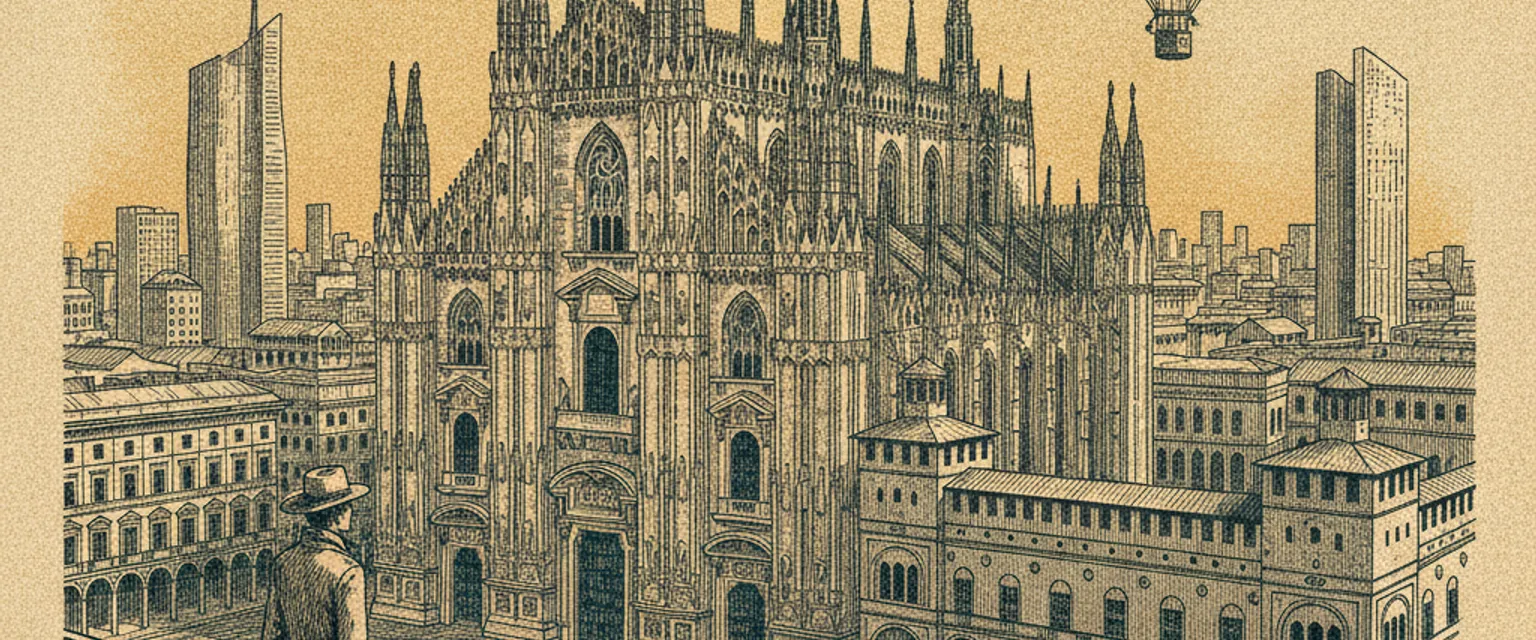
Everyone told me Milan was a one-day city: see the Duomo, see the Last Supper, leave. So I gave it a week out of stubbornness, and by day three I was having my third aperitivo on a Navigli canal bridge, fully converted. Milan does not perform for you. It is busy, well-dressed, and quietly certain that if you do not get it, that is your problem. Once you stop waiting to be charmed and start ordering like a local, it is the best city in Italy.
48 Hours: The Duomo, The Last Supper, and One Real Aperitivo
Two days is enough for the two things you cannot skip: the Duomo rooftop and Leonardo's Last Supper. Book the Last Supper the moment you book your flight; it sells out weeks ahead. Fill the gaps with the Galleria, Brera's lanes, and a Navigli aperitivo at sunset.
Book the Last Supper at the very latest two weeks out. There is no walk-up line worth standing in. None.
72 Hours: Add Brera, the Castle, and the Fashion Quarter
Three days lets Milan breathe. Day three is for the Sforza Castle and its parkland, the Brera art gallery, and the Quadrilatero della Moda, where you can window-shop the most expensive square in Europe without spending a euro and still feel underdressed.
4 Days: Milan Plus Lake Como
Four days earns you the escape every Milanese makes on weekends: a train to Lake Como, an hour each way, and a day among waterside villas and ferries between Bellagio, Varenna, and Menaggio. It is the best single day trip in northern Italy and you are already next to it.
7 Days: Milan, the Lakes, and the Slow Version
A week reveals the Milan that locals actually live in: the Navigli at noon instead of for photos, the design district at Tortona, a second lake day, and the realisation that Milan's reputation for being cold is mostly tourists mistaking competence for unfriendliness.
Estimated budget:$320-$540
Estimated budget:$470-$780
Estimated budget:$640-$1050
Estimated budget:$1150-$1900
Day 1
Duomo, Galleria & La Scala
The marble heart of the city, from the rooftop down
Start at the Duomo at opening. Buy the rooftop-included ticket online the night before and go up first while the marble is still cool and the crowds are thin.
Duomo di Milano + Rooftop Terraces
Six centuries of pink-white marble and a rooftop forest of 135 spires you can actually walk among.
The Duomo took nearly 600 years to finish, which is why it spans Gothic to Neo-Gothic in one impossible facade. Skip the elevator queue, take the stairs up, and walk among the spires and flying buttresses with the Alps on the horizon on a clear morning. Buy the Duomo Pass online with rooftop access; the on-site lines are brutal by 10 AM. Dress with covered shoulders or you will be turned away.
Galleria Vittorio Emanuele II
The world's oldest shopping mall, and still the most beautiful one ever built.
The 1877 glass-and-iron arcade connecting the Duomo to La Scala is a cathedral to commerce: Prada's original store, Camparino's century-old bar, and a mosaic bull whose details get spun on for luck. Order an espresso standing at a counter for two euros rather than sitting for twelve. The dome at the centre is worth a long look straight up.
Aperitivo on the Navigli
Milan invented the aperitivo, and the canals are where it still feels least like a tourist trap.
The Navigli district, built around canals Leonardo helped engineer, is aperitivo headquarters. Order a Negroni Sbagliato or a Spritz at a canalside bar between 6 and 8 PM and the snack spread is half the point. Mag Cafe and Rita are local favourites. This is dinner-adjacent; graze the buffet and you may not need a full meal.
Day 2
The Last Supper & Sforza Castle
Leonardo's masterpiece and the fortress that defined Milan
Your Last Supper slot is fixed, so build the day around it. Arrive fifteen minutes early; latecomers forfeit the slot and there is no appeal.
The Last Supper (Cenacolo Vinciano)
Fifteen minutes with the most famous mural on Earth, in a refectory it has somehow survived for 500 years.
Leonardo's Last Supper lives on the wall of Santa Maria delle Grazie's dining hall, and you get exactly 15 minutes inside with a small group. It is fading, it survived a WWII bomb that flattened the rest of the building, and seeing the real thing reorders your understanding of it. Tickets release in batches months ahead and vanish in minutes; book the second they open or buy a guided slot.
Sforza Castle + Sempione Park
A Renaissance fortress holding Michelangelo's final, unfinished sculpture.
The Castello Sforzesco's courtyards are free to wander, and its museums hold Michelangelo's Rondanini Pieta, the work he was carving days before he died. Behind the castle, Sempione Park is where Milan exhales: joggers, prams, and the Arco della Pace at the far end. Buy a single combined museum ticket rather than per-collection.
Dinner in Brera
Milan's old artists' quarter, now its most charming dinner neighbourhood.
Brera's cobbled lanes feel like a village dropped into a financial capital. For dinner, look past the obvious piazza terraces to side streets: Fioraio Bianchi Caffe (a former flower shop) or a classic trattoria doing risotto alla milanese, the saffron-yellow rice that is the city's signature dish. Book ahead on weekends.
Day 3
Brera Art, the Fashion Quarter & Aperitivo Hour
Old masters in the morning, designer windows by afternoon
A slower, more local day. No tickets needed before noon, so sleep in and let the city set the pace.
Pinacoteca di Brera
One of Italy's great painting collections, mercifully crowd-free compared with Florence or Rome.
The Brera gallery holds masterpieces that would anchor any museum in the world: Mantegna's foreshortened Dead Christ, Raphael's Marriage of the Virgin, Caravaggio's Supper at Emmaus. Because Milan is not on the standard art-tourist circuit, you often have rooms nearly to yourself. Allow two hours and do not rush the Mantegna.
Quadrilatero della Moda
The four streets that set what the rest of the world will wear in eighteen months.
Via Montenapoleone, Via della Spiga, and the streets between them are the fashion world's command centre. Even if you buy nothing, the window displays are free theatre and the people-watching is elite. Duck into the Bagatti Valsecchi Museum nearby, a perfectly preserved Renaissance-revival home most visitors never find.
Rooftop Aperitivo near the Duomo
Trade the canal crowd for a terrace with the cathedral in your glass.
For a different aperitivo register, head to a rooftop bar: the Terrazza Aperol on the Duomo square or the Highline Galleria walkway above the arcade. Prices climb with the altitude, but a single Spritz with the Duomo lit up below is one of those Milan moments worth the markup once.
Day 4
Lake Como Day Trip
Villas, ferries, and the most photogenic lake in Italy
Catch an early train from Milano Centrale to Varenna (about an hour); it is the prettiest and least hectic Como base. Buy a ferry day pass on arrival and let the boats do the work.
Varenna & Villa Monastero
A pastel fishing village with a lakeside botanical garden walk.
Varenna is the quiet, cheaper, arguably lovelier alternative to Bellagio. From the station, walk the lakeside Passeggiata degli Innamorati into the village, then visit Villa Monastero's terraced gardens running right to the water. The waterfront restaurants here do lake fish and a glass of local white for far less than Bellagio's.
Ferry to Bellagio
The pearl of the lake, best reached by boat with the Alps rising behind it.
A short ferry hop lands you in Bellagio, the postcard town at the fork of the lake. Climb the stepped alleys of Salita Serbelloni, tour the gardens of Villa Melzi, and accept that yes, it is touristy, and yes, it earns it. Time your return ferry to Varenna for the late afternoon light, which is when the lake genuinely glows.
Back in Milan: late dinner in Isola
Skip the tourist centre and eat where the post-work crowd does.
Back from the lake, the Isola district behind the Porta Garibaldi skyscrapers is where younger Milan eats. It is unpolished, lively, and full of pizzerias and small plates without a single fixed-price tourist menu in sight. A good landing after a long lake day.
Day 5
Design District & Modern Milan
Where the city designs the future and lives in the present
A day for the Milan that the design world flies in for. No marble, no Leonardo, just the contemporary city doing what it does best.
Fondazione Prada
A converted distillery turned contemporary art campus with a Wes Anderson cafe inside.
The Fondazione Prada, a former gin distillery reimagined by Rem Koolhaas, is the heart of contemporary Milan: bold installations, a gold-leafed tower, and Bar Luce, the cafe designed by Wes Anderson down to the pastel Formica. Even if conceptual art is not your thing, the architecture and the coffee make it worth the metro ride south.
Tortona & Zona Design
Old factories now full of showrooms, studios, and the Armani/Silos museum.
The Tortona district is Milan Design Week's spiritual home: ex-industrial warehouses converted into showrooms and galleries. The Armani/Silos fashion museum here charts decades of Giorgio Armani's work across four floors. Wander the brick streets and ducking into open studio doors is half the pleasure.
Porta Nuova & Bosco Verticale
Milan's skyline of the future, anchored by two forest-covered towers.
End the day among the skyscrapers of Porta Nuova, where the Bosco Verticale (Vertical Forest) towers are wrapped in 20,000 living plants. The Piazza Gae Aulenti above is a circular plaza with fountains and terraces, perfect for an evening drink while you watch the new Milan go home from work.
Day 6
Second Lake or Cathedral Towns
One more escape, or the history Milan keeps just outside itself
With a week, take a second day out. Choose water (Lake Maggiore's island palaces) or stone (the Charterhouse of Pavia). Both are under ninety minutes from Centrale.
Lake Maggiore: Stresa & Isola Bella
A baroque palace and a ten-tier garden floating on a private island.
From Stresa, a short boat reaches Isola Bella, where the Borromeo family built a baroque palace and a tiered garden that looks like a green wedding cake rising from the water, complete with white peacocks. Lake Maggiore is greener and grander than Como and far less crowded. The boats also reach Isola dei Pescatori for a slower lunch.
Alternative: Certosa di Pavia
A staggering Renaissance monastery 30 minutes south, almost untouristed.
If you prefer stone to water, the Certosa di Pavia is a Carthusian monastery whose marble facade is one of the most ornate in Italy, and almost nobody outside Lombardy has heard of it. Guided by a resident monk through cloisters and frescoed chapels, it is the antidote to a week of cathedral queues.
Dinner in the Cinque Vie
Milan's oldest quarter, now its quietly cool antiques-and-osteria district.
The Cinque Vie ("five ways") is the medieval core, recently reborn with antique dealers, design studios, and excellent osterie. It is where Milanese go to feel like they are eating in old Milan. Order cotoletta alla milanese, the bone-in breaded veal cutlet, where it actually originated.
Day 7
Navigli, Markets & a Slow Goodbye
Milan with nothing left to prove and nothing left to rush
Your last day, deliberately unstructured. Markets, canals, and one final long lunch. Milan rewards the visitor who finally stops sightseeing and starts living.
Navigli by Daylight & Antiques
The canals without the crowds, plus a vast antiques market on the last Sunday of the month.
Seen by morning light, the Navigli are a working neighbourhood of studios and cafes, not a nightlife strip. On the last Sunday of each month the Mercatone dell'Antiquariato lines the Naviglio Grande with hundreds of antiques and vintage stalls. Even without it, a slow canal walk and a cappuccino is the right pace for a final morning.
San Maurizio al Monastero Maggiore
Milan's secret Sistine Chapel, free and almost always empty.
Locals call San Maurizio the Sistine Chapel of Milan: a 16th-century church whose every surface is covered in Renaissance frescoes by Bernardino Luini and his school. It is free, central, and somehow missed by nearly everyone. Sit in the back pew and let your eyes adjust; the detail is overwhelming.
Farewell long lunch
One final Milanese meal, eaten the unhurried way the city actually prefers.
End where Milan is happiest: at a table, for hours. A trattoria doing ossobuco with risotto, a half-litre of Bonarda, and an espresso to close. Milan's reputation as cold dissolves entirely over a long lunch, which is the whole secret to the place. Then walk it off toward the Duomo one last time.
Milan gets a bad rap from people who gave it an afternoon. They see the Duomo, queue for the Last Supper, decide the city is grey and businesslike, and catch the next train to Venice. They are wrong, and they are missing the most quietly rewarding city in Italy.
This itinerary is built on a single principle: Milan does not flatter tourists, so you have to meet it where it lives. That means the aperitivo hour on the Navigli, the saffron risotto eaten without ceremony, the art galleries you can have nearly to yourself while Florence chokes on crowds. The marble landmarks are real and worth your time, but the city itself is the reward.
The 2, 3, 4 and 7-day versions move outward from the icons. Two days is the Duomo, Leonardo, and one perfect Spritz. Four days adds the train ride every Milanese makes on weekends, out to Lake Como. A full week earns you the design district, a second lake, and the slow Sunday-market version of the canals that no day-tripper ever sees.
Two practical notes that will make or break your trip. First: book the Last Supper the moment you book your flight. It is genuinely the hardest ticket in Italy and there is no reliable walk-up option. Second: lean into aperitivo. Between roughly 6 and 8 PM, the price of a drink includes a spread of food, and it is both the cheapest dinner in the city and the most fun.
Use the duration filter above to see your version of Milan.
This article contains affiliate links marked with rel="sponsored". We may earn a commission at no extra cost to you.