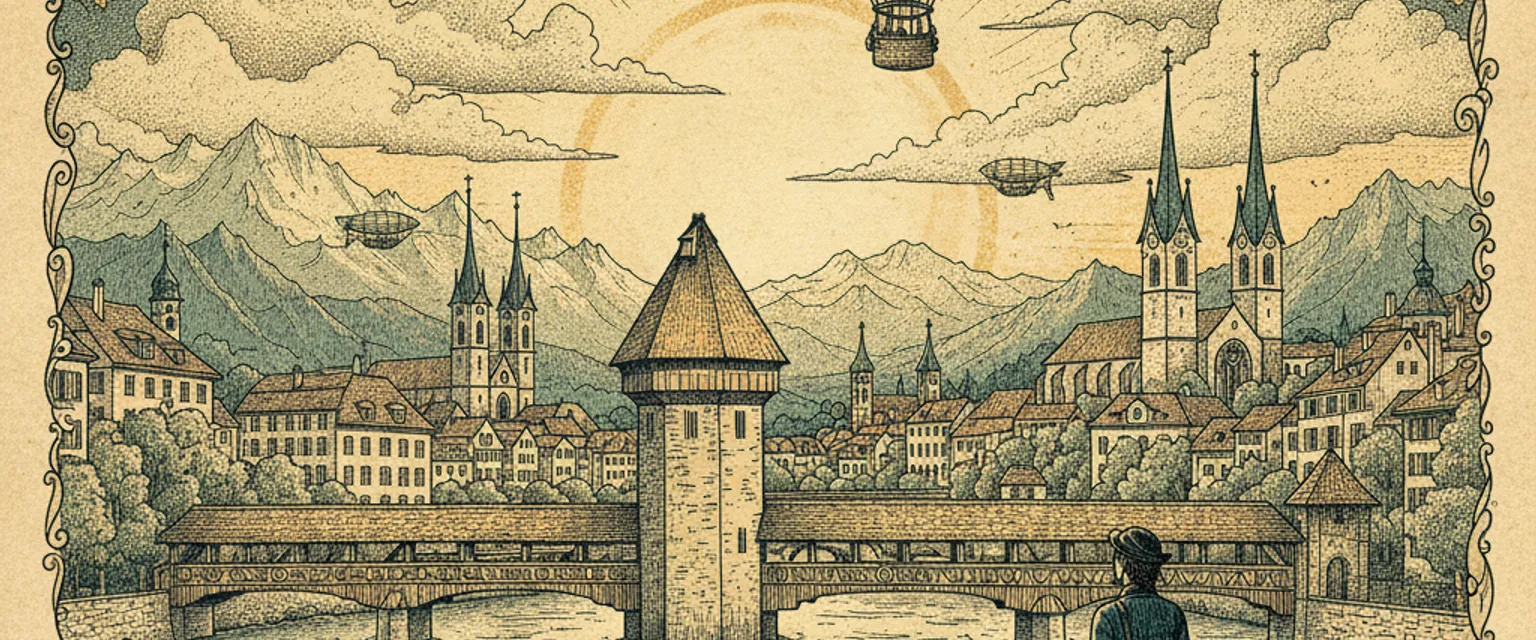
I came to Lucerne braced for the Swiss prices and got ambushed by the geography instead. You step out of a perfectly ordinary train station and there it is: a covered wooden bridge from 1333 with paintings under its rafters, a river running glacier-blue beneath it, and a wall of Alps standing behind the lake like a stage set someone forgot to take down. I had planned one night. I stayed four, and spent two of them on mountains I reached by cogwheel train before lunch. Lucerne is small, expensive, and absurdly easy to fall for.
Two days gets you the postcard: the Chapel Bridge, the painted facades of the old town, the Lion Monument, and a half-day up Mount Pilatus or Rigi by cogwheel railway. Lucerne is compact enough that you will not feel rushed, only slightly poorer.
Two days is enough to understand why people keep coming back to this lake.
Add a lake steamer and a second peak
Day three slows things down with a paddle-steamer cruise across Lake Lucerne and a second mountain, perhaps the snowy revolving cable car to Mount Titlis. You start to see why this lake has been a holiday for 200 years.
Museums, music, and the deeper valleys
Four days makes room for the brilliant Swiss Museum of Transport, a concert at the lakeside KKL hall, and a trip to the founding heart of Switzerland around Lake Uri. The city reveals a cultural side beyond the mountains.
A full week of central Switzerland
Seven days turns Lucerne into a base for the whole region: Mount Stanserhorn, Engelberg's alpine valley, a day trip to Bern or the Rhine Falls, and lazy lakeside afternoons in between. With a Swiss Travel Pass the trains and boats become your playground.
Estimated budget:$400-$750
Estimated budget:$600-$1100
Estimated budget:$800-$1500
Estimated budget:$1600-$3000
Day 1
The old town and the bridges
Walk the medieval core along the Reuss
Kapellbrucke (Chapel Bridge)
Europe's oldest covered wooden bridge, from 1333
Start at the icon. This diagonal wooden footbridge over the Reuss is studded with 17th-century paintings under its roofline and crowned by the octagonal Water Tower. Walk it slowly in both directions, then again at night when it is lit. It costs nothing and never gets old.
Lucerne Altstadt and the painted houses
Frescoed facades and car-free cobbled squares
Wander the old town's squares, Weinmarkt and Hirschenplatz, where the building fronts are covered in elaborate painted murals. Pause at a fountain, browse the chocolate shops, and pick up Swiss cheese for a picnic. The whole quarter is walkable in an hour but worth lingering in.
The Lion Monument
A dying lion carved into a cliff, called the saddest stone in the world
A short walk uphill, this 1821 relief honours the Swiss Guards killed in the French Revolution. Mark Twain called it the most moving piece of stone in the world, and standing before the wounded lion it is hard to disagree. Combine it with the nearby Glacier Garden.
Day 2
Mount Pilatus
Up the world's steepest cogwheel railway
Mount Pilatus golden round trip
Boat, cogwheel, and cable car in one loop
The classic outing: cruise the lake to Alpnachstad, climb the steepest cogwheel railway in the world up Pilatus, then descend by gondola and cable car. The summit views over the lake and a sea of peaks are stunning on a clear day. Buy the round-trip ticket and reverse it to dodge crowds.
Lakeside dinner and a sunset stroll
Cheese fondue with a view of the floodlit bridge
Back in town, settle in for a Swiss classic, a bubbling fondue or rosti, at a restaurant along the river or lake. Yes, it is pricey, but the setting earns it. Finish with a walk along the quay as the Chapel Bridge and the mountains glow in the last light.
Day 3
Lake cruise and Mount Titlis
A paddle steamer and eternal snow
Lake Lucerne paddle steamer
A vintage steamboat across one of the Alps' prettiest lakes
Board one of the historic paddle steamers that still ply Lake Lucerne and cruise past forested shores and lakeside villages. Sit on the open deck with a coffee and watch the peaks slide by. The Swiss Travel Pass covers these boats, making it one of the best-value experiences in town.
Mount Titlis and the Rotair
A revolving cable car to a glacier at 3,000 meters
From Engelberg, the world's first revolving cable car spins you up to the snowy summit of Titlis, where there is a glacier cave and a vertigo-inducing cliff walk suspension bridge. There is snow up here year-round, so bring a warm layer even in July. It is touristy but genuinely thrilling.
Day 4
Museums and music
Lucerne's cultural side
Swiss Museum of Transport
Switzerland's most visited museum, and surprisingly great
A short bus or boat ride from the center, this sprawling museum covers trains, planes, cars, and space, with hands-on exhibits that work for adults and kids alike. The planetarium and the Swiss aerial photo hall are highlights. Budget at least three hours; you will use them.
KKL Lucerne concert hall
A Jean Nouvel building with world-class acoustics
The dramatic lakeside KKL, with its enormous cantilevered roof, hosts one of Europe's finest concert halls and the famous summer Lucerne Festival. Catch a performance if the calendar allows, or just admire the architecture from the lakefront. The acoustics are reason enough to buy a ticket.
Day 5
Mount Rigi
The Queen of the Mountains
Mount Rigi cogwheel railway
Europe's first mountain railway, with views over two lakes
Take the boat to Vitznau and ride the historic red cogwheel train up Rigi, the gentle giant between Lake Lucerne and Lake Zug. The summit panorama takes in dozens of peaks and both lakes. There are easy ridge walks up top, so wear comfortable shoes and plan to linger.
Rigi Kaltbad mineral baths
An alpine spa with an infinity edge over the lake
Halfway down the mountain, the Mario Botta-designed mineral baths at Rigi Kaltbad let you soak in warm water while gazing over the lake and the Alps. It is the perfect antidote to a morning of mountain walking. Bring a swimsuit and a towel, or rent them on site.
Day 6
Lake Uri and the Swiss founding myth
Where Switzerland was born
Rutli Meadow and the Swiss Path
The field where the Swiss Confederation was founded in 1291
Cruise to the southern arm of the lake and walk to the Rutli, the legendary meadow where the first Swiss cantons swore their alliance. The lakeside Swiss Path trail connects historic markers with gorgeous water views. It is quiet, green, and steeped in national myth.
Tell's Chapel and Fluelen
A lakeside shrine to the legend of William Tell
Further along Lake Uri, the small chapel marks where William Tell supposedly leapt from the boat to freedom. Pair it with a lakeside lunch in Fluelen before the steamer back. The fjord-like scenery at this end of the lake is the most dramatic of all.
Day 7
Day trip: Bern or the Rhine Falls
One last Swiss highlight
Bern old town
Switzerland's UNESCO-listed arcaded capital, an hour away
An easy train brings you to Bern, whose medieval old town of sandstone arcades, a clock tower, and the bear park follows a loop of the Aare river. It is a low-key, walkable capital that most visitors skip. Trade it for the Rhine Falls if you prefer Europe's largest waterfall.
Aare river promenade and the bear park
Locals swimming the turquoise river through the city
In summer, watch Bernese residents float down the startlingly blue Aare on their lunch break, then visit the riverside bear park, home to the city's mascots. It is a relaxed, very Swiss way to end the week before the train back to Lucerne. Grab a gelato for the walk.
Lucerne is the easiest gateway to the Swiss Alps, and that is its whole genius: a lake, a medieval town, and three of the most famous mountains in Europe, all reachable by boat and cogwheel train before lunch. This plan leans into that, building from the old-town postcard up to the peaks and out across the lake.
How to use this plan
The itinerary nests by length. Two days covers the Chapel Bridge, the old town, and one big mountain. Three days adds a lake steamer and a second peak. Four days brings in the excellent Transport Museum and the lakeside KKL concert hall. A full week turns Lucerne into a base for Rigi, the founding meadows of Lake Uri, and a day trip to Bern or the Rhine Falls.
A few honest notes. Switzerland is genuinely expensive, so if you are staying three days or more, do the maths on a Swiss Travel Pass, which covers the trains, boats, and many mountain railways and quickly pays for itself. Picnic with supermarket cheese and bread by the lake to offset the restaurant prices. The mountains are weather-dependent, so keep your peak days flexible and check the summit webcams before you commit, because there is no point paying for a view of fog.
Why Lucerne over Interlaken or Zermatt
Because it is a real, lived-in city rather than a purpose-built resort, and it puts the scenery on your doorstep without making you choose just one valley. From a single base you can ride the steepest cogwheel railway in the world, cruise a glacier-blue lake on a vintage steamer, and stand before a carved lion that Mark Twain called the saddest stone on earth. It is compact, romantic, and almost suspiciously convenient. Bring a fat wallet and a light raincoat, and let central Switzerland do the rest.
This article contains affiliate links marked with rel="sponsored". We may earn a commission at no extra cost to you.