I ordered "one teh tarik" at a mamak stall near Masjid Jamek and watched a man pull a stream of milk tea between two cups held a metre apart, back and forth, frothing it like a circus act, never spilling a drop. It cost the equivalent of fifty cents. Around me, at midnight, Malay families, Tamil uncles, and a table of Chinese students all ate roti canai under the same fluorescent lights. That stall told me more about Kuala Lumpur than the towers did: this is a city that runs on cheap, brilliant food and the easy coexistence of three cultures who all decided dinner was the point.
The Perfect Kuala Lumpur Itinerary (2, 3, 4 & 7 Days)
48 Hours: Towers, Temples, and a Plate of Char Kway Teow
Two days covers KL's icons without the rush most visitors inflict on it. Petronas Towers and KLCC park, the Batu Caves on the city's edge, Chinatown and the colonial core around Merdeka Square on day one. Day two: Jalan Alor's hawker chaos, Little India, and a rooftop bar facing the towers at sunset. KL is compact, cheap, and air-conditioned where it counts — easy to do well in a weekend.
Eat where the queue is longest and the menu is shortest. KL's best food is at stalls with no English signage and one specialty.
72 Hours: Add the Markets and the Hill Stations Edge
Three days adds the food markets KL actually lives on — Imbi Market for breakfast, the wet markets of Pudu — plus the colonial walking core and a proper afternoon in Brickfields (Little India) and the Thean Hou Temple's hilltop terraces. Time, too, for KL Forest Eco Park, a patch of genuine rainforest with a canopy walk right beside the skyscrapers.
4 Days: KL Plus a Day in Malacca
Four days lets you escape the city for Malacca, the UNESCO-listed Portuguese- Dutch-British trading port two hours south, all painted shophouses, Nyonya food, and river walks. Back in KL you'll have time for the National Museum, the Islamic Arts Museum (one of Southeast Asia's finest), and the leafy streets of Bangsar for the city's best modern dining.
7 Days: KL as a Base for the Whole Region
A week turns KL into a launchpad: the Cameron Highlands' tea plantations and cool air, the fireflies and seafood of Kuala Selangor, and Genting's mountaintop oddity if you want it. You'll also have time to dig into KL itself — Kampung Baru's traditional Malay village in the shadow of the towers, and enough hawker meals to ruin you for food anywhere else.
Estimated budget:MYR 550-1,100 est. (2 nights, markets, museum entries)
Estimated budget:MYR 800-1,600 est. (3 nights, Malacca day trip, Bangsar dinner)
Estimated budget:MYR 1,600-3,200 est. (full week, Cameron Highlands + Kuala Selangor trips)
Day 1
Petronas Towers, Batu Caves, and Old KL
The icons, sequenced around the heat and the crowds
Batu Caves
A 42-metre golden Murugan statue, 272 rainbow steps, and a Hindu shrine in a limestone cavern.
Go first thing, before the heat and the tour coaches. A short train ride north, Batu Caves rises out of the suburbs as a sheer limestone massif, fronted by the gold Lord Murugan statue and a now-famous staircase painted in candy stripes. Climb the 272 steps (dodging the resident macaques — guard your snacks) to the cathedral-sized Temple Cave. Entry to the main cave is free.
Petronas Twin Towers and KLCC
For 6 years the tallest buildings on Earth, still the most beautiful twin towers anywhere.
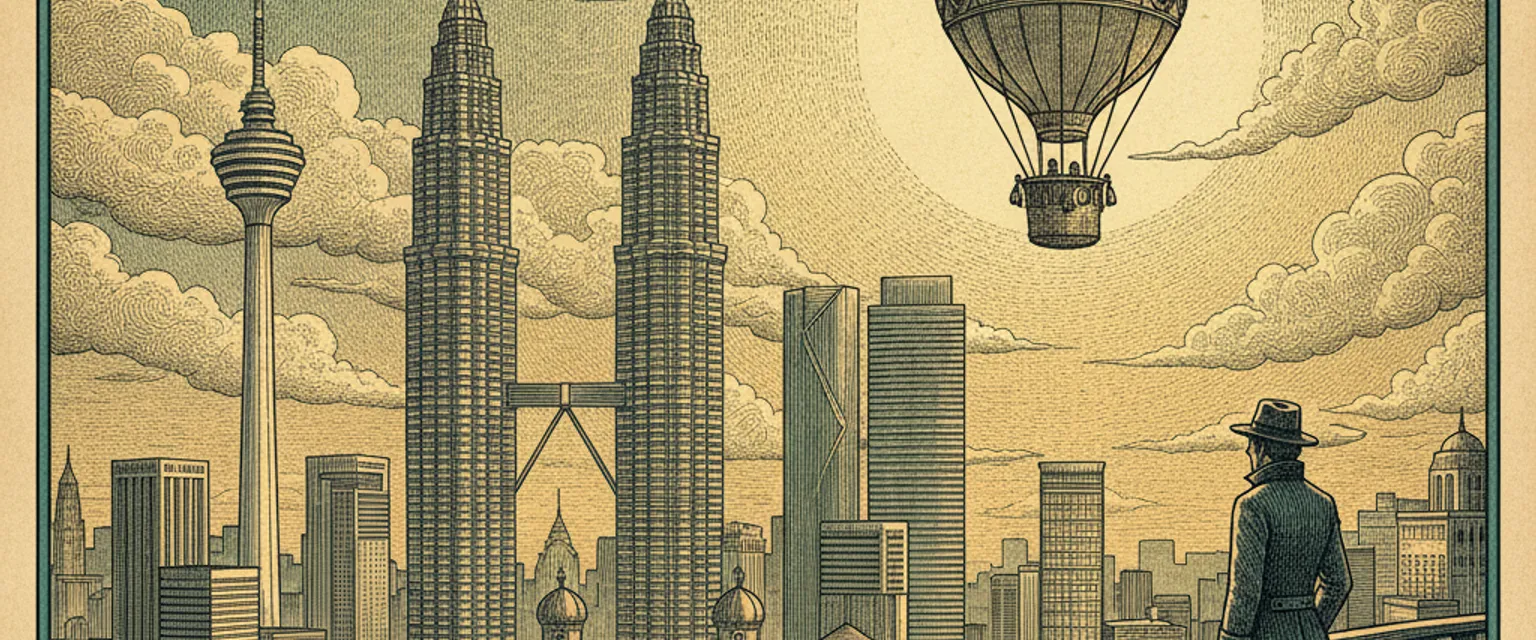
The Petronas Towers defined KL's skyline and remain a genuine marvel of engineering, joined by a skybridge on the 41st floor. Book observation- deck tickets online in advance (around MYR 80); they sell out. The KLCC park at their feet, with its fountains and shaded paths, is the better free experience. Suria KLCC mall beneath offers cold air and a food court for a midday reset.
Merdeka Square and colonial core
Where Malaysia declared independence in 1957, ringed by Moorish-revival landmarks.
The green expanse of Merdeka Square is fringed by the candy-striped Sultan Abdul Samad Building, all horseshoe arches and copper domes, and the black-and-white timbered Royal Selangor Club. Nearby, Masjid Jamek sits at the muddy confluence of two rivers that gave the city its name ("muddy estuary"). A flat, easy late-afternoon walk through the city's founding.
ICC Pudu (the relocated Imbi Market) is where KL eats breakfast — a hall of veteran stalls doing chee cheong fun (rice rolls in sweet sauce), pork ball noodles, fried radish cake, and thick kopi from a sock filter. Get there before 9 AM; the best stalls sell out. Point at what looks good; nobody minds. This is the real city, awake and hungry.
Brickfields (Little India)
Garland sellers, banana-leaf rice, and the loudest, most colourful street in KL.
Brickfields is KL's Little India, a few streets of sari shops, garland stalls, temples, and Indian sweet shops near KL Sentral. Lunch is banana-leaf rice — a mound of rice with curries, pickles, and pappadum ladled onto a leaf, eaten with your right hand and topped up endlessly for one fixed price. Vishalatchi's and the old standbys deliver every time.
Jalan Alor hawker street
A whole street of plastic-stool seafood, satay smoke, and grilled stingray after dark.
As the sun drops, Jalan Alor fills with tables, smoke, and the smell of char from a hundred woks. Order grilled stingray with sambal, char kway teow, satay by the stick, and ais kacang to cool down. It's touristy now, yes, but the food still delivers and the energy is unbeatable. Walk the length before you sit; pick the busiest stall.
Rooftop bar facing the towers
The towers from a deck with a cold drink — the photograph you came for.
Cap the night at a rooftop overlooking the Petronas Towers — Heli Lounge Bar (a working helipad turned bar at sunset) is the cult choice, with 360-degree views and no railings to ruin the shot. Drinks are pricey by KL standards but cheap by anyone else's. The towers' light show at the top of the hour is the payoff.
Day 3
Rainforest in the City, Temples, and the National Museum
Green KL and the history behind the skyline
KL Forest Eco Park canopy walk
A patch of primary rainforest with a canopy bridge, dwarfed by office towers.
One of the few primary rainforest reserves left inside a major city, KL Forest Eco Park sits at the foot of the KL Tower. A swaying canopy walkway threads the treetops; below, you can hear cicadas and birds with glass skyscrapers visible through the leaves. It's small, free, and a surreal reminder of what this whole region once was.
Thean Hou Temple
A six-tiered Chinese temple on a hilltop, all red lanterns and dragon columns.
Thean Hou is one of Southeast Asia's largest Chinese temples, perched on a hill south of the centre with sweeping city views from its terraces. Hundreds of red lanterns hang from the eaves, the carved columns writhe with dragons, and the upper hall honours the sea goddess Mazu. Quiet on weekdays, busy and beautiful around Chinese New Year.
National Museum (Muzium Negara)
Malaysia's story from prehistory to independence under a Minangkabau-style roof.
Muzium Negara walks you from the peninsula's prehistory through the Malacca Sultanate, the spice-trade colonisers, and the road to 1957 independence, all under a distinctive Minangkabau peaked roof. It's a well-curated, air-conditioned afternoon that makes everything else in the city legible. Entry is around MYR 5.
Day 4
Day Trip to Malacca
A UNESCO trading port of shophouses and Nyonya food
Malacca old town and the riverfront
Painted shophouses, the red Dutch Stadthuys, and a river walk through 500 years of trade.
Two hours south by bus, Malacca was the great spice-route port fought over by Portuguese, Dutch, and British, and its UNESCO core shows all three: the salmon-red Dutch Stadthuys, the Portuguese A Famosa fort ruins, Jonker Street's shophouses, and a painted riverfront made for walking. Rent the kitschy trishaws if you must; the river cruise is the better orientation.
Nyonya lunch on Jonker Street
Peranakan cuisine — the spicy, tangy fusion of Chinese and Malay kitchens.
Malacca is the heart of Peranakan (Nyonya) culture, the centuries-old blend of Chinese settlers and Malay tradition, and its food is the star: ayam pongteh, assam fish, otak-otak, and chendol for dessert. Eat at one of Jonker Street's restored shophouse restaurants. The cuisine exists almost nowhere else in the world done this well.
Day 5
Cameron Highlands
Tea plantations and cool mountain air, three hours north
Cameron Highlands tea estates
Rolling green tea terraces in cool highland air — a British-era hill station.
Three to four hours north, the Cameron Highlands sit at 1,500 metres, cool enough for jumpers and famous for tea. The BOH plantation's terraces ripple over the hills, and its cafe serves a pot overlooking the rows. Add a strawberry farm, a mossy forest trail, and the lingering Tudor-style architecture of the old British retreat. A genuine break from the heat.
Highland steamboat dinner
Hotpot in the cool air — the local way to end a Cameron day.
The cold (by Malaysian standards) makes the Highlands the one place locals crave steamboat — a bubbling hotpot of broth, fresh highland vegetables, seafood, and noodles cooked at your table. It's communal, warming, and exactly right after a day in the tea hills. Most guesthouses can point you to the favourite local spot.
Day 6
Kampung Baru and the Islamic Arts Museum
The village in the city, and one of the world's great collections
Kampung Baru Malay village
Wooden stilt houses and nasi lemak stalls in the shadow of the towers.
Kampung Baru is a traditional Malay village that has held its ground at the centre of the city, its wooden stilt houses and kampung lanes surreal against the Petronas Towers behind. Come for breakfast nasi lemak — rice in coconut milk with sambal, anchovies, and egg, wrapped in banana leaf — from the stalls that have fed this neighbourhood for generations.
Islamic Arts Museum Malaysia
Manuscripts, scale-model mosques, and textiles in a serene, dome-topped building.
One of the finest Islamic art collections in Southeast Asia, this museum spans Qurans, ceramics, arms, textiles, and a hall of exquisite scale-model mosques, all in a calm, light-filled building with inverted domes. It's a cool, contemplative few hours and consistently rated KL's best museum. Entry around MYR 20.
Day 7
Kuala Selangor and Departure
Fireflies, seafood, and the road to the airport
Kuala Selangor fireflies and seafood
Thousands of synchronised fireflies on the river, after a fresh seafood dinner.
An hour northwest, Kuala Selangor's mangrove rivers host one of the world's great firefly displays — thousands flashing in unison on the riverside trees, seen from a quiet boat after dark. Pair it with a seafood dinner at a riverside restaurant: chilli crab, butter prawns, steamed fish. A magical, low-key final evening.
KLIA departure
The KLIA Ekspres reaches the airport from KL Sentral in 28 minutes flat.
Take the KLIA Ekspres from KL Sentral straight to the airport in 28 minutes, no traffic, no negotiation. Grab a last teh tarik and a packet of kaya (coconut jam) to take home. Spend your final ringgit on durian snacks at the terminal if you're brave. Plan the return; you'll want one.
Kuala Lumpur is the Southeast Asian capital nobody plans a trip around, and that’s everyone’s loss. People treat it as a layover between Bangkok and Bali, give it a night, photograph the towers, and move on. They miss one of the great food cities on Earth and the most genuinely multicultural place in the region — a city where a Malay village, a Chinese temple, and a Tamil banana-leaf joint sit within a ten-minute Grab ride of each other, and where dinner is a serious, joyful, communal event every single night.
The towers are worth your time, and Batu Caves is a genuine spectacle. But the soul of KL is at the hawker stalls and the morning markets, in the smoke of Jalan Alor and the quiet of Imbi Market at 8 AM. The food is absurdly good and absurdly cheap, and it’s the throughline that holds the whole sprawling, humid, friendly city together.
This itinerary is built around eating well and staying cool. Heavy outdoor sightseeing goes early; the heat of the afternoon is for malls, museums, and air-conditioned temples. Grab (the local ride app) makes getting around painless and cheap, so don’t waste energy on the patchy walking routes between neighbourhoods.
How to Use This Plan
Choose your length and follow the days in sequence — the durations nest, so a two-day trip gets the icons and the food, while a week adds Malacca, the Cameron Highlands, and the firefly rivers of Kuala Selangor. Stay central, near KLCC or Bukit Bintang, and download Grab before you land. Above all: eat where the locals queue, order the one thing each stall is known for, and don’t leave without learning how a teh tarik gets pulled.
This article contains affiliate links marked with rel="sponsored". We may earn a commission at no extra cost to you.