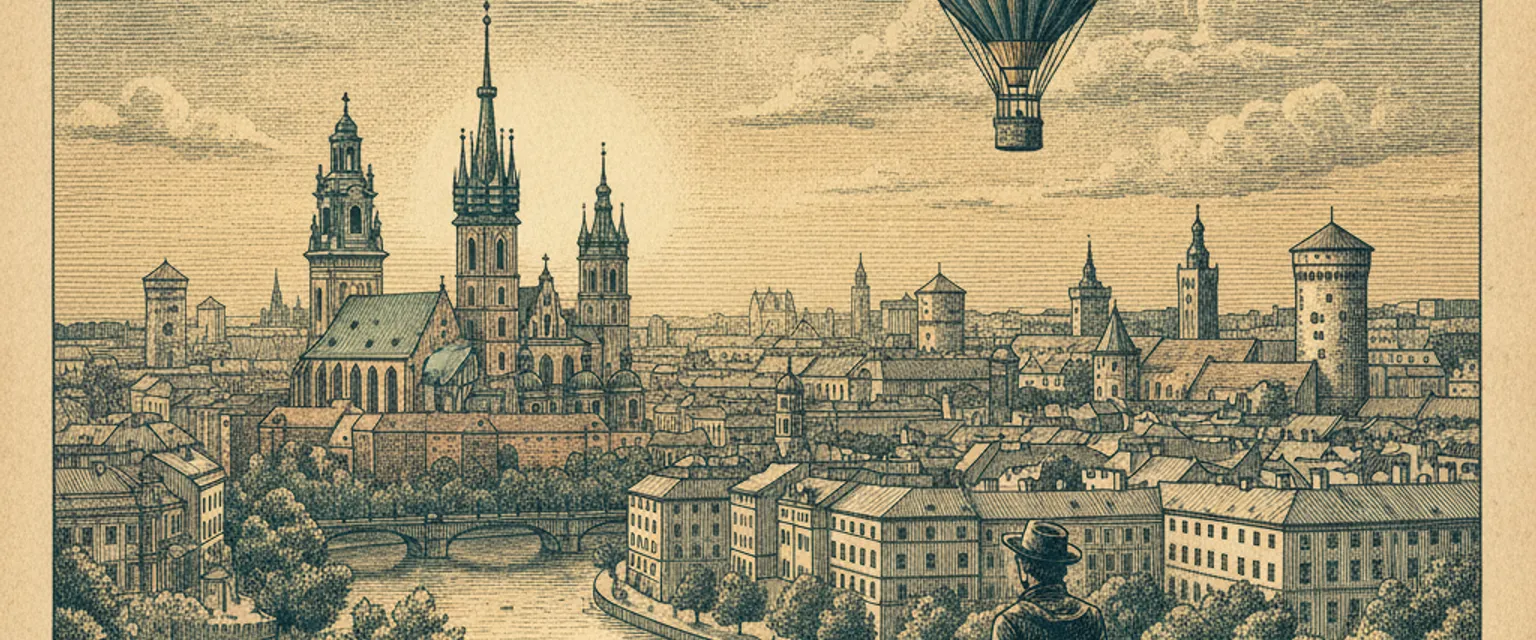
I arrived in Krakow expecting a budget weekend and a checklist. I left having eaten zapiekanka at 1am in a converted ring of socialist-era kiosks, listened to a trumpeter cut his hourly call off mid-note from a church tower because legend says an arrow killed him there, and stood underground inside a chapel carved entirely from salt. The square is the prettiest in Central Europe and it costs nothing to sit in. Krakow does not feel like a deal, it feels like a secret that somehow stayed cheap.
Two days covers the headline acts: the vast Main Market Square, the Cloth Hall, the hourly trumpet from St. Mary's, and the dragon-guarded Wawel Castle. Eat your way through the milk bars and you will spend less here than almost anywhere in Europe for this much beauty.
Two days and you will already be checking flights back. That is the Krakow effect.
Add Kazimierz and the Jewish quarter
Day three is for Kazimierz, the old Jewish district that is now the city's most atmospheric neighbourhood: synagogues, vintage cafes, the zapiekanka kiosks of Plac Nowy, and a heavier history just across the river in Podgorze. It is the soul of the city.
A hard, necessary day at Auschwitz
With four days you make the sobering trip to Auschwitz-Birkenau, about 90 minutes west. It is not pleasant and it is not optional if you want to understand this region. Go early, go with a guide, and leave the afternoon free to sit quietly with what you have seen.
A full week: salt mines, nature, and day trips
Seven days lets you slow down. You descend into the Wieliczka salt mine, hike or kayak in the Ojcow National Park, take a day to Zakopane and the Tatra mountains, and still have time to relearn the old town at a local pace. Krakow rewards the lingerer.
Estimated budget:$180-$380
Estimated budget:$270-$560
Estimated budget:$360-$760
Estimated budget:$650-$1400
Day 1
The Main Square and St. Mary's
Stand in the heart of medieval Krakow
Rynek Glowny (Main Market Square)
The largest medieval square in Europe, and free to enjoy
Start at the center of it all. This 13th-century square is ringed by cafes and pierced by the Gothic St. Mary's Basilica. Buy a coffee, claim a bench, and listen for the hejnal, the trumpet call from the tower that breaks off mid-phrase every hour. It is the best free show in town.
Sukiennice (Cloth Hall)
A Renaissance trading hall still selling amber and souvenirs
The long arcaded hall down the middle of the square has been a marketplace for 700 years. Browse the amber stalls downstairs, then visit the 19th-century Polish painting gallery upstairs for a quiet, often-empty museum hit. Haggling on amber is expected, not rude.
Dinner at a traditional pierogarnia
Hand-folded dumplings for the price of a coffee back home
Krakow's pierogi are the benchmark. Order a mixed plate of the ruskie (potato and cheese), meat, and a sweet fruit version for dessert. A milk-bar style spot near the square fills you up for a few dollars. This is the meal you will crave for months.
Day 2
Wawel Castle and the dragon
Royal Krakow on the river bluff
Wawel Royal Castle
The hilltop seat of Polish kings above the Vistula
The castle complex holds the state rooms, the cathedral where Polish royalty are crowned and buried, and sweeping river views. Tickets are sold per attraction, so pick two or three rather than trying to see everything. The cathedral and the courtyard alone justify the climb.
The Wawel Dragon and Vistula riverbank
A fire-breathing bronze and a riverside stroll
Below the castle, a bronze dragon statue actually breathes fire on the hour, to the eternal delight of children. Walk the riverbank path afterward for a different angle on the castle and a relaxed picnic spot. It is the city's most charming free curiosity.
Day 3
Kazimierz and Podgorze
The Jewish quarter and a heavier history
Kazimierz Jewish Quarter
Synagogues, vintage cafes, and the city's coolest streets
Wander Szeroka and Jozefa streets past historic synagogues, the Galicia Jewish Museum, and a thick layer of vintage shops and bohemian cafes. This was the heart of Jewish Krakow for 500 years and remains the most characterful district to lose an afternoon in.
Zapiekanka at Plac Nowy
Poland's open-faced baguette pizza from the round kiosk
The circular former poultry market in the middle of Kazimierz now serves the city's beloved zapiekanka, a toasted half-baguette loaded with mushrooms, cheese, and ketchup. It is the perfect cheap lunch and an even better 1am snack. Get the classic with extra garlic sauce.
Oskar Schindler's Enamel Factory
A gripping museum of Krakow under Nazi occupation
Across the river in Podgorze, this museum uses Schindler's actual factory to tell the story of the city's wartime occupation and ghetto. It is immersive and emotionally heavy; book a timed ticket in advance because it sells out. Allow at least two hours.
Day 4
Auschwitz-Birkenau
A necessary, sobering day trip
Auschwitz I Memorial and Museum
The preserved camp and its unflinching exhibitions
Book a guided tour and go early before the crowds. The brick barracks of Auschwitz I house exhibitions that are difficult but essential. Entry is free if you go without a guide at certain hours, but the guided context is worth it. This is not a place to rush.
Birkenau (Auschwitz II)
The vast, silent expanse of the second camp
A short shuttle from the first site, Birkenau is enormous and largely empty, which is its own kind of devastating. Walk the railway tracks to the ruins of the gas chambers. Leave the rest of your day unscheduled; you will not want to do anything frivolous afterward.
Day 5
The Wieliczka salt mine
An underground cathedral carved from salt
Wieliczka Salt Mine
A UNESCO labyrinth of salt chapels 135 meters down
Twenty minutes from the center, this 700-year-old mine descends past salt lakes and carved chambers to the staggering St. Kinga's Chapel, where even the chandeliers are salt. The standard tour is a couple of hours of stairs and tunnels. Bring a layer; it is cool underground.
Craft beer crawl in Kazimierz
Poland's underrated beer scene in candlelit cellars
Back in town, spend the evening in Kazimierz's atmospheric bars, many tucked into vaulted brick cellars. Poland's craft scene has exploded, and a flight of local sours and stouts costs a fraction of Western prices. Multikulturalne Cafe and the surrounding lanes are a good base.
Day 6
Ojcow National Park
Limestone cliffs and a fairytale castle
Ojcow National Park
Poland's smallest national park, just north of the city
A 40-minute drive brings you to a green valley of limestone cliffs, caves, and the slender Pieskowa Skala castle perched on a rock. It is an easy, pretty half-day of walking that almost no first-time visitor bothers with. Rent a car or take a small-group tour.
Nowa Huta socialist district
Krakow's planned communist-era steel town
On the way back, detour to Nowa Huta, the model socialist city the Soviets built next to medieval Krakow. The vast central square, brutalist apartment blocks, and old milk bars are a fascinating counterpoint to the old town. Vintage Trabant tours are a fun way to see it.
Day 7
Zakopane and the Tatras
Mountain air to close the week
Zakopane and Krupowki street
Poland's alpine resort town two hours south
Take the bus or drive south to Zakopane, the wooden-chalet mountain town beneath the Tatras. Walk the lively Krupowki pedestrian street, eat smoked oscypek sheep cheese from the grills, and ride the funicular up Gubalowka for a panorama of the peaks.
Morskie Oko lake hike
An emerald glacial lake under the high Tatras
If the weather holds, do the easy two-hour walk up to Morskie Oko, the stunning glacial lake ringed by the highest mountains in Poland. The trail is paved and busy but the payoff is genuine alpine drama. Start early to beat the crowds and the afternoon clouds.
Krakow is the rare European city that is both gorgeous and genuinely affordable, and the gap between those two facts is closing fast, so go now. This plan moves from the postcard old town outward into the history, the food, and the mountains, at a pace that fits whatever time you have.
How to use this plan
The days build on each other. Two days is a perfect long weekend covering the Main Square and Wawel Castle. Three days adds Kazimierz, the atmospheric Jewish quarter that is now the city’s beating heart. Four days makes room for Auschwitz, which is harrowing but, I would argue, the reason many people come to this corner of Poland at all. A full week unlocks the salt mine, the national parks, and a mountain day in Zakopane.
A few practical notes. The historic center is compact and entirely walkable, so you will not need transport within it. Book Schindler’s Factory and your Auschwitz tour days ahead, because both sell out. Eat at milk bars and pierogarnias rather than the touristy square-front restaurants, and your food budget will feel almost imaginary. Late spring and early autumn give you the best weather and the smallest crowds, while December turns the square into one of Europe’s loveliest Christmas markets.
Why Krakow over Prague or Budapest
Because it is less polished and more lived-in. Krakow survived the war physically intact, so the old town is the real medieval article rather than a reconstruction, and the prices have not yet caught up with its more famous neighbours. The weight of 20th-century history sits right beside the dumpling shops and the dragon statue, and holding both at once is exactly what makes the city unforgettable. Come hungry, come curious, and give it more days than you think you need.
This article contains affiliate links marked with rel="sponsored". We may earn a commission at no extra cost to you.