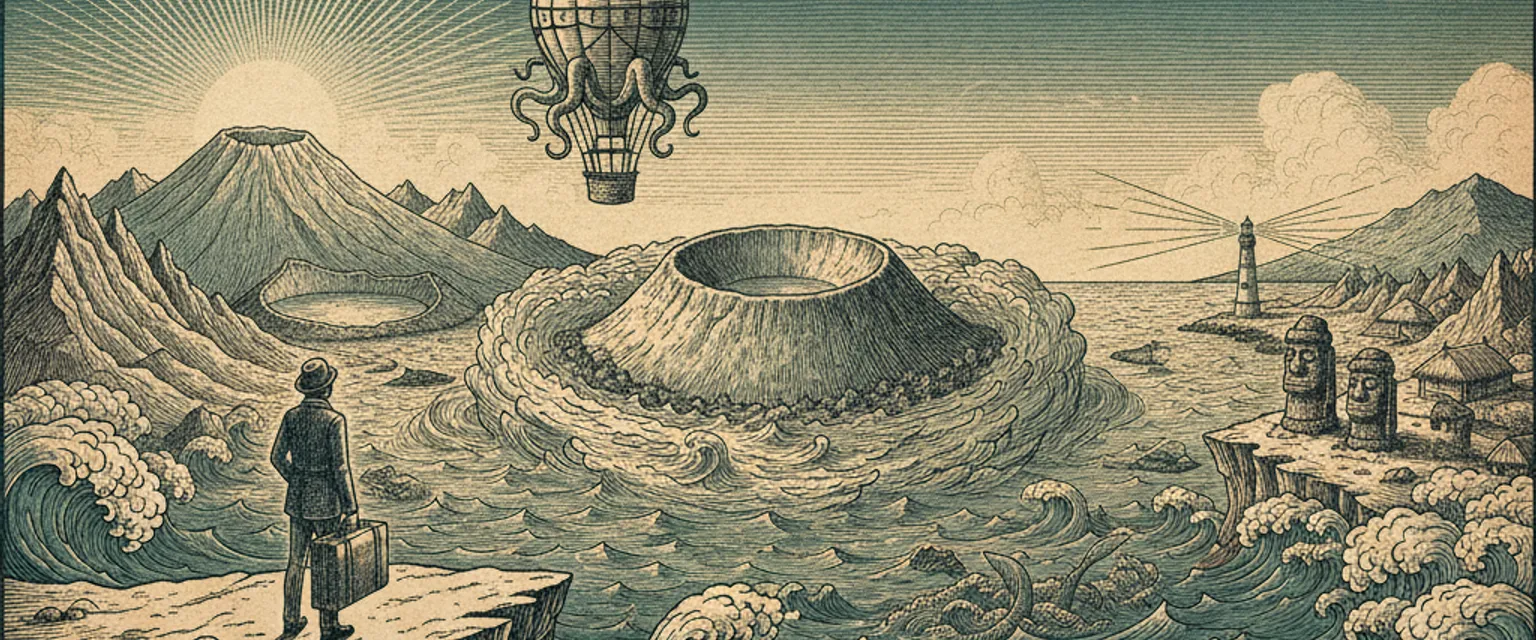
I climbed Seongsan Ilchulbong in the dark to see the famous sunrise and, naturally, got fog. Thick, total, zero-visibility fog. Coming down, deflated, I passed a haenyeo — one of Jeju's diving grandmothers — selling sea urchin she had just pulled from the water in a wetsuit, in her seventies, in October. She laughed at my sunrise sulk and sold me the best thing I ate all week. The sunrise is optional. The island is not.
Two days on Jeju means picking one coast and doing it well. Base on the east, climb Seongsan Ilchulbong for sunrise, walk the Seopjikoji headland, and explore a lava tube. Rent a car — Jeju is built for driving and nearly impossible without one. It is a compact island but the highlights are scattered around the ring road.
An International Driving Permit plus your home licence is required to rent a car here — arrange the IDP before you leave home, as it cannot be issued on the island.
72 Hours: Add Hallasan's Lower Trails and the West
Three days lets you split the island. Add a half-day on Hallasan, the dormant volcano at Jeju's centre, plus the dramatic west coast — O'sulloc tea fields, the basalt-column cliffs, and a sunset over the sea instead of a sunrise over it.
4 Days: Waterfalls, Olle Trails and Slow Coast
Four days takes the foot off the accelerator. Walk a section of the Olle coastal trail, see the south-coast waterfalls around Seogwipo, and trade one big sight for a long, slow drive with stops wherever the coast looks good. This is where Jeju goes from checklist to holiday.
7 Days: Summit Hallasan and Circle the Whole Island
A full week earns the big one: a summit hike up Hallasan to the crater lake, the highest point in South Korea. Add a smaller offshore island, the full ring of the coast at a gentle pace, and enough beach and cafe time that the island finally feels like the rest, not the trip.
Estimated budget:$160-$380
Estimated budget:$250-$580
Estimated budget:$340-$800
Estimated budget:$620-$1,600
Day 1
East Coast — Sunrise Peak & Seopjikoji
Jeju's iconic eastern headlands
Seongsan Ilchulbong (Sunrise Peak)
A 5,000-year-old tuff cone rising straight from the sea, climbed for the dawn.
Seongsan Ilchulbong is a UNESCO-listed volcanic crater that erupted from the seabed, forming a fortress-like green bowl on the eastern tip of the island. The climb to the rim takes about 25 minutes up a stepped path. Sunrise is the classic time, but the view of the crater and coast is superb at any hour. Check the haenyeo diving demonstration schedule at the base.
Seopjikoji headland
A windswept clifftop cape of canola fields, a lighthouse, and ocean on three sides.
Seopjikoji is a low grassy headland just south of Seongsan, famous for spring canola blooms, a white lighthouse, and dramatic basalt coastline. It is an easy, flat walk along the cliff path with constant sea views and the cone of Seongsan behind you. Popular with Korean drama film crews and, consequently, Korean tourists — come earlier for calm.
Seafood lunch in Seongsan
Abalone porridge and grilled mackerel, fresh from the haenyeo's catch.
The harbour restaurants in Seongsan serve the island's signature seafood: jeonbok-juk (abalone rice porridge), grilled mackerel, and raw sea urchin and conch straight from the divers. Jeju black pork is the inland counterpart if you have had enough of the sea. Look for the small places where the menu is only in Korean — they are the ones the divers eat at.
Day 2
Lava Tubes & North Coast
Inside the volcano and along the rim of the island
Manjanggul Lava Tube
Walk a kilometre inside one of the world's finest lava tubes.
Manjanggul is a UNESCO-listed lava tube, one of the longest and best preserved on earth — you can walk roughly a kilometre through the cool, dark tunnel to a 7.6-metre lava column, the tallest known. Bring a light jacket; it stays around 12 degrees year-round. The floor is uneven and damp, so wear proper shoes rather than sandals.
Gimnyeong Beach
Turquoise water against black volcanic rock and a row of white wind turbines.
Gimnyeong is one of Jeju's prettiest beaches — improbably bright turquoise shallows fringed by black basalt, with a wind farm turning on the headland behind. It is quieter than the famous Hyeopjae on the west coast and just as photogenic. Have a coffee at one of the beachfront cafes and watch the water change colour with the light.
Jeju black pork barbecue
The island's prized heritage pig, grilled over charcoal at your table.
Jeju's native black pigs produce richer, fattier pork than the mainland, and a black-pork barbecue is the essential island dinner — thick slices grilled at the table, dipped in meljeot (anchovy sauce), wrapped in lettuce with raw garlic and ssamjang. Black Pork Street in Jeju City is the dense cluster of options. Pair it with a bottle of local Hallasan soju.
Day 3
West Coast — Tea Fields & Basalt Cliffs
Green hills and a sea-facing sunset
O'sulloc Tea Museum & fields
Rolling green tea terraces and a green-tea ice cream worth the drive.
O'sulloc sits amid the island's western green-tea plantations — neat rows of bushes you can walk among, a sleek museum on Korean tea culture, and a cafe famous for green-tea roll cake and ice cream. It is unashamedly photogenic and busy on weekends. The adjacent Innisfree outpost and the lavender fields nearby make an easy combined stop.
Jusangjeolli Cliffs
Hexagonal basalt columns where the lava met the sea and froze.
The Jusangjeolli cliffs are a wall of dark, geometric basalt columns formed as lava cooled on contact with the ocean — a natural cathedral of hexagonal stone with the surf crashing against its base. A short boardwalk runs along the top. It is on the south-west coast near Jungmun; combine it with the resort area's beaches and the nearby Cheonjeyeon Falls.
Hyeopjae Beach sunset
White shell sand, blue water, and Biyangdo island on the horizon.
Hyeopjae is the west coast's showpiece beach — pale shell sand, shallow clear water, and the small island of Biyangdo offshore catching the sunset. The adjacent Hallim Park has botanical gardens and more lava caves if you have time. Stay for the sun to drop into the sea; this is the west coast's answer to Seongsan's dawn.
Day 4
Seogwipo Waterfalls & an Olle Trail
The lush south coast on foot
Cheonjiyeon Falls
A 22-metre waterfall through subtropical forest, a short walk from town.
Cheonjiyeon ('sky-connected pond') is a broad waterfall reached by an easy, beautiful walk through a wooded gorge thick with subtropical plants near Seogwipo. It is one of three famous falls in the area — Jeongbang, which drops directly into the sea, is the dramatic alternative nearby. Both are gentle, accessible, and shaded, ideal for a warm midday.
Walk an Olle coastal trail (Route 7)
A section of Jeju's famous waymarked coast path, at your own pace.
The Jeju Olle is a 437-kilometre network of waymarked walking routes circling the island, and Route 7 along the south coast from Seogwipo is among the most scenic — clifftops, fishing villages, and constant sea. You do not need to walk a whole route; pick a few-kilometre stretch, follow the blue-and-orange ribbons, and turn back when you like.
Seogwipo Maeil Olle Market
A covered street market of tangerines, fishcakes, and black-pork buns.
Seogwipo's main market is the best place to graze on Jeju snacks: hallabong tangerines (the island's sweet citrus), fresh fishcakes, black-pork dumplings, and omegi-tteok rice cakes. It is covered, local, and far more relaxed than Jeju City's markets. Buy a bag of tangerines for the road; they are the island's signature souvenir.
Day 5
Hallasan Lower Trail & Sangumburi
The volcano's flanks without the summit grind
Hallasan — Eorimok or Yeongsil trail
A forested half-day climb on the volcano without committing to the summit.
You do not have to summit Hallasan to enjoy it. The Eorimok and Yeongsil trails on the western flank are shorter, gorgeous loops through fir forest and open highland that meet at the Witseoreum shelter, with grand views of the peak and coast. They are far less demanding than the summit routes and need no permit. Start early and check the trail status before driving up.
Sangumburi Crater
A vast grassy maar crater carpeted in silver eulalia grass.
Sangumburi is a rare flat-bottomed maar crater on the eastern highlands — a wide bowl 100 metres deep, ringed by an easy rim path and famous for its autumn silver grass, which turns the whole plateau to shimmering eulalia in October. It is a short, gentle visit after a morning on the volcano, and one of Jeju's best photo spots in the right season.
Highland cafe stop
Jeju's cafe culture is a sport — join in with a view.
Jeju takes cafes seriously, and the mid-island highlands are full of design-led places with floor-to-ceiling windows framing Hallasan or the sea. Stop wherever the view and the coffee align — a tangerine ade or a green-tea latte and an hour off your feet. It is the island's favourite pastime; do not fight it.
Day 6
Summit Hallasan
The roof of South Korea and its crater lake
Seongpanak Trail start
An early, long, rewarding climb to the highest point in the country.
The summit of Hallasan (1,947 m) is reachable only via the Seongpanak or Gwaneumsa trails — long day-hikes of roughly 9 to 10 kilometres each way. Seongpanak is the gentler, more popular route. You must reserve a free timed permit online in advance, and there is a strict cut-off time to start the final summit section. Begin at first light.
Baengnokdam Crater Lake
The summit crater lake, the literal top of South Korea.
Baengnokdam ('white deer lake') is the crater lake at Hallasan's summit — sometimes full and mirror-still, sometimes a dry green bowl, always the reward for a hard climb. The summit is often clouded, so any clear window is a gift. Eat your packed lunch at the top, sign the marker board, and start down with plenty of daylight in hand.
Recovery dinner — gogi-guksu
Jeju's pork-broth noodles are exactly what a summit day demands.
After Hallasan, the island's comfort food is gogi-guksu — thick wheat noodles in a rich pork-bone broth topped with slices of black pork. It is hearty, restorative, and everywhere in Jeju City. Pair it with a cold beer and the smug satisfaction of having climbed the highest mountain in the country and lived. You earned the second bowl.
Day 7
Udo Island & Departure
One last offshore island before the flight
Ferry to Udo (Cow Island)
A 15-minute hop to a tiny, bike-able island off the east coast.
Udo is the small island just off Seongsan, reached by a frequent 15-minute car ferry from Seongsan Port. Rent an electric scooter or bicycle and circle it in a few hours — white coral-sand beaches, green barley fields, lighthouse views, and the famous peanut ice cream made from Udo-grown peanuts. It is the gentlest possible finale to a Jeju trip.
Lunch on Udo
Sea-urchin noodles and peanut everything.
Udo's specialities lean into its two famous products: seongge-guksu (sea-urchin noodle soup) and an entire economy of peanut-based treats — ice cream, makgeolli rice wine, and snacks. Eat at a harbour-side spot with the boats coming and going, then catch the ferry back to the main island with time to spare before your flight.
Jeju International Airport departure
Allow time to return the rental car and clear the busy domestic terminal.
Jeju's airport sits on the north edge of Jeju City and handles one of the busiest air routes in the world (Jeju to Seoul Gimpo), so domestic security lines can be long. Return your rental car at the off-airport depots and take the shuttle, leaving a comfortable buffer. Buy a final box of hallabong tangerines past security if you forgot at the market.
Jeju is South Korea’s volcanic island holiday — the place mainland Koreans fly to for honeymoons, hiking, and tangerines, and most foreign visitors never reach. It rewards the ones who do. A dormant volcano sits at its centre, a ring of strange coastline circles it, and a fading culture of haenyeo — free-diving grandmothers who harvest the sea by lung power alone — still works the water. It is greener, slower, and weirder than you expect.
The first practical truth: you need a car. Jeju is a driving island, with its highlights scattered around a coastal ring road and a mountainous middle that public buses cover slowly and awkwardly. To rent, you need an International Driving Permit arranged before you leave home — it cannot be issued on the island, and your home licence alone will not do.
How to Use This Plan
Two days means picking the east coast and doing it justice — the sunrise peak, a lava tube, a great seafood lunch. Three adds the west coast’s tea fields and a sea-facing sunset. Four slows things down with waterfalls and a stretch of the Olle coastal trail. The full week is for hikers: it includes a summit climb up Hallasan to its crater lake, the highest point in the country.
Time it for spring or autumn if you can. April and May bring canola and cherry blossom; September and October bring clear air and the silver eulalia grass on the crater rims. Summer is hot, humid, and crowded with domestic holidaymakers; winter can be cold and windy, though Hallasan under snow is a sight of its own. Whenever you come, build in slack — Jeju is small, but it is best taken slowly.
This article contains affiliate links marked with rel="sponsored". We may earn a commission at no extra cost to you.