At 7am on the ramp up to Amber Fort, a chai-wallah handed me a clay cup of cardamom tea and assured me, with total confidence, that I was about to see the most beautiful building in the world and also that I needed his cousin's rickshaw afterwards. He was half right. Jaipur runs on exactly this energy: overwhelming generosity, relentless hustle, and a genuine, unshakeable pride in a city that the maharajas planned with the precision of a chessboard and the colour of a wedding.
Two days is Amber Fort at opening, the City Palace and Jantar Mantar in the walled Pink City, the Hawa Mahal facade at sunrise, and a long evening lost in the bazaars. Hire a car-and-driver for the day — it's cheap, sane, and saves you negotiating with every rickshaw in Rajasthan.
See Amber Fort right at opening (8am). By 10am the heat and the tour buses arrive together.
72 Hours: Add Nahargarh, Jaigarh, and a Cooking Class
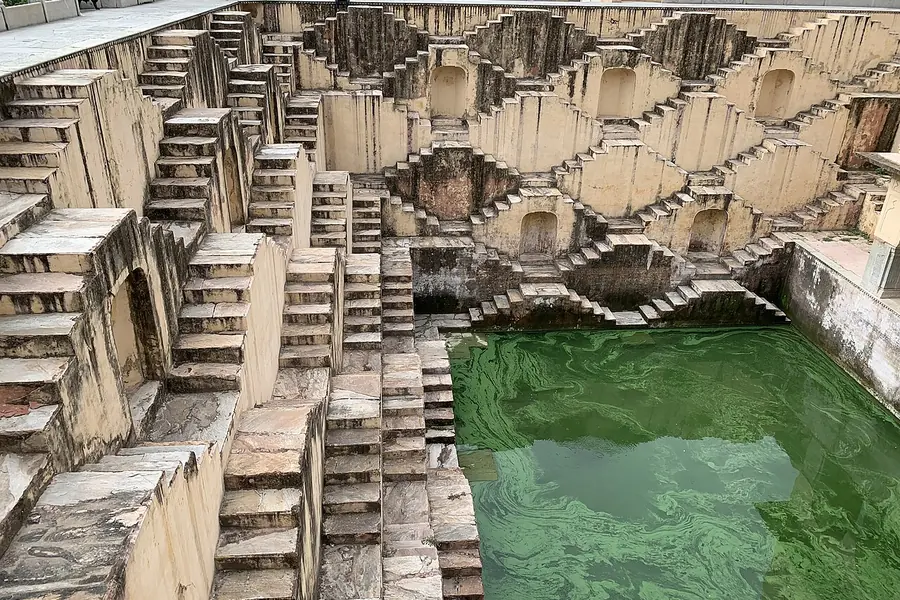
Three days buys the hilltop forts of Nahargarh and Jaigarh (with the world's largest cannon on wheels), the stepwell at Panna Meena, and a home cooking class that finally explains what's in a proper laal maas.
4 Days: Crafts, Galtaji, and a Slower Pink City
Four days lets you visit the block printers and blue-pottery workshops, the Monkey Temple at Galtaji, and Anokhi's textile museum — the Jaipur of artisans rather than just maharajas.
7 Days: Rajasthan From a Pink Base
A week and you've done a day trip to the deserted city of Abhaneri's stepwell or out toward Pushkar, found a rooftop you return to at sunset, and stopped flinching at the traffic. You'll have a tailor, a chai stall, and strong opinions on the best kachori in the old city.
Estimated budget:$80-$200
Estimated budget:$120-$300
Estimated budget:$160-$400
Estimated budget:$300-$750
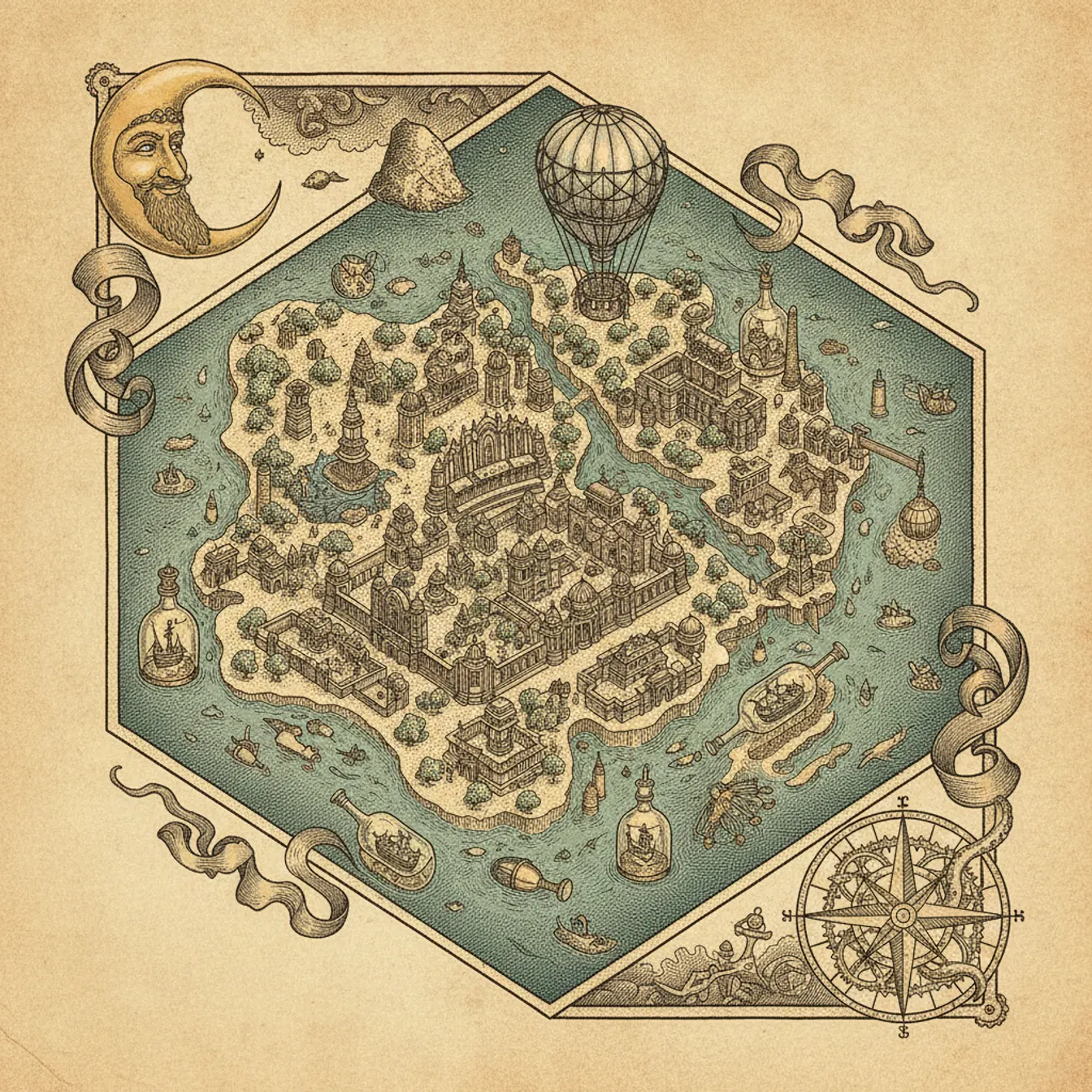
[ THE DISPATCH · FIELD MAP ]
A tilted, hand-drawn dispatch of Jaipur. Click a quarter to explode it open.
0 / 6 quarters explored
Legend · tap to highlight
[ PINK CITY (WALLED OLD CITY) ]
Old stones, older stories.
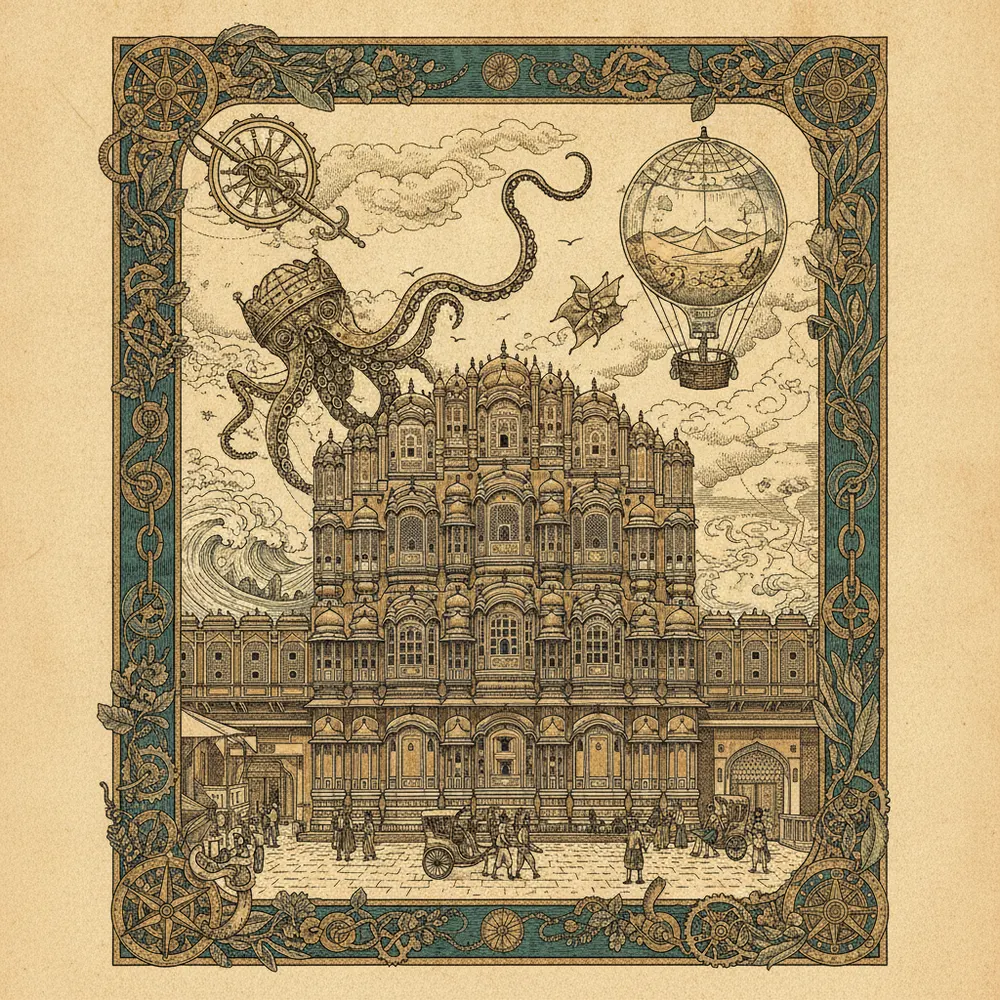
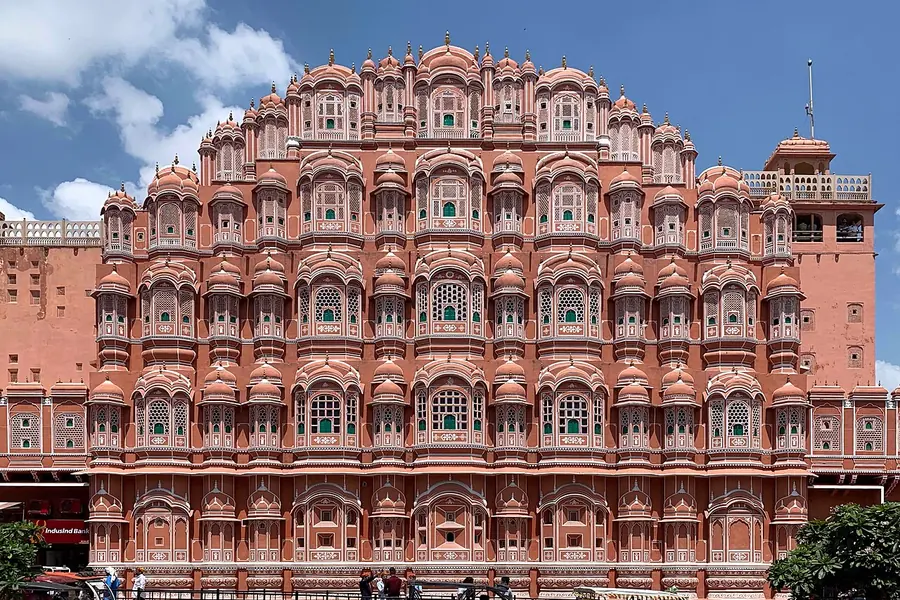
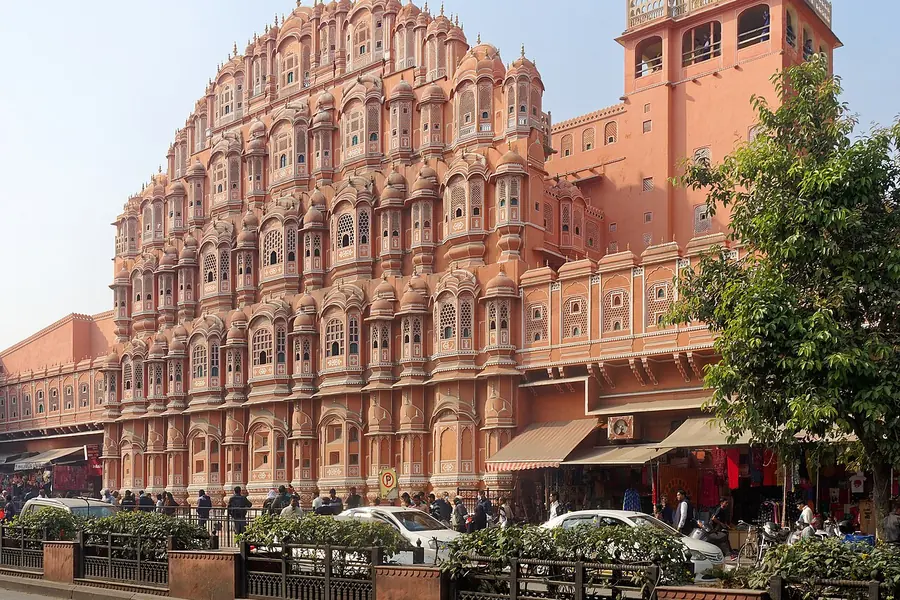
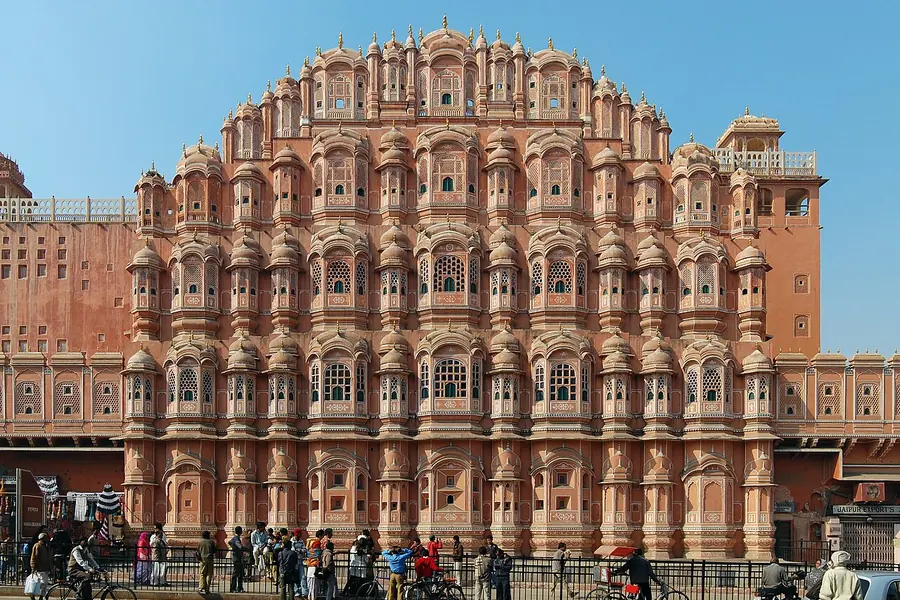
Hawa MahalThe Palace of Winds' 953 windows, best caught glowing at sunrise.
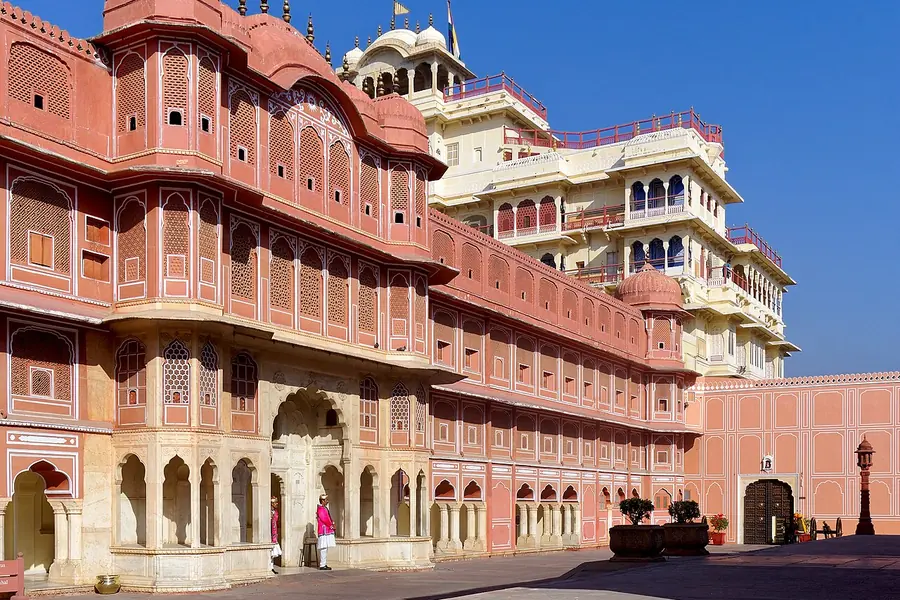
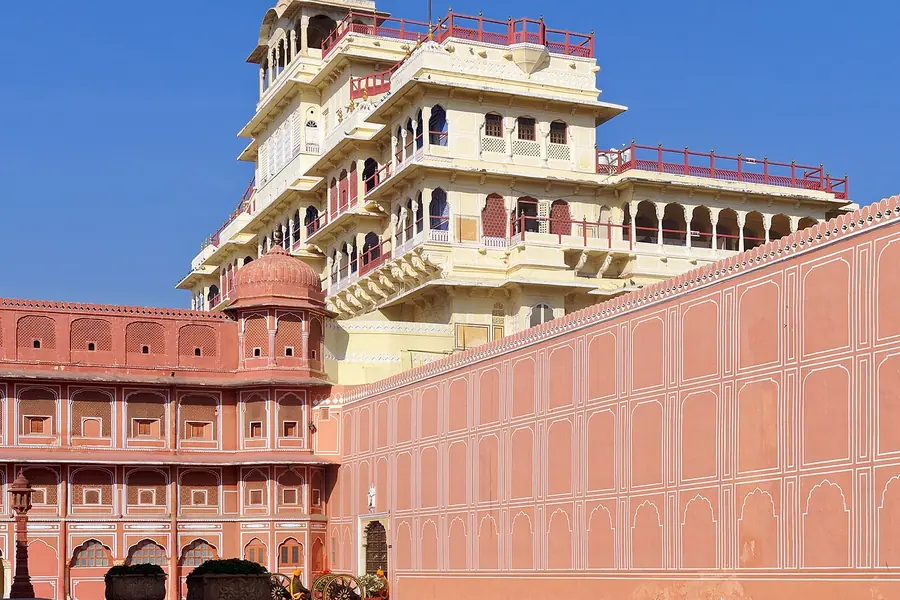
City PalaceThe still-royal residence with peacock gates and a courtyard of impeccable colour.
[ AMER (AMBER) ]
Old stones, older stories.
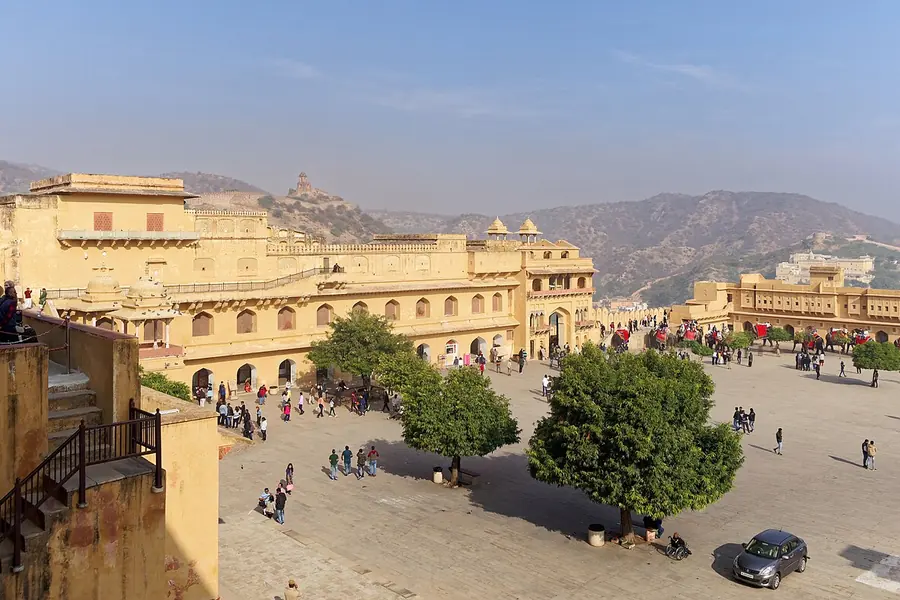
Amber FortA honey-and-cream hilltop palace with a mirror hall that turns candlelight into a galaxy.
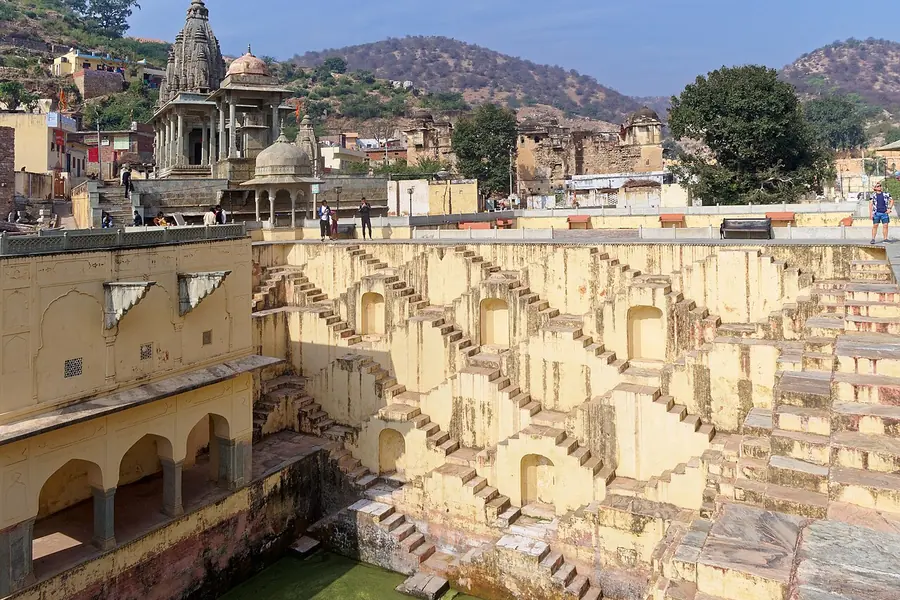
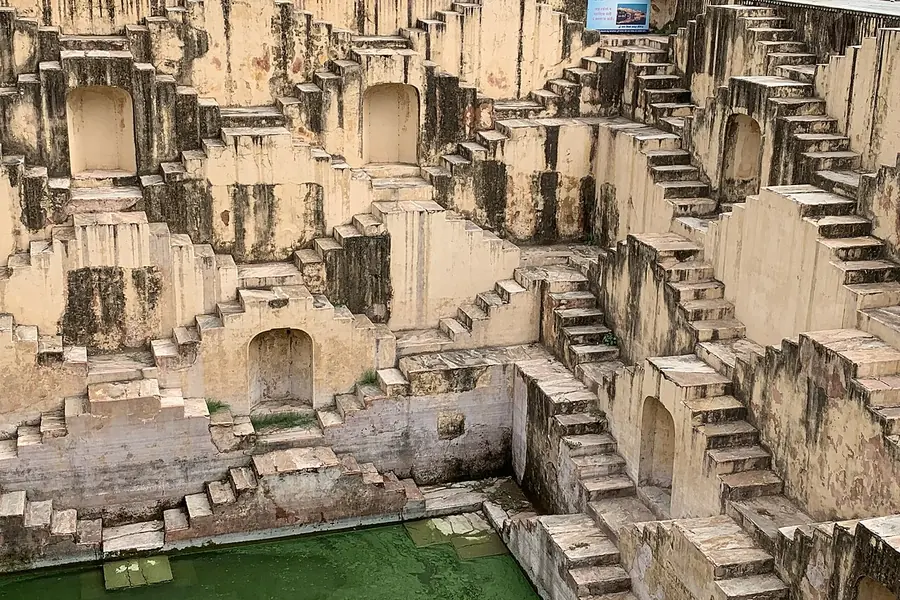
Panna Meena ka KundA perfect geometric stepwell of crisscrossing staircases, just below Amber.
[ HILLTOP FORTS ]
Green breathing room.
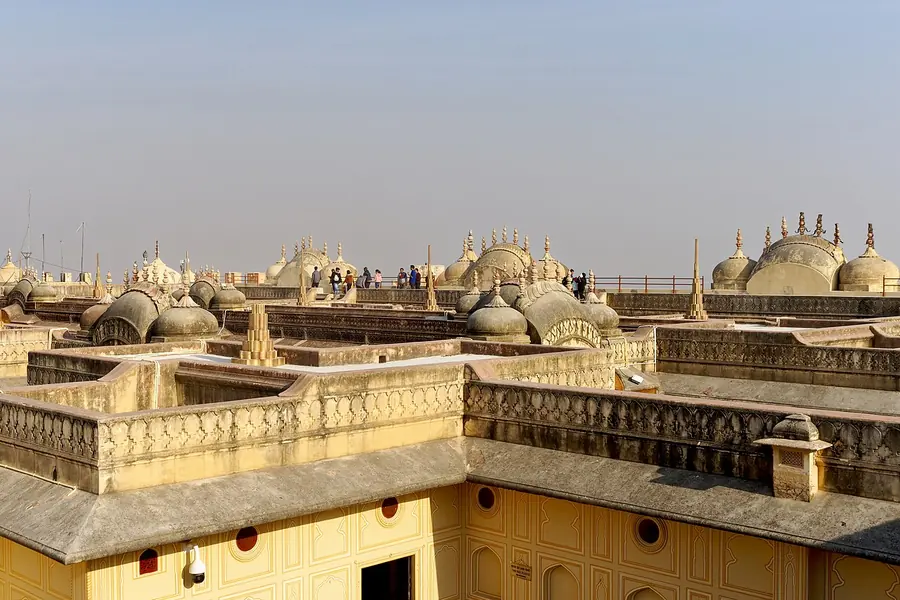
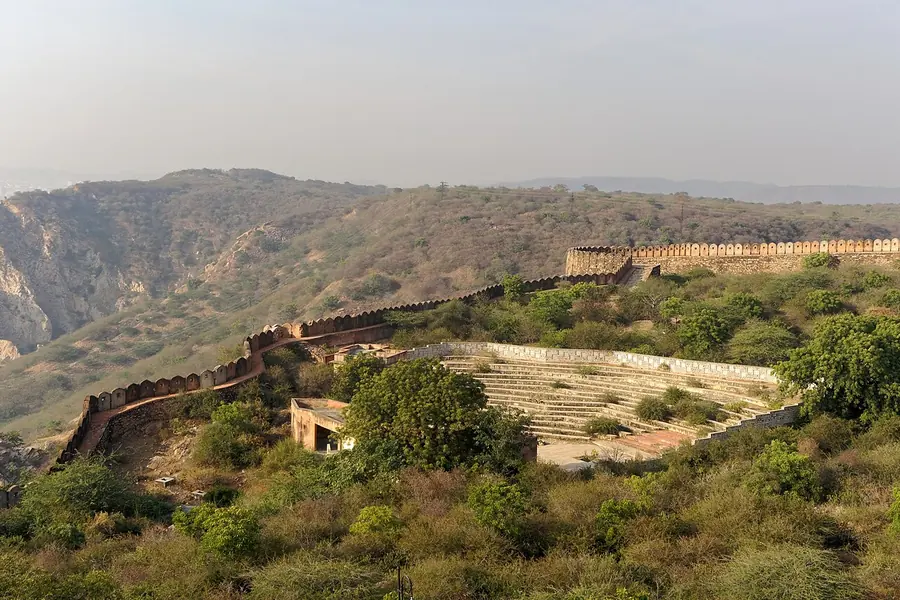
Nahargarh FortThe 'Tiger Fort' on the ridge, with the best panorama over the whole Pink City.
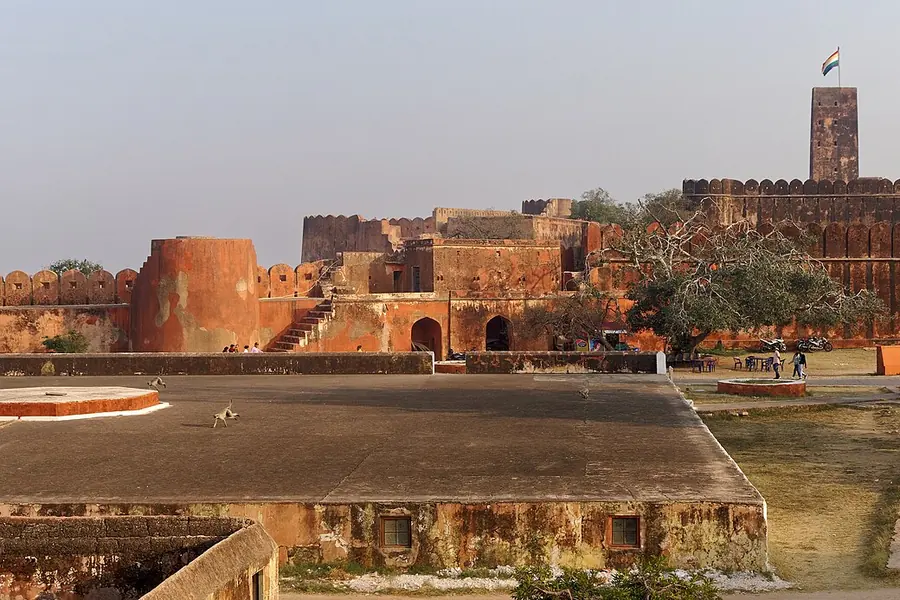
Jaigarh FortHome to Jaivana, once the world's largest cannon on wheels.
[ CIVIL LINES & MI ROAD ]
Grand squares and big ideas.
Albert Hall MuseumAn Indo-Saracenic showpiece full of Rajasthani art, lit up beautifully at night.
Sanganer block-printing workshopsThe dusty village where much of India's hand-printed cloth is actually made.
[ GALTA & THE EASTERN HILLS ]
Green breathing room.
Anokhi Museum of Hand PrintingA restored haveli celebrating Rajasthan's block-printed textile craft.
Galtaji (Monkey Temple)A pilgrimage temple complex in a rocky gorge, run partly by macaques.
[ SANGANER CRAFT BELT ]
Grand squares and big ideas.
Sanganer printing workshopsA neighbourhood worth your time.
Day 1
Amber Fort + Panna Meena Stepwell
The great hilltop fort, climbed before the heat
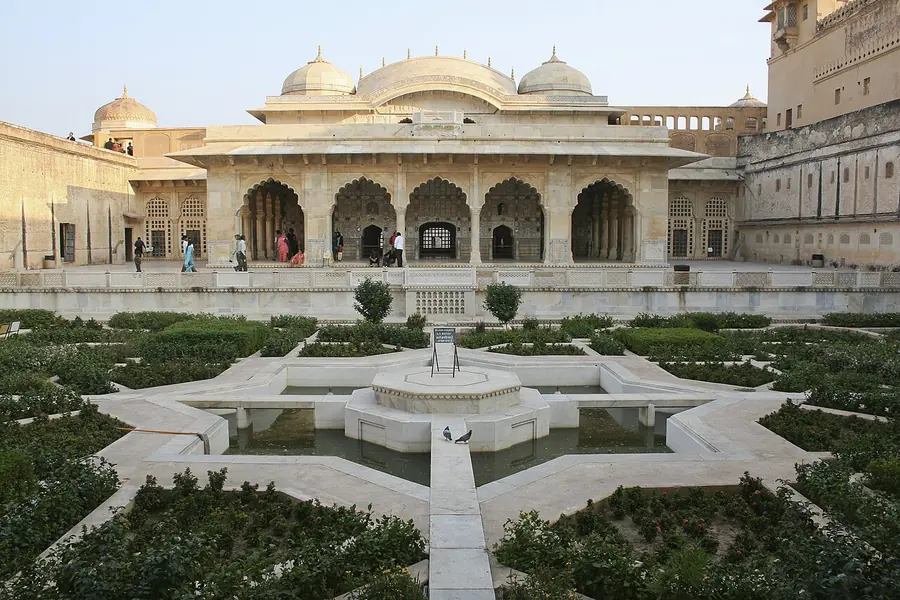
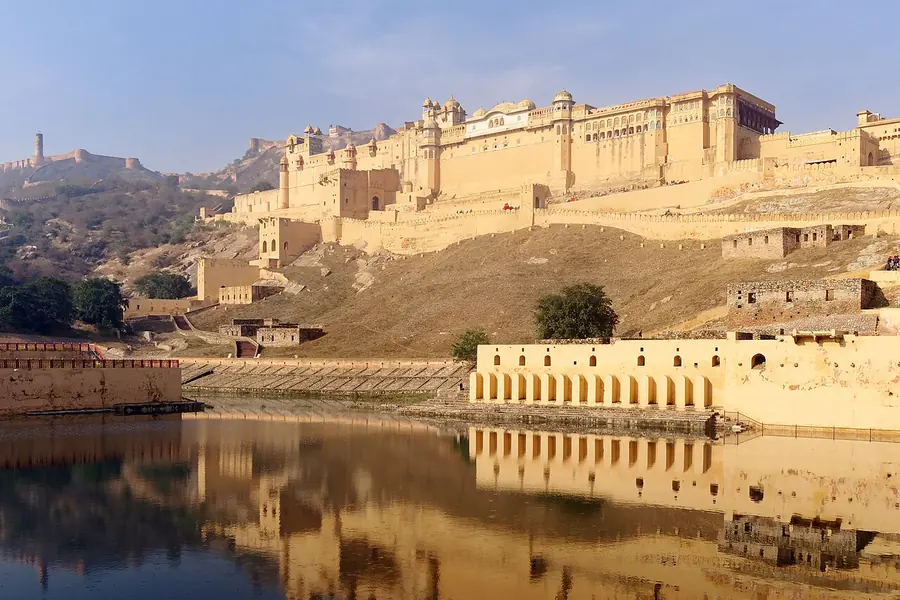
Amber Fort
A honey-and-cream hilltop palace with a mirror hall that turns candlelight into a galaxy.
The former Rajput capital, rising in tiers above Maota Lake (around 550 rupees entry). The Sheesh Mahal mirror palace and the Ganesh Pol gate are the highlights. Walk up rather than taking the much- criticised elephant rides. Go at 8am opening for cool air and empty courtyards.
A perfect geometric stepwell of crisscrossing staircases, just below Amber.
A 16th-century stepwell with hypnotic symmetrical staircases zigzagging down to the water. Free, quick, and stunning — and far quieter than the fort above. You can't descend the steps anymore, but the view from the top is the photo everyone wants.
The Palace of Winds' 953 windows, best caught glowing at sunrise.
The five-storey honeycomb facade was built so royal women could watch street processions unseen. Catch it from the cafe across the street at sunrise when it turns rose-gold (around 50 rupees to go inside, but the facade is the point). The early light and empty street are worth the alarm.
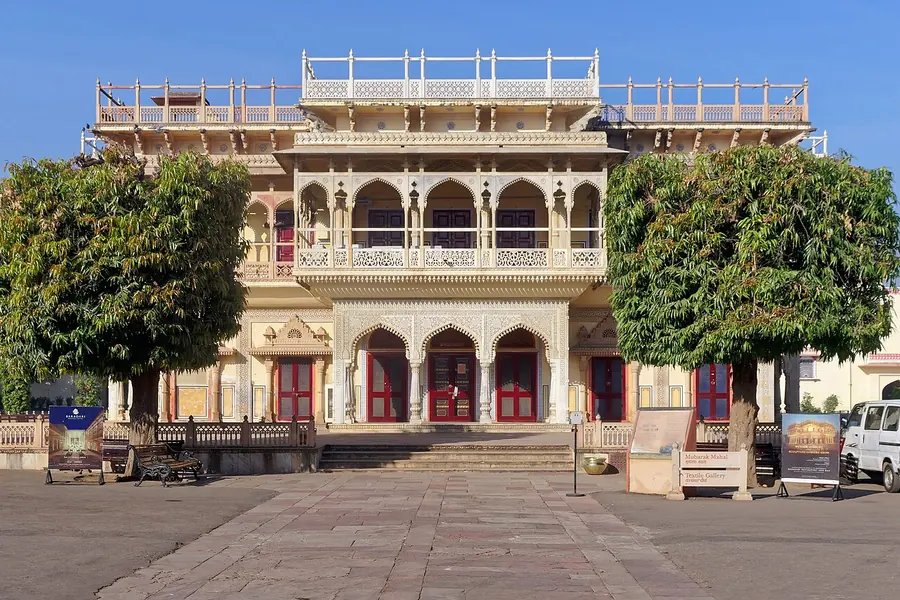
The still-royal residence with peacock gates and a courtyard of impeccable colour.
A working palace and museum complex (around 700 rupees) with the famous painted peacock doors of Pritam Niwas Chowk, an armoury, and textiles. Part of it is still the maharaja's home. Pay for a guide at the gate; the history makes the rooms come alive.
The old city's market sprawl — gemstones, textiles, and joyful sensory overload.
The walled-city bazaars are the real Jaipur: Johari for jewellery and gemstones, Bapu Bazaar for textiles and juttis (slippers). Haggle hard and good-naturedly. Even buying nothing, the evening colour, noise, and chaos are the experience. Try a hot kachori from a stall.
Day 3
Nahargarh + Jaigarh + Cooking Class
Hilltop forts and a proper Rajasthani kitchen
Nahargarh Fort
The 'Tiger Fort' on the ridge, with the best panorama over the whole Pink City.
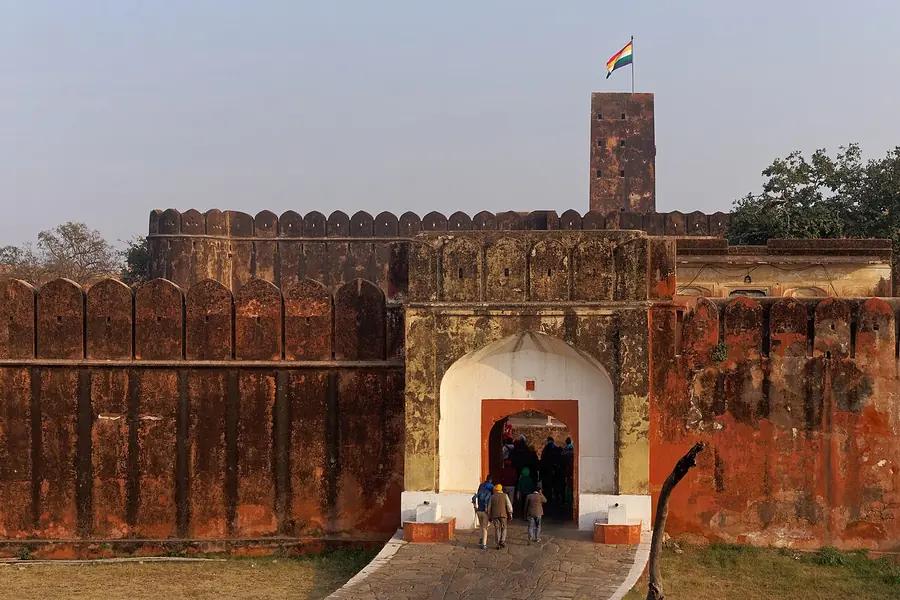
A rugged hilltop fort (around 200 rupees) built to defend Jaipur, with the Madhavendra Bhawan suite of royal apartments and a knockout view across the entire city grid below. The cafe terrace here is the classic sunset spot, but it's gorgeous in the cool of morning too.
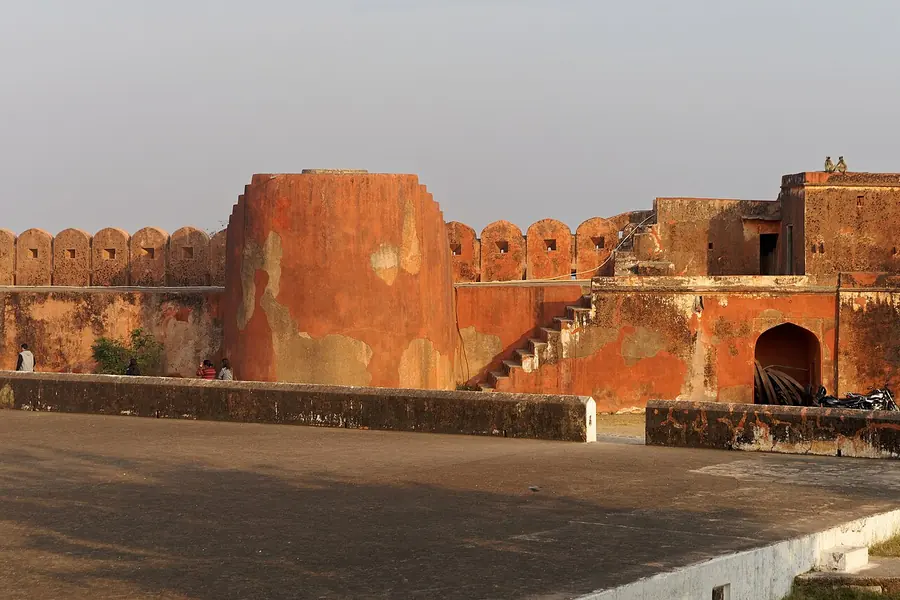
Home to Jaivana, once the world's largest cannon on wheels.
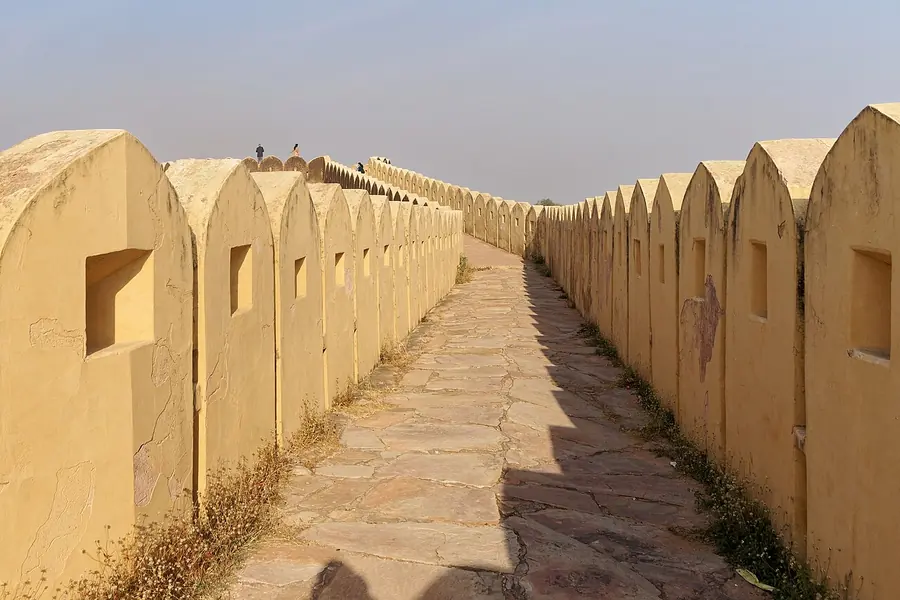
The military fort above Amber (around 200 rupees), connected to it by tunnels, holds the colossal Jaivana cannon and the original fortifications, water systems, and an armoury. Less polished, more raw history than Amber. The ramparts give another sweeping view.
Learn laal maas and dal baati in a local home — far better than any restaurant.
Several families run small cooking classes (around 2,000-3,000 rupees) teaching the fiery mutton curry laal maas, dal baati churma, and proper masala chai. You eat what you cook, on a rooftop, and leave understanding Rajasthani food rather than just consuming it.
Day 4
Crafts + Galtaji Monkey Temple
Block printers, blue pottery, and a hidden temple gorge
Anokhi Museum of Hand Printing
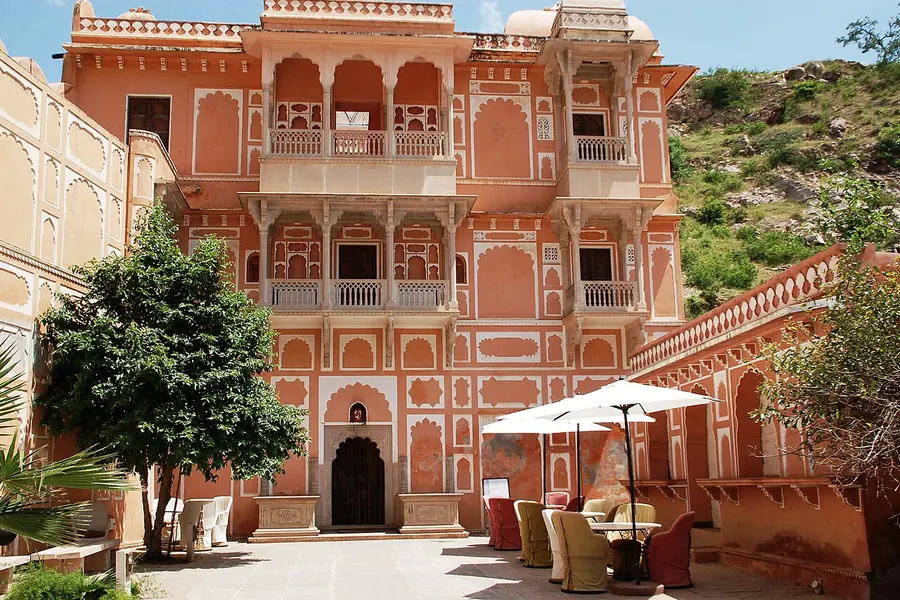
A restored haveli celebrating Rajasthan's block-printed textile craft.
A beautifully curated small museum (around 80 rupees) in a haveli in Amer village, devoted to the hand block-printing tradition. You can watch carvers and printers at work and buy direct. It quietly reframes the souvenir textiles you'll see everywhere as serious craft.
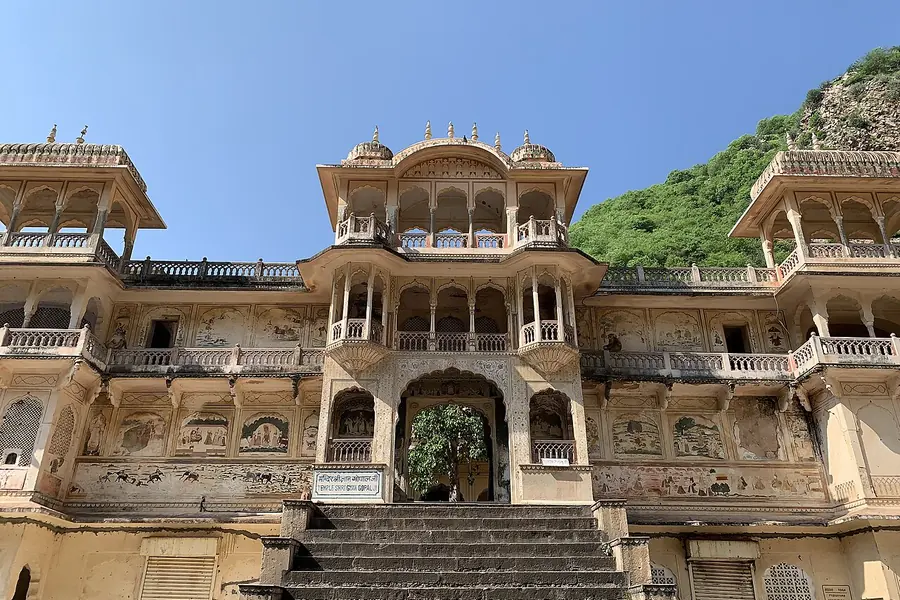
A pilgrimage temple complex in a rocky gorge, run partly by macaques.
A series of sacred water tanks and pink temples tucked into a hill gorge east of the city, famous for its resident monkeys. Free (tip the priest, mind your snacks around the macaques). Go late afternoon for golden light and a peaceful, slightly surreal atmosphere.
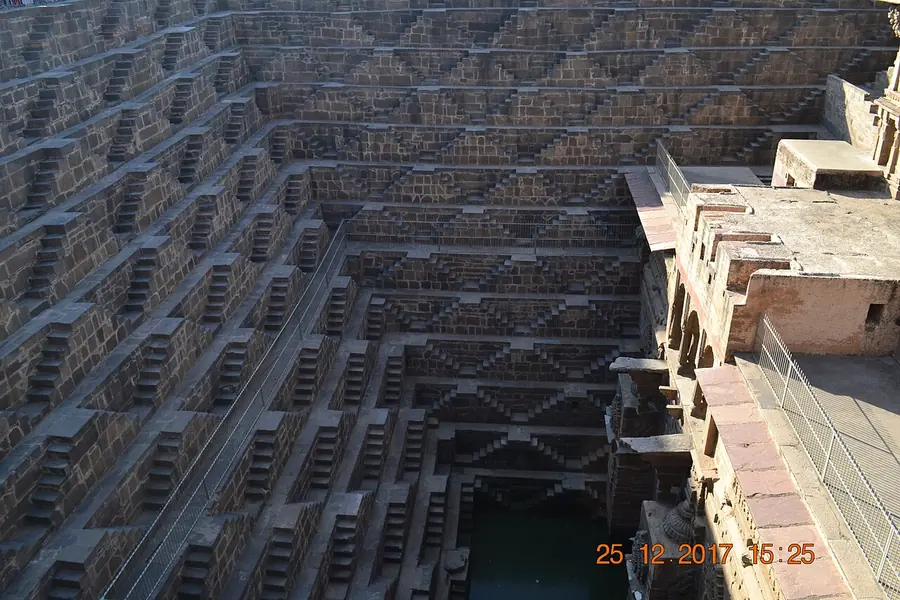
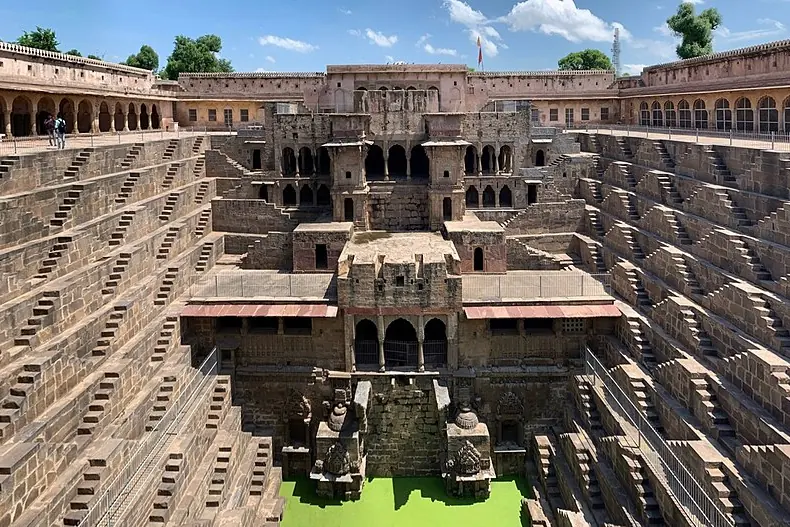
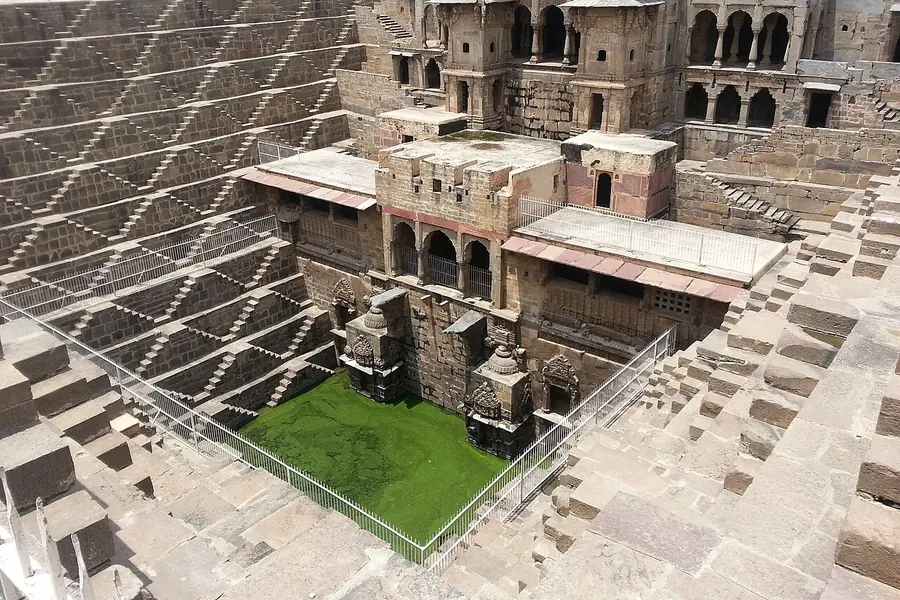
3,500 perfectly symmetrical steps plunging 13 storeys into the earth.
About 90 minutes from Jaipur, this 9th-century stepwell is one of the most jaw-dropping pieces of architecture in India — a geometric pit of thousands of steps. Small entry fee. Pair it with the nearby Harshat Mata temple. A day trip that out-photographs the forts.
Rural Rajasthan and a simple thali far from the tourist trail.
The village around the stepwell is quiet, agricultural, and a real glimpse of Rajasthan beyond the cities. Have a simple vegetarian thali at a roadside dhaba on the way back. Bring cash and patience; this is slow, rewarding travel.
Day 6
Albert Hall + Sanganer Printing Village
Museums and the workshops that supply the bazaars
Albert Hall Museum
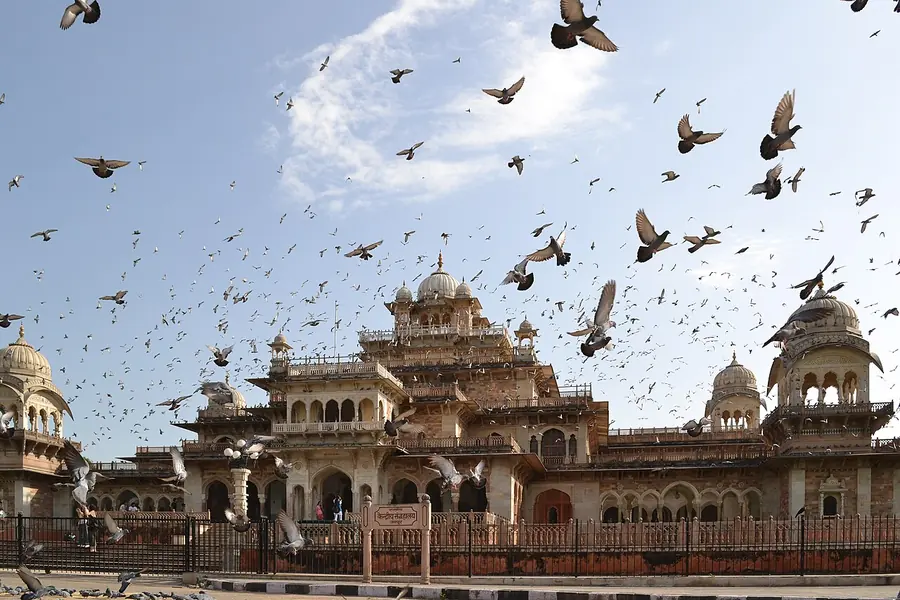
An Indo-Saracenic showpiece full of Rajasthani art, lit up beautifully at night.
The state museum (around 300 rupees) in a gorgeous 1887 Indo-Saracenic building in Ram Niwas Garden, holding miniatures, carpets, and even an Egyptian mummy. Come back after dark to see the floodlit facade with pigeons swirling — a Jaipur set piece.
The dusty village where much of India's hand-printed cloth is actually made.
South of the city, Sanganer is the heart of Jaipur's textile and handmade-paper industry. Visit a working printing unit to watch carved wooden blocks stamp metres of fabric, then buy at workshop prices. The supply chain behind every bazaar stall, demystified.
Day 7
Slow Jaipur — Chai, Rooftops, Goodbye
The last day of anything done properly
Lassiwala & a kachori breakfast
The legendary clay-cup lassi stall — accept no imitators (there are many).
The original Lassiwala on MI Road (look for '1944, Shop 312') serves thick, set lassi in disposable clay cups. Pair with a hot pyaaz kachori from Rawat. A few rupees, and the most authentic breakfast in the city. Beware the copycat stalls beside it.
Nahargarh sunset (return)
The whole Pink City turning gold beneath you — the right way to say goodbye.
Return to the Nahargarh ramparts or the Padao cafe for sunset over the entire city grid the maharaja laid out in 1727. A cold drink, a warm breeze, the call to prayer drifting up from below. Then back down for one last bazaar wander.
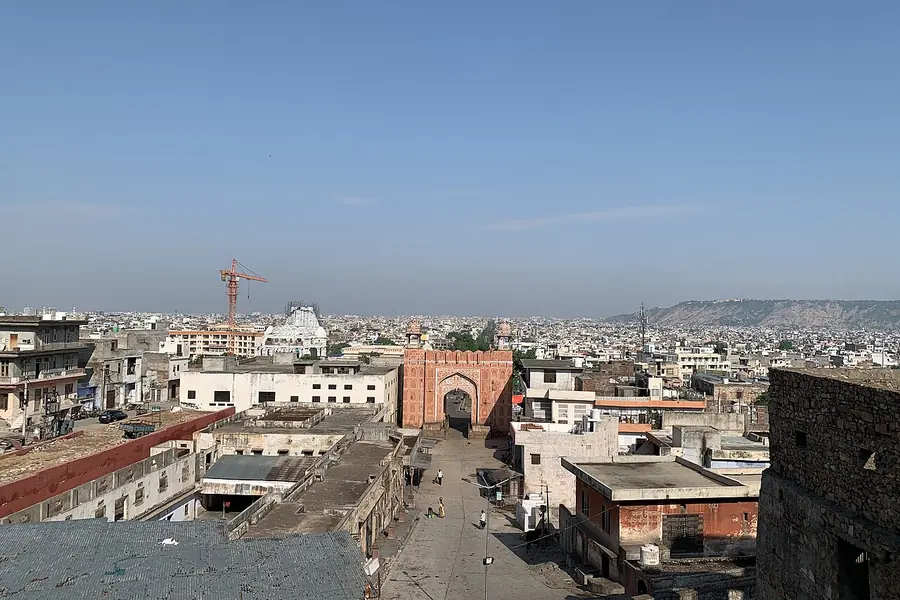
Jaipur is one of the few cities anywhere that was master-planned from scratch — laid out in 1727 by Maharaja Sawai Jai Singh II on a strict grid, with wide avenues, walled markets, and gates aligned to the cardinal directions, all of it later painted pink to welcome a visiting Prince of Wales. It’s the capital of Rajasthan and the eastern point of India’s Golden Triangle, and it hits a first-time visitor like a wall of colour, noise, and ferocious commercial energy. The honest truth is that Jaipur can be exhausting; the equally honest truth is that almost nowhere rewards you faster for pushing through it.
The shape of the city is simple once you see it. The walled Pink City holds the City Palace, Jantar Mantar, the Hawa Mahal, and the great bazaars. The forts ring the surrounding hills — Amber to the north, with Nahargarh and Jaigarh on the ridge above it. The craft villages of Sanganer and Bagru lie to the south. Distances are real and the traffic is theatrical, so the single best decision you’ll make is hiring a car-and-driver for the day — inexpensive, comfortable, and it removes the constant rickshaw negotiation.
This itinerary front-loads the great forts and palaces at opening time (heat and crowds both peak by mid-morning) and builds outward to crafts, temples, and day trips. The 2/3/4/7-day versions move from icons to artisans to the wider desert beyond.
Where to Stay in Jaipur
Area
Vibe
Best For
Walled Pink City
Atmospheric, central, chaotic
First-timers who want bazaars on the doorstep
Civil Lines / MI Road
Leafy, calmer, good restaurants
Comfort and easy logistics
Amer
Near the fort, scenic, quiet
Heritage-stay seekers
Bani Park
Residential, mid-range havelis
Value and quiet nights
This article contains affiliate links marked with rel="sponsored". We may earn a commission at no extra cost to you.